
Mars Rover's New Selfie Reveals Vera Rubin Ridge Secrets
We compile, generate and translate using Artificial Intelligence from the below given source. Macro Micro News is responsible for its editorial publication.
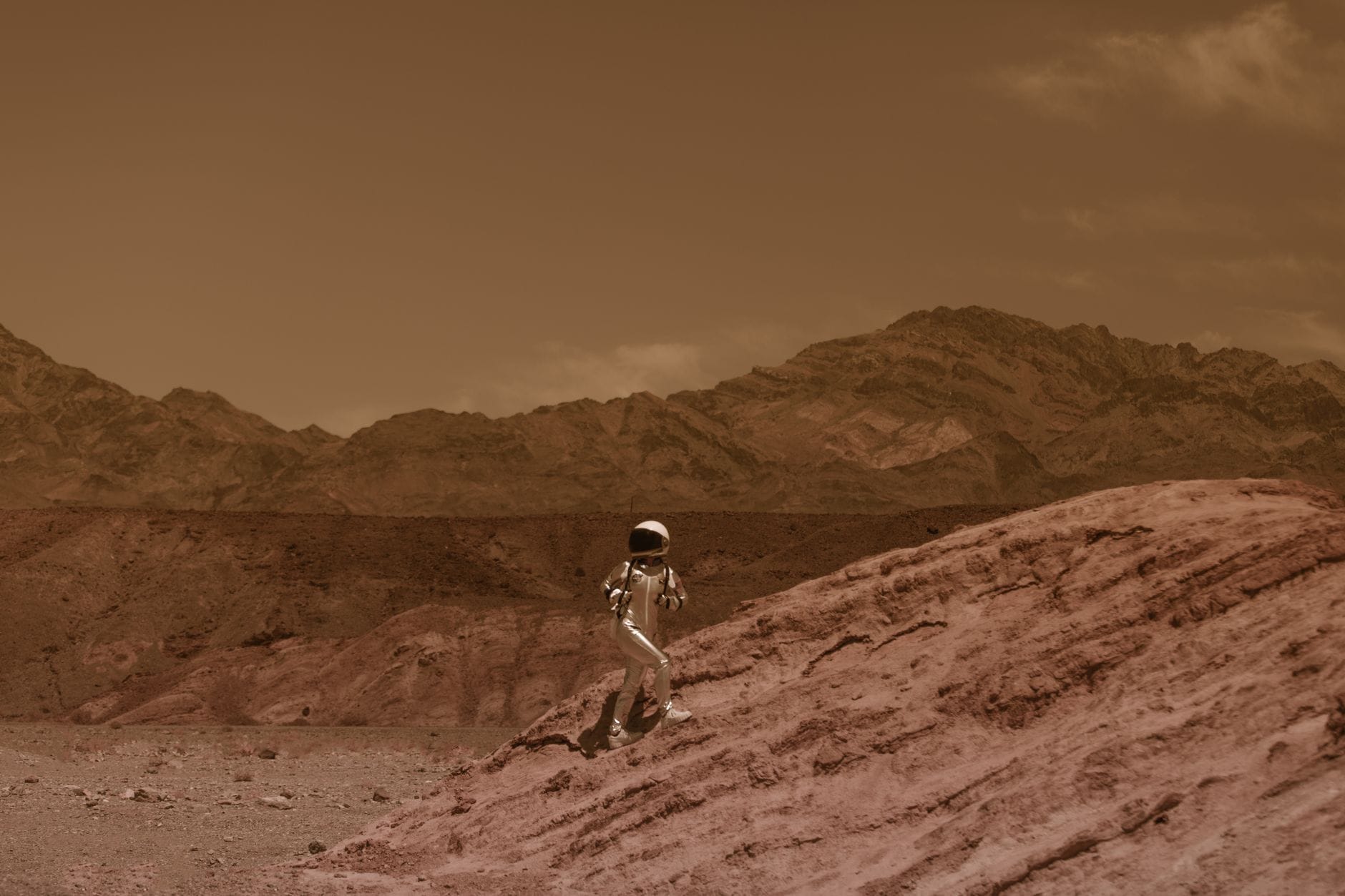
Gale Crater, Mars, Source:
NASA’s Curiosity rover has once again provided humanity with a breathtaking glimpse into the red planet. The vehicle captured a stunning panoramic selfie at the south rim of Vera Rubin Ridge. This image served as the Astronomy Picture of the Day for October 3, 2026. It marks a significant milestone in the rover’s ongoing geological survey of Gale Crater. The photograph showcases the rugged Martian landscape. It also stands as a testament to the engineering prowess and scientific endurance of one of NASA’s most successful missions.
Vera Rubin Ridge honors a pioneering astronomer who made fundamental contributions to our understanding of dark matter. This feature rises approximately 5 kilometers high within Gale Crater. It forms part of the larger Mount Sharp complex. Reaching this elevation represents a monumental achievement for Curiosity. On August 26, 2026, the rover marked its total elevation gain of 1 kilometer from the floor of Gale Crater. This feat demonstrates its capability to traverse steep slopes and analyze diverse rock formations over long distances.
The selfie itself is a composite masterpiece combining data from multiple instruments. It utilizes 61 exposures taken by the Mars Hand Lens Imager or MAHLI. This camera mounts on the rover’s robotic arm for close-up imaging of rocks and soil. To create a seamless panorama, frames containing the imager’s arm were digitally edited out. The extended background sourced from images taken by the Mastcam on sol 1903. Foreground details come from sol 1943, which corresponds to January 23, 2018, in Earth time. Notably, the ChemCam housing blocks out a portion of the distant peak. This adds a unique perspective to the composition.
This mission continues to unravel the history of water on Mars. Scientists analyze the mineralogy and chemistry of rocks along Vera Rubin Ridge. They hope to understand how environmental conditions changed over billions of years. The ability of Curiosity to climb such significant elevations provides access to ancient lakebeds and sedimentary layers. These hold clues about past habitability. As the rover continues its journey up Mount Sharp, each new image brings us closer to answering whether Mars ever harbored life. The Vera Rubin Ridge selfie stands as a symbol of human curiosity and the relentless pursuit of knowledge beyond our home planet.
Related in Space Tech
Space Tech
Stickney Crater: How a Massive Impact Nearly Destroyed Mars' Moon Phobos
Phobos, the innermost moon of Mars, carries a scar that tells a story of cosmic violence. Stickney Crater dominates its surface, a colossal basin named after Angeline Stickney Hall, wife of astronomer Asaph Hall. Hall discovered both Phobos and Deimos in 1877, linking human hist…
Read More...
Space Tech
Saturn's Cosmic Clarity: How One Night Revealed the Ringed Planet's Secrets
On October 8, 2026, the Astronomy Picture of the Day featured a breathtaking composite image titled "The Saturn System Smörgåsbord." This visual feast offers an unprecedented view of the ringed planet and its diverse moons. Astrophotographer Tom Williams captured this exquisite…
Read More...
Space Tech
Artemis II Crew Captures Lunar Impact Flashes: What the Moon Revealed in April 2026
NASA has shared a remarkable dataset from the Artemis II mission that offers fresh perspectives on our lunar neighbor. The journey occurred between April 1 and April 10, 2026, marking the first crewed trip to the Moon's vicinity since the Apollo days. Astronauts Reid Wiseman, Vi…
Read More...
Space Tech
Pa 30: The 845-Year-Old Supernova Mystery That Defies Standard Models
The night sky holds countless stories written in light and dust. Among these celestial narratives, supernova remnants stand as testaments to the violent yet creative end of stellar lives. These expanding shells do more than mark a star's death. They scatter heavy elements across…
Read More...
Space Tech
Earth's Full Aurora Ring Revealed: SMILE Mission Captures Complete View
Scientists have achieved a remarkable first by capturing the entire auroral oval in one continuous shot. The Solar Wind Magnetosphere Ionosphere Link Explorer mission shared this image on October 6, 2026. This perspective offers a fresh look at how our planet interacts with the…
Read More...
Space Tech
Sombrero Galaxy M104: New Deep-Exposure Image Reveals Tidal Streams and Violent History
The Sombrero Galaxy, known scientifically as Messier 104 or M104, has always drawn the eye with its striking resemblance to a wide-brimmed Mexican hat. This massive spiral galaxy features a bright central bulge encircled by a distinctive dark band of interstellar dust. While ast…
Read More...
Space Tech
New Jersey Sky: Witnessing Supernumerary Rainbows and the Wave Nature of Light
On October 4, 2026, the skies above New Jersey presented a rare spectacle that captivated both amateur photographers and meteorology enthusiasts. Following the passage of storm remnants over the Jersey Shore, a standard rainbow appeared in one direction. However, the phenomenon…
Read More...
Space Tech
313 Nebulas Captured: The Complete Sharpless Catalog Revealed in Eastern China
On October 2, 2026, NASA’s Astronomy Picture of the Day highlighted a monumental achievement in astrophotography. The complete Sharpless Catalog has been unveiled, showcasing 313 distinct nebulae. This comprehensive collection offers an unprecedented opportunity to explore the d…
Read More...
Space Tech
Harvest Moon Meets Etna: Why This October 2026 Sky Was Unforgettable
On October 1, 2026, the night sky delivered a breathtaking convergence of astronomical precision and geological fury. A stunning composite image has captivated astronomy enthusiasts worldwide by capturing this rare moment. The photograph features the Harvest Moon rising over the…
Read More...
Space Tech
Arp 78: Aries Galaxy's Massive Spiral Arm Reveals Cosmic Collision History
Deep within the constellation of Aries, roughly 100 million light-years from Earth, astronomers have identified a celestial spectacle that challenges our understanding of galactic evolution. Arp 78 stands out as one of the most visually compelling examples of interacting galaxie…
Read More...