
NASA's New Simulation Reveals How Dark Matter Shapes Galaxies
We compile, generate and translate using Artificial Intelligence from the below given source. Macro Micro News is responsible for its editorial publication.
Washington, United States, Source:
In the vast silence of space, a ghostly presence quietly dictates the fate of galaxies. This unseen force, known as dark matter, does not emit or reflect light, making it invisible to traditional telescopes. Yet its gravitational influence is undeniable. It acts as the cosmic scaffolding upon which the visible universe is built. Recent simulations from NASA’s Space Show, titled 'Dark Universe,' offer a striking visualization of this phenomenon. These models reveal how dark matter weaves through space like an intricate web.
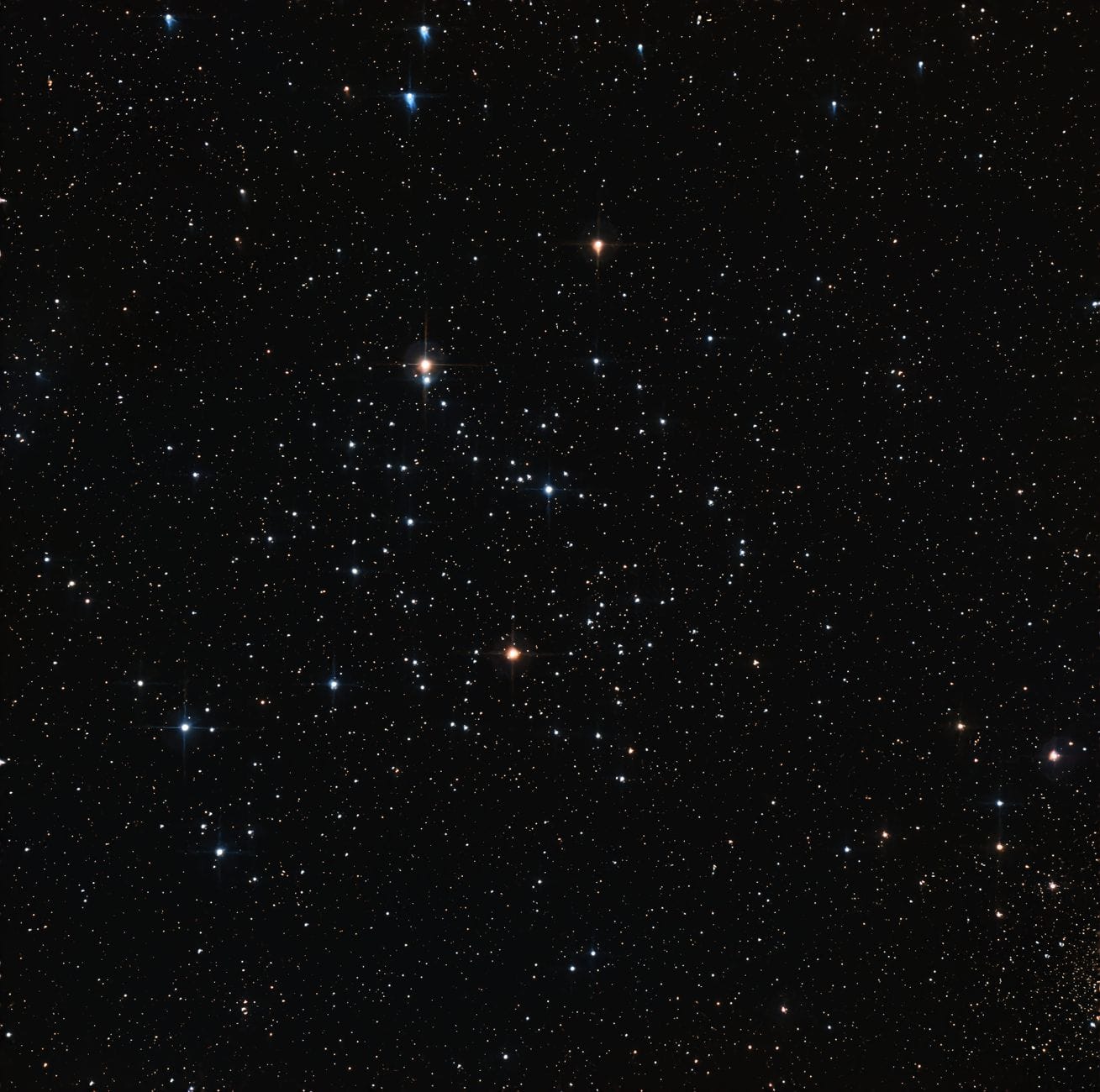
The featured image from the simulation highlights complex filaments of dark matter. These structures are depicted in black and stretch across the frame like ethereal threads. They connect clumps of familiar baryonic matter, which appear orange in the visualization. Ordinary matter such as stars, planets, and gas makes up only a small fraction of the universe’s total mass-energy content. Dark matter accounts for approximately 27% of this total. Its pervasive nature suggests that it influences everything from galaxy rotation to the bending of light around massive objects, a phenomenon known as gravitational lensing.
These simulations are not merely artistic interpretations. They represent rigorous statistical matches to actual astronomical observations. By modeling the distribution of dark matter, scientists can better understand how large-scale structures form and evolve over billions of years. The data confirms that dark matter is distributed in a way that aligns with predictions from the Lambda-CDM model. This standard model of Big Bang cosmology posits that the universe is dominated by dark energy. This uniform source of repulsive force drives the accelerated expansion of the cosmos. Meanwhile, dark matter provides the gravitational glue that holds structures together.
Recent insights suggest that while dark matter is strange and elusive, it may no longer be considered the strangest component of the universe. That title now belongs to dark energy, which appears to dominate the dynamics of the entire cosmos. Dark energy’s uniform nature contrasts sharply with the clumpy, filamentary structure of dark matter. Both components play critical roles in shaping the fate of the universe. As astronomers continue to refine their models and gather more data from deep-space surveys, the distinction between these two mysterious components becomes clearer. This progress offers a deeper understanding of the fundamental forces at work.
The visualization serves as a powerful reminder of how much remains unknown about our universe. Despite decades of research, the exact nature of dark matter particles remains one of the greatest mysteries in physics. Are they weakly interacting massive particles? Axions? Or something entirely different? Until direct detection is achieved, simulations will remain a vital tool for exploring the invisible architecture of the cosmos. Through these digital recreations, scientists and the public alike can glimpse the hidden framework that governs the motion of stars and galaxies. This effort bridges the gap between theoretical physics and observable reality.
Related in Space Tech
Space Tech
Pegasus Galaxy Collision: What Happens When NGC 7771 Merges?
The cosmos operates on a scale that defies human intuition. Galaxies are not static objects floating in void but dynamic entities engaged in a slow-motion dance spanning billions of years. The NGC 7771 group offers a striking glimpse into this celestial choreography. Located app…
Read More...
Space Tech
Lynds 1251: How Dark Dust Clouds Ignite New Stars in the Cosmos
The cosmos often feels like a silent void, but that darkness is actually a canvas waiting for creation. On November 23, 2026, the Astronomy Picture of the Day featured Lynds 1251, a dark nebula affectionately called the Rotten Fish Nebula. This image does more than show empty sp…
Read More...
Space Tech
Jupiter's Color Code: How Juno Deciphers the Gas Giant's Atmospheric Palette
The gas giant Jupiter has long captivated astronomers with its dynamic atmosphere, a swirling canvas of storms and bands that have been observed for centuries. However, the precise chemical mechanisms behind the planet's vibrant hues remain one of astrophysics' enduring enigmas.…
Read More...
Space Tech
Voyager 2 at Neptune: The Last Look from the Edge of Our Solar System
On November 21, 2026, NASA’s Astronomy Picture of the Day showcases a breathtaking composite image of Neptune. This visual record comes from Voyager 2, the only spacecraft to ever visit this ice giant during its historic flyby. The image stands as a powerful testament to human i…
Read More...
Space Tech
Voyager 1 Enters Interstellar Space: The Historic Milestone of November 2026
On November 20, 2026, the astronomical community marked a profound milestone as NASA’s Astronomy Picture of the Day highlighted the historic journey of Voyager 1. The featured image, captured by the Emirates Astronomical Observatory, depicts a time-exposure photograph where Mors…
Read More...
Space Tech
Orion's Cosmic Canvas: Horsehead and Flame Nebulas Revealed in Stunning Detail
The night sky often serves as a canvas for some of the most breathtaking natural artistry in the universe. Few images capture this essence quite like the combined view of the Horsehead and Flame Nebulas. This celestial scene offers a profound glimpse into the dynamic processes o…
Read More...
Space Tech
M-Class Solar Flare: How NASA's New Image Reveals the Sun's Extreme Heat Mystery
On November 18, 2026, NASA’s Astronomy Picture of the Day shared a striking image captured on May 14, 2025. This visual record highlights an M-class solar flare and invites you to look closer at the dynamic processes shaping our star. The photograph displays bright loops of plas…
Read More...
Space Tech
Milky Way Meets Aurora: The Rare Sky Event of November 17, 2026
On November 17, 2026, the night sky presented a breathtaking spectacle that blurred the lines between the distant cosmos and our immediate atmospheric environment. Captured in northern regions, an image revealed two majestic arches dominating the heavens, creating a visual illus…
Read More...
Space Tech
Webb Telescope Reveals NGC 7129: How Violent Jets Sculpt New Stars
The James Webb Space Telescope has delivered a stunning new view of NGC 7129, a star-forming region located about 3,000 light-years away in the constellation Cepheus. This celestial nursery offers astronomers a rare chance to study how stars are born within chaotic and turbulent…
Read More...
Space Tech
NASA Chandra Data Reveals Why Massive Star AT 2016blu Keeps Exploding
Astronomers have used NASA’s Chandra X-ray Observatory to uncover the reasons behind the erratic behavior of a massive star named AT 2016blu. This discovery offers a clearer picture of how unstable stars evolve and release energy in violent bursts. The star resides in the spiral…
Read More...