
Plastics Treaty Draft Leaves Out Production Cuts: What It Means for You and the Planet
We compile, generate and translate using Artificial Intelligence from the below given source. Macro Micro News is responsible for its editorial publication.
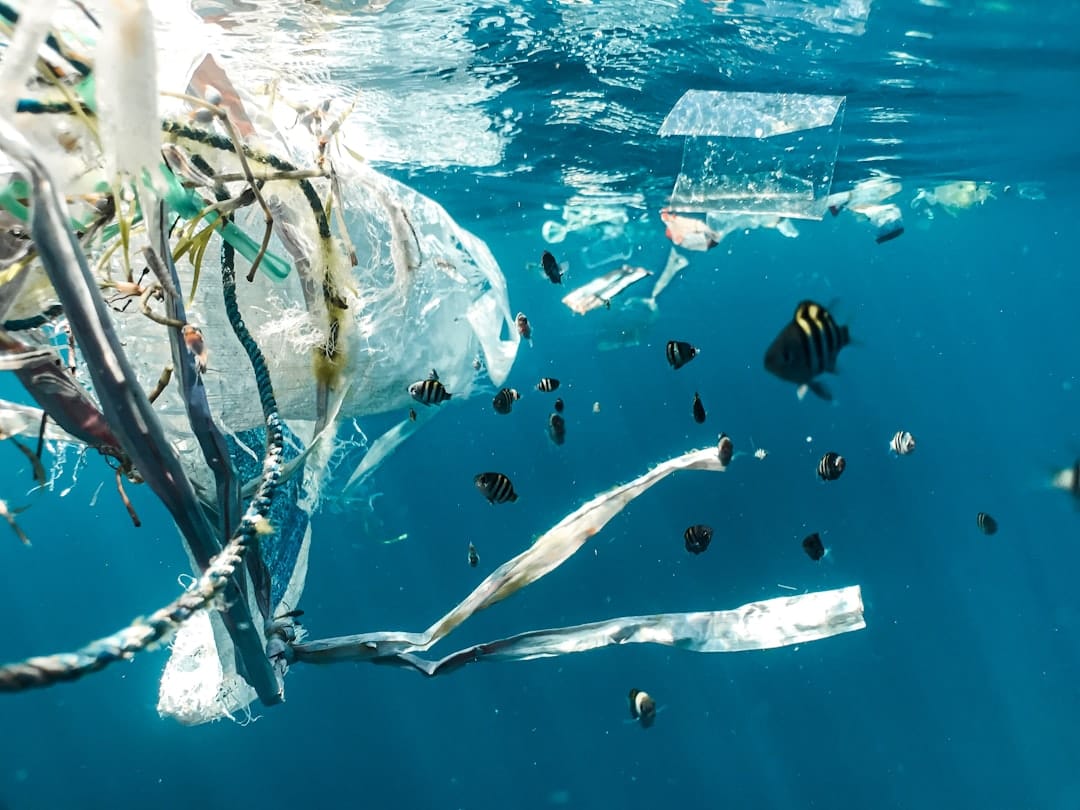
Geneva, MMN Correspondent: The newest draft of the global plastics treaty has arrived, and it is missing something many countries consider essential. Chilean ambassador Julio Cordano, the diplomat chairing the United Nations talks, released the document as an informal reference text. It reads a lot like a formal treaty, and for governments, campaigners, and scientists, the most striking detail is what is not inside it: any concrete step to slow down the production of new plastics.
The text acknowledges that the world produces and consumes plastics at an unsustainable level. It does not offer measures to address that growth. A treaty meant to end plastic pollution without touching the source of that pollution is, in the eyes of many, a treaty that will struggle to do its job.
Environmental Investigation Agency campaigner Christina Dixon says the paper echoes a version rejected by most governments in Geneva a year ago, with key elements removed and repackaged as progress. "We’ve gone backwards rather than forwards," she says. French diplomats add that the text lacks concrete provisions on unsustainable production and consumption, and a majority of countries have kept calling for those provisions.
Scientists have made this point for years. Plastic pollution does not begin at the landfill. It begins with manufacturing. Governments across Europe, Latin America, Africa, and the Pacific islands have long asked for limits to plastic manufacturing at sustainable levels. They face strong opposition from fossil fuel producing countries, including Gulf states, the United States, and Russia. For those producers, plastics represent a growing market for oil and gas.
This is not a new battle. Initial drafts from 2024 included a standalone article that would have allowed negotiators to set a global target for reducing the production and consumption of primary plastics. That provision disappeared from successive drafts published in Geneva last year. The Geneva text did keep language suggesting that production data could be used in future assessments of whether the treaty was meeting its goals. Observers saw that as a doorway to a stronger pact over time. The new text walks away from that door. It mentions sustainable production only in the preamble, and it includes an article about improving plastic product design to support sustainable production. No target. No data loop. No obligation.
Micronesia’s negotiator Dennis Clare sees a slow-motion erosion of ambition. "There’s a war of attrition element," he says. "The countries that want to do less are dragging out discussions and gradually pressuring the more ambitious to compromise towards a lower common denominator."
The talks have already missed two deadlines. Formal sessions meant to close the deal ended without agreement in December 2024 and August 2025. New chair Julio Cordano has tried to reset the process through informal meetings. The next formal negotiating session is scheduled for early 2027.
His approach has drawn scrutiny. Some negotiators say production was kept off the agenda for a recent meeting in Nairobi, and that made it harder to discuss the treaty’s foundation. Cordano says countries were free to raise any issue and that Nairobi offered space for reaffirming positions and expressing new ideas. The informal talks happen behind closed doors, with no media or outside observers allowed.
Campaigners see a clear calculation. Dixon says the easiest path to a consensus agreement is to remove the more complex elements, including sustainable production and consumption. Cordano responds that he is guided by countries as they develop their own exchanges and work toward possible landing zones.
The stakes reach far beyond the negotiating room. Plastic production is a large and fast growing source of greenhouse gases. According to the OECD, plastics produced 1.8 billion tonnes of emissions in 2019, about 3.4 percent of the global total. Without policy change, that number could more than double by 2060. Because plastic relies on fossil fuels for both material and energy, this treaty is also a climate agreement.
Negotiators will gather in Bangkok at the end of September for another meeting of chief negotiators. A new version of the text is expected after that. French diplomats say the current draft should not be treated as an end product. They describe it as a starting point that can and should be improved. France, the European Union, and the High Ambition Coalition, a group of more than 70 countries from Europe, Latin America, Africa, and the Pacific, will keep pushing for stronger provisions. The HAC has consistently called for a treaty that covers the full lifecycle of plastics, including production and waste management.
Dennis Clare offers a sharp warning for the next phase. If the treaty leaves out essential elements of the solution, an apparent diplomatic success could become an environmental failure. Frontline countries may decide they do not want a weak pact that asks them to clean up someone else’s waste while producers keep expanding.
So the real question is about the quality of the final agreement. Once reached, will it actually solve the problem? Bangkok will be a key test of whether production returns to the table. The answer will shape the plastics economy and the planet for decades to come.
Related in Global Warming
Scientific Research
How PLOS Climate Is Reshaping Global Science: The Open Access Advantage
In the fast-moving world of scientific communication, open access journals are doing more than just sharing papers. They are breaking down walls that have long kept knowledge out of reach. PLOS Climate stands at the center of this shift. As a key part of the Public Library of Sc…
Read More...
Scientific Research
PLOS Climate: How Open Access is Reshaping Global Warming Solutions
The landscape of scientific publishing is shifting beneath our feet. Accessibility and transparency are no longer just nice-to-have features; they are the bedrock upon which we address the most pressing challenges of our time. The Public Library of Science (PLOS), a nonprofit ba…
Read More...
Scientific Research
PLOS Climate: Why Broken Links Threaten Global Science Access
The digital landscape of scientific communication is shifting beneath our feet. As climate research accelerates, the integrity and accessibility of this data have become paramount. Specialized journals like PLOS Climate face constant challenges regarding content availability and…
Read More...
Scientific Research
Why Climate Data Links Fail: The Open Access Fix You Need Now
Imagine clicking a link to the latest climate study only to hit a dead end. That frustrating 'Page Not Found' error is more than a technical glitch. It represents a significant barrier in the fight against misinformation and delayed action. When vital research on global warming…
Read More...
Scientific Research
PLOS Climate: The Open Access Frontier for Global Warming Research
The landscape of scientific publishing is shifting rapidly. Accessibility and transparency are no longer just ideals but necessities. PLOS, a nonprofit organization based in California, stands at the forefront of this movement. They champion open access to peer-reviewed research…
Read More...
Global Warming
COP17 Mongolia: The Desertification Summit Deciding Your Food and Water Future
Around 10,000 people are heading into a national park near Ulaanbaatar this week. They've gathered for COP17, the seventeenth Conference of Parties to the United Nations Convention to Combat Desertification. The meeting runs from August 17 to 28, and it could determine how farms…
Read More...
Global Warming
What You Need to Know About South Africa’s Offshore Oil Court Battle: Communities Take On Shell and TotalEnergies
Layers of red dust still coat Saldanha Bay, a reminder of the iron ore exports that transformed a quiet coastal fishing town in the 1970s. Today, the same bay is being prepared for a different role. The South African government wants to turn it into the country's oil and gas hub…
Read More...
Global Warming
UK Wildfire Crisis 2026: 71% of England in Drought and Firefighters Overwhelmed, Are We Ready for What's Next?
The United Kingdom is living through a fire emergency that keeps growing. Dry landscapes, repeated heatwaves, and shifting wind patterns have turned large parts of the country into a potential tinderbox. Firefighters are working long shifts to contain flames in Hampshire, Nottin…
Read More...
Global Warming
Canada’s Out-of-Control Wildfires: 22,000 Flee British Columbia, and What That Means for Your Community
Summerland received its evacuation order with little time to spare. Across British Columbia, around 22,000 people have now left their homes as 102 active wildfires spread through the province. Nearly half of those fires are listed as uncontrolled. The Bald Range fire grew to mor…
Read More...
Global Warming
Super El Niño 2026 Could Bring Flooding to Western US: Here's What Forecasters Are Watching
Something big is taking shape across the Pacific Ocean, and its effects are expected to reach the United States this winter. Climate scientists are tracking what could become one of the strongest El Niño events on record. If the forecasts hold, the western and south-eastern part…
Read More...