
Portugal’s Right-Wing Leader Revealed: New Poll Shows André Ventura Overtaking Luís Montenegro as Voters Choose Their Champion
We compile, generate and translate using Artificial Intelligence from the below given source. Macro Micro News is responsible for its editorial publication.
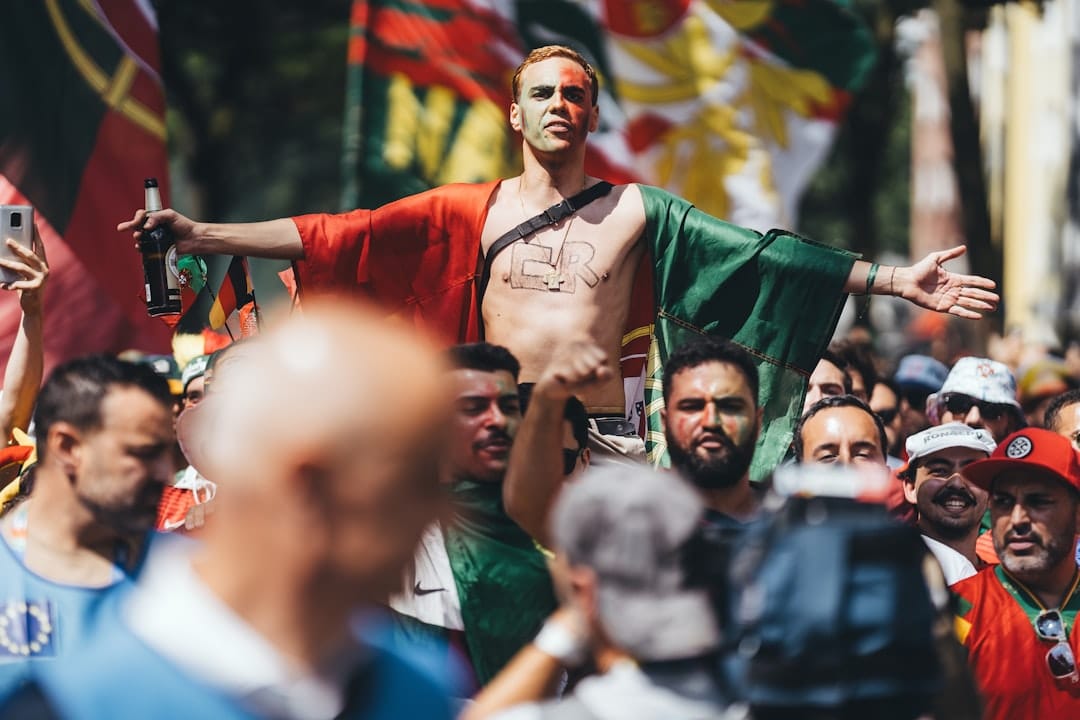
Lisbon, Portugal, MMN Correspondent: A fresh wave of voter sentiment has sent ripples through Portugal’s political scene. The question on everyone’s mind is no longer about policy alone. It is about identity. Who truly speaks for the right? The latest survey points to a name that has been rising with remarkable speed: André Ventura, the leader of CHEGA. Not Luís Montenegro, who heads the Social Democratic Party (PSD). The result has sparked conversations in living rooms, party headquarters, and university halls alike.
The survey emerged during a time of economic strain and growing public unease. It asked voters a direct question. Which political figure best represents the core values of the right? The answer was not what many expected. A clear plurality named Ventura. His direct language on immigration, national sovereignty, and corruption has found a receptive audience. Montenegro, despite leading a party with decades of governing experience, found himself trailing. Voters described him as careful and measured. In a moment when many crave clarity, that carefulness is being read as hesitation.
This shift did not appear overnight. Across Europe, populist movements have gained ground. Italy has seen it with Giorgia Meloni. France has witnessed the rise of Marine Le Pen. Portugal is now feeling the same currents. CHEGA was founded in 2019. In just a few years, it moved from the margins to the center of national politics. In the 2024 legislative elections, the party captured 18% of the vote. That made it the third-largest force in the Assembly of the Republic. The speed of that rise still surprises many political observers.
Ventura’s background is unusual. He was once a football commentator and a university professor. Today he is known for saying things that make other politicians uncomfortable. His speeches often target the political elite. He talks about the Roma community in ways that have drawn strong criticism. He speaks against what he calls excessive immigration. For his supporters, this is refreshing honesty. They see him as someone who will not bow to European Union instructions or hide behind diplomatic language. They believe he wants to clean up a system long accused of cronyism.
Montenegro represents a different tradition. The PSD has shared power with the Socialist Party for generations. His leadership style leans toward building bridges. He looks for consensus and stability. These are valuable qualities in normal times. But these are not normal times. Polarization is growing. Voters are tuning into louder voices. The survey suggests that many people on the right now see Montenegro as a figure from the past. They find it hard to see him as a strong alternative to the left’s agenda.
The implications are significant for everyone involved. For the PSD, this is a moment of deep reflection. If the party’s natural supporters see Ventura as the true leader of the right, then the PSD faces the risk of becoming marginal. Its traditional space is being squeezed. Some analysts believe Montenegro’s refusal to work with CHEGA has made things worse. Voters who wanted cooperation instead saw a wall. That wall felt elitist to many, and it pushed some voters further toward Ventura.
For CHEGA, the survey offers validation. The party has worked hard to position itself as the only real opposition to the Socialist-led government. It has highlighted corruption scandals. It has demanded tougher law enforcement. Its leader’s presence on social media is massive. Millions of followers see his messages directly. There is no editorial filter. This digital reach, combined with active local groups, has turned CHEGA into a well-oiled electoral operation.
Still, the path ahead is not completely smooth. Ventura may lead in popular perception, but his party remains divisive. Many voters are cautious about some of its more extreme voices. The question is whether CHEGA can move beyond being a protest vehicle and become a lasting political home for a broader coalition. That remains open. Montenegro still has significant institutional backing. Business leaders and moderate voters support him. They worry about the unpredictable nature of populist governance.
Political scientists see this as part of a larger European story. Traditional conservative parties everywhere are asking how to deal with populist challengers. In Austria, the People’s Party chose to absorb populist themes. In Germany, the CDU chose isolation. Portugal now faces a similar crossroads. Whatever decision emerges here will shape the country’s direction for years.
Timing adds urgency. Local elections are approaching. A general election could happen within two years. Ventura has already announced plans to run candidates in every municipality. He wants to build a local base that can support future national gains. Montenegro, meanwhile, has to manage internal party tensions. He must choose between moving toward the right or holding firm in the center. Both options carry risks.
For ordinary Portuguese voters, this debate is not abstract. It touches housing costs, access to healthcare, and feelings of safety on the streets. Ventura’s promise to put Portugal first speaks to those who believe globalization and European integration left them behind. Montenegro’s message of stability and European partnership appeals to those who prefer the known over the unknown. The survey makes clear that more people are finding Ventura’s answer more convincing. They see him as a fighter, even if his style is rough around the edges.
Critics urge caution. They remember Ventura’s comments that have been labeled racist and xenophobic. They see echoes of leaders like Viktor Orbán in Hungary. They argue that this support is based on anger rather than lasting values. They warn about a slide toward authoritarianism. These are serious concerns, and they have not disappeared simply because a poll shows growth.
Yet the data cannot be ignored. On questions about lower taxes, national identity, and law and order, Ventura outperformed Montenegro by a wide margin. Even some PSD voters quietly admire Ventura’s bluntness. That suggests the appeal of his message reaches beyond his own party.
What happens next is uncertain. Montenegro could adjust his approach and adopt stronger positions on immigration or security. He could seek some form of understanding with CHEGA. Or he could stay the course and hope that voters return to tradition. Ventura, for his part, will keep pushing forward. He has momentum. He has media attention. He has a loyal following.
One thing is clear. The automatic loyalty that political parties once enjoyed is gone. Voters are making choices based on who speaks their language, not who holds the oldest flag. The crown of right-wing leadership may currently rest on Ventura’s head, but in politics, crowns shift easily. Montenegro has not conceded anything. The coming months will tell whether this symbolic victory becomes an electoral one.
For now, the survey gives us a snapshot of a nation in motion. It shows a growing appetite for direct answers and bold promises. It also shows declining trust in established institutions. Portugal is standing at a fork in the road. The choice between Ventura and Montenegro is not merely about two men. It is about what kind of future the country wants to build.
Related in Politics
Politics
Europe's New Aid Strategy: How Team Europe Is Protecting Workers and Fixing Supply Chains in 240 Million Crisis Zones
European Commissioner Lahbib Zouarhi recently took the stage at the Foreign Affairs Council to unveil a bold new vision for humanitarian aid. The message was clear. Europe must step up as "Team Europe" to tackle the growing number of global crises. With nearly 240 million people…
Read More...
Politics
Germany's Growth Mirage: Weidel Exposes the Debt Trap Behind Official Projections
The German federal government recently unveiled its autumn economic projections for October 2026, highlighting a projected growth rate of 1.3 percent for the current year. This optimistic forecast suggests a notable upswing in national economic activity. However, Alice Weidel, c…
Read More...
Politics
EU-Mexico Trade Alliance 2026: How This Partnership Is Reshaping Global Supply Chains
The European Union and Mexico have always been strong partners in multilateral cooperation. By September 2026 their relationship has become a key test for global economic resilience. Trade tensions are rising in many parts of the world. The EU-Mexico partnership offers stability…
Read More...
Politics
Ireland's EU Presidency: How Humanitarian Aid and Preparedness Build a Safer Future
As Ireland takes the helm of the Council of the European Union, Commissioner Lahbib highlights a pivotal moment for global engagement. Europe now faces a dual mandate that requires both moral leadership through humanitarian aid and strengthened internal resilience against a comp…
Read More...
Politics
Saxony-Anhalt Breaks Tradition: AfD's Tobias Rausch Takes Landtag Presidency
German politics witnessed a defining moment on October 6, 2026, when the newly constituted state parliament of Saxony-Anhalt elected Tobias Rausch as its Landtag President. This event marks the first time in the history of the Federal Republic that a member of the Alternative fo…
Read More...
Politics
Von der Leyen's Balkan Strategy: Why EU Expansion is a Mutual Transformation
Ursula von der Leyen has made it clear that the European Union’s path forward involves more than just opening borders. Her recent visits to the Western Balkans highlight a strategic shift where enlargement is treated as a mutual transformation rather than a one-sided gift from B…
Read More...
Politics
EU-Mexico Trade Shift 2026: What Nearshoring and Green Tech Mean for Your Business
The relationship between the European Union and Mexico is undergoing a significant transformation as we navigate through 2026. This partnership has evolved from traditional trade agreements into a robust framework focused on sustainable development digital innovation and diploma…
Read More...
Politics
Germany's 52% State Share: What This Record Means for Your Wallet and Economy
In early October 2026, Germany reached a notable economic milestone. The federal government projected a state share of 52 percent for the current year. This figure marks a new all-time high. It signals a substantial shift in how public expenditure relates to national economic ou…
Read More...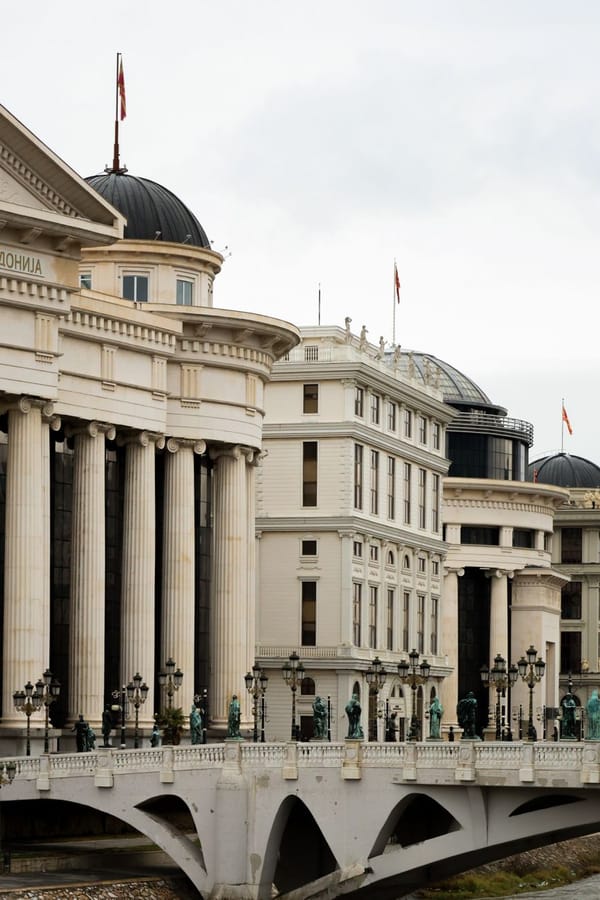
Politics
North Macedonia's EU Path: Security, Economy, and Institutional Readiness
In a significant diplomatic engagement held in Skopje, European leadership reaffirmed its commitment to North Macedonia’s accession to the European Union, highlighting the nation’s pivotal role in regional security and economic stability. The dialogue underscored North Macedonia…
Read More...
Politics
Germany's Subsidy Crisis: Why Taxpayers Are Demanding Fiscal Reform Now
In October 2026, the Bund der Steuerzahler released its annual "Black Book," a detailed report exposing state-funded waste and inefficient subsidy programs across Germany. This publication has sparked a significant conversation about fiscal responsibility, revealing how public f…
Read More...