
See Elon Musk's $55 Billion Terafab Texas: The AI Megaproject Shaping Your Autonomous Future
We compile, generate and translate using Artificial Intelligence from the below given source. Macro Micro News is responsible for its editorial publication.

Grimes County, Texas, MMN Correspondent: Elon Musk just released a video that gives the world its clearest view yet of Terafab Texas. This is the massive joint project from Tesla, SpaceX, and xAI, and the render shows a campus that stretches 2.5 miles across Grimes County. It also gives us a look at two Tesla products people have been waiting to see: the Robovan and the Optimus robot.
What makes this project stand out? Start with the size. The video shows Optimus units walking around the grounds while a Robovan moves along an elevated roadway that runs straight through the building. A Tesla Semi and a Cybercab appear in the same frame, which makes the vision easy to picture: integrated, autonomous movement at every scale.
Musk posted the video with a strong promise. 'Terafab Texas will be the largest and most valuable building on Earth by far. And it will be stunningly beautiful.' That is a tall order. The render backs it up with a design that feels like a futuristic campus.
The Robovan has been a quiet mystery since its reveal at the 'We, Robot' event in October 2024. It is a boxy, driverless vehicle built for up to 20 passengers or freight, and Musk has said it could operate for under a dollar per mile. A production date has yet to be announced, so this render is one of the clearest signs that the vehicle remains a core part of Tesla's plans.
Optimus is further along. Tesla has already started converting Fremont's old Model S and Model X assembly line into a Gen 3 Optimus production line. Another and larger plant is going up at Giga Texas. That site is expected to reach volume production in summer 2027 and eventually support 10 million units per year. Musk has called Optimus the company's biggest product of any kind, with a target price between $20,000 and $30,000.
The architecture at Terafab has its own visual identity. The facade features sharp angles, glowing horizontal bands, and a multi-level interior that is visible from outside. An elevated road passes through the structure. There is a plaza with a reflecting pool, and angular spires rise behind the campus. The overall effect is part technology park, part sculpture garden.
The timing of the video matters. It came less than 24 hours after Terafab representative Riley Trennell told Grimes County residents that renderings would be released 'within days.' The project itself has been in motion since March, when Musk announced Terafab as a joint effort from Tesla, SpaceX, and xAI. The campus is designed to produce over a terawatt of AI compute every year. To put that in perspective, the entire global chip industry currently produces roughly 20 gigawatts. Intel became a manufacturing partner in April, adding weight to the plan.
Terafab has moved from renderings to real site work. SpaceX has sent Grimes County its first $10 million payment under the tax abatement agreement, and the JETI tax break agreements with local school districts are active. Civil work and foundation preparation are starting almost immediately, with construction expected within months. Reuters has tied $16.8 billion to this phase of construction. It is one of the first hard capital expenditure numbers attached to the project.
SpaceX has also answered questions about the local environment. Terafab is set to leave local electric rates unchanged, avoid depleting water supplies, and keep the Navasota River from being drawn down. The company owns the Navasota River pumping station and plans to use it to move stormwater into Gibbons Creek Reservoir. Natural gas plants will power the facility, so it will operate independently of the ERCOT grid. Grimes County commissioners even approved an addendum that lets county employees use ten approved AI chatbots for work, including Grok.
The response on X was quick and colorful. 'God Bless Texas! Everything is bigger and better in Texas!' one person wrote. Another was more patient: 'Terafab in a decade…..' One thing is clear from the numbers: the video crossed 5.5 million views less than a day after it went up. Love it or question it, people are watching.
Meanwhile, SpaceX has moved a major Starship milestone forward. Musk says the heat shield challenge, one of the most demanding technical hurdles in aerospace, is now effectively solved. All indications from data and visual inspection, in his words, point to a solution. The team will keep making improvements, and he sees no technical obstacles to achieving rapid reusability at this point.
The heat shield is made of about 18,000 hexagonal ceramic tiles that cover the windward side of Starship's upper stage. During reentry, atmospheric friction creates temperatures in the thousands of degrees Celsius and plasma flows that could melt unprotected metal. The tiles absorb, radiate, and insulate against that energy. The system has gone through constant refinement. Early flights experienced tile losses from vibration and aerodynamic pressure, and gaps allowed plasma to reach the structure. That same challenge was part of NASA's Space Shuttle program.
SpaceX kept iterating. Engineers standardized tile shapes, improved attachment methods, added secondary ablative layers, and tested gap sealing with a material called 'crunch wrap' felt. Each test flight produced new data, and the team used it to make the next version stronger.
Flight 13 on July 24 gave the clearest answer yet. Ship 40 flew a trajectory designed to stress the heat shield beyond typical operational loads. It deployed 20 operational Starlink V3 satellites, a first for Starship, performed an in-space Raptor engine relight, and completed a controlled reentry. Cameras on six satellites plus onboard sensors captured layers of imagery during the descent. The ship then made its softest splashdown to date in the Indian Ocean. It stayed intact and floated, which was a first for the program. Post-flight checks showed most tiles still in place, with only minor damage and limited plasma streaking at the seams. Musk said the mission delivered 'all the heat shield data we needed and then some.'
Terafab, the Robovan, Optimus, and Starship all point in the same direction. AI compute, electric transport, and humanoid robotics are moving out of concept stages and into physical construction. Musk's ventures are planning for the future and building the infrastructure for it right now. The latest videos and flight data show that momentum is real. What remains to be seen is how fast these massive projects can go from render to reality. If the pace of recent announcements is any guide, the next few years will be interesting to watch.
Related in Space Tech
Space Tech
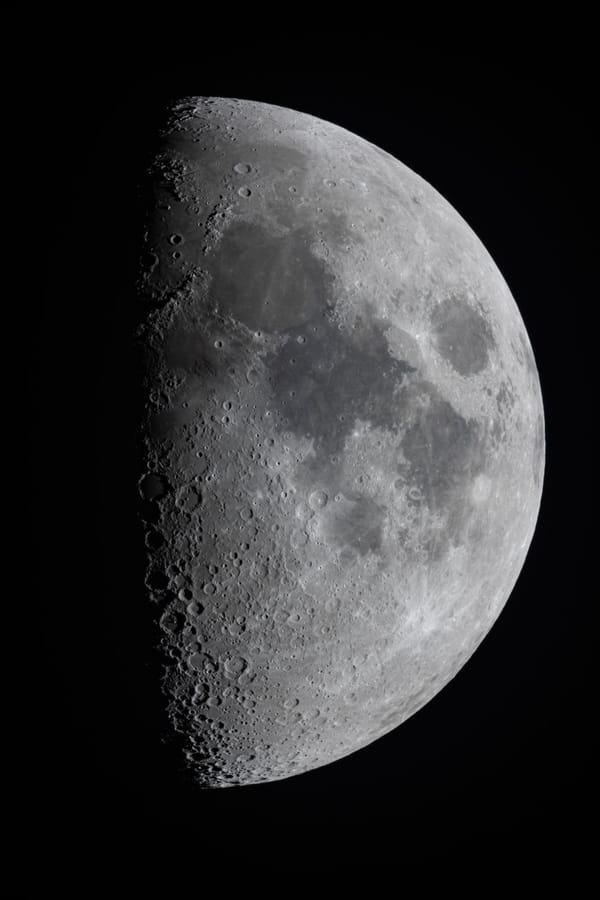
Lunar Farside Revealed: 15,000 Images Uncover Ancient Moon Terrain
For centuries we have looked up and seen only one face of our nearest celestial neighbor. Tidal locking keeps the far side turned away from Earth, creating a permanent blind spot in human history. Modern orbital technology has now lifted that veil. A detailed mosaic captured by…
Read More...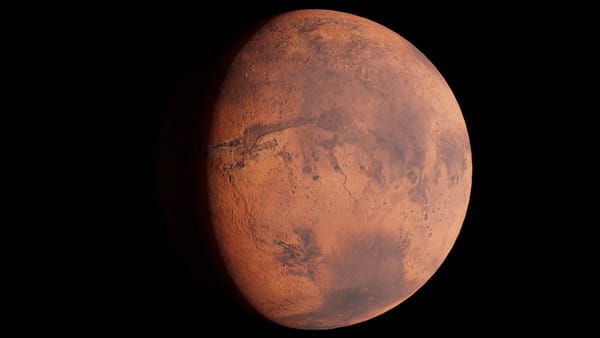
Space Tech
Stickney Crater: How a Massive Impact Nearly Destroyed Mars' Moon Phobos
Phobos, the innermost moon of Mars, carries a scar that tells a story of cosmic violence. Stickney Crater dominates its surface, a colossal basin named after Angeline Stickney Hall, wife of astronomer Asaph Hall. Hall discovered both Phobos and Deimos in 1877, linking human hist…
Read More...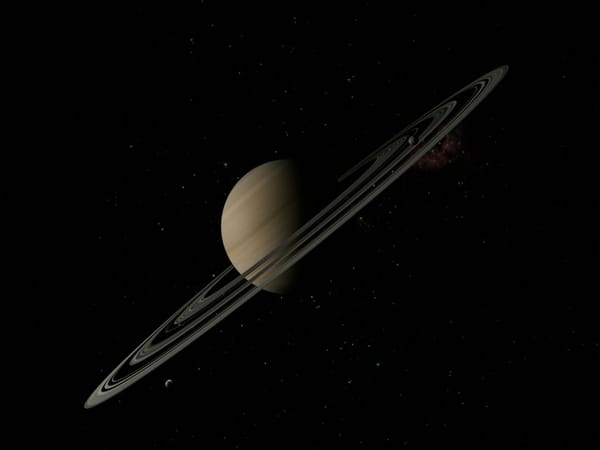
Space Tech
Saturn's Cosmic Clarity: How One Night Revealed the Ringed Planet's Secrets
On October 8, 2026, the Astronomy Picture of the Day featured a breathtaking composite image titled "The Saturn System Smörgåsbord." This visual feast offers an unprecedented view of the ringed planet and its diverse moons. Astrophotographer Tom Williams captured this exquisite…
Read More...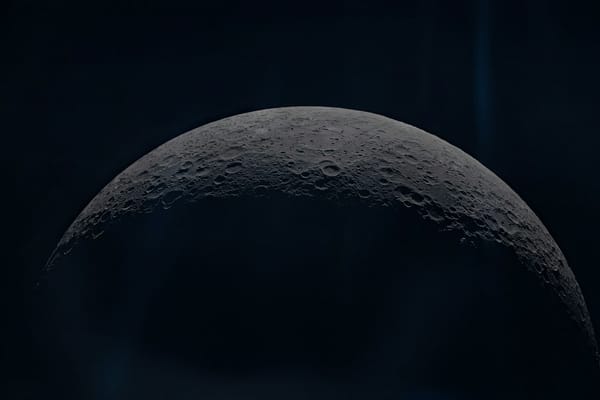
Space Tech
Artemis II Crew Captures Lunar Impact Flashes: What the Moon Revealed in April 2026
NASA has shared a remarkable dataset from the Artemis II mission that offers fresh perspectives on our lunar neighbor. The journey occurred between April 1 and April 10, 2026, marking the first crewed trip to the Moon's vicinity since the Apollo days. Astronauts Reid Wiseman, Vi…
Read More...
Space Tech
Pa 30: The 845-Year-Old Supernova Mystery That Defies Standard Models
The night sky holds countless stories written in light and dust. Among these celestial narratives, supernova remnants stand as testaments to the violent yet creative end of stellar lives. These expanding shells do more than mark a star's death. They scatter heavy elements across…
Read More...
Space Tech
Earth's Full Aurora Ring Revealed: SMILE Mission Captures Complete View
Scientists have achieved a remarkable first by capturing the entire auroral oval in one continuous shot. The Solar Wind Magnetosphere Ionosphere Link Explorer mission shared this image on October 6, 2026. This perspective offers a fresh look at how our planet interacts with the…
Read More...
Space Tech
Sombrero Galaxy M104: New Deep-Exposure Image Reveals Tidal Streams and Violent History
The Sombrero Galaxy, known scientifically as Messier 104 or M104, has always drawn the eye with its striking resemblance to a wide-brimmed Mexican hat. This massive spiral galaxy features a bright central bulge encircled by a distinctive dark band of interstellar dust. While ast…
Read More...
Space Tech
New Jersey Sky: Witnessing Supernumerary Rainbows and the Wave Nature of Light
On October 4, 2026, the skies above New Jersey presented a rare spectacle that captivated both amateur photographers and meteorology enthusiasts. Following the passage of storm remnants over the Jersey Shore, a standard rainbow appeared in one direction. However, the phenomenon…
Read More...
Space Tech
Mars Rover's New Selfie Reveals Vera Rubin Ridge Secrets
NASA’s Curiosity rover has once again provided humanity with a breathtaking glimpse into the red planet. The vehicle captured a stunning panoramic selfie at the south rim of Vera Rubin Ridge. This image served as the Astronomy Picture of the Day for October 3, 2026. It marks a s…
Read More...
Space Tech
313 Nebulas Captured: The Complete Sharpless Catalog Revealed in Eastern China
On October 2, 2026, NASA’s Astronomy Picture of the Day highlighted a monumental achievement in astrophotography. The complete Sharpless Catalog has been unveiled, showcasing 313 distinct nebulae. This comprehensive collection offers an unprecedented opportunity to explore the d…
Read More...