
Skywatchers Witness Rare Anticrepuscular Rainbow Fan on October 20, 2026
We compile, generate and translate using Artificial Intelligence from the below given source. Macro Micro News is responsible for its editorial publication.

United States, Source:
On October 20, 2026, skywatchers encountered a celestial optical illusion that challenged immediate intuition. An anticrepuscular rainbow fan appeared during sunset, presenting a vivid arc of colors in the part of the sky directly opposite the setting sun. While rainbows are common sights following rainfall, the specific geometry and location of this display marked it as a rare and scientifically fascinating event.
To understand the wonder of this image, one must first grasp the basic mechanics of a standard rainbow. A typical rainbow forms when sunlight enters water droplets, refracts, reflects off the back of the droplet, and refracts again as it exits. This process directs light back toward the observer, meaning the sun must be behind the viewer for a primary rainbow to appear. Consequently, the center of the rainbow’s arc is always located in the antisolar point, the direction directly opposite the sun.
The phenomenon featured in this NASA Astronomy Picture of the Day (APOD) was different. The photographer observed bright, sunlit clouds near the horizon where the sun had just dipped below the hills. Yet, the colorful fan appeared on the opposite side of the sky, facing away from the visible sunset. This counter-intuitive placement is the hallmark of an anticrepuscular ray or bow system. These features arise because sunlight passes through raindrops across the entire hemisphere of the sky. The light rays cross paths and converge at the antisolar point, creating parallel bands of brightness or color that appear to radiate from a point opposite the sun.
The term "anticrepuscular" derives from the Latin words for "against" and "twilight." While crepuscular rays are beams of sunlight that appear to diverge from the sun’s position during twilight, anticrepuscular rays converge toward the point opposite the sun. In this specific instance, the convergence created a fan-like structure of spectral colors, likely enhanced by the low angle of the sun and the presence of suspended moisture in the atmosphere. The effect is subtle compared to a full circular rainbow but equally mesmerizing due to its deceptive geometry.
This image serves as a reminder of the complex interplay between light, water, and perspective in our atmosphere. It highlights how everyday weather conditions can produce extraordinary visual effects when viewed from the right vantage point. For astronomers and meteorologists alike, such phenomena provide valuable data on atmospheric clarity, droplet distribution, and light scattering properties. The photograph, taken with a mobile device, underscores how accessible these wonders are to anyone willing to look up and observe the sky with curiosity.
As the sun sets and rises daily, the antisolar point shifts, constantly reshaping the canvas upon which these optical dramas play out. Understanding the science behind the anticrepuscular rainbow not only enhances our appreciation of its beauty but also deepens our connection to the physical laws governing our environment. Whether captured by professional telescopes or smartphone cameras, these images invite us to pause and marvel at the intricate design of the natural world.
Related in Space Tech

Space Tech
Pegasus Galaxy Collision: What Happens When NGC 7771 Merges?
The cosmos operates on a scale that defies human intuition. Galaxies are not static objects floating in void but dynamic entities engaged in a slow-motion dance spanning billions of years. The NGC 7771 group offers a striking glimpse into this celestial choreography. Located app…
Read More...
Space Tech
Lynds 1251: How Dark Dust Clouds Ignite New Stars in the Cosmos
The cosmos often feels like a silent void, but that darkness is actually a canvas waiting for creation. On November 23, 2026, the Astronomy Picture of the Day featured Lynds 1251, a dark nebula affectionately called the Rotten Fish Nebula. This image does more than show empty sp…
Read More...
Space Tech
Jupiter's Color Code: How Juno Deciphers the Gas Giant's Atmospheric Palette
The gas giant Jupiter has long captivated astronomers with its dynamic atmosphere, a swirling canvas of storms and bands that have been observed for centuries. However, the precise chemical mechanisms behind the planet's vibrant hues remain one of astrophysics' enduring enigmas.…
Read More...
Space Tech
Voyager 2 at Neptune: The Last Look from the Edge of Our Solar System
On November 21, 2026, NASA’s Astronomy Picture of the Day showcases a breathtaking composite image of Neptune. This visual record comes from Voyager 2, the only spacecraft to ever visit this ice giant during its historic flyby. The image stands as a powerful testament to human i…
Read More...
Space Tech
Voyager 1 Enters Interstellar Space: The Historic Milestone of November 2026
On November 20, 2026, the astronomical community marked a profound milestone as NASA’s Astronomy Picture of the Day highlighted the historic journey of Voyager 1. The featured image, captured by the Emirates Astronomical Observatory, depicts a time-exposure photograph where Mors…
Read More...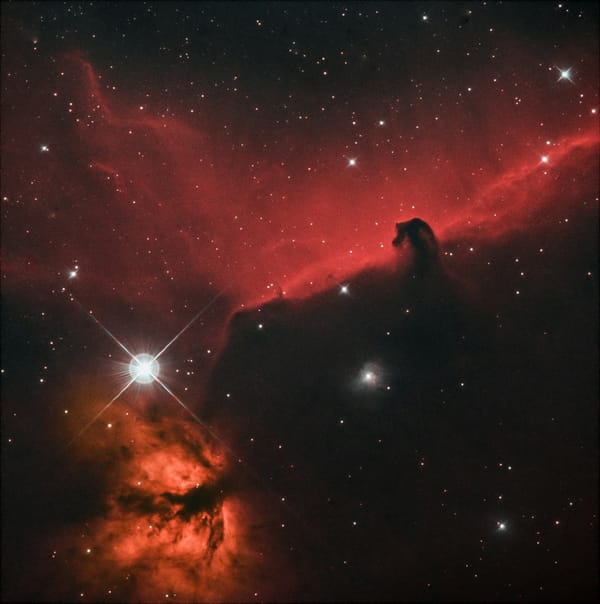
Space Tech
Orion's Cosmic Canvas: Horsehead and Flame Nebulas Revealed in Stunning Detail
The night sky often serves as a canvas for some of the most breathtaking natural artistry in the universe. Few images capture this essence quite like the combined view of the Horsehead and Flame Nebulas. This celestial scene offers a profound glimpse into the dynamic processes o…
Read More...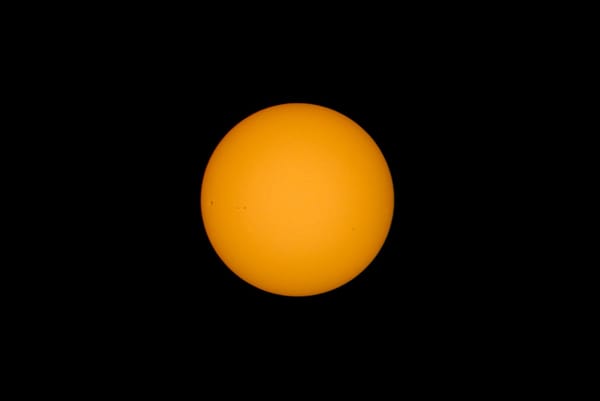
Space Tech
M-Class Solar Flare: How NASA's New Image Reveals the Sun's Extreme Heat Mystery
On November 18, 2026, NASA’s Astronomy Picture of the Day shared a striking image captured on May 14, 2025. This visual record highlights an M-class solar flare and invites you to look closer at the dynamic processes shaping our star. The photograph displays bright loops of plas…
Read More...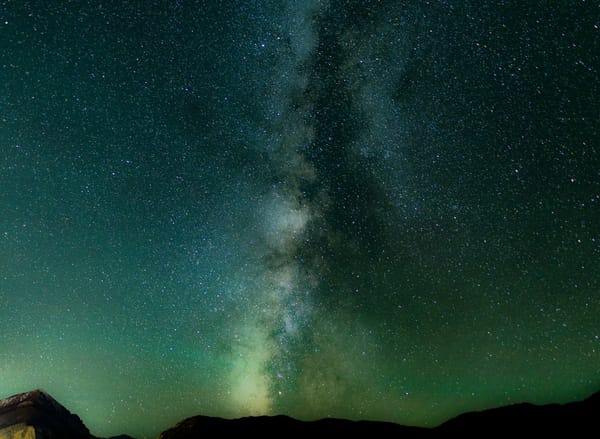
Space Tech
Milky Way Meets Aurora: The Rare Sky Event of November 17, 2026
On November 17, 2026, the night sky presented a breathtaking spectacle that blurred the lines between the distant cosmos and our immediate atmospheric environment. Captured in northern regions, an image revealed two majestic arches dominating the heavens, creating a visual illus…
Read More...
Space Tech
Webb Telescope Reveals NGC 7129: How Violent Jets Sculpt New Stars
The James Webb Space Telescope has delivered a stunning new view of NGC 7129, a star-forming region located about 3,000 light-years away in the constellation Cepheus. This celestial nursery offers astronomers a rare chance to study how stars are born within chaotic and turbulent…
Read More...
Space Tech
NASA Chandra Data Reveals Why Massive Star AT 2016blu Keeps Exploding
Astronomers have used NASA’s Chandra X-ray Observatory to uncover the reasons behind the erratic behavior of a massive star named AT 2016blu. This discovery offers a clearer picture of how unstable stars evolve and release energy in violent bursts. The star resides in the spiral…
Read More...