
Venus in October 2026: The Rare Celestial Horns Event You Can Witness
We compile, generate and translate using Artificial Intelligence from the below given source. Macro Micro News is responsible for its editorial publication.
United States, Source:
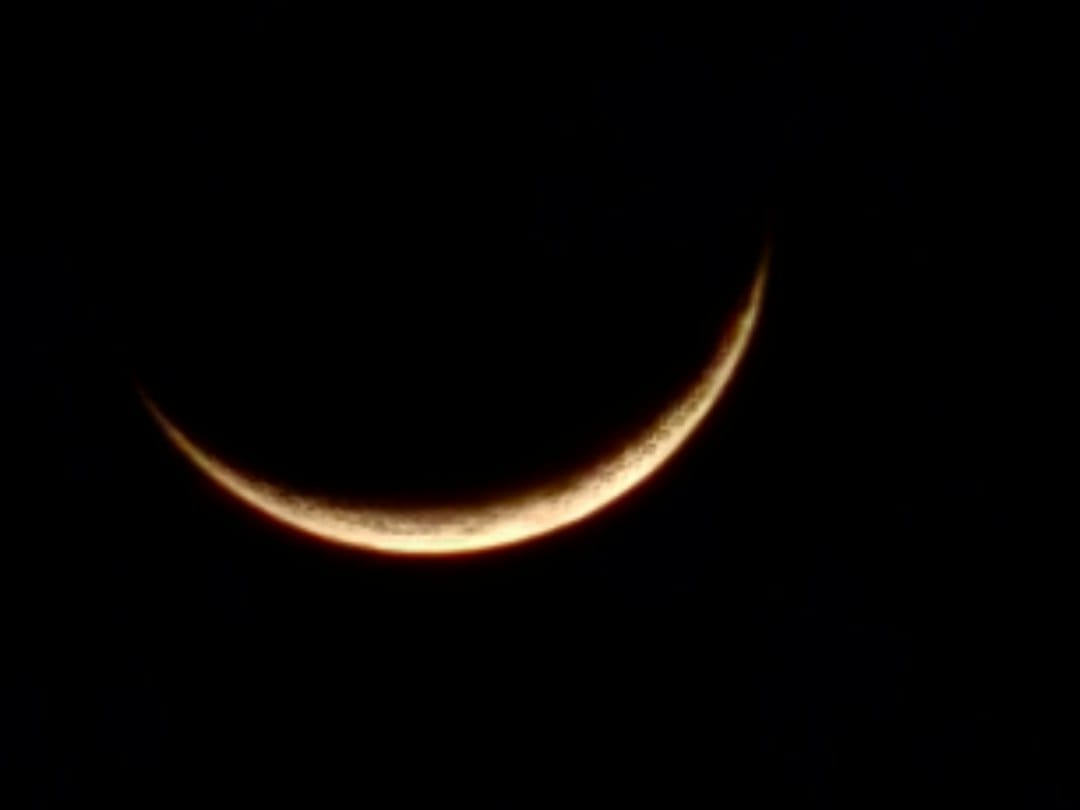
On October 29, 2026, the night sky offered a stunning visual treat for both professional astronomers and casual observers. NASA’s Astronomy Picture of the Day featured a captivating image known as "The Horns of Venus." This rare phenomenon provides a breathtaking glimpse of our planetary neighbor during a specific orbital phase. It serves as an excellent opportunity to explore the optical physics that create such striking celestial sights.
Venus is often called Earth's sister planet because of their similar size and composition. It shines as the brightest natural object in the night sky after the Moon. However, its appearance shifts dramatically based on its position relative to Earth and the Sun. During certain periods, Venus appears as a thin crescent. Sunlight reflects off its cloud-covered surface from behind, illuminating only a sliver of the planet. When viewed almost directly between the Sun and Earth, this crescent can extend beyond 180 degrees of illumination. This creates a glowing arc with distinct tips referred to as the horns. This alignment occurs roughly once every eight years, mirroring the monthly new moon cycle but on a much grander scale.
Unlike the new moon which remains dark because it faces away from the Sun, backlit Venus creates a luminous effect that extends into the darkness. The horns mark the points where the crescent shape tapers to a fine point. This feature has fascinated astronomers for centuries. While small telescopes or binoculars make the crescent easily visible during twilight hours, exceptional atmospheric conditions may allow even unaided eyes to catch a glimpse of this ethereal glow. Visibility depends heavily on the observer's location, weather conditions, and light pollution levels.
Ancient astronomers were among the first to study Venus's brightness changes. They noted correlations with its orbital phases long before modern technology existed. Civilizations such as the Babylonians and Mayans kept detailed astronomical records. They used observations of Venus's cycles for calendrical and religious purposes. The Babylonians recognized Venus as a significant celestial body. They tracked its appearances over decades to predict its movements accurately. These early studies laid the groundwork for our modern understanding of planetary motion and optics.
Today, technology allows us to capture these moments with unprecedented clarity. High-resolution images reveal not just the horns but also subtle details in Venus's atmosphere. We can see cloud patterns and atmospheric scattering effects that add depth to our understanding. Such observations contribute to broader scientific efforts to understand planetary atmospheres and climate dynamics. This knowledge applies to Venus and other worlds alike. As we continue to explore the cosmos, events like the Horns of Venus remind us of the beauty and complexity inherent in our solar system. They invite everyone to look up and marvel at the universe above.
Related in Space Tech
Space Tech
Pegasus Galaxy Collision: What Happens When NGC 7771 Merges?
The cosmos operates on a scale that defies human intuition. Galaxies are not static objects floating in void but dynamic entities engaged in a slow-motion dance spanning billions of years. The NGC 7771 group offers a striking glimpse into this celestial choreography. Located app…
Read More...
Space Tech
Lynds 1251: How Dark Dust Clouds Ignite New Stars in the Cosmos
The cosmos often feels like a silent void, but that darkness is actually a canvas waiting for creation. On November 23, 2026, the Astronomy Picture of the Day featured Lynds 1251, a dark nebula affectionately called the Rotten Fish Nebula. This image does more than show empty sp…
Read More...
Space Tech
Jupiter's Color Code: How Juno Deciphers the Gas Giant's Atmospheric Palette
The gas giant Jupiter has long captivated astronomers with its dynamic atmosphere, a swirling canvas of storms and bands that have been observed for centuries. However, the precise chemical mechanisms behind the planet's vibrant hues remain one of astrophysics' enduring enigmas.…
Read More...
Space Tech
Voyager 2 at Neptune: The Last Look from the Edge of Our Solar System
On November 21, 2026, NASA’s Astronomy Picture of the Day showcases a breathtaking composite image of Neptune. This visual record comes from Voyager 2, the only spacecraft to ever visit this ice giant during its historic flyby. The image stands as a powerful testament to human i…
Read More...
Space Tech
Voyager 1 Enters Interstellar Space: The Historic Milestone of November 2026
On November 20, 2026, the astronomical community marked a profound milestone as NASA’s Astronomy Picture of the Day highlighted the historic journey of Voyager 1. The featured image, captured by the Emirates Astronomical Observatory, depicts a time-exposure photograph where Mors…
Read More...
Space Tech
Orion's Cosmic Canvas: Horsehead and Flame Nebulas Revealed in Stunning Detail
The night sky often serves as a canvas for some of the most breathtaking natural artistry in the universe. Few images capture this essence quite like the combined view of the Horsehead and Flame Nebulas. This celestial scene offers a profound glimpse into the dynamic processes o…
Read More...
Space Tech
M-Class Solar Flare: How NASA's New Image Reveals the Sun's Extreme Heat Mystery
On November 18, 2026, NASA’s Astronomy Picture of the Day shared a striking image captured on May 14, 2025. This visual record highlights an M-class solar flare and invites you to look closer at the dynamic processes shaping our star. The photograph displays bright loops of plas…
Read More...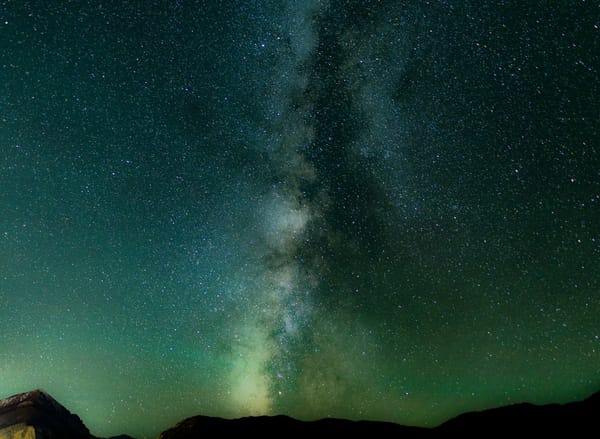
Space Tech
Milky Way Meets Aurora: The Rare Sky Event of November 17, 2026
On November 17, 2026, the night sky presented a breathtaking spectacle that blurred the lines between the distant cosmos and our immediate atmospheric environment. Captured in northern regions, an image revealed two majestic arches dominating the heavens, creating a visual illus…
Read More...
Space Tech
Webb Telescope Reveals NGC 7129: How Violent Jets Sculpt New Stars
The James Webb Space Telescope has delivered a stunning new view of NGC 7129, a star-forming region located about 3,000 light-years away in the constellation Cepheus. This celestial nursery offers astronomers a rare chance to study how stars are born within chaotic and turbulent…
Read More...
Space Tech
NASA Chandra Data Reveals Why Massive Star AT 2016blu Keeps Exploding
Astronomers have used NASA’s Chandra X-ray Observatory to uncover the reasons behind the erratic behavior of a massive star named AT 2016blu. This discovery offers a clearer picture of how unstable stars evolve and release energy in violent bursts. The star resides in the spiral…
Read More...