
Watch NASA’s Roman Space Telescope Launch Live Aug. 30: The Infrared Mission Set to Map Billions of Galaxies
We compile, generate and translate using Artificial Intelligence from the below given source. Macro Micro News is responsible for its editorial publication.
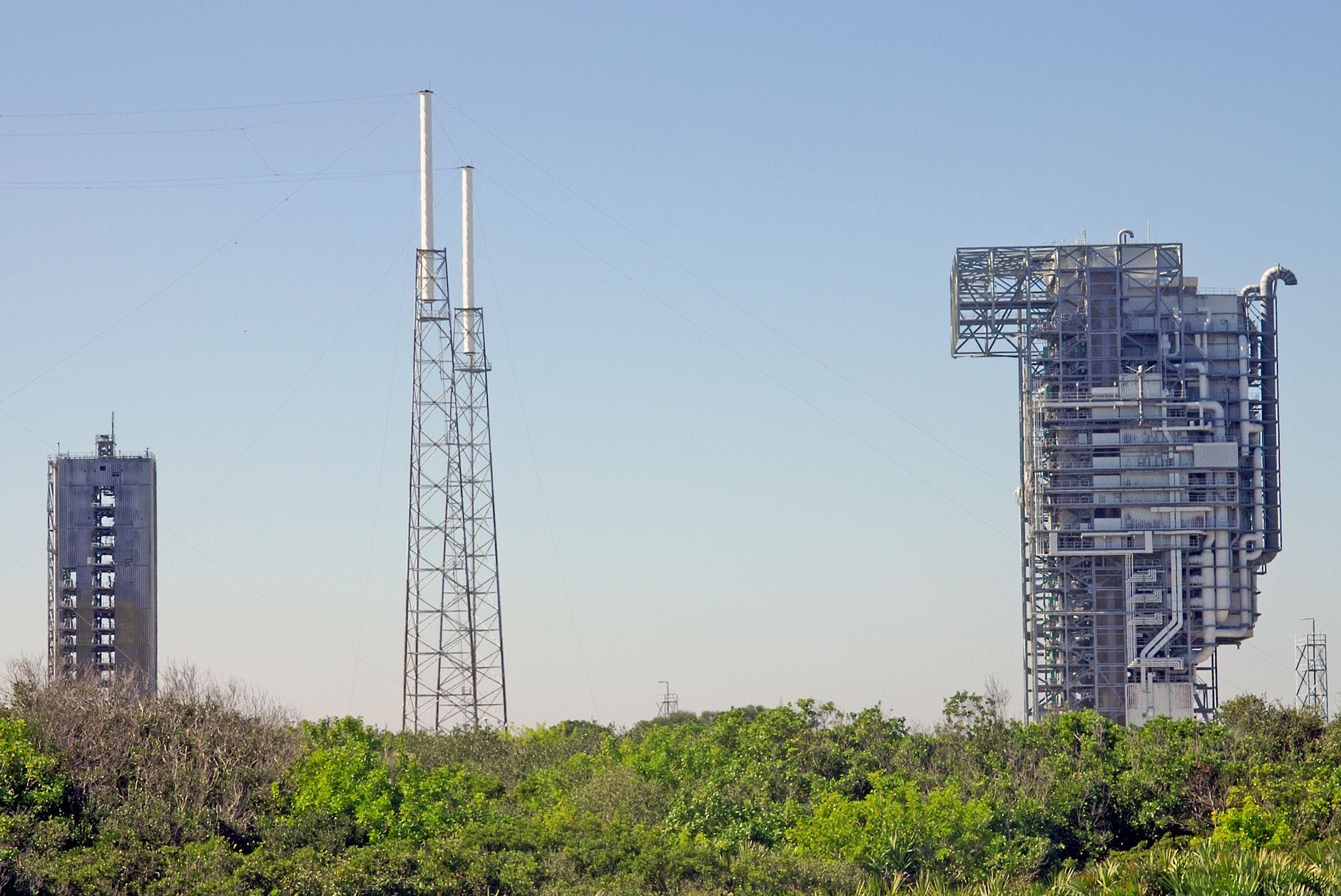
NASA Kennedy Space Center, Florida, Source :. The countdown to a new era of infrared astronomy is officially underway. NASA’s Nancy Grace Roman Space Telescope is getting ready to lift off from Florida, and the agency has laid out all the ways you can follow along. Launch is targeted for no earlier than 7:26 a.m. EDT on Sunday, Aug. 30, 2026, from Launch Complex 39A at NASA’s Kennedy Space Center. A SpaceX Falcon Heavy rocket will carry the observatory into orbit, and live coverage begins at 6:20 a.m. EDT.
Roman is named after NASA’s first chief astronomer, and its mission is one of the most ambitious in modern space science. The telescope combines sharp infrared vision with a field of view at least 100 times larger than Hubble’s. That means it can capture vast sections of the sky quickly while still zooming in on faint cosmic objects. The result is an observatory built for discovery. What exactly is dark energy? How are galaxies shaped over time? Where do exoplanets form? Roman is designed to search for answers.
The mission’s science goals are broad. It will map billions of galaxies, probe the nature of dark matter, discover and characterize exoplanets, and study black holes. It will also look at objects ranging from our solar system to the edge of the observable universe. In other words, Roman is a cosmic explorer with a very detailed travel itinerary.
Two powerful instruments make this possible. The Wide Field Instrument is designed for large sky surveys, capturing enormous cosmic scenes in one shot. The Coronagraph Instrument blocks light from bright stars, which lets scientists directly image planets orbiting those stars. This opens a window onto exoplanet atmospheres and brings us closer to understanding what conditions might support life elsewhere. Roman will offer this kind of detail for a wide range of worlds, and that could change the search for life beyond Earth.
After separating from the Falcon Heavy, Roman will travel to the second Sun-Earth Lagrange point, known as L2, roughly one million miles from Earth. From that stable perch, it will observe the universe in infrared light. The mission has a five-year primary lifetime and a goal of operating for ten years. And the science data it collects will be processed and made publicly available, so the discoveries will be shared with everyone.
The launch experience actually starts a day early. On Saturday, Aug. 29, NASA kicks off with a mission science briefing at 9 a.m. EDT, followed by a prelaunch news conference at 10:30 a.m. EDT. NASA Administrator Jared Isaacman is expected to fly by the rocket and telescope at the pad at 11:45 a.m., and in-person media interviews start at noon. Then Sunday, Aug. 30, is the main event. Launch coverage begins at 6:20 a.m. EDT, liftoff happens at 7:26 a.m., and a postlaunch news conference is scheduled for 9:30 a.m. You can tune in to audio-only coverage on NASA’s broadcast circuits, or watch the livestream on NASA’s website. Blog updates, photos, and a virtual guest program make it easy to experience the launch from anywhere.
The Roman Space Telescope is managed by NASA’s Goddard Space Flight Center, with key involvement from NASA’s Jet Propulsion Laboratory, Caltech/IPAC, and the Space Telescope Science Institute. The industrial team includes BAE Systems, L3Harris Technologies, and Teledyne Scientific & Imaging. International collaboration comes from ESA, JAXA, the French space agency CNES, and the Max Planck Institute for Astronomy in Germany. NASA’s Launch Services Program, based at Kennedy, manages the launch service. This mission really is a world effort.
With its unprecedented view of the infrared universe, Roman is expected to reshape our understanding of cosmic expansion, galaxy formation, exoplanetary systems, and dark matter. As launch day approaches, the excitement on Florida’s Space Coast continues to build. This time next year, we'll have a whole new collection of cosmic questions to explore. And it all starts with that morning launch from Launch Complex 39A. Be sure to mark your calendar.
Related in Space Tech
Space Tech
Lunar Farside Revealed: 15,000 Images Uncover Ancient Moon Terrain
For centuries we have looked up and seen only one face of our nearest celestial neighbor. Tidal locking keeps the far side turned away from Earth, creating a permanent blind spot in human history. Modern orbital technology has now lifted that veil. A detailed mosaic captured by…
Read More...
Space Tech
Stickney Crater: How a Massive Impact Nearly Destroyed Mars' Moon Phobos
Phobos, the innermost moon of Mars, carries a scar that tells a story of cosmic violence. Stickney Crater dominates its surface, a colossal basin named after Angeline Stickney Hall, wife of astronomer Asaph Hall. Hall discovered both Phobos and Deimos in 1877, linking human hist…
Read More...
Space Tech
Saturn's Cosmic Clarity: How One Night Revealed the Ringed Planet's Secrets
On October 8, 2026, the Astronomy Picture of the Day featured a breathtaking composite image titled "The Saturn System Smörgåsbord." This visual feast offers an unprecedented view of the ringed planet and its diverse moons. Astrophotographer Tom Williams captured this exquisite…
Read More...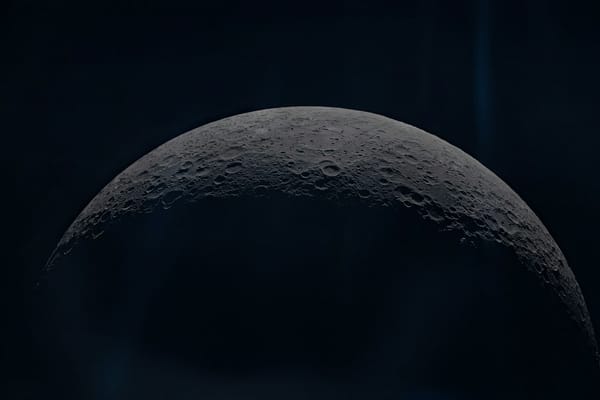
Space Tech
Artemis II Crew Captures Lunar Impact Flashes: What the Moon Revealed in April 2026
NASA has shared a remarkable dataset from the Artemis II mission that offers fresh perspectives on our lunar neighbor. The journey occurred between April 1 and April 10, 2026, marking the first crewed trip to the Moon's vicinity since the Apollo days. Astronauts Reid Wiseman, Vi…
Read More...
Space Tech
Pa 30: The 845-Year-Old Supernova Mystery That Defies Standard Models
The night sky holds countless stories written in light and dust. Among these celestial narratives, supernova remnants stand as testaments to the violent yet creative end of stellar lives. These expanding shells do more than mark a star's death. They scatter heavy elements across…
Read More...
Space Tech
Earth's Full Aurora Ring Revealed: SMILE Mission Captures Complete View
Scientists have achieved a remarkable first by capturing the entire auroral oval in one continuous shot. The Solar Wind Magnetosphere Ionosphere Link Explorer mission shared this image on October 6, 2026. This perspective offers a fresh look at how our planet interacts with the…
Read More...
Space Tech
Sombrero Galaxy M104: New Deep-Exposure Image Reveals Tidal Streams and Violent History
The Sombrero Galaxy, known scientifically as Messier 104 or M104, has always drawn the eye with its striking resemblance to a wide-brimmed Mexican hat. This massive spiral galaxy features a bright central bulge encircled by a distinctive dark band of interstellar dust. While ast…
Read More...
Space Tech
New Jersey Sky: Witnessing Supernumerary Rainbows and the Wave Nature of Light
On October 4, 2026, the skies above New Jersey presented a rare spectacle that captivated both amateur photographers and meteorology enthusiasts. Following the passage of storm remnants over the Jersey Shore, a standard rainbow appeared in one direction. However, the phenomenon…
Read More...
Space Tech
Mars Rover's New Selfie Reveals Vera Rubin Ridge Secrets
NASA’s Curiosity rover has once again provided humanity with a breathtaking glimpse into the red planet. The vehicle captured a stunning panoramic selfie at the south rim of Vera Rubin Ridge. This image served as the Astronomy Picture of the Day for October 3, 2026. It marks a s…
Read More...
Space Tech
313 Nebulas Captured: The Complete Sharpless Catalog Revealed in Eastern China
On October 2, 2026, NASA’s Astronomy Picture of the Day highlighted a monumental achievement in astrophotography. The complete Sharpless Catalog has been unveiled, showcasing 313 distinct nebulae. This comprehensive collection offers an unprecedented opportunity to explore the d…
Read More...