
What Aontú's Finian Toomey Newsletter Tells You About Political Advertising Transparency in Ireland
We compile, generate and translate using Artificial Intelligence from the below given source. Macro Micro News is responsible for its editorial publication.

Navan, Ireland, MMN Correspondent: Aontú has just published a transparency notice for the Finian Toomey Newsletter on its official website, and it is worth a close look. This is not a routine footnote in a party archive. It is a practical example of how Ireland is adapting to new European rules for political advertising, and it gives voters a clear line of sight into a political communication campaign.
The notice is tied to Finian Toomey, a member of Aontú, the party that came out of a split from Sinn Féin in 2019. Led by Peadar Tóibín, Aontú describes itself as socially conservative and economically progressive, with a strong focus on pro-life positions and critical views of EU fiscal policy. Toomey uses digital tools to stay in touch with supporters, and this newsletter is one of the ways he does that.
What stands out first is the level of detail. The sponsor and paying entity is Aontú, with a registered address at 8 Market Square, Navan, Co Meath, C15 E0KR, Ireland. The contact email is clearly listed as info@aontu.ie. The intended period runs from 17 August 2026 to 31 December 2026, which suggests a deliberate, long-term campaign rather than a single message. The total payment value is listed as TBC, or to be confirmed, which is common at this stage because final costs have not been locked in. Importantly, the funding source is given as Party General Funds. That means the newsletter is paid from the party's central resources, not from outside donors or interest groups. That little detail answers a question voters often have: who is behind this message?
Then comes the part that raises eyebrows. Under online targeting, the notice says None. No personal data is being used to target the newsletter. In a period when digital political ads often rely on micro-targeting, that is a deliberate choice. It announces a broadcast-style approach, closer to handing out a pamphlet on the street than sending a tailored data profile to a voter. It also sidesteps the controversy that has surrounded data-driven political ads in many countries. Whether this is a strategic decision or a reflection of smaller party infrastructure, it sets a new baseline. Voters may start expecting other parties to explain their targeting choices just as clearly.
The notice also mentions the European Repository for Online Political Advertisements. This public archive is part of the EU Regulation on the Transparency and Targeting of Political Advertising, which applies fully in 2025. The idea is that every political ad gets stored for at least a year, allowing journalists, researchers, and voters to examine them. The reference is enough to show that the legal framework is operational and being acknowledged.
Another useful feature is the reporting mechanism. The notice invites anyone with concerns about non-compliant ads to email info@aontu.ie. That turns transparency from a passive document into an active conversation. It also confirms that no previous version of this ad was suspended or discontinued due to non-compliance. For a party, that is a clean record worth noting.
What does this mean for the wider picture in Ireland? The country has a strong democratic tradition, with multiple parties and active voter participation. Like many places, it has seen debates about online disinformation and external interference. The new EU regulation is a direct answer to those concerns, and Aontú's notice shows how the rules look in practice. Some may worry that transparency documents become just another checkbox. For people who want to know who is paying for a political message, when it runs, and whether it uses their data, this notice is a useful model.
For voters, the value is simple. When a party tells you the funding source, the time period, and the targeting method, your decision at the ballot box becomes more informed. It also places a quiet pressure on every other party. Once one group publishes this level of detail, other parties can expect similar questions. That is how transparency grows.
There are still open questions. The TBC on the payment value means the full financial picture will only appear later. The lack of a direct repository link may need to be filled in as the ad runs. Those are details, not contradictions. The notice is a solid start, and it appears to be written in good faith.
As the 2026 election period approaches, political advertising in Ireland will be watched closely. People will pay attention to the words in a leaflet or on a screen, and also to the sponsorship, the funding, and the targeting behind it. Aontú has chosen to put that information in the open. Whether other parties follow remains to be seen. The template is now there. The Finian Toomey Newsletter transparency notice is a small document with a useful signal: political communication in Ireland is moving toward a more open, answerable standard.
Related in Politics
Politics
Europe's New Aid Strategy: How Team Europe Is Protecting Workers and Fixing Supply Chains in 240 Million Crisis Zones
European Commissioner Lahbib Zouarhi recently took the stage at the Foreign Affairs Council to unveil a bold new vision for humanitarian aid. The message was clear. Europe must step up as "Team Europe" to tackle the growing number of global crises. With nearly 240 million people…
Read More...
Politics
Germany's Growth Mirage: Weidel Exposes the Debt Trap Behind Official Projections
The German federal government recently unveiled its autumn economic projections for October 2026, highlighting a projected growth rate of 1.3 percent for the current year. This optimistic forecast suggests a notable upswing in national economic activity. However, Alice Weidel, c…
Read More...
Politics
EU-Mexico Trade Alliance 2026: How This Partnership Is Reshaping Global Supply Chains
The European Union and Mexico have always been strong partners in multilateral cooperation. By September 2026 their relationship has become a key test for global economic resilience. Trade tensions are rising in many parts of the world. The EU-Mexico partnership offers stability…
Read More...
Politics
Ireland's EU Presidency: How Humanitarian Aid and Preparedness Build a Safer Future
As Ireland takes the helm of the Council of the European Union, Commissioner Lahbib highlights a pivotal moment for global engagement. Europe now faces a dual mandate that requires both moral leadership through humanitarian aid and strengthened internal resilience against a comp…
Read More...
Politics
Saxony-Anhalt Breaks Tradition: AfD's Tobias Rausch Takes Landtag Presidency
German politics witnessed a defining moment on October 6, 2026, when the newly constituted state parliament of Saxony-Anhalt elected Tobias Rausch as its Landtag President. This event marks the first time in the history of the Federal Republic that a member of the Alternative fo…
Read More...
Politics
Von der Leyen's Balkan Strategy: Why EU Expansion is a Mutual Transformation
Ursula von der Leyen has made it clear that the European Union’s path forward involves more than just opening borders. Her recent visits to the Western Balkans highlight a strategic shift where enlargement is treated as a mutual transformation rather than a one-sided gift from B…
Read More...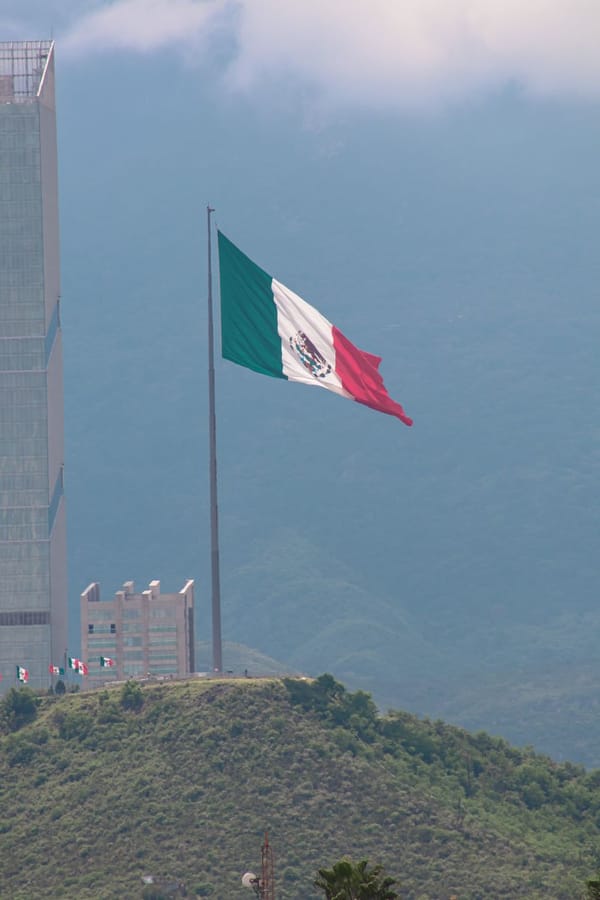
Politics
EU-Mexico Trade Shift 2026: What Nearshoring and Green Tech Mean for Your Business
The relationship between the European Union and Mexico is undergoing a significant transformation as we navigate through 2026. This partnership has evolved from traditional trade agreements into a robust framework focused on sustainable development digital innovation and diploma…
Read More...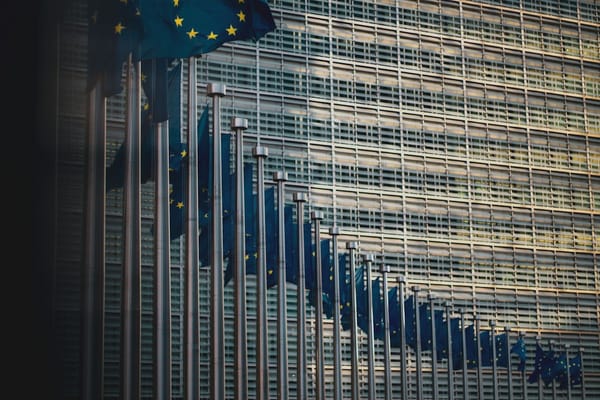
Politics
Germany's 52% State Share: What This Record Means for Your Wallet and Economy
In early October 2026, Germany reached a notable economic milestone. The federal government projected a state share of 52 percent for the current year. This figure marks a new all-time high. It signals a substantial shift in how public expenditure relates to national economic ou…
Read More...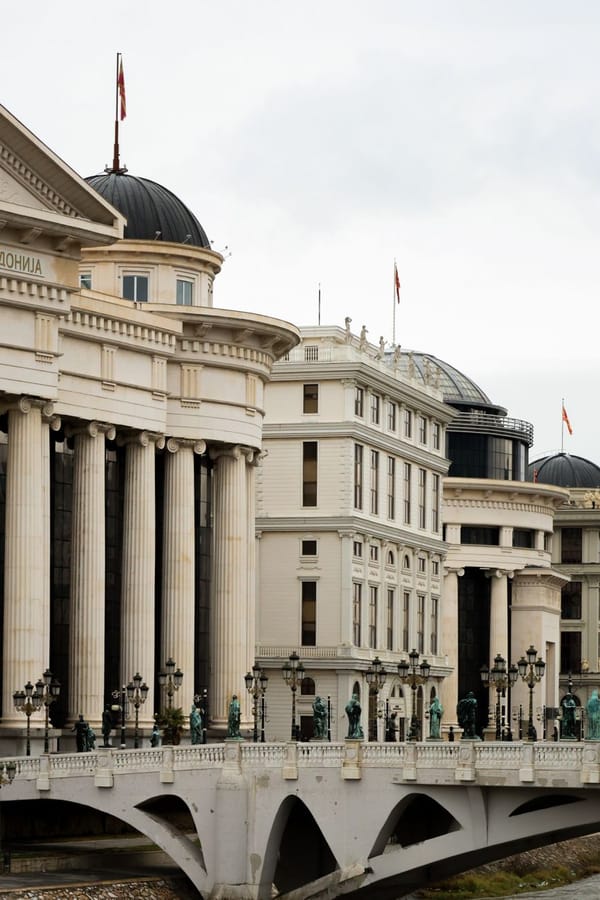
Politics
North Macedonia's EU Path: Security, Economy, and Institutional Readiness
In a significant diplomatic engagement held in Skopje, European leadership reaffirmed its commitment to North Macedonia’s accession to the European Union, highlighting the nation’s pivotal role in regional security and economic stability. The dialogue underscored North Macedonia…
Read More...
Politics
Germany's Subsidy Crisis: Why Taxpayers Are Demanding Fiscal Reform Now
In October 2026, the Bund der Steuerzahler released its annual "Black Book," a detailed report exposing state-funded waste and inefficient subsidy programs across Germany. This publication has sparked a significant conversation about fiscal responsibility, revealing how public f…
Read More...