
Your Countdown to Progress 96: How This Automated Cargo Mission Keeps the ISS Thriving in September 2026
We compile, generate and translate using Artificial Intelligence from the below given source. Macro Micro News is responsible for its editorial publication.
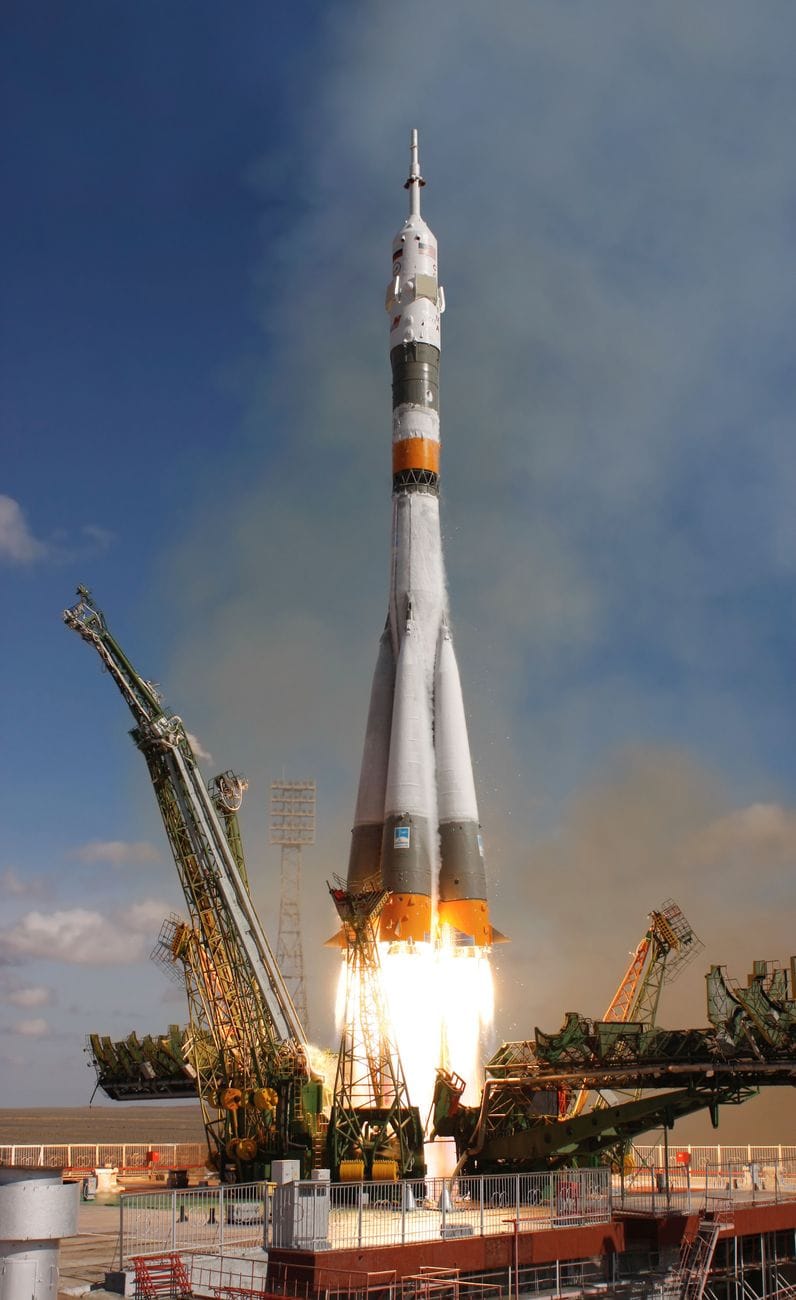
Baikonur, Kazakhstan, Source :
The rhythm of spaceflight picks up again on September 9, 2026, as Roscosmos readies the Progress 96 automated freighter for its journey to the International Space Station. You will witness a meticulously planned sequence where a Soyuz 2.1a rocket carries roughly three tons of fresh provisions, propellant, water, and scientific gear into low Earth orbit. NASA plans to stream every moment of the launch and docking, giving you a direct window into how modern logistics keep our orbital laboratory running smoothly.
Liftoff is set for 12:15 p.m. EDT from the historic Baikonur Cosmodrome, sending the cargo ship toward a precise parking orbit before beginning its two day transit. Ground controllers will track telemetry while the spacecraft navigates independently, raising an intriguing question about how autonomous systems calculate their approach without human intervention. The rendezvous targets 2:37 p.m. EDT on Friday, September 11, when Progress 96 aligns with the Poisk module docking port. This automated sequence demonstrates decades of engineering refinement, proving that precision navigation can operate flawlessly without manual piloting.
Once attached to the station, the Progress vehicle transforms into a mobile storage hub and propulsion platform for approximately five months. You will see how these uncrewed ships quietly manage critical supply transfers while periodically firing thrusters to maintain optimal altitude. Atmospheric drag constantly pulls objects downward, so these routine reboost maneuvers ensure the station stays perfectly positioned for continuous research. After completing its operational cycle, Progress 96 will detach, collect used equipment, and execute a controlled descent over the South Pacific Ocean, following a proven disposal method that keeps orbital pathways clear for future missions.
This arrival follows the departure of Progress 94, which clears the docking port on September 7 to begin its own atmospheric return. The steady turnover of cargo vessels highlights a resilient infrastructure supporting over twenty five years of uninterrupted human presence in space. These logistical routines enable advanced microgravity experiments, strengthen commercial partnerships, and generate valuable data for upcoming deep space initiatives like the Artemis program and eventual crewed journeys to Mars. The technologies powering automated delivery systems also inspire advancements in robotics, environmental recycling, and satellite networks that extend far beyond aerospace. As international cooperation expands and commercial ventures grow, missions like Progress 96 stand as reliable foundations for sustainable exploration ahead.
Related in Space Tech
Space Tech
Lunar Farside Revealed: 15,000 Images Uncover Ancient Moon Terrain
For centuries we have looked up and seen only one face of our nearest celestial neighbor. Tidal locking keeps the far side turned away from Earth, creating a permanent blind spot in human history. Modern orbital technology has now lifted that veil. A detailed mosaic captured by…
Read More...
Space Tech
Stickney Crater: How a Massive Impact Nearly Destroyed Mars' Moon Phobos
Phobos, the innermost moon of Mars, carries a scar that tells a story of cosmic violence. Stickney Crater dominates its surface, a colossal basin named after Angeline Stickney Hall, wife of astronomer Asaph Hall. Hall discovered both Phobos and Deimos in 1877, linking human hist…
Read More...
Space Tech
Saturn's Cosmic Clarity: How One Night Revealed the Ringed Planet's Secrets
On October 8, 2026, the Astronomy Picture of the Day featured a breathtaking composite image titled "The Saturn System Smörgåsbord." This visual feast offers an unprecedented view of the ringed planet and its diverse moons. Astrophotographer Tom Williams captured this exquisite…
Read More...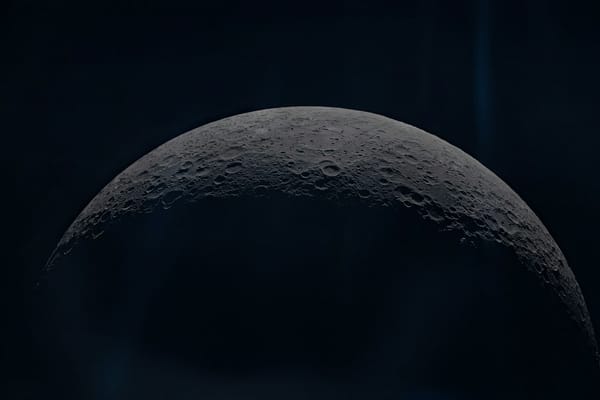
Space Tech
Artemis II Crew Captures Lunar Impact Flashes: What the Moon Revealed in April 2026
NASA has shared a remarkable dataset from the Artemis II mission that offers fresh perspectives on our lunar neighbor. The journey occurred between April 1 and April 10, 2026, marking the first crewed trip to the Moon's vicinity since the Apollo days. Astronauts Reid Wiseman, Vi…
Read More...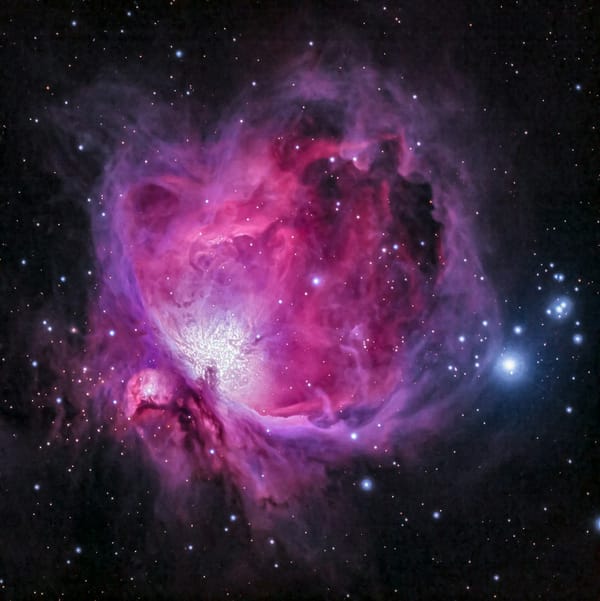
Space Tech
Pa 30: The 845-Year-Old Supernova Mystery That Defies Standard Models
The night sky holds countless stories written in light and dust. Among these celestial narratives, supernova remnants stand as testaments to the violent yet creative end of stellar lives. These expanding shells do more than mark a star's death. They scatter heavy elements across…
Read More...
Space Tech
Earth's Full Aurora Ring Revealed: SMILE Mission Captures Complete View
Scientists have achieved a remarkable first by capturing the entire auroral oval in one continuous shot. The Solar Wind Magnetosphere Ionosphere Link Explorer mission shared this image on October 6, 2026. This perspective offers a fresh look at how our planet interacts with the…
Read More...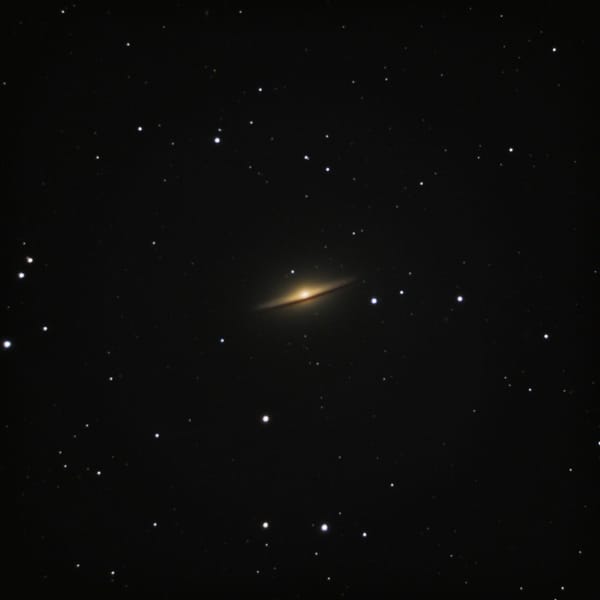
Space Tech
Sombrero Galaxy M104: New Deep-Exposure Image Reveals Tidal Streams and Violent History
The Sombrero Galaxy, known scientifically as Messier 104 or M104, has always drawn the eye with its striking resemblance to a wide-brimmed Mexican hat. This massive spiral galaxy features a bright central bulge encircled by a distinctive dark band of interstellar dust. While ast…
Read More...
Space Tech
New Jersey Sky: Witnessing Supernumerary Rainbows and the Wave Nature of Light
On October 4, 2026, the skies above New Jersey presented a rare spectacle that captivated both amateur photographers and meteorology enthusiasts. Following the passage of storm remnants over the Jersey Shore, a standard rainbow appeared in one direction. However, the phenomenon…
Read More...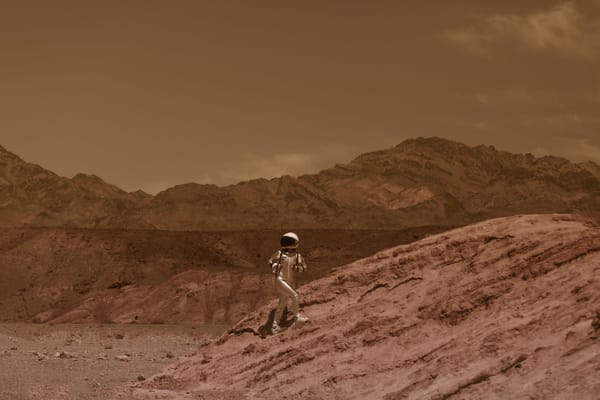
Space Tech
Mars Rover's New Selfie Reveals Vera Rubin Ridge Secrets
NASA’s Curiosity rover has once again provided humanity with a breathtaking glimpse into the red planet. The vehicle captured a stunning panoramic selfie at the south rim of Vera Rubin Ridge. This image served as the Astronomy Picture of the Day for October 3, 2026. It marks a s…
Read More...
Space Tech
313 Nebulas Captured: The Complete Sharpless Catalog Revealed in Eastern China
On October 2, 2026, NASA’s Astronomy Picture of the Day highlighted a monumental achievement in astrophotography. The complete Sharpless Catalog has been unveiled, showcasing 313 distinct nebulae. This comprehensive collection offers an unprecedented opportunity to explore the d…
Read More...