
Your Defense, Your Future: How Poland’s Private Sector Can Redefine National Security
We compile, generate and translate using Artificial Intelligence from the below given source. Macro Micro News is responsible for its editorial publication.
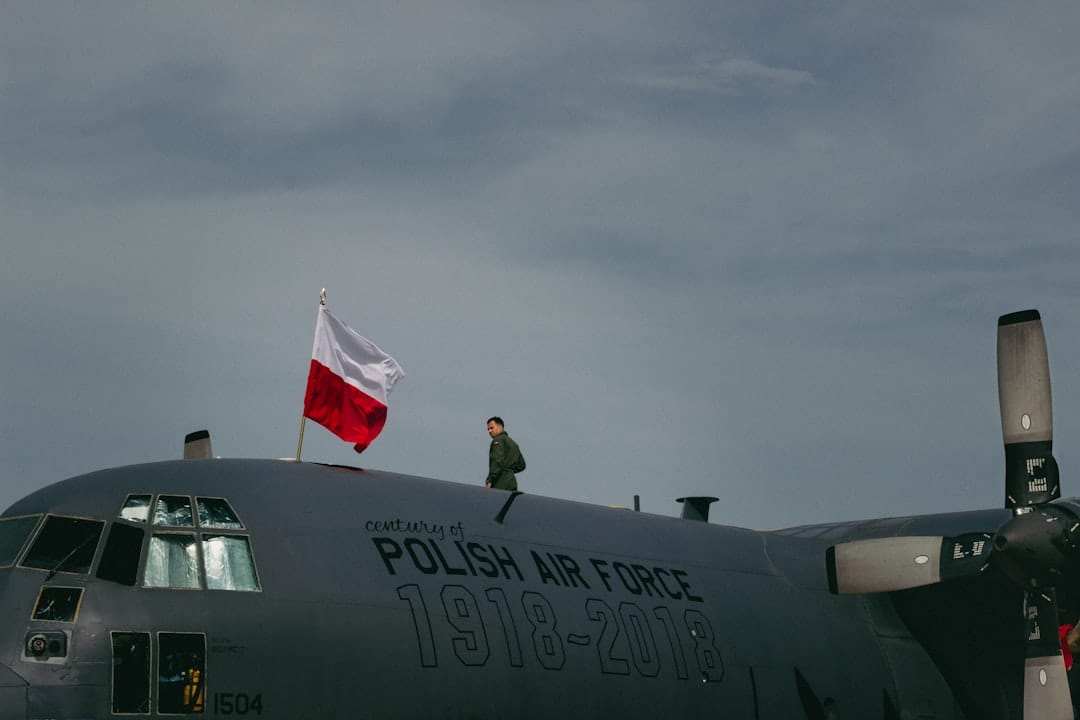
Warsaw, Poland, MMN Correspondent: Poland is spending more than 4% of its GDP on defense, one of the highest levels in NATO. The attention is usually on the equipment itself. A deeper question is emerging: can the supply side keep pace with this historic ambition? Sławomir Mentzen, speaking in parliament, has put forward a view that is gaining traction across the political spectrum. The solution, he argues, involves opening the defense sector to private enterprise and removing the barriers that keep new companies out.
State-owned defense groups have been central to Poland's military modernization. They carry experience and institutional knowledge. There are also reports of production delays and limited capacity, and these reports arrive at a moment when demand for weapons and ammunition is spiking. This is not about dismissing existing players. It is about asking whether a more diverse ecosystem can produce better results.
What happens when the state is both the buyer and the owner? Mentzen believes that is where the greatest risk lies. Without external pressure to improve, organizations can settle into comfortable patterns. Private firms have a competitive instinct that drives cost reduction, rapid prototyping, and creative solutions. Opening the market to new entrants could bring that instinct directly into the defense establishment.
Mentzen's comparison to healthcare is useful. He suggests that when politicians manage services directly, priorities can drift away from efficiency. In defense, the state is both the customer and the producer, which makes the loop even tighter. Adding new players to the market breaks that loop. It creates opportunities for engineers, software developers, and small manufacturers to participate in something that matters deeply for national security.
There is no need to guess how this might work. Other nations already show the benefits of a mixed defense ecosystem. In the United States, a network of small suppliers and startup specialists works alongside major prime contractors. In Israel, a technology culture that encourages risk taking supports one of the most advanced defense sectors in the world. Poland has a deep pool of engineering and IT talent. The ingredients for a more dynamic private defense sector are already present.
The next step is to identify where private companies can contribute immediately. Drone manufacturing, electronic warfare, and cybersecurity are all areas where smaller teams often move faster than large organizations. These fields also happen to be among the most important for modern conflict. A startup focused on drone navigation or signal encryption can add real value to the military in a very short time. Supporting those companies with clear procurement rules and streamlined licensing could have an outsized impact.
A stronger private sector also means a more resilient supply chain. Relying on a few very large producers can create bottlenecks, especially in times of crisis. A broader network of suppliers offers the kind of redundancy that keeps the armed forces equipped when it matters most. There is also an economic advantage. Defense technology often spills over into civilian markets, creating new products, new jobs, and new export opportunities.
National security requires careful oversight of sensitive technologies. That is something the state should continue to handle. The goal is not to remove the state from defense. The goal is to build a system where the state sets standards and private companies compete to meet them. Mentzen's proposal to open the market for new companies, remove unnecessary regulations and restrictions, and allow Polish companies to develop is a clear call to action.
The recent difficulties with the RCB emergency alert system offered a useful reminder that responsiveness matters. In crisis situations, the ability to communicate quickly with citizens is a form of national security. The same logic applies to military procurement. Speed and reliability are not optional features. They are core requirements.
The window for action is open now. European security continues to shift, and Poland's commitment to defense spending is strong. Building a private sector that can innovate, scale, and deliver is one of the most practical ways to honor that commitment. With the right conditions, Polish companies can become major contributors to national security and global defense markets. The future of Poland's defense industry is not a single entity. It is an ecosystem that includes state institutions, private investors, and ambitious entrepreneurs. Nurturing that ecosystem is the best way forward.
Related in Politics
Politics
Europe's New Aid Strategy: How Team Europe Is Protecting Workers and Fixing Supply Chains in 240 Million Crisis Zones
European Commissioner Lahbib Zouarhi recently took the stage at the Foreign Affairs Council to unveil a bold new vision for humanitarian aid. The message was clear. Europe must step up as "Team Europe" to tackle the growing number of global crises. With nearly 240 million people…
Read More...
Politics
Germany's Growth Mirage: Weidel Exposes the Debt Trap Behind Official Projections
The German federal government recently unveiled its autumn economic projections for October 2026, highlighting a projected growth rate of 1.3 percent for the current year. This optimistic forecast suggests a notable upswing in national economic activity. However, Alice Weidel, c…
Read More...
Politics
EU-Mexico Trade Alliance 2026: How This Partnership Is Reshaping Global Supply Chains
The European Union and Mexico have always been strong partners in multilateral cooperation. By September 2026 their relationship has become a key test for global economic resilience. Trade tensions are rising in many parts of the world. The EU-Mexico partnership offers stability…
Read More...
Politics
Ireland's EU Presidency: How Humanitarian Aid and Preparedness Build a Safer Future
As Ireland takes the helm of the Council of the European Union, Commissioner Lahbib highlights a pivotal moment for global engagement. Europe now faces a dual mandate that requires both moral leadership through humanitarian aid and strengthened internal resilience against a comp…
Read More...
Politics
Saxony-Anhalt Breaks Tradition: AfD's Tobias Rausch Takes Landtag Presidency
German politics witnessed a defining moment on October 6, 2026, when the newly constituted state parliament of Saxony-Anhalt elected Tobias Rausch as its Landtag President. This event marks the first time in the history of the Federal Republic that a member of the Alternative fo…
Read More...
Politics
Von der Leyen's Balkan Strategy: Why EU Expansion is a Mutual Transformation
Ursula von der Leyen has made it clear that the European Union’s path forward involves more than just opening borders. Her recent visits to the Western Balkans highlight a strategic shift where enlargement is treated as a mutual transformation rather than a one-sided gift from B…
Read More...
Politics
EU-Mexico Trade Shift 2026: What Nearshoring and Green Tech Mean for Your Business
The relationship between the European Union and Mexico is undergoing a significant transformation as we navigate through 2026. This partnership has evolved from traditional trade agreements into a robust framework focused on sustainable development digital innovation and diploma…
Read More...
Politics
Germany's 52% State Share: What This Record Means for Your Wallet and Economy
In early October 2026, Germany reached a notable economic milestone. The federal government projected a state share of 52 percent for the current year. This figure marks a new all-time high. It signals a substantial shift in how public expenditure relates to national economic ou…
Read More...
Politics
North Macedonia's EU Path: Security, Economy, and Institutional Readiness
In a significant diplomatic engagement held in Skopje, European leadership reaffirmed its commitment to North Macedonia’s accession to the European Union, highlighting the nation’s pivotal role in regional security and economic stability. The dialogue underscored North Macedonia…
Read More...
Politics
Germany's Subsidy Crisis: Why Taxpayers Are Demanding Fiscal Reform Now
In October 2026, the Bund der Steuerzahler released its annual "Black Book," a detailed report exposing state-funded waste and inefficient subsidy programs across Germany. This publication has sparked a significant conversation about fiscal responsibility, revealing how public f…
Read More...