
Your Mars Exploration Era Begins Now: How Blue Origin’s $700 Million NASA Network Will Transform Deep Space Data
We compile, generate and translate using Artificial Intelligence from the below given source. Macro Micro News is responsible for its editorial publication.
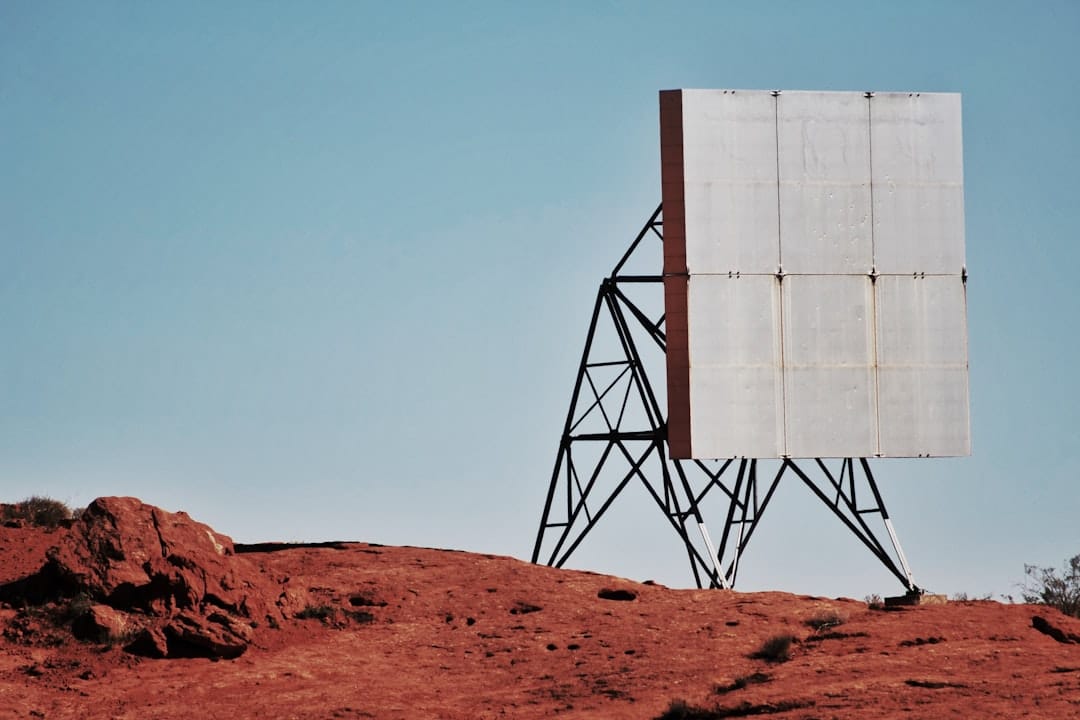
[Location of the news], Source : NASA has officially handed Blue Origin a firm fixed price contract worth roughly seven hundred million dollars to design, launch, and operate a brand new telecommunications orbiter around Mars. You are looking at the foundation of a dedicated communication highway that will carry high bandwidth data and precision navigation signals for every robotic explorer and future crewed mission heading toward the Red Planet. The spacecraft must reach its designated orbit by December thirty first twenty twenty eight, with full network operations kicking in by two thousand thirty.
Think about the sheer volume of information waiting to travel across millions of miles of empty space. Surface rovers capture stunning geological surveys, landers analyze soil composition, and orbiters map atmospheric patterns. All of these instruments generate streams of telemetry and imagery that demand a reliable relay system. A purpose built communications satellite positioned in a stable Martian orbit will serve as a continuous data hub. This architecture connects surface activities directly to Earth tracking stations without missing a beat. What happens when your favorite rover sends back crystal clear video in real time? The answer lies in this newly engineered orbital relay.
Private sector engineering brings fresh manufacturing speed and innovative design principles to deep space infrastructure. NASA channels federal resources toward core exploration goals, planetary science research, and astronaut safety alongside industry partners who handle the heavy lifting of communications and navigation. The upcoming system combines advanced optical lasers with radio frequency transmitters to boost downlink speeds and route signals efficiently across interplanetary distances. Real time positioning data will guide autonomous rovers through complex terrain, support precision landing sequences, and coordinate multiple vehicles working together on the Martian surface. How will scientists interpret ancient riverbeds when they can stream terabytes of spectral analysis daily? The network makes those discoveries possible.
This telecommunications framework marks a steady progression toward a lasting human presence on Mars. Mission complexity grows alongside international partnerships, creating a natural demand for standardized deep space networking protocols. A unified high capacity communication backbone reduces latency challenges and establishes resilient data pathways that expand seamlessly with lunar outposts and eventual crewed expeditions. Engineers incorporate advanced thermal shielding, radiation hardened electronics, and automated fault tolerance systems to maintain uninterrupted service in demanding planetary conditions. Development moves forward on a clear timeline, setting the stage for continuous high fidelity connections across the solar system. What new frontiers will open when scientists never have to wait for a signal again?
The shift toward commercialized deep space infrastructure redefines how we approach interplanetary logistics. Industry collaboration accelerates technology maturation and keeps costs predictable through firm fixed pricing models. Scientists gain access to consistent data flows that transform isolated snapshots into living datasets. Navigation accuracy improves dramatically, allowing future crews to traverse unfamiliar landscapes with confidence. The orbital relay operates as a silent partner, carrying the weight of global scientific inquiry across the void. Every transmission strengthens our connection to distant worlds. The next chapter of Mars exploration begins with a single reliable signal.
Related in Space Tech
Space Tech
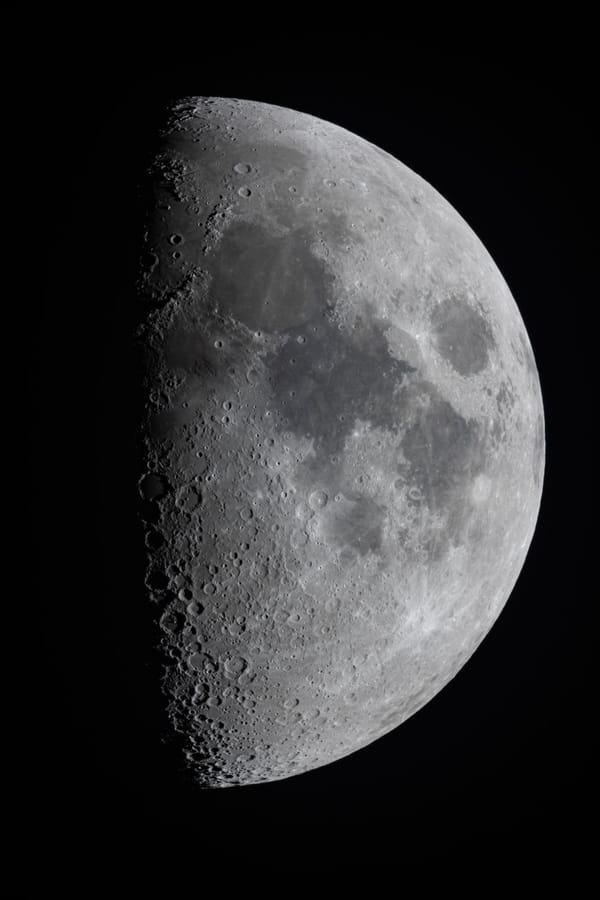
Lunar Farside Revealed: 15,000 Images Uncover Ancient Moon Terrain
For centuries we have looked up and seen only one face of our nearest celestial neighbor. Tidal locking keeps the far side turned away from Earth, creating a permanent blind spot in human history. Modern orbital technology has now lifted that veil. A detailed mosaic captured by…
Read More...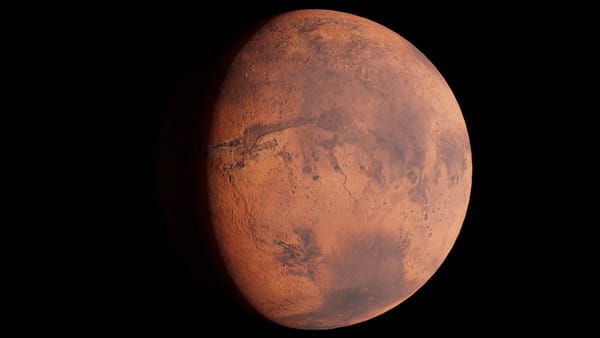
Space Tech
Stickney Crater: How a Massive Impact Nearly Destroyed Mars' Moon Phobos
Phobos, the innermost moon of Mars, carries a scar that tells a story of cosmic violence. Stickney Crater dominates its surface, a colossal basin named after Angeline Stickney Hall, wife of astronomer Asaph Hall. Hall discovered both Phobos and Deimos in 1877, linking human hist…
Read More...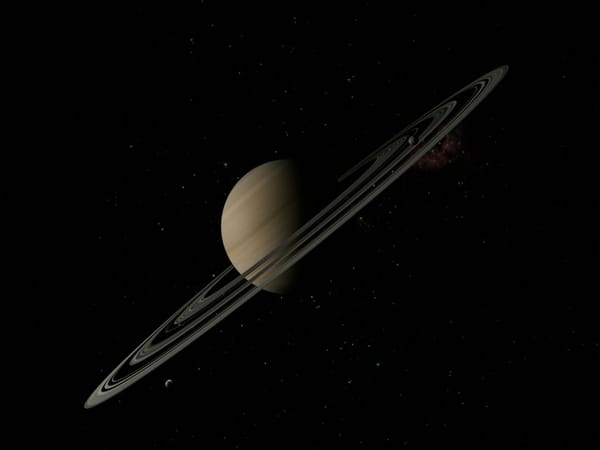
Space Tech
Saturn's Cosmic Clarity: How One Night Revealed the Ringed Planet's Secrets
On October 8, 2026, the Astronomy Picture of the Day featured a breathtaking composite image titled "The Saturn System Smörgåsbord." This visual feast offers an unprecedented view of the ringed planet and its diverse moons. Astrophotographer Tom Williams captured this exquisite…
Read More...
Space Tech
Artemis II Crew Captures Lunar Impact Flashes: What the Moon Revealed in April 2026
NASA has shared a remarkable dataset from the Artemis II mission that offers fresh perspectives on our lunar neighbor. The journey occurred between April 1 and April 10, 2026, marking the first crewed trip to the Moon's vicinity since the Apollo days. Astronauts Reid Wiseman, Vi…
Read More...
Space Tech
Pa 30: The 845-Year-Old Supernova Mystery That Defies Standard Models
The night sky holds countless stories written in light and dust. Among these celestial narratives, supernova remnants stand as testaments to the violent yet creative end of stellar lives. These expanding shells do more than mark a star's death. They scatter heavy elements across…
Read More...
Space Tech
Earth's Full Aurora Ring Revealed: SMILE Mission Captures Complete View
Scientists have achieved a remarkable first by capturing the entire auroral oval in one continuous shot. The Solar Wind Magnetosphere Ionosphere Link Explorer mission shared this image on October 6, 2026. This perspective offers a fresh look at how our planet interacts with the…
Read More...
Space Tech
Sombrero Galaxy M104: New Deep-Exposure Image Reveals Tidal Streams and Violent History
The Sombrero Galaxy, known scientifically as Messier 104 or M104, has always drawn the eye with its striking resemblance to a wide-brimmed Mexican hat. This massive spiral galaxy features a bright central bulge encircled by a distinctive dark band of interstellar dust. While ast…
Read More...
Space Tech
New Jersey Sky: Witnessing Supernumerary Rainbows and the Wave Nature of Light
On October 4, 2026, the skies above New Jersey presented a rare spectacle that captivated both amateur photographers and meteorology enthusiasts. Following the passage of storm remnants over the Jersey Shore, a standard rainbow appeared in one direction. However, the phenomenon…
Read More...
Space Tech
Mars Rover's New Selfie Reveals Vera Rubin Ridge Secrets
NASA’s Curiosity rover has once again provided humanity with a breathtaking glimpse into the red planet. The vehicle captured a stunning panoramic selfie at the south rim of Vera Rubin Ridge. This image served as the Astronomy Picture of the Day for October 3, 2026. It marks a s…
Read More...
Space Tech
313 Nebulas Captured: The Complete Sharpless Catalog Revealed in Eastern China
On October 2, 2026, NASA’s Astronomy Picture of the Day highlighted a monumental achievement in astrophotography. The complete Sharpless Catalog has been unveiled, showcasing 313 distinct nebulae. This comprehensive collection offers an unprecedented opportunity to explore the d…
Read More...