
Your Next Trip to Europe Just Got Safer: EU Approves Spanish AI Data-Centre Venture as Schengen Border System Hits 160 Million Checks
We compile, generate and translate using Artificial Intelligence from the below given source. Macro Micro News is responsible for its editorial publication.
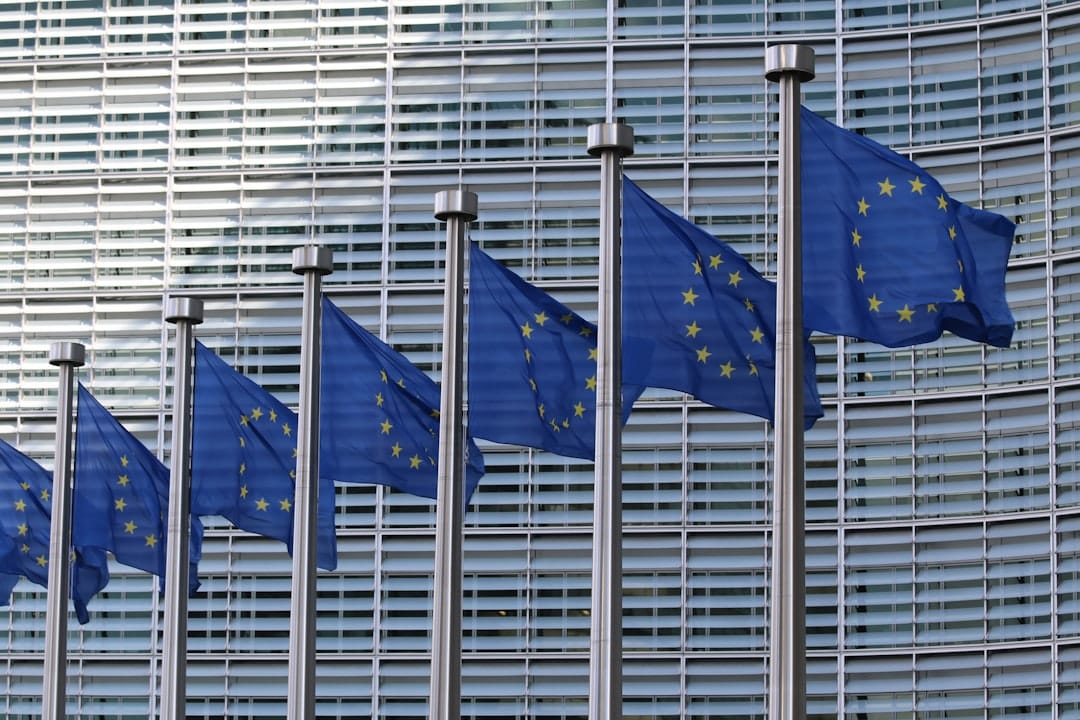
Brussels, Source :
On 20 August 2026, the European Commission cleared the creation of a joint venture in Spain that could give the continent a major edge in artificial intelligence. Around the same time, the Schengen Area’s digital border system passed a remarkable milestone: 160 million checks. These two developments are actually two sides of the same strategy. Europe wants to be both digitally sovereign and digitally secure.
The new venture brings together ACS AIID, Telefónica, Banco Santander, and the Spanish public entity SETT. The Commission reviewed the deal under the simplified merger procedure and cleared it without conditions. The companies will focus on third-party data-centre colocation services, essentially offering shared data-centre space where organisations can house servers, storage systems, and networking equipment and tap into the high-capacity power and connectivity that AI workloads demand.
This project matters beyond Spain for a clear reason. It lines up with the EU’s AI Gigafactories Initiative, which is all about building strong, sovereign cloud and AI infrastructure across Europe. More colocation capacity in Spain means more room to process sensitive data and train advanced AI models inside EU borders. That strengthens resilience and reduces the need to rely on external cloud providers for critical digital services.
Now to the borders. Commissioner for Internal Affairs Magnus Brunner is in Croatia to see the Entry-Exit System in action. Since October 2025, the EES has registered over 160 million entries and exits by non-EU nationals on short stays in the Schengen Area. Think about that number for a moment. The system also refused more than 50,000 entries, including over 1,500 people identified as serious security risks. That is a powerful layer of protection for one of the world’s largest border-free zones.
Brunner’s schedule includes a stop at Split Airport, where Croatian police will show how they use EES. He will then join Deputy Prime Minister and Interior Minister Davor Božinović for a press conference at 14:00 CEST. The next day, bilateral talks will dig into internal security and migration, with a shared focus on border management that protects people and keeps legitimate travel flowing smoothly. The discussions are expected to cover good practices and lessons learned from Croatia’s rollout.
So what does all this mean for travellers and tech watchers? It means Europe is serious about building the infrastructure of the future on all fronts. That work includes creating world-class AI hosting capacity in Spain and reinforcing the digital shield around the Schengen Area. The pace is fast, and the direction is clear. The next few years will be very interesting.
Related in Politics
Politics
Europe's New Aid Strategy: How Team Europe Is Protecting Workers and Fixing Supply Chains in 240 Million Crisis Zones
European Commissioner Lahbib Zouarhi recently took the stage at the Foreign Affairs Council to unveil a bold new vision for humanitarian aid. The message was clear. Europe must step up as "Team Europe" to tackle the growing number of global crises. With nearly 240 million people…
Read More...
Politics
Germany's Growth Mirage: Weidel Exposes the Debt Trap Behind Official Projections
The German federal government recently unveiled its autumn economic projections for October 2026, highlighting a projected growth rate of 1.3 percent for the current year. This optimistic forecast suggests a notable upswing in national economic activity. However, Alice Weidel, c…
Read More...
Politics
EU-Mexico Trade Alliance 2026: How This Partnership Is Reshaping Global Supply Chains
The European Union and Mexico have always been strong partners in multilateral cooperation. By September 2026 their relationship has become a key test for global economic resilience. Trade tensions are rising in many parts of the world. The EU-Mexico partnership offers stability…
Read More...
Politics
Ireland's EU Presidency: How Humanitarian Aid and Preparedness Build a Safer Future
As Ireland takes the helm of the Council of the European Union, Commissioner Lahbib highlights a pivotal moment for global engagement. Europe now faces a dual mandate that requires both moral leadership through humanitarian aid and strengthened internal resilience against a comp…
Read More...
Politics
Saxony-Anhalt Breaks Tradition: AfD's Tobias Rausch Takes Landtag Presidency
German politics witnessed a defining moment on October 6, 2026, when the newly constituted state parliament of Saxony-Anhalt elected Tobias Rausch as its Landtag President. This event marks the first time in the history of the Federal Republic that a member of the Alternative fo…
Read More...
Politics
Von der Leyen's Balkan Strategy: Why EU Expansion is a Mutual Transformation
Ursula von der Leyen has made it clear that the European Union’s path forward involves more than just opening borders. Her recent visits to the Western Balkans highlight a strategic shift where enlargement is treated as a mutual transformation rather than a one-sided gift from B…
Read More...
Politics
EU-Mexico Trade Shift 2026: What Nearshoring and Green Tech Mean for Your Business
The relationship between the European Union and Mexico is undergoing a significant transformation as we navigate through 2026. This partnership has evolved from traditional trade agreements into a robust framework focused on sustainable development digital innovation and diploma…
Read More...
Politics
Germany's 52% State Share: What This Record Means for Your Wallet and Economy
In early October 2026, Germany reached a notable economic milestone. The federal government projected a state share of 52 percent for the current year. This figure marks a new all-time high. It signals a substantial shift in how public expenditure relates to national economic ou…
Read More...
Politics
North Macedonia's EU Path: Security, Economy, and Institutional Readiness
In a significant diplomatic engagement held in Skopje, European leadership reaffirmed its commitment to North Macedonia’s accession to the European Union, highlighting the nation’s pivotal role in regional security and economic stability. The dialogue underscored North Macedonia…
Read More...
Politics
Germany's Subsidy Crisis: Why Taxpayers Are Demanding Fiscal Reform Now
In October 2026, the Bund der Steuerzahler released its annual "Black Book," a detailed report exposing state-funded waste and inefficient subsidy programs across Germany. This publication has sparked a significant conversation about fiscal responsibility, revealing how public f…
Read More...