
60 Nations Hit With New US Tariffs: What This Means for Your Wallet and Global Trade
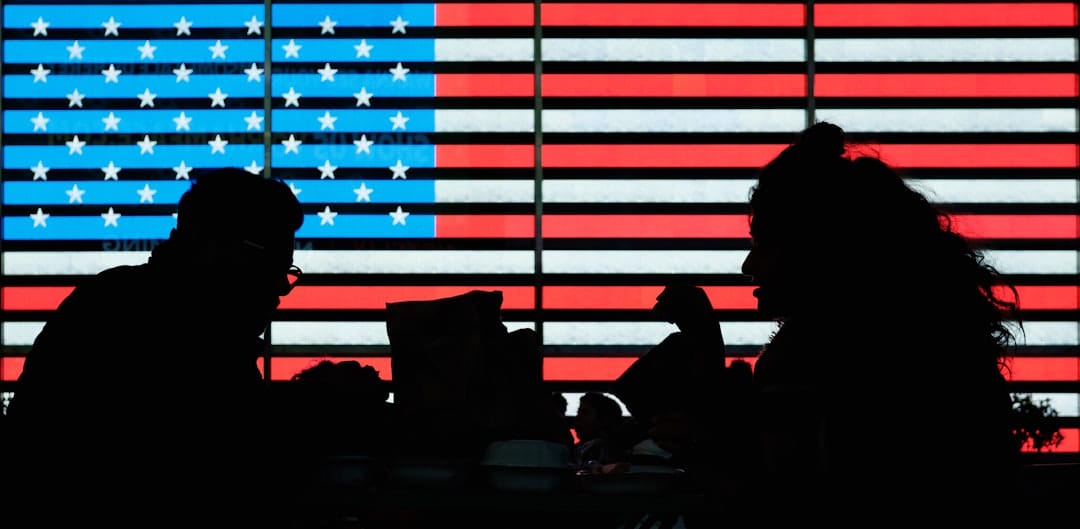
Washington, D.C., MMN Correspondent: The United States has just turned up the heat on global trade. In a move that touches nearly every corner of the import market, Washington has slapped fresh tariffs on roughly 60 of its largest trading partners. We're talking about China, the European Union, Canada, Japan, India, and the United Kingdom all in the crosshairs. Starting Friday, duties between 10% and 12.5% will apply to a wide range of imported goods. This isn't a small adjustment. It's a deliberate shift in how the U.S. enforces labor standards through trade policy.
So why now? The temporary 10% tariff introduced earlier this year is expiring. The administration, now in its second term under President Donald Trump, is using this moment to pivot. The goal is to keep pressure on international trade practices, but under a revised legal framework. The tool of choice? Section 301 of the Trade Act of 1974. That's the same authority that allows the U.S. to retaliate against foreign trade practices it considers unfair or burdensome to American commerce.
U.S. Trade Representative Jamieson Greer, acting on direct orders from President Trump, has framed this as a fight against forced labor. The administration argues that many countries have systemically failed to stop the importation of goods made with forced labor. According to the Office of the U.S. Trade Representative, the targeted nations account for a staggering 99.4% of all U.S. imports. That means the economic ripple effects could be felt in nearly every aisle of every store.
This decision didn't come out of nowhere. Earlier this year, the U.S. Supreme Court ruled that many of the tariffs imposed under emergency powers were unconstitutional. The court said Congress hadn't approved them. That landmark ruling forced the government to refund tens of billions of dollars in tariffs collected from importers. In response, the White House had to find new legal ground to keep its trade agenda alive. The forced labor initiative has become a central pillar of that strategy.
Here's how the new system works. Countries that commit to enacting and effectively enforcing bans on forced labor imports will face a 10% tariff. Those that haven't made such commitments, or can't show they're enforcing them, will pay the higher 12.5% rate. The administration reports that 10 nations have already agreed to adopt these prohibitions as part of reciprocal trade agreements. Others have responded to ongoing investigations by implementing domestic bans in recent weeks. Greer expressed cautious optimism, saying the action will begin to correct what he calls both a human rights abuse and a distortive trade practice.
This latest round is part of a broader pattern we've seen since Trump returned to office in January 2025. His administration consistently frames tariffs as tools to protect American jobs, boost domestic manufacturing, and address what they see as global imbalances. On what was called 'Liberation Day,' Trump announced sweeping tariffs on imports from multiple nations, branding them a necessary corrective to decades of what he described as unfair treatment by trading partners.
But what does this mean for everyday people? Economists point out that elevated tariffs often lead to higher consumer prices. Importers tend to pass on increased costs to end users. That means items like coffee beans, electronics, kitchen appliances, and clothing could become more expensive. Households across income levels could feel the pinch. The Federal Reserve and independent research institutions have previously noted that sustained trade barriers can reduce supply chain efficiency, limit market access, and trigger inflationary pressures.
The U.S. hasn't stopped there. Just days before the forced labor tariffs took effect, the administration applied Section 338 of the Tariff Act of 1930 to impose a 50% tariff on Canadian exports. That move is widely seen as retaliation for disagreements over energy and border policies. It's a clear signal that trade policy is increasingly being used as leverage in diplomatic negotiations, extending beyond traditional economic concerns into areas like environmental regulation, immigration, and labor standards.
Global markets reacted quickly. Major stock indices in Asia and Europe dipped in early trading, reflecting investor anxiety over escalating protectionism. Industry groups in affected countries, including the European Union Chamber of Commerce and the Canadian Manufacturers & Exporters Association, have signaled plans to challenge the tariffs through international dispute mechanisms, including the World Trade Organization. Legal experts anticipate prolonged litigation, especially given the constitutional challenges previously raised against similar measures.
Looking ahead, the U.S. Trade Representative is currently conducting investigations into 16 additional countries over allegations of manufacturing overcapacity. This is a growing concern in sectors like steel, aluminum, and semiconductors. If findings confirm unfair subsidies or market distortion, further tariffs could be announced later this year, potentially expanding the scope of the current trade war.
The forced labor tariffs represent a pivotal moment in the evolution of global trade governance. While framed as a moral and economic imperative, the policy raises critical questions about sovereignty, due process, and the definition of acceptable labor practices across diverse economies. Developing nations argue they lack the institutional capacity to enforce stringent labor laws. Critics caution that blanket tariffs risk punishing vulnerable producers rather than addressing root causes.
Ultimately, the success of this policy may depend not only on enforcement but also on multilateral cooperation. Without coordinated global standards on labor rights and supply chain transparency, unilateral actions risk fueling trade fragmentation, undermining the very stability the U.S. claims to seek. As the world watches, the coming months will determine whether this new chapter in U.S. trade policy becomes a catalyst for reform or a flashpoint in an enduring era of economic confrontation.
The ripple effects of these tariffs are expected to extend far beyond borders, influencing everything from corporate sourcing strategies to geopolitical alliances. For businesses, governments, and consumers alike, the stakes are higher than ever.
Related in Global Trend
Global Trend
Egypt’s 2026 Digital Visa: How a QR Code Will Cut Airport Queues & Change Your Travel Plans
Imagine stepping off a long haul flight, stretching your legs, and instead of joining a snaking queue for a paper visa sticker, you simply pull out your phone. A single QR code. A quick scan. And you’re through. That’s the reality Egypt is rolling out on August 1, 2026, at Cairo…
Read More...
Global Trend
185 Meters Above Rotterdam: What Awaits Inside the Reimagined Euromast?
What happens when a six decade old icon decides to stop being just a lookout point and transforms into something far more immersive? The answer is now standing 185 meters above Rotterdam, and it might just change how you think about city landmarks. Magnicity, a global name in ur…
Read More...
Global Trend
10 Enchanting Agritourism Adventures in Québec This Fall: From Cranberry Bogs to Vineyard Harvests
What if you could taste the season itself? As autumn paints Québec in shades of amber and gold, the province becomes a living canvas of flavor and tradition. From the cranberry bogs of Centre-du-Québec to the sun-kissed vineyards of the Eastern Townships and the orchard-lined ro…
Read More...
Global Trend
7 Reasons Why the British Virgin Islands’ 2026 Unrushed Season Is Your Best Bet for Slow Travel, Big Savings & Pure Serenity
What if the best time to visit paradise wasn’t when everyone else does? The British Virgin Islands (BVI) is flipping the script on traditional travel calendars with its 2026 Unrushed Season, a thoughtfully crafted window from July through early November that invites you to trade…
Read More...
Global Trend
Want to Experience the Florida Keys Without the Crowds? Here’s How August Through October Delivers More Value and Island Magic
Picture this: you’re driving the Overseas Highway, windows down, salt air mixing with the scent of tropical blooms. The road stretches over turquoise water, and each island you pass feels like a new world waiting to be discovered. But here’s the thing most travelers don’t realiz…
Read More...
Global Trend
British Airways Will Fly Daily from London to Baltimore in 2026. Here’s Why Maryland Is Your Next Winter Escape.
Picture this: you board a plane at London Heathrow, settle into your seat, and just under eight hours later you step off into a winter wonderland that most British travelers have never considered. That’s exactly what British Airways is betting on with its announcement of daily n…
Read More...
Global Trend
Why Travelers Are Trading Sightseeing for Rice Terraces and Long Hair Villages in Rural China
What if the most unforgettable travel experience wasn’t a famous landmark, but a conversation with a farmer who has spent decades coaxing life from a mountainside? In Guilin, that’s exactly what’s happening. The region’s iconic karst peaks and winding Li River have drawn visitor…
Read More...
Global Trend
What Happens When the EPO Goes Fully Digital in 2027? Here’s What Patent Filers Need to Know
Imagine a world where patent applications never touch paper. Where every step from filing to grant happens in a secure, instant, and traceable digital environment. That world arrives on 1 April 2027, when the European Patent Office (EPO) completes its decade long digital transfo…
Read More...
Global Trend
Why Travelers Are Flocking to Taoyuan: K-Pop Star Ambassador, 3 Curated Routes, and 2026 Festivals You Can’t Miss
What if your first stop in Taiwan turned into the highlight of your entire trip? That’s exactly what Taoyuan is betting on. As the island’s busiest international gateway, this city is stepping into the spotlight with a fresh global campaign that’s turning heads from Seoul to Sin…
Read More...
Global Trend
What Triggers the 'Upstream Connect Error'? 5 Critical Factors That Break Web Performance
Imagine this: you click a link, and the page hangs. Then it fails. Behind that simple moment of frustration, a silent breakdown just occurred in the digital infrastructure connecting you to the service. One of the most common culprits? The 'upstream connect error or disconnect/r…
Read More...