
7 Ways Nehera’s Spring 2027 Menswear Turns Childhood Longing into Wearable Art – A Designer’s Escape from the Iron Curtain

Bratislava, Slovakia, MMN Correspondent: What happens when a designer’s most vivid memory of freedom is a lake? Not an ocean, not a mountain range, but a body of water that stood in for everything he couldn’t reach. For Ladislav Zdút, co-founder of Nehera, that lake was Balaton in Hungary. Growing up in Communist era Slovakia, where travel beyond the Iron Curtain was a political impossibility, Balaton became his substitute sea. Every summer, his family would pack up and head to this shimmering expanse, and for a few weeks, the borders of his world expanded.
Zdút shared this story during a recent Zoom presentation for the brand’s Spring 2027 menswear collection. He described the 1970s, when Western Europe felt like a distant planet. “The lake acted as a replacement sea for us who were forbidden to go beyond the Iron Curtain,” he said. That tension between restriction and imagination is the emotional engine of this entire line. It’s not just clothing. It’s a wardrobe built from the memory of wanting something you can’t have, and finding a way to create it anyway.
The collection itself is a study in contrasts that feel natural, not forced. You see sharply angled double breasted jackets in lightweight linen paired with wide leg trousers that seem to float. The silhouettes are structured but never stiff. Fabrics drape and move like water. The color palette is mostly neutral: beige, sand, ivory. But then you get these bursts of deep cerulean, sun bleached yellow, and a coral that looks like it was pulled straight from a Hungarian sunset. These aren’t random choices. They mirror the faded facades of lakeside summer homes and the way the sky looks just after the sun dips below the horizon.
Materials here do more than cover the body. They carry memory. Organic cotton, hemp, and Tencel form the foundation, chosen for both sustainability and tactile honesty. One standout piece is a draped coat made from recycled silk with raw edge embroidery. Zdút said it was inspired by how sunlight fractured across the lake’s surface. Another garment, a layered shirt dress hybrid, has asymmetric hems and hand stitched details that mimic the irregular rhythm of waves hitting a pebbled shore. Each piece feels grounded in a specific moment, yet light enough to belong anywhere.
This season also marks a noticeable shift in Nehera’s aesthetic. Earlier collections leaned into minimalist European modernism. Clean lines, restrained shapes. Spring 2027 is more poetic, more romantic. The runway presentation took place in a repurposed warehouse filled with floating lanterns and ambient water sounds. Models walked barefoot through shallow pools of reflective water, their movements slow and deliberate. It felt less like a fashion show and more like a ritual. A quiet act of escape.
Behind the beauty, there’s serious technical work. Nehera partnered with a Czech textile lab to develop a proprietary fabric blend that mimics the sheen of wet stone while staying breathable and moisture wicking. Perfect for warm weather. All garments were produced using low impact dyes and zero waste cutting techniques. This aligns with a broader industry shift. Recent reports show that 68% of global luxury consumers now prioritize sustainability in their purchasing decisions, especially in menswear. Nehera isn’t just following that trend. They’re building it into the DNA of the collection.
There’s also a cultural resonance here that goes beyond fashion. In a world where so much of our experience is mediated through screens and filters, the desire for something authentic and unmediated has grown. Nehera taps into that by offering clothing that invites the wearer to imagine themselves in another world. Each stitch carries a memory. Each fold suggests movement across a landscape that was once forbidden. It’s fashion as emotional storytelling, and it works because it feels personal, not performative.
The influence of Eastern European design sensibilities is clear. Unlike the hyper masculine, rigid structures often associated with Western menswear, Nehera’s pieces embrace softness, asymmetry, and emotional resonance. This reflects a growing global trend where designers from non Western regions are redefining masculinity through vulnerability and nature based metaphors. Brands like A-COLD-WALL*, Jil Sander under its new creative direction, and even Prada have incorporated similar themes. The shift is away from power dressing and toward a more nuanced understanding of male identity.
Commercially, the collection positions Nehera as a key player in the emerging slow luxury segment. Retail prices range from $450 to $2,200, targeting discerning buyers who want investment pieces with cultural weight. Early sales data from major retailers show strong pre orders, particularly in Germany, Japan, and Canada. These are markets known for valuing design integrity and historical context in fashion.
Ultimately, this collection isn’t about seasonal trends. It’s a meditation on what it means to dream beyond boundaries. Not just geographical boundaries, but psychological and emotional ones. By channeling the quiet rebellion of a child who once longed for the sea, Ladislav Zdút has created a wardrobe that doesn’t just clothe the body. It nourishes the soul. And in doing so, it reminds us that some of the most powerful forms of freedom aren’t found in open spaces. They’re found in the imagination, and in the clothes we wear to remember them.
Related in Fashion

Fashion
Why Your Next Wardrobe Could Be Made of Mushrooms: Inside Ambush’s Spring 2027 Collection
What happens when a Tokyo fashion house decides to stop chasing global trends and instead listens to the forest? You get Ambush’s Spring 2027 Ready to Wear collection, unveiled during Paris Fashion Week. This is not just a new line of clothes. It is a quiet rebellion against the…
Read More...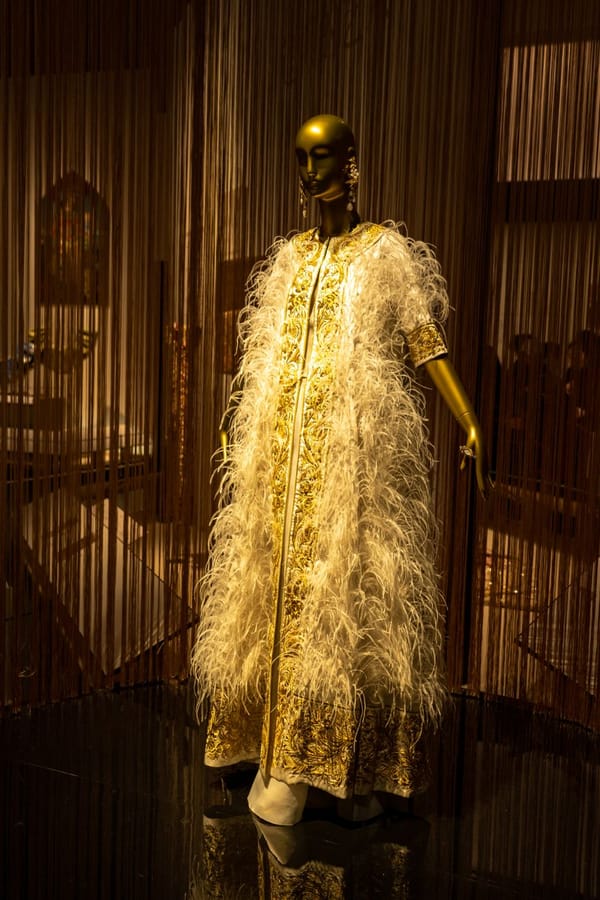
Fashion
What Maria Grazia Chiuri’s Fendi Debut in Rome Means for the Future of Haute Couture
On a warm July evening in Rome, something quietly extraordinary happened inside the Galleria Nazionale d’Arte Moderne e Contemporanea. Maria Grazia Chiuri, fresh from a decade at Dior in Paris, returned to her hometown to present her first haute couture collection for Fendi. The…
Read More...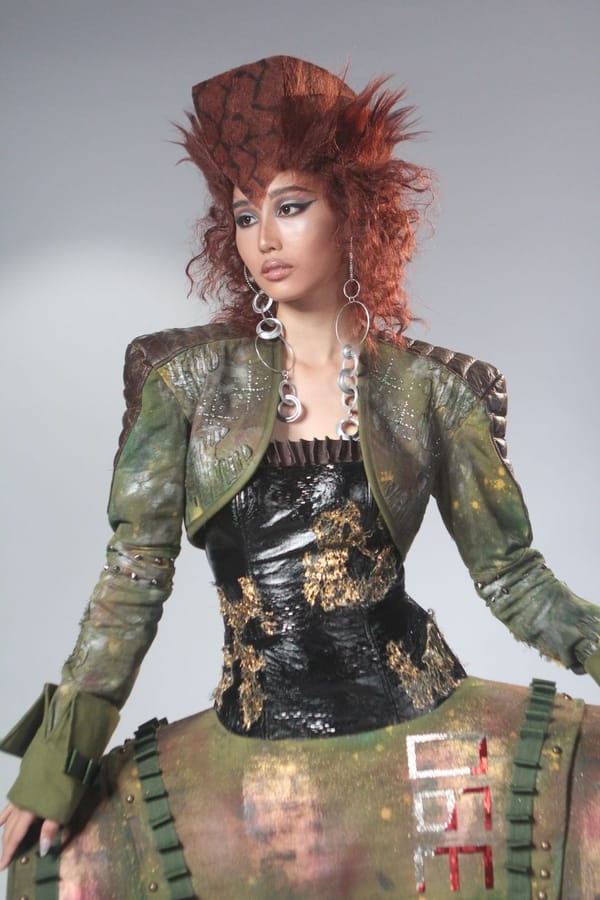
Fashion
What Happens When 18th Century Opulence Meets AI Couture? Jean Paul Gaultier’s Fall 2026 Collection Has the Answer
Imagine stepping into a dream where powdered wigs and corsets collide with laser scans and biomechanical forms. That’s exactly what happened when Jean Paul Gaultier unveiled its Fall 2026 haute couture collection during Paris Fashion Week. The show marked the debut of designer D…
Read More...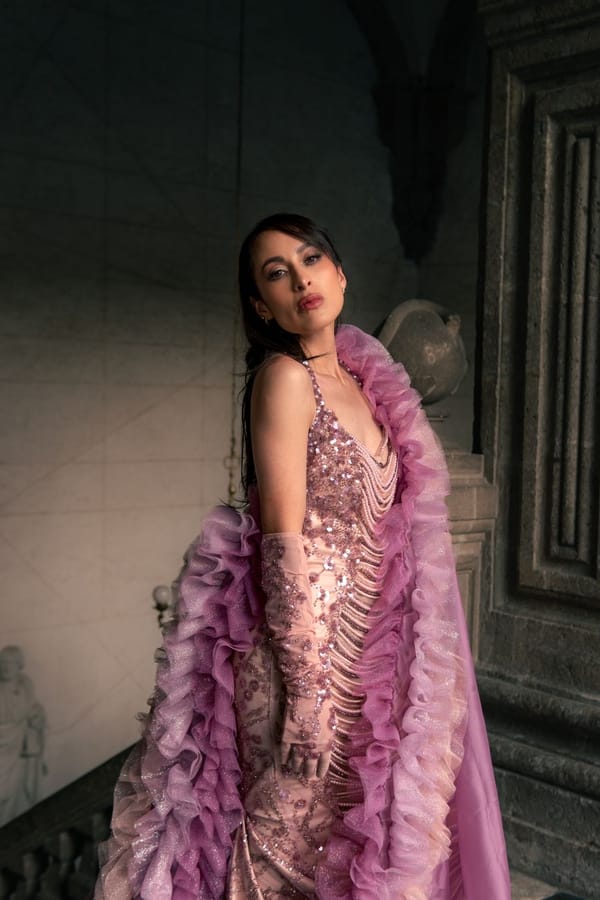
Fashion
20 Years of Masks: How Ashi Studio’s Fall 2026 Couture Turned Paris Fashion Week Into a Surrealist Dreamscape
What happens when a fashion house celebrates two decades not with a retrospective, but with a full-blown theatrical meditation on identity, disguise, and the art of concealment? Ashi Studio answered that question on the Fall 2026 runway, and the answer was nothing short of mesme…
Read More...
Fashion
How Magda Butrym’s 2027 Resort Collection Turns a Cult Film Into Wearable Art (And Why NYFW Is Next)
What happens when a designer takes a cult Polish psychological thriller and turns it into a wardrobe you can actually wear? Magda Butrym’s 2027 Resort collection offers a compelling answer. Titled ‘Szamanka,’ after Andrzej Żuławski’s 1996 film about power, desire, and identity,…
Read More...
Fashion
7 Ways Berlin Designer Mario Kleine Is Redefining Menswear with History and Emotion in Spring 2027
What happens when a designer stops chasing the next big thing and starts listening to the whispers of the past? Mario Kleine, the mind behind Berlin based label Marke, just answered that question with a collection that feels less like fashion and more like a conversation across…
Read More...
Fashion
7 Reasons Gigi Hadid’s Salmon Pink Wiederhoeft Dress and Soft Serve Hair Are the 2026 Wedding Trend You Need to Copy
Picture this: a candlelit seaside soirée, the air thick with romance, and every guest dressed like a character from a dream. That was the scene at Taylor Swift and Travis Kelce’s 2026 wedding, an event that didn’t just celebrate love—it launched a new era in fashion. Among the a…
Read More...
Fashion
Inside Taylor Swift and Travis Kelce’s Madison Square Garden Wedding: Music, Fashion, and Surprises You Need to Know
Imagine the world’s most famous pop star and an NFL superstar saying “I do” inside a legendary arena that has hosted everyone from Elvis to the Knicks. That’s exactly what happened on July 3, 2026, when Taylor Swift and Travis Kelce turned Madison Square Garden into their privat…
Read More...
Fashion
Why Fashion Insiders Are Calling Anna October’s Resort 2027 Collection a Love Letter to Paris (And You’ll Want Every Piece)
In July 2026, the fashion world’s gaze settled on Paris for reasons beyond its famed boulevards and iconic landmarks. Anna October presented her Resort 2027 collection, titled ‘Café Pleasure,’ at an intimate event that wove together architectural inspiration, historical nods, an…
Read More...
Fashion
7 Ways Mykonos Transformed Duckie Brown’s Spring 2027 Menswear Into a Mediterranean Dream
What happens when two Brooklyn designers trade the roar of subway trains for the whisper of Aegean waves? Daniel Silver and Steven Cox, the minds behind Duckie Brown, found out this spring. They spent months on Mykonos, not as tourists but as students of the island’s quiet rhyth…
Read More...