
What Maria Grazia Chiuri’s Fendi Debut in Rome Means for the Future of Haute Couture
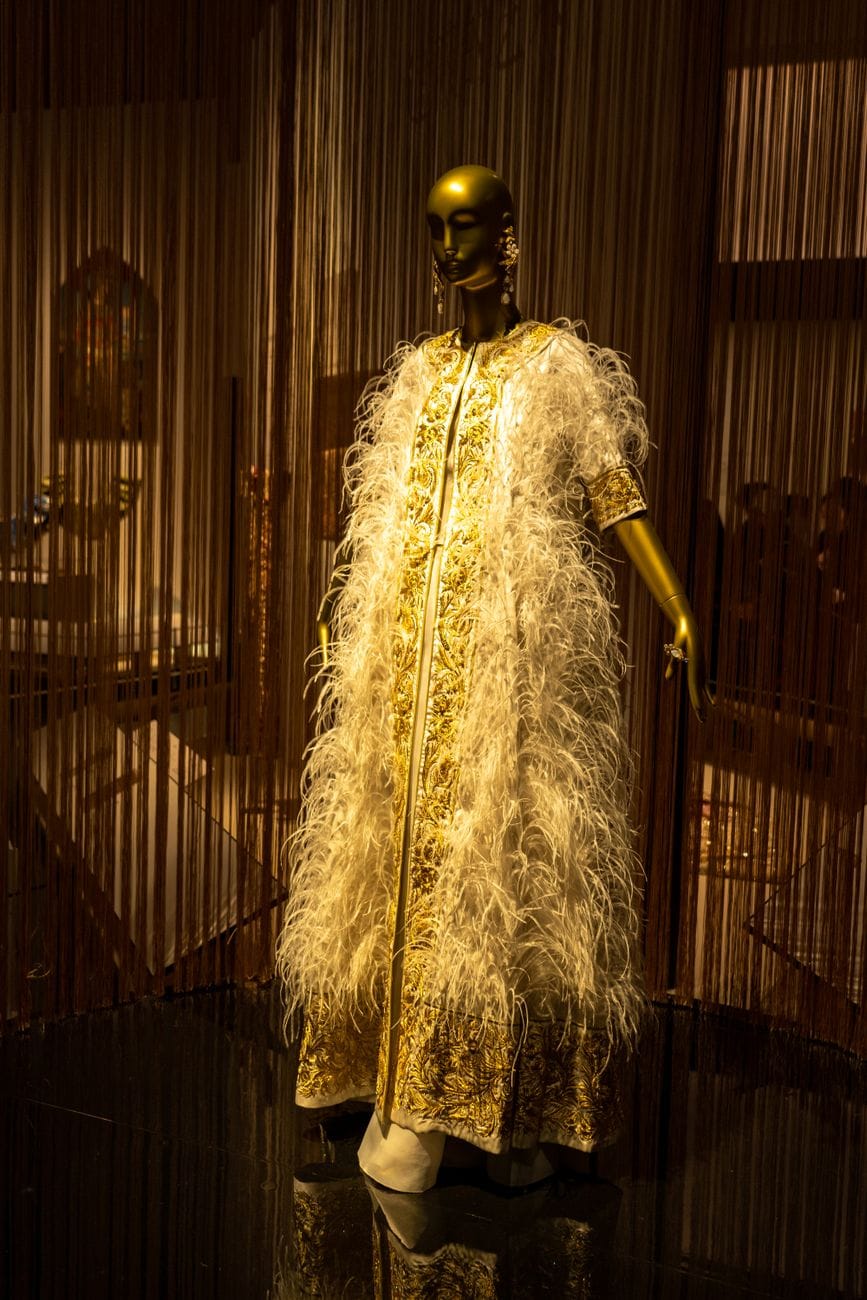
Rome, Italy, MMN Correspondent: On a warm July evening in Rome, something quietly extraordinary happened inside the Galleria Nazionale d’Arte Moderne e Contemporanea. Maria Grazia Chiuri, fresh from a decade at Dior in Paris, returned to her hometown to present her first haute couture collection for Fendi. The date was July 9, 2026, and the air inside the Palazzo dell’Esposizione felt charged with possibility. This wasn’t just a fashion show. It was a homecoming, a conversation between centuries, and a quiet declaration that couture can be both deeply personal and universally resonant.
Why choose a modern art gallery for a luxury fashion debut? Because Chiuri wanted the clothes to feel like sculptures. The venue itself, dedicated to contemporary and modern art, became a silent collaborator. As models moved through the space, the line between garment and artwork blurred. Visitors weren’t just watching a collection; they were walking through a living exhibition where fabric, form, and history merged into one continuous narrative.
Chiuri’s starting point was a bold one. She revisited a landmark 1985 Fendi exhibition curated by Karl Lagerfeld, which featured 180 of his illustrations and 25 fur pieces. But instead of recreating that era’s power shoulders and exaggerated silhouettes, she chose to ask a different question: What would that same spirit of innovation look like if it were freed from the constraints of the past? Her answer came in the form of fluid a-line shapes, unwaisted cuts, and hemlines that grazed the ankle with quiet confidence.
The opening look set the tone. A black and white chevron-patterned caftan, woven with precision, was a direct nod to Emilie Flöge, the early 20th-century Austrian modernist and close collaborator of Gustav Klimt. Why reference a woman from over a century ago? Because Chiuri believes that fashion’s future is built on the shoulders of women who dared to think differently. Flöge wasn’t just a muse; she was a designer, a businesswoman, and a pioneer. By weaving her influence into the collection, Chiuri made a quiet but powerful statement about lineage and legacy.
Throughout the show, fabrics were handled with the kind of reverence usually reserved for museum artifacts. Silk chiffon floated over hand-embroidered tulle. Organza layers caught the gallery’s soft light and seemed to glow from within. One gown, sheer and iridescent, was built over a structural bodice that resembled a modernist relief. Delicate metallic threads traced patterns that echoed ancient Roman mosaics, grounding the ethereal in the eternal. Another piece paired tailored wool with flowing silk, marrying structure with softness in a way that felt both fresh and familiar.
Accessories told their own story. Leather gloves, some extending past the elbow, recalled the meticulous handwork of Renaissance artisans. Sculptural heels drew inspiration from classical columns, while minimalist sandals featured embedded micro-lenses that refracted light like tiny prisms. These details weren’t decorative afterthoughts. They were deliberate invitations to look closer, to question how tradition and technology can coexist.
Asymmetry emerged as a recurring theme, but not for the sake of being different. Garments were cut on the bias, draped diagonally, or left open at the side seam. The result was a collection that moved with the body rather than constraining it. In a world where haute couture has often been associated with rigid tailoring and restricted movement, Chiuri offered an alternative: clothes that breathe, that adapt, that allow the wearer to exist freely within them.
The color palette was intentionally restrained. Black, white, ivory, and deep charcoal dominated, with occasional flashes of muted emerald and burnt ochre. These earthy tones were drawn directly from Rome’s ancient stone facades and frescoed interiors. Even the hair and makeup followed suit: sleek low buns, natural brows, skin that looked polished but untouched. The focus was on the clothes, yes, but also on the woman wearing them. No theatrical distractions. Just presence.
What does this collection say about the future of Fendi? Quite a lot, actually. Chiuri’s arrival signals a shift toward a more globally aware, culturally rooted identity for the house. Rome is no longer just a backdrop for Parisian glamour. It is now a creative center in its own right. This aligns with broader trends in luxury fashion, where consumers are increasingly drawn to brands that demonstrate cultural intelligence and emotional depth. According to McKinsey & Company’s State of Fashion 2026 report, authenticity and heritage are becoming key drivers of consumer loyalty, especially in the high-end segment.
The digital experience of the show also deserves attention. Through Vogue.com, audiences around the world could explore each look in split-view, filmstrip, and grid formats. Interactive features allowed viewers to zoom into embroidery patterns, fabric textures, and construction techniques. This wasn’t just a broadcast. It was an invitation to engage, to learn, to see fashion as a craft worth studying.
Chiuri’s feminist ethos, long a hallmark of her work, was present throughout but never heavy-handed. By honoring Emilie Flöge and other women whose contributions have often been overlooked, she reminded us that fashion history is not a straight line of male genius. It is a web of collaborations, influences, and quiet rebellions. This collection didn’t just celebrate Fendi’s past. It expanded the definition of who gets to be part of that story.
As the final model disappeared into the gallery’s shadows, the silence that followed was not empty. It was full. Full of the kind of awe that comes when you realize you’ve witnessed something that will be talked about for seasons to come. Maria Grazia Chiuri’s debut at Fendi was not a spectacle. It was a conversation. And it has only just begun.
Related in Fashion

Fashion
Why Your Next Wardrobe Could Be Made of Mushrooms: Inside Ambush’s Spring 2027 Collection
What happens when a Tokyo fashion house decides to stop chasing global trends and instead listens to the forest? You get Ambush’s Spring 2027 Ready to Wear collection, unveiled during Paris Fashion Week. This is not just a new line of clothes. It is a quiet rebellion against the…
Read More...
Fashion
What Happens When 18th Century Opulence Meets AI Couture? Jean Paul Gaultier’s Fall 2026 Collection Has the Answer
Imagine stepping into a dream where powdered wigs and corsets collide with laser scans and biomechanical forms. That’s exactly what happened when Jean Paul Gaultier unveiled its Fall 2026 haute couture collection during Paris Fashion Week. The show marked the debut of designer D…
Read More...
Fashion
20 Years of Masks: How Ashi Studio’s Fall 2026 Couture Turned Paris Fashion Week Into a Surrealist Dreamscape
What happens when a fashion house celebrates two decades not with a retrospective, but with a full-blown theatrical meditation on identity, disguise, and the art of concealment? Ashi Studio answered that question on the Fall 2026 runway, and the answer was nothing short of mesme…
Read More...
Fashion
How Magda Butrym’s 2027 Resort Collection Turns a Cult Film Into Wearable Art (And Why NYFW Is Next)
What happens when a designer takes a cult Polish psychological thriller and turns it into a wardrobe you can actually wear? Magda Butrym’s 2027 Resort collection offers a compelling answer. Titled ‘Szamanka,’ after Andrzej Żuławski’s 1996 film about power, desire, and identity,…
Read More...
Fashion
7 Ways Berlin Designer Mario Kleine Is Redefining Menswear with History and Emotion in Spring 2027
What happens when a designer stops chasing the next big thing and starts listening to the whispers of the past? Mario Kleine, the mind behind Berlin based label Marke, just answered that question with a collection that feels less like fashion and more like a conversation across…
Read More...
Fashion
7 Reasons Gigi Hadid’s Salmon Pink Wiederhoeft Dress and Soft Serve Hair Are the 2026 Wedding Trend You Need to Copy
Picture this: a candlelit seaside soirée, the air thick with romance, and every guest dressed like a character from a dream. That was the scene at Taylor Swift and Travis Kelce’s 2026 wedding, an event that didn’t just celebrate love—it launched a new era in fashion. Among the a…
Read More...
Fashion
Inside Taylor Swift and Travis Kelce’s Madison Square Garden Wedding: Music, Fashion, and Surprises You Need to Know
Imagine the world’s most famous pop star and an NFL superstar saying “I do” inside a legendary arena that has hosted everyone from Elvis to the Knicks. That’s exactly what happened on July 3, 2026, when Taylor Swift and Travis Kelce turned Madison Square Garden into their privat…
Read More...
Fashion
Why Fashion Insiders Are Calling Anna October’s Resort 2027 Collection a Love Letter to Paris (And You’ll Want Every Piece)
In July 2026, the fashion world’s gaze settled on Paris for reasons beyond its famed boulevards and iconic landmarks. Anna October presented her Resort 2027 collection, titled ‘Café Pleasure,’ at an intimate event that wove together architectural inspiration, historical nods, an…
Read More...
Fashion
7 Ways Mykonos Transformed Duckie Brown’s Spring 2027 Menswear Into a Mediterranean Dream
What happens when two Brooklyn designers trade the roar of subway trains for the whisper of Aegean waves? Daniel Silver and Steven Cox, the minds behind Duckie Brown, found out this spring. They spent months on Mykonos, not as tourists but as students of the island’s quiet rhyth…
Read More...
Fashion
7 Ways Ranra’s Spring 2027 Menswear Collection Is Redefining Summer Tailoring for the Modern Man
What happens when a brand built for Arctic winters decides to take on the heat? Ranra’s Spring 2027 menswear collection answers that question with a wardrobe that feels both unexpected and inevitable. Creative duo Arnar Már Jónsson and Luke Stevens have done something quietly ra…
Read More...