
7 Ways Ranra’s Spring 2027 Menswear Collection Is Redefining Summer Tailoring for the Modern Man

Paris, France, MMN Correspondent: What happens when a brand built for Arctic winters decides to take on the heat? Ranra’s Spring 2027 menswear collection answers that question with a wardrobe that feels both unexpected and inevitable. Creative duo Arnar Már Jónsson and Luke Stevens have done something quietly radical: they’ve taken the technical precision and bold color blocking that made their cold-weather outerwear iconic, and translated it into pieces designed for sun, sweat, and city streets. The result is a collection that doesn’t just adapt to warmer climates—it reimagines what summer dressing can be.
The collection landed on June 30, 2026, during Paris Fashion Week’s Spring 2027 menswear segment. For a label long associated with high-performance parkas and insulated layers built for Nordic and alpine environments, this pivot is significant. But instead of abandoning their DNA, Jónsson and Stevens extracted its core—layered construction, dynamic textures, architectural silhouettes—and poured it into lighter, more fluid forms. Think of it as taking the skeleton of a winter coat and rebuilding it with breathable fabrics and relaxed cuts. The question becomes: can technical craftsmanship thrive in the heat? Their answer is a confident yes.
Material innovation sits at the heart of this transformation. The designers revisited fabrics from previous seasons, including a proprietary nylon with a pile-like texture that mimics the warmth of down insulation without the weight. It’s a fabric that feels rich to the touch but breathes during daytime use, making it ideal for cooler evenings or air-conditioned spaces. Alongside it, you’ll find a semi-transparent mesh with an iridescent sheen, a lightweight wool-silk blend that drapes naturally, and a recycled polyester weave engineered for rapid moisture wicking. Each textile was chosen not just for its look but for its sustainability credentials, responding to a growing demand for eco-conscious luxury that doesn’t compromise on performance.
The silhouette language balances structure with ease. Key pieces include a zip-front jacket with asymmetrical hemlines and hidden internal pockets, double-pleated trousers with a relaxed taper and elasticized waistband, and a series of scoop-neck over-vests in varying lengths and weights. These vests come in muted earth tones like sage green, dusty rose, and stone gray, layered over minimalist cotton shirts or sheer camisoles. One standout ensemble uses three distinct shades of red—deep maroon, terracotta blush, and bright cherry—in a single coordinated look. It’s a masterclass in tonal harmony, proving that color can be both bold and wearable.
What makes this collection truly compelling is its functional intelligence. Every piece is designed with real-world usability in mind. The zip-front jacket includes a detachable hood made from the same iridescent mesh, which folds into a discreet internal pocket when not needed. The double-pleated pants feature an articulated knee panel for mobility and a concealed side-zip closure for easy on-and-off. Even the accessories—minimalist leather belts with magnetic buckles, translucent sunglasses with UV-protective lenses, and compact foldable tote bags—reflect the same attention to purpose-driven design. This isn’t fashion for fashion’s sake; it’s fashion that works.
Ranra’s timing is particularly smart. As global temperatures rise and weather patterns become more unpredictable, consumers are demanding clothing that performs across shifting conditions. A 2025 McKinsey & Company report on sustainable fashion found that 68% of male consumers now prioritize multi-season versatility in their wardrobes. They want garments that offer both style and practicality, pieces that can transition from a morning commute to an evening dinner without missing a beat. Ranra’s Spring 2027 line directly addresses this need, offering a wardrobe that transcends seasonal boundaries. It’s ideal for urban professionals navigating unpredictable weather, outdoor enthusiasts seeking adaptable gear, and travelers who value compact, efficient packing solutions.
The collection’s presentation reinforced its thematic depth. Instead of a traditional runway show, Ranra opted for an immersive digital experience featuring split-view and filmstrip layouts. Viewers could explore garments from multiple angles in real time, examining stitching techniques, fabric textures, and construction details up close. The absence of models allowed the clothes themselves to take center stage, emphasizing form, function, and materiality over celebrity influence. It was a bold move that aligned perfectly with the brand’s ethos of accessibility and transparency.
Critically, this collection maintains Ranra’s reputation for elevating technical apparel into high fashion. Unlike brands that dilute performance features in favor of aesthetics, Jónsson and Stevens ensure every element serves a purpose. The result is a wardrobe that feels both futuristic and timeless—an evolution rather than a revolution. It speaks to a new generation of men who value authenticity, craftsmanship, and environmental responsibility without sacrificing elegance. Looking ahead, the success of this collection could signal a broader industry shift toward hybrid seasonal design. As climate change continues to disrupt traditional fashion calendars, labels may increasingly adopt flexible, year-round product strategies. Ranra’s Spring 2027 line stands as a pioneering example of how innovation in fabric, form, and function can redefine seasonal expectations and meet the evolving needs of modern consumers. With its seamless fusion of artistry and utility, this collection doesn’t just reflect the future of menswear—it helps shape it.
Related in Fashion

Fashion
Why Your Next Wardrobe Could Be Made of Mushrooms: Inside Ambush’s Spring 2027 Collection
What happens when a Tokyo fashion house decides to stop chasing global trends and instead listens to the forest? You get Ambush’s Spring 2027 Ready to Wear collection, unveiled during Paris Fashion Week. This is not just a new line of clothes. It is a quiet rebellion against the…
Read More...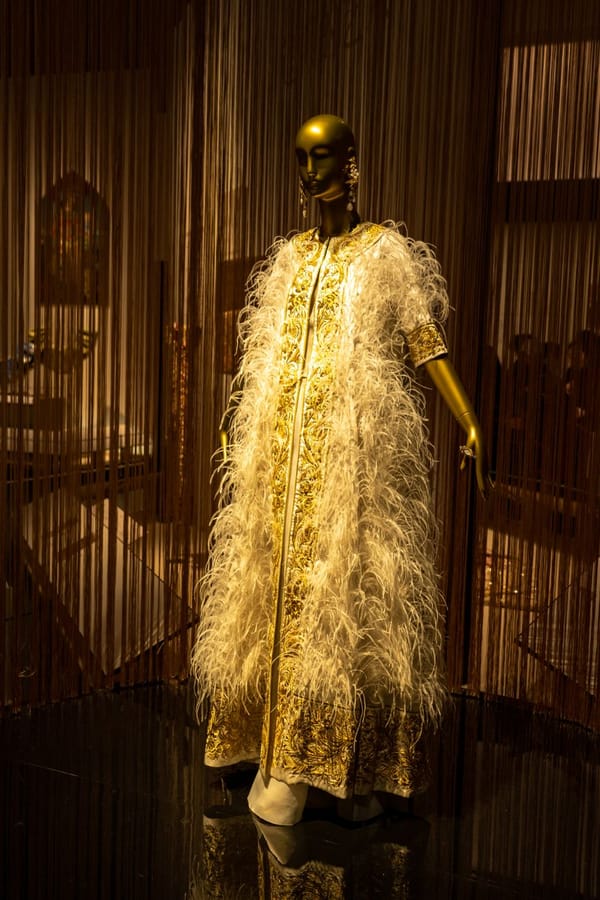
Fashion
What Maria Grazia Chiuri’s Fendi Debut in Rome Means for the Future of Haute Couture
On a warm July evening in Rome, something quietly extraordinary happened inside the Galleria Nazionale d’Arte Moderne e Contemporanea. Maria Grazia Chiuri, fresh from a decade at Dior in Paris, returned to her hometown to present her first haute couture collection for Fendi. The…
Read More...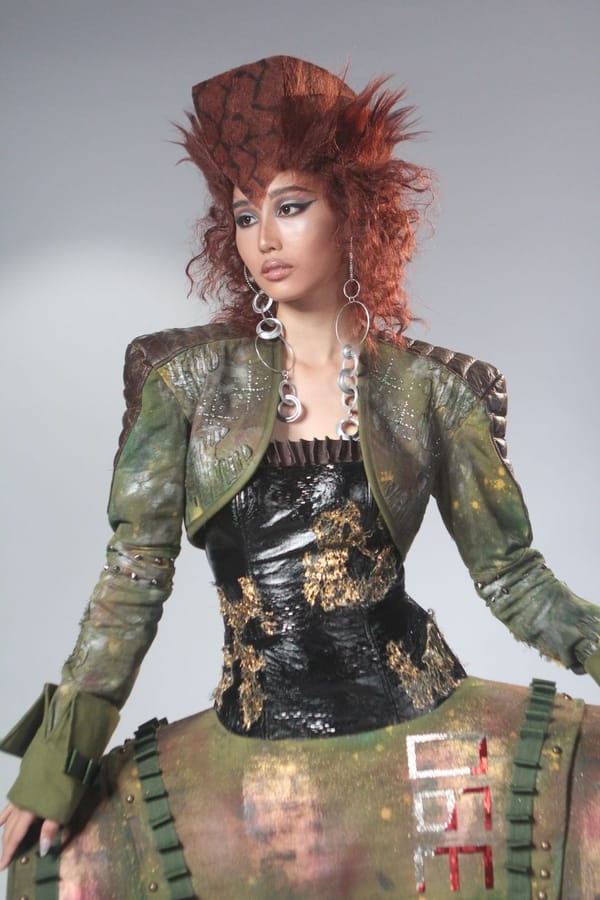
Fashion
What Happens When 18th Century Opulence Meets AI Couture? Jean Paul Gaultier’s Fall 2026 Collection Has the Answer
Imagine stepping into a dream where powdered wigs and corsets collide with laser scans and biomechanical forms. That’s exactly what happened when Jean Paul Gaultier unveiled its Fall 2026 haute couture collection during Paris Fashion Week. The show marked the debut of designer D…
Read More...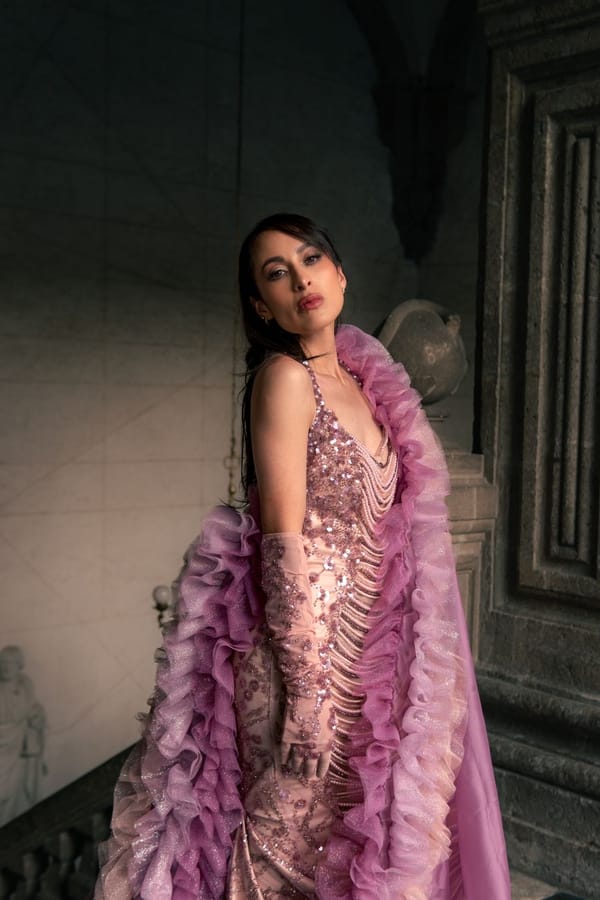
Fashion
20 Years of Masks: How Ashi Studio’s Fall 2026 Couture Turned Paris Fashion Week Into a Surrealist Dreamscape
What happens when a fashion house celebrates two decades not with a retrospective, but with a full-blown theatrical meditation on identity, disguise, and the art of concealment? Ashi Studio answered that question on the Fall 2026 runway, and the answer was nothing short of mesme…
Read More...
Fashion
How Magda Butrym’s 2027 Resort Collection Turns a Cult Film Into Wearable Art (And Why NYFW Is Next)
What happens when a designer takes a cult Polish psychological thriller and turns it into a wardrobe you can actually wear? Magda Butrym’s 2027 Resort collection offers a compelling answer. Titled ‘Szamanka,’ after Andrzej Żuławski’s 1996 film about power, desire, and identity,…
Read More...
Fashion
7 Ways Berlin Designer Mario Kleine Is Redefining Menswear with History and Emotion in Spring 2027
What happens when a designer stops chasing the next big thing and starts listening to the whispers of the past? Mario Kleine, the mind behind Berlin based label Marke, just answered that question with a collection that feels less like fashion and more like a conversation across…
Read More...
Fashion
7 Reasons Gigi Hadid’s Salmon Pink Wiederhoeft Dress and Soft Serve Hair Are the 2026 Wedding Trend You Need to Copy
Picture this: a candlelit seaside soirée, the air thick with romance, and every guest dressed like a character from a dream. That was the scene at Taylor Swift and Travis Kelce’s 2026 wedding, an event that didn’t just celebrate love—it launched a new era in fashion. Among the a…
Read More...
Fashion
Inside Taylor Swift and Travis Kelce’s Madison Square Garden Wedding: Music, Fashion, and Surprises You Need to Know
Imagine the world’s most famous pop star and an NFL superstar saying “I do” inside a legendary arena that has hosted everyone from Elvis to the Knicks. That’s exactly what happened on July 3, 2026, when Taylor Swift and Travis Kelce turned Madison Square Garden into their privat…
Read More...
Fashion
Why Fashion Insiders Are Calling Anna October’s Resort 2027 Collection a Love Letter to Paris (And You’ll Want Every Piece)
In July 2026, the fashion world’s gaze settled on Paris for reasons beyond its famed boulevards and iconic landmarks. Anna October presented her Resort 2027 collection, titled ‘Café Pleasure,’ at an intimate event that wove together architectural inspiration, historical nods, an…
Read More...
Fashion
7 Ways Mykonos Transformed Duckie Brown’s Spring 2027 Menswear Into a Mediterranean Dream
What happens when two Brooklyn designers trade the roar of subway trains for the whisper of Aegean waves? Daniel Silver and Steven Cox, the minds behind Duckie Brown, found out this spring. They spent months on Mykonos, not as tourists but as students of the island’s quiet rhyth…
Read More...