
Does Your Running Playlist Change Your Physiology? New Data Challenges Common Assumptions
We compile, generate and translate using Artificial Intelligence from the below given source. Macro Micro News is responsible for its editorial publication.
Asan, South Korea, Source:
The world of recreational running has embraced auditory stimulation as a standard tool for boosting performance and mood. Athletes increasingly turn to binaural beats and motivational playlists to regulate their effort and emotional state during workouts. A rigorous randomized controlled trial published in October 2026 now invites us to reconsider whether these soundscapes actually alter physiological or biomechanical responses in meaningful ways.
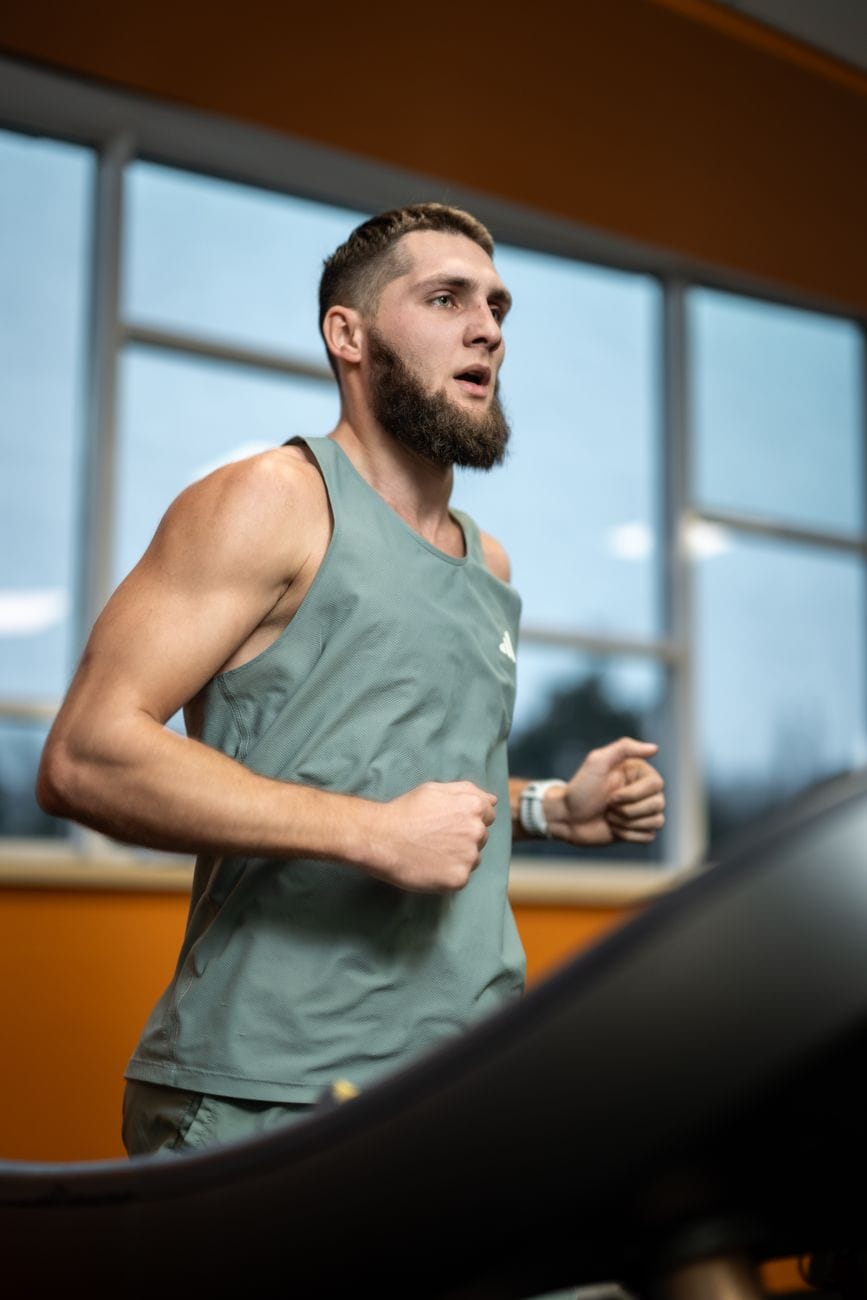
Researchers at Sunmoon University in South Korea designed a study to examine how three distinct auditory conditions affected 66 recreational runners. The participants experienced classical music combined with binaural beats, standardized negative verbal statements, and white noise while completing a 20-minute treadmill run. Each runner self-regulated their intensity to maintain a Rating of Perceived Exertion between 10 and 11. The research team measured oxygen cost, spatiotemporal gait variables, and affective states using established psychological scales.
The results challenge the widespread belief that specific auditory environments significantly shift metabolic efficiency or biomechanics during perceptually regulated exercise. After adjusting for multiple comparisons, the data revealed no statistically detectable differential changes in oxygen uptake, cadence, step length, stride length, or flow experiences across the three conditions. While previous meta-analyses have suggested modest benefits from music, this trial indicates that when runners adjust their speed to maintain effort, the auditory environment does not produce significant shifts in physical output.
Confidence intervals in the study indicated substantial uncertainty rather than strict equivalence. This suggests that while no significant difference was detected, meaningful differences cannot be entirely ruled out. The findings highlight the complexity of isolating auditory effects when self-selected speeds confound the interpretation of oxygen cost per kilometer.
A notable exception emerged in the psychological domain regarding interpersonal control. The condition featuring prerecorded negative statements designed to induce feelings of intimidation was perceived as markedly more controlling than the other conditions. This manipulation check confirmed that the auditory stimulus successfully influenced participants' perception of control. However, this heightened sense of control did not translate into measurable changes in negative affect or physiological strain compared to neutral white noise or relaxing classical music.
The study also highlights critical methodological nuances in exercise science. The use of unvalidated AI-translated questionnaires and the lack of a silent control arm limit the ability to isolate the absolute benefits of auditory exposure versus silence. No adverse events were reported, indicating that even negative auditory stimuli were well-tolerated in the short term.
These findings suggest that auditory environments shape our subjective experience of control and mood but may have limited impact on the acute physiological mechanics of running when intensity is self-regulated. For coaches and athletes, the data implies that the choice of auditory stimulus might be driven more by personal preference and emotional regulation than by expectations of improved metabolic efficiency or biomechanical optimization.
Related in Sport

Sport
Why You See Access Denied on MDPI: The Real Story Behind Scholarly Paywalls
The phrase "Access Denied" often feels like a digital brick wall. It is more than a simple technical glitch. It represents the complex intersection of intellectual property rights and global information accessibility. When you encounter a 403 Forbidden error on platforms like MD…
Read More...
Sport
Why You Are Blocked: The Real Reasons Behind Access Denied Errors
In the vast landscape of digital information, few experiences are as frustrating or ubiquitous as encountering an 'Access Denied' error. This message, often accompanied by cryptic reference numbers and server warnings, represents a fundamental barrier between users and the conte…
Read More...
Sport
Aging and Muscle Protection: What the Repeated Bout Effect Reveals About Your Future Strength
The repeated bout effect describes a fascinating physiological phenomenon where a single session of eccentric exercise provides lasting protection against muscle damage during future similar activities. This adaptive response allows muscles to recover faster and suffer less stru…
Read More...
Sport
Elite Handball: How Anaerobic Power Drives Match Success
Team handball at the highest level demands more than just stamina. It requires explosive power and the ability to change direction instantly. Recent reviews point out that success in this intermittent sport hinges on anaerobic capacity. Players need to accelerate fast, shoot wit…
Read More...
Sport
Why You See Access Denied: The Real Story Behind Academic Paywalls
That frustrating "Access Denied" message is more than just a technical hiccup. It stands at the crossroads of intellectual property rights and global information equity. When you hit a 403 Forbidden error on platforms like MDPI, you are seeing the academic publishing ecosystem i…
Read More...
Sport
Core Training Boosts Balance and Strength in Young Female Tennis Players
Tennis demands explosive power and precise control. The core acts as the central hub that transfers energy from the legs to the arms. For girls aged 13 to 14 this stage offers a unique window for neuromuscular growth. A recent study explores how specific core exercises can impro…
Read More...
Sport
Hungarian Soccer Data: How MD-3 and MD-2 Training Loads Predict Match Wins
In the high-stakes arena of professional football, victory is often attributed to tactical brilliance or individual skill. However, emerging research suggests that the timing and distribution of physical training loads throughout the week may be a critical yet overlooked predict…
Read More...
Sport
How Synchronized Drives Team Unity: New Data on Junior Handball Cohesion
Success in youth sports often gets pinned on individual brilliance. Yet a new perspective suggests that the invisible glue holding a team together matters just as much. A recent six-month study tracking 64 junior handball players aged 12 to 14 reveals that coordination training…
Read More...
Sport
How Elite CrossFit Athletes Taper: The 8-Week Load Management Blueprint for Peak Performance
CrossFit has transformed from a niche fitness trend into a rigorous sport that demands seamless integration of weightlifting, gymnastics, and metabolic conditioning. For elite athletes, victory depends less on raw power alone and more on the precise orchestration of training loa…
Read More...
Sport
How Digital Platforms Can Transform Elite Athlete Career Transitions and Mental Health Support
The journey from elite sports to post-athletic life presents one of the most psychologically and socially demanding phases in an athlete's career. A comprehensive cross-sectional study involving 136 European elite athletes reveals a critical disconnect between the high value ath…
Read More...