
Germany's Constitutional Crossroads: What the Federal Court Decides Next Will Reshape Party Ban Precedents
We compile, generate and translate using Artificial Intelligence from the below given source. Macro Micro News is responsible for its editorial publication.
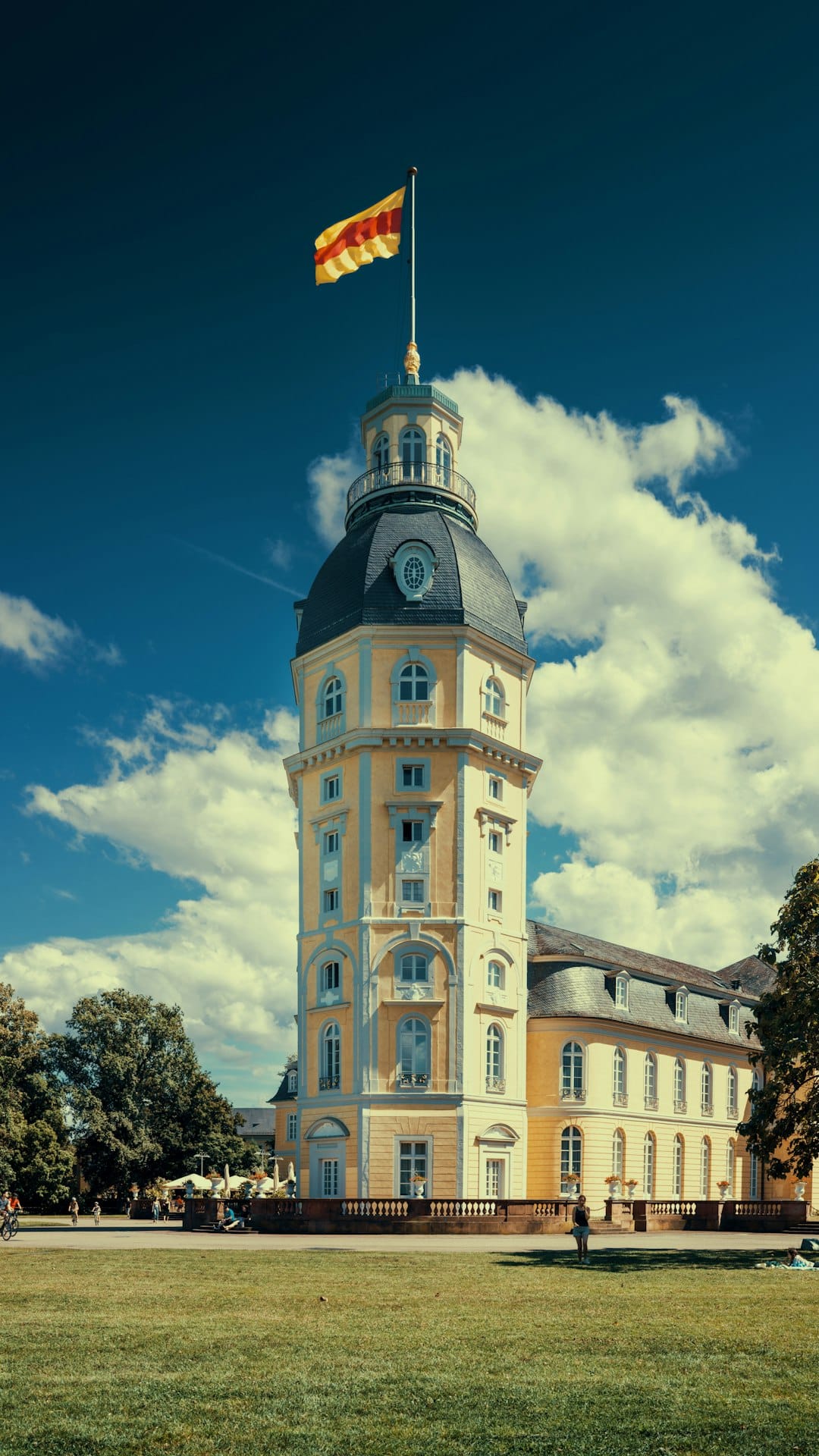
Karlsruhe, Germany, Source:
The political landscape in Germany is currently navigating a period of intense scrutiny regarding the legal boundaries of democratic participation and party bans. As calls for stricter measures against the Alternative for Germany (AfD) grow louder, particularly from prominent figures such as Hendrik Wüst, Minister President of North Rhine-Westphalia, the focus has shifted toward the role of the Federal Constitutional Court in Karlsruhe. The court now holds the opportunity to establish definitive legal standards that could clarify the complex criteria required for banning a political party under German law.
Two significant legal proceedings have brought this issue to the forefront. Both cases involve the revocation of weapons permits granted to individuals who are members of the AfD. The administrative authorities justified these revocations by asserting that membership in the party inherently demonstrates unreliability due to an alleged opposition to the free democratic basic order (freiheitliche demokratische Grundordnung). Despite previous unsuccessful attempts through lower courts, the affected members filed constitutional complaints on September 10, 2026, seeking clarity from the highest judicial body in the land.
Stefan Möller, Deputy Federal Spokesman for the AfD, emphasized the broader implications of these cases. He noted that given the heated political climate and the potential societal consequences of banning the country's third-largest party, especially in eastern Germany, it is crucial for the Constitutional Court to refine its jurisprudence dating back to the NPD era. Möller argued that a comprehensive assessment of a party must account for its parliamentary activities, including thousands of initiatives and speeches made within city councils and state parliaments. He questioned how such extensive democratic engagement can be disregarded when determining whether a party poses a threat to the constitution.
The core of the debate lies in the interpretation of what constitutes a violation of the democratic order. Previous rulings have often focused on specific statements or actions deemed extremist, but critics argue that this approach fails to consider the totality of a party's legislative work. The Administrative Courts have shown divergent interpretations in similar cases, creating legal uncertainty. A ruling by the Federal Constitutional Court would not only resolve these immediate disputes over weapon licenses but also set a precedent for any future discussions on party bans.
This legal challenge highlights the delicate balance between protecting democracy and preserving political pluralism. By providing clearer guidelines, the Court aims to prevent arbitrary decisions and ensure that any measure taken against a political entity is grounded in robust, consistent legal principles. The outcome of these constitutional complaints will likely influence not only domestic policy debates but also international perceptions of Germany's commitment to rule of law and democratic resilience.
Related in Politics
Politics
EU Strategy 2026: How Tech Capital and Active Lifestyles Are Reshaping Europe's Future
The European Commission has unveiled a dual-track strategy for 2026 that targets both economic resilience and social well-being. By strengthening technological infrastructure while promoting healthier lifestyles, the EU aims to align policy with public sentiment amidst global un…
Read More...
Politics
EU September 2026 Update: Data Centers, Customs, and Arctic Resilience
The European Commission has introduced a common rating scheme for data centers to enhance transparency regarding energy and water consumption. This initiative supports Europe's push for technological independence while addressing the environmental impacts of rapid digital expans…
Read More...
Politics
Guimarães Summit: Europe’s $180B Climate Strategy for COP31
The historic city of Guimarães has become the focal point for a critical dialogue on clean growth and sustainable development. As the European Green Capital, this gathering serves as a vital precursor to COP31, emphasizing the urgent need to align climate action with economic st…
Read More...
Politics
EU Deploys €489M to Rebuild Southern Europe After Winter Storms: What’s Next for Portugal, Spain, Italy & Malta?
The European Commission has stepped forward with a decisive financial response, announcing a €489 million aid package aimed at helping Portugal, Spain, Italy, and Malta recover from the severe weather events that battered the region in January and February 2026. This significant…
Read More...
Politics
Germany Security Alert: Weidel Challenges Merz Plan on Migration and Safety
A significant political discussion has emerged in Germany regarding national security and migration policy. Alice Weidel, co-leader of the Alternative for Germany (AfD), has responded to a ten-point plan proposed by the Merz-led federal government. The government released this s…
Read More...
Politics
UN General Assembly 2026: Can Global Leaders Restore Trust Before the Deadline?
Every September New York becomes the heartbeat of global diplomacy. Heads of state and senior diplomats gather at United Nations Headquarters to navigate a complex web of geopolitical tensions and overlapping crises. The 81st session of the UN General Assembly’s High-Level Week…
Read More...
Politics
UN General Assembly 2026: Can Leaders Bridge the Gap Before 2030?
Each September, New York becomes the global stage for diplomacy. Heads of state and senior diplomats gather at United Nations Headquarters to address pressing international issues. The 81st session of the UN General Assembly’s High-Level Week takes place amid rising geopolitical…
Read More...
Politics
EU Cuts Red Tape: How Ending Gold-Plating Boosts SME Competitiveness in 2026
The European Commission has launched a decisive campaign to eliminate "gold-plating," a practice where member states add unnecessary regulatory layers beyond EU requirements. This initiative follows President von der Leyen’s 2026 State of the Union Address, which highlighted reg…
Read More...
Politics
Europe's Heat Crisis: How the EU is Rewiring Resilience Against Record Wildfires
The summer of 2026 has served as a stark reminder of Europe’s vulnerability to climate change. Heatwaves, droughts, and wildfires have inflicted substantial damage on public health, agriculture, and infrastructure. As temperatures soar across the continent, the European Commissi…
Read More...
Politics
EU Missions Hit Major Milestones: Cancer Goals Met, Farm Aid Approved, and Key Deals Cleared
The European Commission has unveiled a mid-term assessment that confirms the EU's Mission-driven approach is actively reshaping the continent. Released on September 14, 2026, this report details how scientific innovation under the Horizon Europe programme is turning into practic…
Read More...