
House of Dagmar Returns: Fall 2026 Collection Blends Surrealist Art with Blackened Couture in New York

New York City, Nishant Shrivastava: After years of silence, House of Dagmar stepped back onto the international runway on June 6, 2026, and the fashion world took notice. The Fall 2026 Ready-to-Wear collection, unveiled in New York City, marks the brand’s first official presentation in over a decade. Led by Karin Söderlind, one of the three founding sisters, the show didn’t just revisit the label’s Scandinavian avant-garde roots. It pushed forward into something darker, more introspective, and deeply artistic.
The collection is built around a monochrome palette of deep black, but don’t mistake that for simplicity. Within that shadowy foundation, bursts of electric cobalt, fiery orange, and iridescent green appear like sudden dreams. These colors are drawn from the surrealist canvases of Joan Miró, and they do more than decorate. They punctuate the silence of the garments, pulling your eye to the psychological layers stitched into every piece. Abstract shapes float across silk gowns. Asymmetrical silhouettes echo Miró’s biomorphic forms. Hand-painted motifs mimic the spontaneity of his brushwork, making each look feel like a living canvas.
What makes this collection stand out isn’t just the visual daring. It’s the story woven through every seam. Each garment speaks to transformation: loss, rebirth, and the space between reality and imagination. Tailored coats with exaggerated shoulders carry sculptural elements that recall Miró’s floating figures. Layered tulle dresses seem to dissolve into shadow, their hemlines trailing like ink bleeding across paper. The craftsmanship is meticulous. Hand-embroidered threads form constellations across bodices. Translucent organza panels reveal understructures that resemble architectural blueprints, inviting you to look closer and wonder what lies beneath.
The presentation itself was designed to pull you into a different state of mind. Held in a repurposed industrial warehouse, the space was lit only by soft, amber-toned spotlights. Models moved slowly, deliberately, their expressions blank yet intense. This wasn’t a typical fashion show. It felt more like a ritual. Music composed specifically for the event featured haunting vocal harmonies and dissonant piano chords, amplifying the emotional weight of the moment. You weren’t watching clothes. You were experiencing a meditation on form, feeling, and memory.
House of Dagmar’s return carries extra weight because of its history. Founded in 1978 during the height of the Scandinavian Design movement, the brand was known for blending minimalist structure with poetic embellishment. By the early 2000s, shifting market dynamics and internal creative tensions led to a hiatus. The brand remained largely dormant, referenced more in academic texts than on runways. Its revival in 2026 signals more than a comeback. It’s a deliberate repositioning toward high-concept, emotionally resonant design that speaks directly to today’s cultural moment.
This shift aligns with broader trends in luxury fashion. More houses are turning to psychological depth and artistic references to stand out. Collections inspired by Dali, Kandinsky, and H.R. Giger have gained traction, reflecting a growing appetite for narratives that go beyond surface beauty. House of Dagmar’s use of Miró fits perfectly within this trajectory, bridging mid-century modernism with post-digital surrealism. It offers something rare: a conversation between past and future, between art and wearability.
The brand’s decision to debut the Fall 2026 line during a resort presentation is also strategic. Resort collections are traditionally lighter and more accessible. By using this platform to introduce fall concepts, the designers blur seasonal boundaries. This reflects how fashion consumption has evolved in the digital age. Consumers expect continuity across seasons, and brands are responding with year-round storytelling. House of Dagmar is leaning into that shift, offering a collection that feels timeless rather than tied to a calendar.
From a technical perspective, the collection showcases advanced textile innovation. A signature fabric developed with a Finnish textile lab combines viscose and recycled polyester. Named ‘Nocturne,’ it offers both drape and durability, allowing for complex silhouettes without sacrificing wearability. You’ll find it in structured jackets and flowing skirts, contributing to the collection’s balance between edge and practicality.
The accessories are understated but intentional. Shoes feature elongated toe boxes and metallic heel caps, echoing the angular geometry of Miró’s later works. Handbags are shaped like miniature sculptures, some resembling folded origami, others evoking organic growth patterns. All are crafted from vegan leather sourced from mushroom mycelium, reinforcing the brand’s commitment to sustainability. In luxury fashion today, that matters more than ever.
Critical reception has been strong. Reviewers praise the collection’s intellectual rigor, emotional resonance, and technical precision. One critic noted that Dagmar didn’t just dress women. They dressed their inner selves, their anxieties, their dreams. Another highlighted the brand’s ability to merge historical reference with future-facing design, calling it a manifesto for slow fashion in an era of speed.
Looking ahead, House of Dagmar’s Fall 2026 collection could become a benchmark for how heritage brands reinvent themselves without losing authenticity. With Karin Söderlind at the helm and a clear artistic vision, the house appears poised for sustained resurgence. Future plans include a limited capsule collaboration with a contemporary artist, potential expansion into ready-to-wear boutiques in Paris, Milan, and Tokyo, and the launch of a digital archive showcasing the brand’s evolution since 1978.
As the fashion world continues to explore questions of relevance, identity, and sustainability, House of Dagmar’s return offers a powerful reminder. True innovation doesn’t come from novelty alone. It comes from depth, intention, and the courage to return after silence. This collection invites you to look, to feel, and to ask what stories your own clothes might tell.
Related in Fashion

Fashion
Why Your Next Wardrobe Could Be Made of Mushrooms: Inside Ambush’s Spring 2027 Collection
What happens when a Tokyo fashion house decides to stop chasing global trends and instead listens to the forest? You get Ambush’s Spring 2027 Ready to Wear collection, unveiled during Paris Fashion Week. This is not just a new line of clothes. It is a quiet rebellion against the…
Read More...
Fashion
What Maria Grazia Chiuri’s Fendi Debut in Rome Means for the Future of Haute Couture
On a warm July evening in Rome, something quietly extraordinary happened inside the Galleria Nazionale d’Arte Moderne e Contemporanea. Maria Grazia Chiuri, fresh from a decade at Dior in Paris, returned to her hometown to present her first haute couture collection for Fendi. The…
Read More...
Fashion
What Happens When 18th Century Opulence Meets AI Couture? Jean Paul Gaultier’s Fall 2026 Collection Has the Answer
Imagine stepping into a dream where powdered wigs and corsets collide with laser scans and biomechanical forms. That’s exactly what happened when Jean Paul Gaultier unveiled its Fall 2026 haute couture collection during Paris Fashion Week. The show marked the debut of designer D…
Read More...
Fashion
20 Years of Masks: How Ashi Studio’s Fall 2026 Couture Turned Paris Fashion Week Into a Surrealist Dreamscape
What happens when a fashion house celebrates two decades not with a retrospective, but with a full-blown theatrical meditation on identity, disguise, and the art of concealment? Ashi Studio answered that question on the Fall 2026 runway, and the answer was nothing short of mesme…
Read More...
Fashion
How Magda Butrym’s 2027 Resort Collection Turns a Cult Film Into Wearable Art (And Why NYFW Is Next)
What happens when a designer takes a cult Polish psychological thriller and turns it into a wardrobe you can actually wear? Magda Butrym’s 2027 Resort collection offers a compelling answer. Titled ‘Szamanka,’ after Andrzej Żuławski’s 1996 film about power, desire, and identity,…
Read More...
Fashion
7 Ways Berlin Designer Mario Kleine Is Redefining Menswear with History and Emotion in Spring 2027
What happens when a designer stops chasing the next big thing and starts listening to the whispers of the past? Mario Kleine, the mind behind Berlin based label Marke, just answered that question with a collection that feels less like fashion and more like a conversation across…
Read More...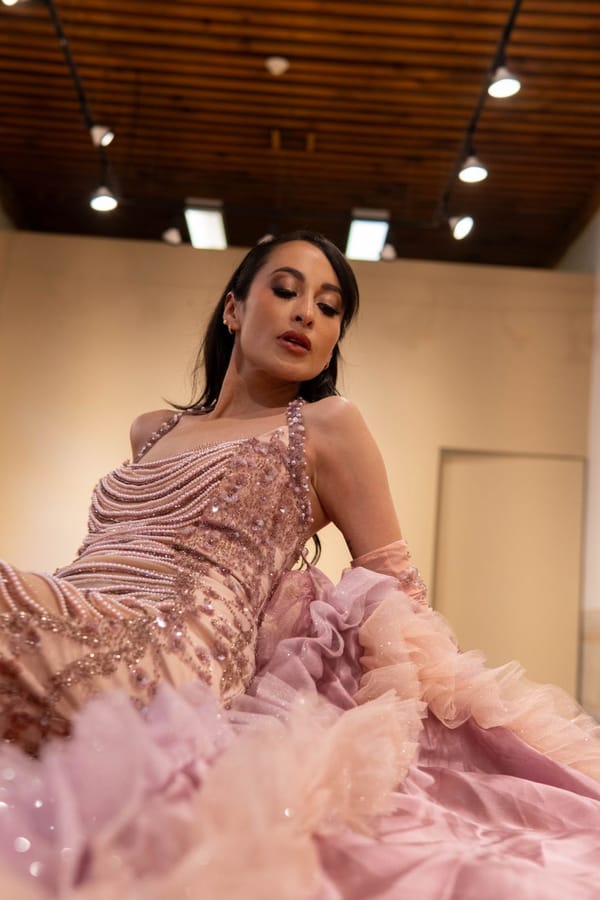
Fashion
7 Reasons Gigi Hadid’s Salmon Pink Wiederhoeft Dress and Soft Serve Hair Are the 2026 Wedding Trend You Need to Copy
Picture this: a candlelit seaside soirée, the air thick with romance, and every guest dressed like a character from a dream. That was the scene at Taylor Swift and Travis Kelce’s 2026 wedding, an event that didn’t just celebrate love—it launched a new era in fashion. Among the a…
Read More...
Fashion
Inside Taylor Swift and Travis Kelce’s Madison Square Garden Wedding: Music, Fashion, and Surprises You Need to Know
Imagine the world’s most famous pop star and an NFL superstar saying “I do” inside a legendary arena that has hosted everyone from Elvis to the Knicks. That’s exactly what happened on July 3, 2026, when Taylor Swift and Travis Kelce turned Madison Square Garden into their privat…
Read More...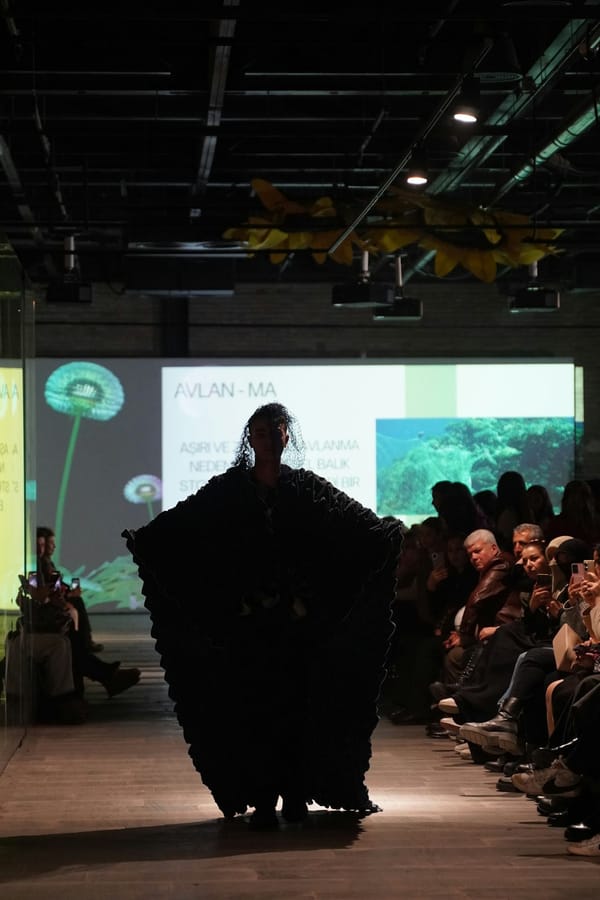
Fashion
Why Fashion Insiders Are Calling Anna October’s Resort 2027 Collection a Love Letter to Paris (And You’ll Want Every Piece)
In July 2026, the fashion world’s gaze settled on Paris for reasons beyond its famed boulevards and iconic landmarks. Anna October presented her Resort 2027 collection, titled ‘Café Pleasure,’ at an intimate event that wove together architectural inspiration, historical nods, an…
Read More...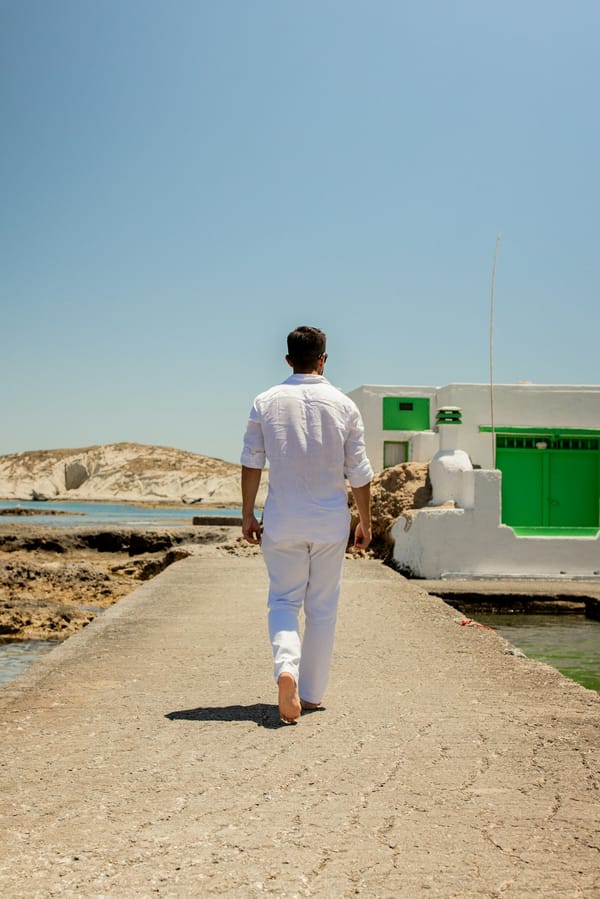
Fashion
7 Ways Mykonos Transformed Duckie Brown’s Spring 2027 Menswear Into a Mediterranean Dream
What happens when two Brooklyn designers trade the roar of subway trains for the whisper of Aegean waves? Daniel Silver and Steven Cox, the minds behind Duckie Brown, found out this spring. They spent months on Mykonos, not as tourists but as students of the island’s quiet rhyth…
Read More...