
How MAGA Inc. Built a $400 Million War Chest for the 2026 Midterms: What It Means for Your Vote
Washington, D.C., MMN Correspondent: Imagine having $400 million to spend on shaping the future of American politics. That is exactly what MAGA Inc., the pro-Trump super PAC, has reportedly amassed ahead of the 2026 midterm elections. This is not just a number. It is a signal that political fundraising has entered a new dimension, one where the scale of money could redefine how campaigns are run and how voters are reached.
Where did all this money come from? According to campaign finance reports, more than 85 percent of the funds came from donors giving over $100,000 each. Think tech entrepreneurs, real estate moguls, and energy executives who are aligned with the conservative movement. But there is also a grassroots side to this story. Small-dollar donations, combined with strategic partnerships with allied organizations, have helped push the total to a level that dwarfs previous records.
To put this in perspective, the largest super PACs during the 2022 midterms each raised less than $150 million. Even the biggest Democratic super PAC, Priorities USA Action, peaked at around $230 million. So MAGA Inc. has nearly tripled what was once considered the ceiling for a single political entity. That is a dramatic shift in the landscape of campaign finance.
Why now? The post-2024 political climate has intensified polarization. Many conservative voters see the 2026 midterms as a referendum on President Donald Trump’s influence and the broader direction of the Republican Party. Digital fundraising platforms and encrypted donation systems have also made it easier to raise money quickly without traditional banking oversight. And dark money networks, which allow donors to remain anonymous, have played a role in fueling this massive operation.
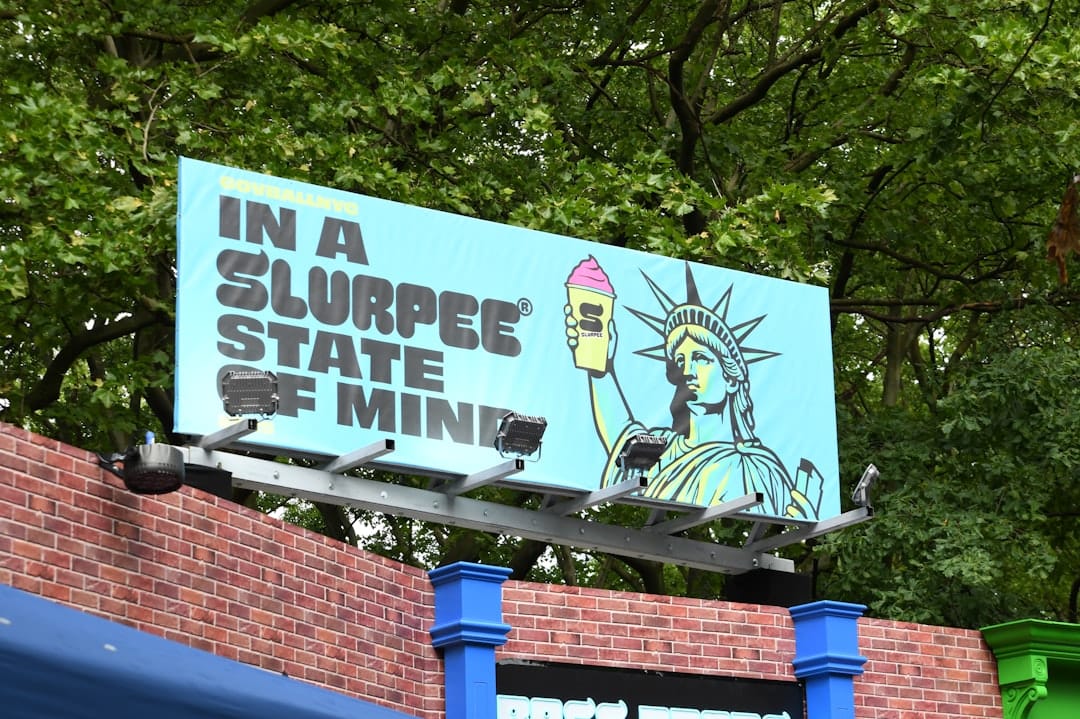
MAGA Inc. is not just sitting on this cash. It is already deploying it with precision. The organization has committed over $120 million to advertising and field operations in 27 competitive House and Senate races. That includes digital ads, door-to-door canvassing, town halls, and even billboards in rural counties where mainstream media reach is limited. The group employs former tech executives from companies like Amazon, Meta, and Palantir to build predictive models that identify swing districts and target voters with surgical accuracy.
What makes this effort different is its decentralized structure. Unlike traditional PACs tied to a single candidate, MAGA Inc. operates as a broad coalition that supports multiple Republican candidates at once. This allows it to spread resources across battleground states like Georgia, Arizona, Pennsylvania, and Wisconsin, where every vote counts.
Of course, this level of concentrated spending raises questions about the health of democracy. When a single group can pour hundreds of millions into elections, it amplifies the voices of wealthy donors while potentially drowning out smaller grassroots movements. The legal framework for super PACs has remained largely unchanged since the 2010 Citizens United decision, which allowed unlimited independent expenditures by corporations and unions. While federal law prohibits coordination between super PACs and candidate campaigns, enforcement is weak. This creates a system where groups like MAGA Inc. can act as de facto campaign arms without direct accountability.
Legal scholars point out that the Federal Election Commission has struggled to keep up with evolving fundraising tactics. With no cap on contributions to super PACs and limited transparency requirements, vast sums can flow into political discourse with minimal public scrutiny. The line between advocacy and political interference continues to blur.
Looking ahead, the 2026 midterms are expected to be among the most expensive in U.S. history. Analysts project total campaign spending could exceed $15 billion, with super PACs accounting for nearly half of all outside spending. If MAGA Inc. maintains its current trajectory, it may raise an additional $200 million in the final year before the election, potentially surpassing $600 million in total funds.
The impact of this financial firepower will likely be felt across policy areas. Candidates backed by this war chest tend to oppose abortion rights, advocate for stricter immigration policies, and push for deregulation in energy and finance. Judicial appointments, particularly to federal appellate courts, may also become a priority, as conservative legal scholars emphasize the long-term consequences of court composition.
As the nation prepares for what some analysts call a new era of political finance, the question remains: can democracy withstand the influence of such concentrated wealth? The $400 million war chest of MAGA Inc. is not just a number. It is a symbol of a transformation in American politics, where money, technology, and ideology converge to shape the future of governance. With the 2026 midterms just two years away, the race for influence is already underway. And in this battle, the size of the war chest may determine not only who wins seats in Congress but who shapes the country’s destiny.
Related in Finance

Finance
Oil Breaches $100: What Trump’s ‘Massive Attack’ Warning Means for Your Wallet and Global Markets
On a sweltering July evening in Florida, a single sentence from a former president sent shockwaves through the global economy. Oil prices just punched through the $100 barrier for the first time in nearly three years. And the reason? Not a supply cut, not a refinery fire, but a…
Read More...
Finance
Tesla Profits Drop 45%: What the Price War Means for Your Next EV Purchase
Tesla just reported a 45% drop in net income for the second quarter of 2026. That’s a massive number. And it’s not because people stopped buying their cars. Deliveries actually ticked up to around 480,000 units globally. So what’s going on? The answer is simple and complex at th…
Read More...
Finance
What Would Happen If a U.S. President Ordered a Strike on Iran’s Nuclear Site? Here’s What You Need to Know
Imagine standing in a packed arena in Dallas, Texas, listening to a former president promise something that could reshape the Middle East for decades. That’s exactly what happened recently when Donald Trump told a roaring crowd that if he returns to the White House in 2028, he w…
Read More...
Finance
140+ Casualties in 3 Countries: What’s Driving the US Military’s New Strategy Against Iran?
Have you ever wondered what happens when a superpower decides to change the rules of engagement overnight? That’s exactly what we’re seeing right now across Iraq, Syria, and Yemen. The United States has just launched a coordinated wave of military strikes against Iranian backed…
Read More...
Finance
What Happens When a Social Media Empire Collides with International Law? The Tate Brothers Extradition Case Explained
The United Kingdom has formally requested the extradition of Andrew and Tristan Tate following their arrest in Miami, Florida, on July 18, 2026. This development marks a significant moment in a legal saga that has captured global attention, raising questions about the intersecti…
Read More...
Finance
3 Summer Programs in Ajman 2026: Build Financial Skills, AI Knowledge & Mental Math for Ages 6–18
What if your child’s summer break could be the launchpad for a future in finance, artificial intelligence, or entrepreneurship? That’s exactly what the Department of Finance in Ajman is offering with its 2026 summer lineup. Instead of idle days, kids and teens will dive into han…
Read More...
Finance
What Happens When Wildfire Smoke Crosses Borders? A Trade War Over the Air We Breathe
Imagine waking up to a sky turned orange, the air thick with the smell of burning forests, and then hearing your president blame your northern neighbor for the haze. That is exactly what happened on July 17, 2026, when former U.S. President Donald Trump stood before a rally in M…
Read More...
Finance
Chip Stocks Crashed 6% in a Day: What’s Really Happening to Nvidia, Intel, and Micron?
If you blinked on July 17, 2026, you might have missed one of the most dramatic single-day sell-offs in the U.S. semiconductor sector. Chip and memory stocks didn’t just dip—they plunged. Nvidia fell 8.4%. Micron dropped 10.3%. Intel lost 7.6%. And the Philadelphia Semiconductor…
Read More...
Finance
Indian Firms Spent $45 Billion Abroad in 2024: Is the Rupee Paying the Price?
Corporate India is stepping onto the global stage like never before. Indian companies are pouring record amounts of money into overseas acquisitions, new factories, and strategic partnerships. But here is the question that is keeping economists awake: can the rupee survive this…
Read More...
Finance
China's Growth Dips to 4.1%: What This Means for Global Markets and Your Investments
China’s economy just hit a speed bump that’s got everyone talking. Official data from July 2026 shows the country’s GDP grew only 4.1% year on year in the second quarter. That’s the slowest pace since early 2023. For a nation that once sprinted at 7% or more, this is a notable s…
Read More...