
What Would Happen If a U.S. President Ordered a Strike on Iran’s Nuclear Site? Here’s What You Need to Know
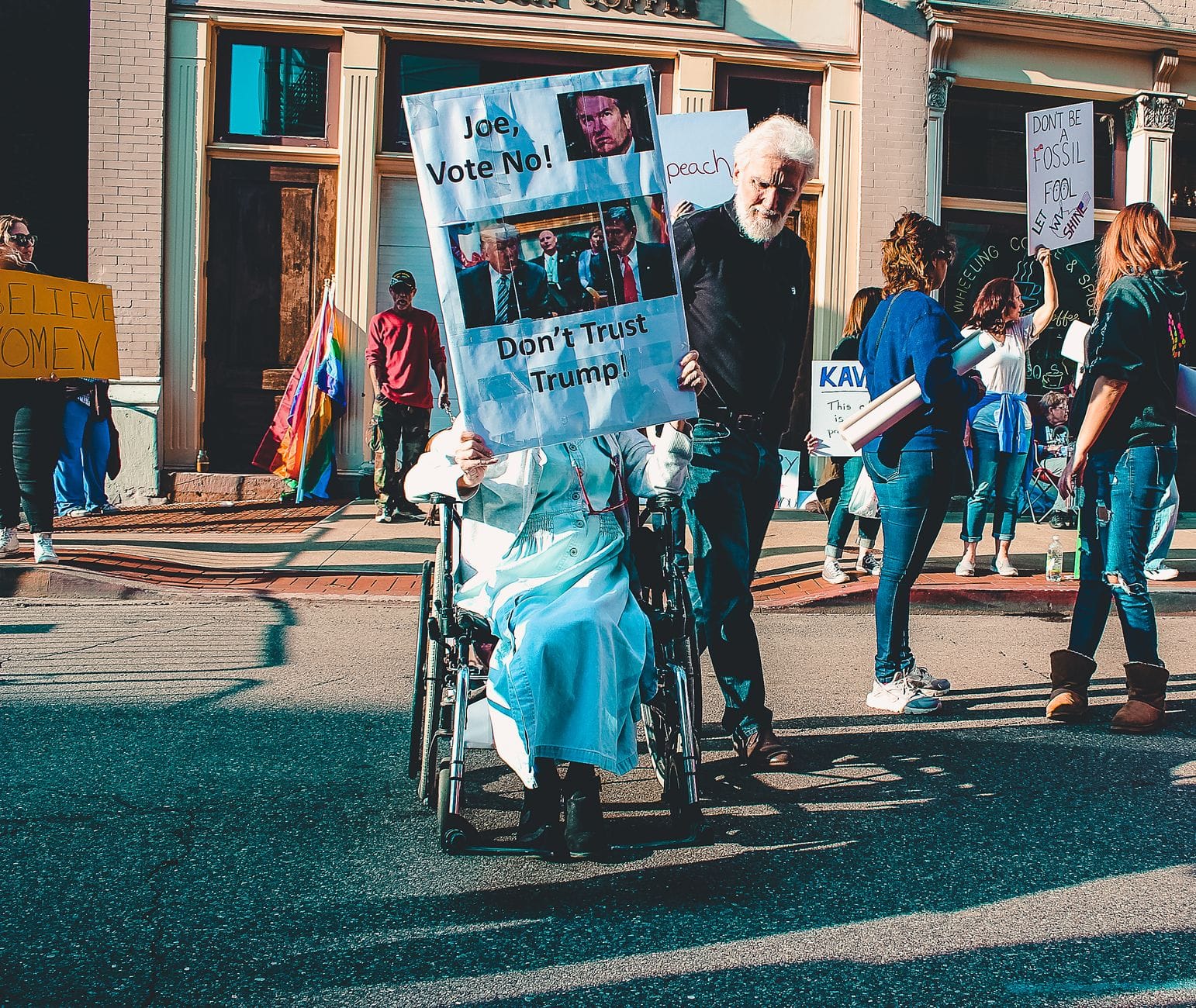
Dallas, Texas, MMN Correspondent: Imagine standing in a packed arena in Dallas, Texas, listening to a former president promise something that could reshape the Middle East for decades. That’s exactly what happened recently when Donald Trump told a roaring crowd that if he returns to the White House in 2028, he would authorize a military strike on an Iranian nuclear facility. The room erupted. But beyond the applause, a much bigger question hangs in the air: what would that actually mean for the world?
This isn’t just campaign rhetoric. It comes at a time when the Middle East is already on edge. Conflicts in Gaza, Yemen, and the ongoing shadow war between Iran and Israel have turned the region into a powder keg. Trump’s words didn’t just stir the crowd; they sent ripples through diplomatic channels from Tehran to Brussels to Beijing.
To understand the weight of this threat, you have to look back at his first term. In 2018, Trump pulled the United States out of the Iran nuclear deal, the Joint Comprehensive Plan of Action, and slapped heavy sanctions on Tehran. Since then, Iran has pushed its uranium enrichment far beyond the deal’s limits. The International Atomic Energy Agency now reports that Iran has enriched uranium to 60% purity. That’s just one step away from the 90% needed for a nuclear weapon. Western intelligence agencies are watching closely, and they don’t like what they see.
The tension didn’t start with Trump’s speech. In early 2024, Israel struck Iranian backed militias in Syria after a deadly drone attack on its embassy in Damascus. Iran responded by launching more than 300 drones and missiles toward Israel in April 2024. It was the largest assault of its kind in history. Most were intercepted, but the message was clear: Iran is willing to escalate. Analysts now warn that a direct attack on Iran’s nuclear sites could pull in Hezbollah, Hamas, and proxy forces across Iraq, Lebanon, and the Arabian Peninsula. A regional war would no longer be a hypothetical.
Trump specifically mentioned the Fordow Fuel Enrichment Plant, buried deep inside a mountain near Qom. This facility has been a concern for years. It was originally built as a covert operation in the 2000s, and its hardened structure makes it a tempting target for a precision strike. A successful hit could set Iran’s nuclear program back by months or even years. But the risks are enormous. Retaliation against U.S. allies in the region would be almost certain, and global oil prices could spike overnight.
Right now, the United States has a strong military presence in the Persian Gulf, with naval bases in Bahrain, Kuwait, and Qatar. Patriot missile batteries and F-35 fighter jets have been deployed to Israel as a precaution. Russia and China have both voiced concern. Moscow called any U.S. led military intervention a dangerous provocation. Beijing urged restraint and pushed for diplomatic solutions. The European Union, while supporting non proliferation efforts, warned that unilateral military action could undermine international law and destabilize the entire region.
Back home, Americans are split. A Pew Research Center survey from June 2026 found that 52% of Americans support stronger measures against Iran’s nuclear ambitions, including military options. The other 48% oppose direct military engagement. Among younger voters, the numbers flip dramatically: 67% prefer diplomacy over force. This generational divide reflects a broader shift in how Americans view foreign policy, shaped by two decades of war in Afghanistan and Iraq.
Historically, the United States has avoided direct attacks on nuclear facilities, even when they were considered. The most famous example is Israel’s 1981 bombing of Iraq’s Osirak reactor. That strike drew widespread condemnation and sparked debates about the legality of preemptive action. Critics today argue that attacking Iran’s nuclear sites could push Tehran to accelerate its weaponization efforts as a defensive response to what it would see as an existential threat.
The economic consequences would hit fast and hard. Within hours of Trump’s announcement, global crude oil prices jumped more than 20%, with Brent crude crossing $120 per barrel. The International Energy Agency warned that any disruption to Iranian oil exports, which average about 2.5 million barrels per day, could trigger a worldwide energy crisis. Supply chains are already strained from the pandemic, the war in Ukraine, and disruptions in Red Sea shipping lanes.
Trump has argued that military action would be swift, surgical, and limited. He pointed to the 2011 raid that killed Osama bin Laden as a model, saying decisive operations can prevent larger conflicts. His campaign emphasizes strategic deterrence and a return to what he calls a tougher foreign policy posture. But experts say the situation today is far more complex. Iran is no longer isolated. It has close defense ties with Russia, China, and North Korea. It has developed sophisticated cyber warfare capabilities and ballistic missiles that can reach targets across the Middle East and parts of Europe. A U.S. strike could trigger coordinated responses from multiple fronts, including cyberattacks on American infrastructure, missile barrages on U.S. bases, and intensified support for militant groups.
Diplomatic efforts are underway. France, Germany, and the United Kingdom have proposed renewed negotiations through the IAEA, aiming to restore monitoring protocols and tighten controls on dual use materials. Turkey and Oman have offered to mediate between Washington and Tehran, but Iran has so far rejected all overtures.
As the 2028 election cycle heats up, Iran’s nuclear program is becoming a defining foreign policy issue. With geopolitical instability rising, energy markets volatile, and the threat of nuclear proliferation looming, every statement from a political leader carries enormous weight. Whether Trump’s threat leads to actual military action or serves as a strategic deterrent remains uncertain. What is clear is that the stakes have never been higher.
The Middle East stands at a crossroads. The coming months will test not only the resolve of nations but the very foundations of international security. Every word matters. Every decision counts.
Related in Finance

Finance
Oil Breaches $100: What Trump’s ‘Massive Attack’ Warning Means for Your Wallet and Global Markets
On a sweltering July evening in Florida, a single sentence from a former president sent shockwaves through the global economy. Oil prices just punched through the $100 barrier for the first time in nearly three years. And the reason? Not a supply cut, not a refinery fire, but a…
Read More...
Finance
Tesla Profits Drop 45%: What the Price War Means for Your Next EV Purchase
Tesla just reported a 45% drop in net income for the second quarter of 2026. That’s a massive number. And it’s not because people stopped buying their cars. Deliveries actually ticked up to around 480,000 units globally. So what’s going on? The answer is simple and complex at th…
Read More...
Finance
How MAGA Inc. Built a $400 Million War Chest for the 2026 Midterms: What It Means for Your Vote
Imagine having $400 million to spend on shaping the future of American politics. That is exactly what MAGA Inc., the pro-Trump super PAC, has reportedly amassed ahead of the 2026 midterm elections. This is not just a number. It is a signal that political fundraising has entered…
Read More...
Finance
140+ Casualties in 3 Countries: What’s Driving the US Military’s New Strategy Against Iran?
Have you ever wondered what happens when a superpower decides to change the rules of engagement overnight? That’s exactly what we’re seeing right now across Iraq, Syria, and Yemen. The United States has just launched a coordinated wave of military strikes against Iranian backed…
Read More...
Finance
What Happens When a Social Media Empire Collides with International Law? The Tate Brothers Extradition Case Explained
The United Kingdom has formally requested the extradition of Andrew and Tristan Tate following their arrest in Miami, Florida, on July 18, 2026. This development marks a significant moment in a legal saga that has captured global attention, raising questions about the intersecti…
Read More...
Finance
3 Summer Programs in Ajman 2026: Build Financial Skills, AI Knowledge & Mental Math for Ages 6–18
What if your child’s summer break could be the launchpad for a future in finance, artificial intelligence, or entrepreneurship? That’s exactly what the Department of Finance in Ajman is offering with its 2026 summer lineup. Instead of idle days, kids and teens will dive into han…
Read More...
Finance
What Happens When Wildfire Smoke Crosses Borders? A Trade War Over the Air We Breathe
Imagine waking up to a sky turned orange, the air thick with the smell of burning forests, and then hearing your president blame your northern neighbor for the haze. That is exactly what happened on July 17, 2026, when former U.S. President Donald Trump stood before a rally in M…
Read More...
Finance
Chip Stocks Crashed 6% in a Day: What’s Really Happening to Nvidia, Intel, and Micron?
If you blinked on July 17, 2026, you might have missed one of the most dramatic single-day sell-offs in the U.S. semiconductor sector. Chip and memory stocks didn’t just dip—they plunged. Nvidia fell 8.4%. Micron dropped 10.3%. Intel lost 7.6%. And the Philadelphia Semiconductor…
Read More...
Finance
Indian Firms Spent $45 Billion Abroad in 2024: Is the Rupee Paying the Price?
Corporate India is stepping onto the global stage like never before. Indian companies are pouring record amounts of money into overseas acquisitions, new factories, and strategic partnerships. But here is the question that is keeping economists awake: can the rupee survive this…
Read More...
Finance
China's Growth Dips to 4.1%: What This Means for Global Markets and Your Investments
China’s economy just hit a speed bump that’s got everyone talking. Official data from July 2026 shows the country’s GDP grew only 4.1% year on year in the second quarter. That’s the slowest pace since early 2023. For a nation that once sprinted at 7% or more, this is a notable s…
Read More...