
Tesla Profits Drop 45%: What the Price War Means for Your Next EV Purchase
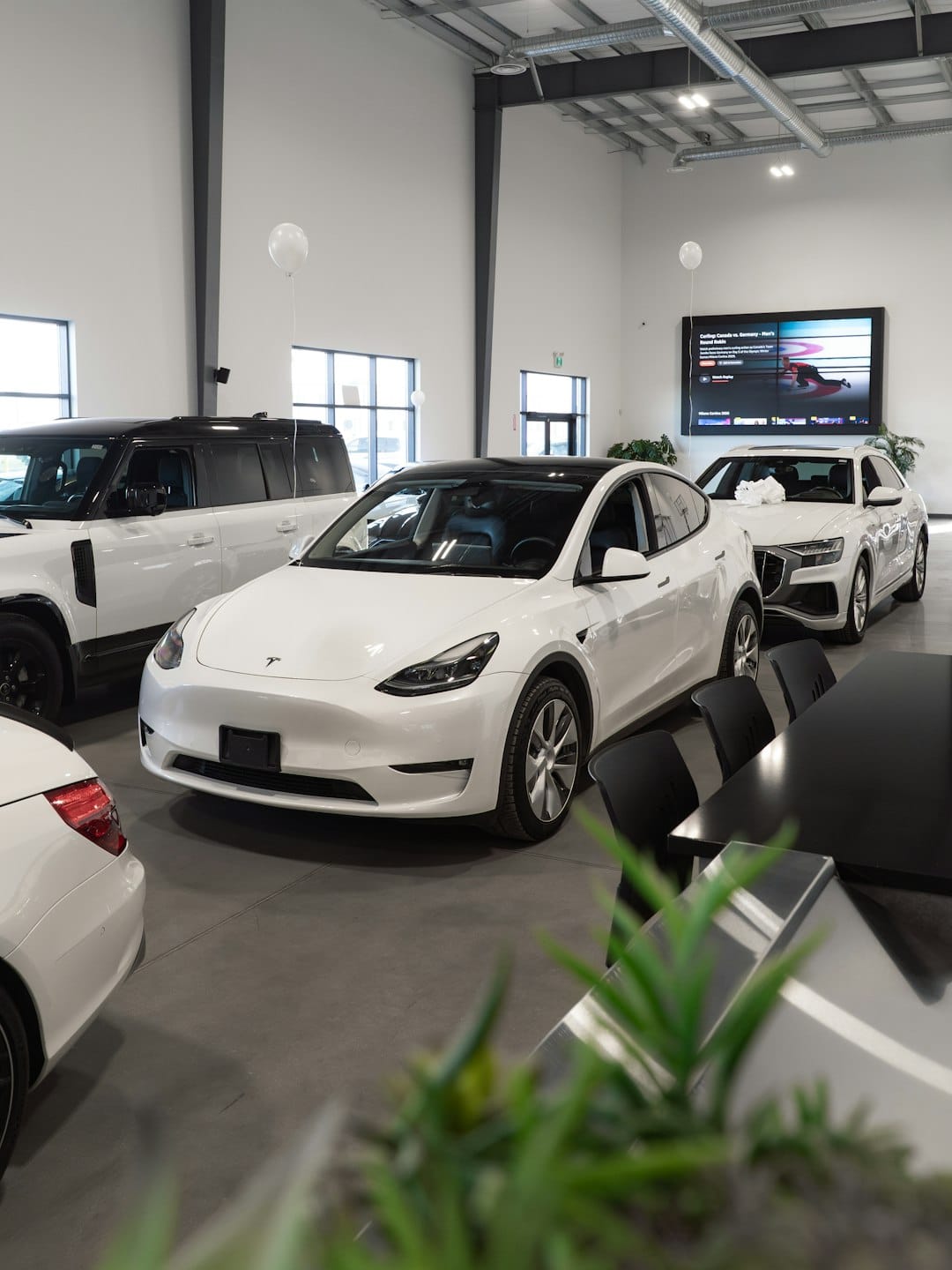
San Francisco, California, MMN Correspondent: Tesla just reported a 45% drop in net income for the second quarter of 2026. That’s a massive number. And it’s not because people stopped buying their cars. Deliveries actually ticked up to around 480,000 units globally. So what’s going on? The answer is simple and complex at the same time: Tesla is slashing prices like never before.
If you’ve been eyeing a Model 3 or Model Y, you’ve probably noticed the deals. Discounts of 15% or more on base models. Cash rebates. Free Supercharger access. Attractive lease terms. It’s a buyer’s market right now. But for Tesla, this aggressive discounting is eating into profits. Gross margins fell to 17.8% in Q2 2026, the lowest since 2021. That’s down from 22.5% a year earlier.
Why is Tesla doing this? Competition is heating up. In China, brands like NIO, Xpeng, and Li Auto are offering feature-rich EVs at lower prices. Legacy automakers like Ford, Volkswagen, and BYD are also pushing hard with longer ranges and advanced driver-assistance systems. Meanwhile, rising interest rates and inflation are making consumers more price-sensitive, especially in Europe and North America. Tesla’s response has been to cut prices to keep demand up.
Elon Musk has been clear about the strategy. On a recent investor call, he said short-term profitability must be sacrificed for long-term dominance. His argument is that lower prices will accelerate EV adoption, expand the market, and ultimately benefit everyone including Tesla. It’s a bold bet on volume over margin.
But there are risks. A study from the International Council on Clean Transportation found that repeated price cuts by leading EV makers have reduced profit margins across the sector by 28% over the past two years. If Tesla keeps this up, it could trigger a price war that hurts the entire industry. Innovation incentives might take a hit too.
There’s also the question of funding future projects. Tesla is working on next-generation platforms like the Model 2 and a fully autonomous vehicle. These require significant capital. With profits shrinking, financing those ambitions could become more challenging. Some analysts worry that Tesla’s ability to innovate might be compromised if it prioritizes volume over margin for too long.
Regulators are paying attention too. In the United States, the Department of Justice is investigating whether Tesla’s discounting practices amount to predatory pricing. European regulators are also looking into whether these strategies distort competition. Fines or mandated changes could add another layer of complexity.
Still, Tesla has strengths that competitors can’t easily replicate. Its proprietary battery technology, full self-driving software, and extensive Supercharger network remain unique advantages. The latest version of FSD shows improved navigation accuracy and safety metrics. The company is also making strides in integrating AI into vehicle operations.
Looking ahead, Tesla faces a critical balancing act. It needs to grow market share while restoring profitability. Options include optimizing production efficiency, expanding into higher-margin segments like commercial vehicles and energy storage, and exploring partnerships with other automakers to co-develop new platforms.
For consumers, this is a rare opportunity. Deep discounts and favorable financing terms make Tesla ownership more accessible than ever. But the long-term implications of this pricing strategy are still unfolding. As the EV market matures, companies that can deliver both affordability and sustained profitability are likely to emerge as the true winners.
Tesla’s profit plunge is a reminder that even the most disruptive innovators face market forces. The era of unchecked growth may be ending. The road ahead demands a new formula one that blends scale, innovation, and financial discipline in equal measure.
Related in Finance

Finance
Oil Breaches $100: What Trump’s ‘Massive Attack’ Warning Means for Your Wallet and Global Markets
On a sweltering July evening in Florida, a single sentence from a former president sent shockwaves through the global economy. Oil prices just punched through the $100 barrier for the first time in nearly three years. And the reason? Not a supply cut, not a refinery fire, but a…
Read More...
Finance
What Would Happen If a U.S. President Ordered a Strike on Iran’s Nuclear Site? Here’s What You Need to Know
Imagine standing in a packed arena in Dallas, Texas, listening to a former president promise something that could reshape the Middle East for decades. That’s exactly what happened recently when Donald Trump told a roaring crowd that if he returns to the White House in 2028, he w…
Read More...
Finance
How MAGA Inc. Built a $400 Million War Chest for the 2026 Midterms: What It Means for Your Vote
Imagine having $400 million to spend on shaping the future of American politics. That is exactly what MAGA Inc., the pro-Trump super PAC, has reportedly amassed ahead of the 2026 midterm elections. This is not just a number. It is a signal that political fundraising has entered…
Read More...
Finance
140+ Casualties in 3 Countries: What’s Driving the US Military’s New Strategy Against Iran?
Have you ever wondered what happens when a superpower decides to change the rules of engagement overnight? That’s exactly what we’re seeing right now across Iraq, Syria, and Yemen. The United States has just launched a coordinated wave of military strikes against Iranian backed…
Read More...
Finance
What Happens When a Social Media Empire Collides with International Law? The Tate Brothers Extradition Case Explained
The United Kingdom has formally requested the extradition of Andrew and Tristan Tate following their arrest in Miami, Florida, on July 18, 2026. This development marks a significant moment in a legal saga that has captured global attention, raising questions about the intersecti…
Read More...
Finance
3 Summer Programs in Ajman 2026: Build Financial Skills, AI Knowledge & Mental Math for Ages 6–18
What if your child’s summer break could be the launchpad for a future in finance, artificial intelligence, or entrepreneurship? That’s exactly what the Department of Finance in Ajman is offering with its 2026 summer lineup. Instead of idle days, kids and teens will dive into han…
Read More...
Finance
What Happens When Wildfire Smoke Crosses Borders? A Trade War Over the Air We Breathe
Imagine waking up to a sky turned orange, the air thick with the smell of burning forests, and then hearing your president blame your northern neighbor for the haze. That is exactly what happened on July 17, 2026, when former U.S. President Donald Trump stood before a rally in M…
Read More...
Finance
Chip Stocks Crashed 6% in a Day: What’s Really Happening to Nvidia, Intel, and Micron?
If you blinked on July 17, 2026, you might have missed one of the most dramatic single-day sell-offs in the U.S. semiconductor sector. Chip and memory stocks didn’t just dip—they plunged. Nvidia fell 8.4%. Micron dropped 10.3%. Intel lost 7.6%. And the Philadelphia Semiconductor…
Read More...
Finance
Indian Firms Spent $45 Billion Abroad in 2024: Is the Rupee Paying the Price?
Corporate India is stepping onto the global stage like never before. Indian companies are pouring record amounts of money into overseas acquisitions, new factories, and strategic partnerships. But here is the question that is keeping economists awake: can the rupee survive this…
Read More...
Finance
China's Growth Dips to 4.1%: What This Means for Global Markets and Your Investments
China’s economy just hit a speed bump that’s got everyone talking. Official data from July 2026 shows the country’s GDP grew only 4.1% year on year in the second quarter. That’s the slowest pace since early 2023. For a nation that once sprinted at 7% or more, this is a notable s…
Read More...