
Investors, Here’s What SpaceX’s First Earnings Report Delivered: $7.8B Revenue, $3.5B EBITDA, and a $47.5B Backlog
We compile, generate and translate using Artificial Intelligence from the below given source. Macro Micro News is responsible for its editorial publication.
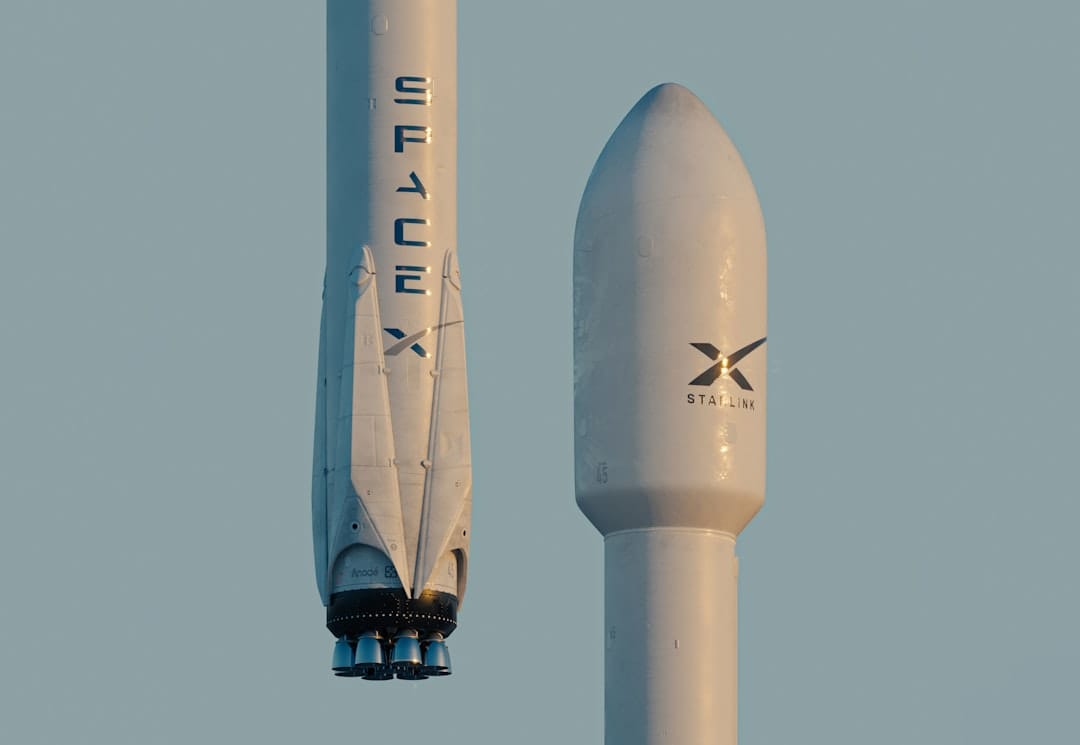
Hawthorne, California, MMN Correspondent: What happens when a company that has spent more than two decades reshaping the rocket industry finally opens its books to the public? On August 4, 2026, investors got the first answer. SpaceX reported its first quarterly earnings as a publicly traded company, and the numbers came in well above Wall Street's expectations.
The company posted revenue of $7.8 billion against an expected $6.7 billion. Adjusted EBITDA reached $3.5 billion, nearly double the $2 billion analysts had forecast. The net loss for the quarter came to $541 million, a $467 million improvement from the previous quarter's $1.0 billion loss. That narrowing loss tells its own story about the trajectory of this business.
For years, SpaceX has been evaluated on mission milestones and long-term vision. Now the market has actual financials to dig into, and the first look is strong. Chief Financial Officer Bret Johnsen noted that revenue growth accelerated across all segments and that the company delivered strong operating leverage, particularly through new AI compute agreements. He highlighted SpaceX's leadership in launch services, Starlink subscriber growth, enterprise and government partnerships, and AI infrastructure.
The balance sheet adds another layer of confidence. SpaceX ended the quarter with $100 billion in cash, cash equivalents, and marketable securities, along with a $47.5 billion backlog. That gives the company substantial capacity to keep funding Starship, Starlink Broadband and Mobile satellites, and its growing AI platform. In other words, the financial engine is now visible, and it is running.
This report lands at an interesting moment for the stock. SpaceX went public in June 2026 after a record-breaking IPO, and shares have traded roughly 25 percent below their peak valuation of over $2.6 trillion. Short interest has been significant, with approximately 95 percent of available shares on loan and short interest representing about 34 percent of the float. Musk, who has a long history of communicating directly with short sellers, warned again on the day of the earnings release. He wrote on X that he has tried to warn them and they keep doubling down. A few weeks earlier, he had questioned how long significant short positions in SpaceX could last.
The operational side of the quarter reinforces the optimism. The Space segment, which includes launch services, generated $962 million in revenue, a 55 percent sequential increase and a 29 percent year-over-year rise. That growth came from a higher number of large customer launches and a favorable customer mix. Costs and expenses in the segment rose by $389 million year-over-year, driven by accelerated research and development investments in the Starship program. Management believes Starship will reduce the cost to orbit by 99 percent or more relative to historical averages, and that would open up a massive new revenue potential across every part of the company.
Launch cadence in the first half of 2026 was impressive. SpaceX completed 78 launches and deployed 1,041 metric tons of mass to orbit, mostly for its Starlink constellation. The Starship program also hit important milestones. In May, Flight 12 marked the first suborbital mission of Starship V3, with liftoff from the new Starbase pad, a precision landing of the upper stage, and deployment of modified V2 Starlink satellites. Then in July, Flight 13 achieved all of its objectives, including deploying 20 production V3 satellites, demonstrating an in-space relight of a Raptor engine, and executing the softest-ever Starship splashdown. The flight gave engineers critical views of an intact heatshield.
Now the market is watching the calendar. The lockup expiration on August 6 will free approximately 911.5 million insider and employee shares, worth well over $100 billion at current prices. That would be the largest lockup release in Wall Street history. A second, larger tranche tied to the stock trading 30 percent above its $135 IPO price did not trigger, since shares spent most of July below that level.
The earnings call was streamed live on X with no dial-in option. Investors expected management to address several open questions: How many net new Starlink subscribers came in during the quarter? The company ended March with 10.3 million subscribers. What is the trend in average revenue per user? How much are the AI contracts with Anthropic, Google, and Reflection AI contributing? Those agreements could annualize to nearly $28 billion if fully ramped. And will SpaceX offer forward guidance for the first time?
SpaceX's arrival on public markets marks the beginning of a new chapter for the company and for the entire space economy. Starship is advancing toward full and rapid reusability, and the company is positioning itself as critical infrastructure for a potential multi-trillion-dollar space economy that includes orbital solar power, asteroid mining, data centers, and Mars-related projects. The combination of a strong earnings beat and Musk's confidence in the long-term trajectory suggests SpaceX is well positioned to handle short-term market fluctuations and deliver value to shareholders and bondholders.
As the first publicly traded company actively launching rockets, SpaceX operates in a class of its own. High short interest and Musk's public commentary have kept a spotlight on the stock, and this earnings report gives investors their first concrete look at how the company's vision translates into financial results. Revenue is growing across all segments, margins are expanding, and the net loss is shrinking. That's a powerful combination for a business that is still pouring resources into next-generation technology.
Looking ahead, the key variables are Starship production scale, Starlink subscriber expansion, and additional AI compute agreements. The $47.5 billion backlog gives the company a strong revenue foundation, and the $100 billion cash position provides enough liquidity to fund ambitious projects. As the lockup expiration approaches, the market will be watching to see how insiders and early investors respond to the current valuation. In the meantime, the first earnings report offers a clear signal: SpaceX is on track to redefine the economics of space access and strengthen its position as a leader in the new space economy.
Related in Space Tech
Space Tech
Lunar Farside Revealed: 15,000 Images Uncover Ancient Moon Terrain
For centuries we have looked up and seen only one face of our nearest celestial neighbor. Tidal locking keeps the far side turned away from Earth, creating a permanent blind spot in human history. Modern orbital technology has now lifted that veil. A detailed mosaic captured by…
Read More...
Space Tech
Stickney Crater: How a Massive Impact Nearly Destroyed Mars' Moon Phobos
Phobos, the innermost moon of Mars, carries a scar that tells a story of cosmic violence. Stickney Crater dominates its surface, a colossal basin named after Angeline Stickney Hall, wife of astronomer Asaph Hall. Hall discovered both Phobos and Deimos in 1877, linking human hist…
Read More...
Space Tech
Saturn's Cosmic Clarity: How One Night Revealed the Ringed Planet's Secrets
On October 8, 2026, the Astronomy Picture of the Day featured a breathtaking composite image titled "The Saturn System Smörgåsbord." This visual feast offers an unprecedented view of the ringed planet and its diverse moons. Astrophotographer Tom Williams captured this exquisite…
Read More...
Space Tech
Artemis II Crew Captures Lunar Impact Flashes: What the Moon Revealed in April 2026
NASA has shared a remarkable dataset from the Artemis II mission that offers fresh perspectives on our lunar neighbor. The journey occurred between April 1 and April 10, 2026, marking the first crewed trip to the Moon's vicinity since the Apollo days. Astronauts Reid Wiseman, Vi…
Read More...
Space Tech
Pa 30: The 845-Year-Old Supernova Mystery That Defies Standard Models
The night sky holds countless stories written in light and dust. Among these celestial narratives, supernova remnants stand as testaments to the violent yet creative end of stellar lives. These expanding shells do more than mark a star's death. They scatter heavy elements across…
Read More...
Space Tech
Earth's Full Aurora Ring Revealed: SMILE Mission Captures Complete View
Scientists have achieved a remarkable first by capturing the entire auroral oval in one continuous shot. The Solar Wind Magnetosphere Ionosphere Link Explorer mission shared this image on October 6, 2026. This perspective offers a fresh look at how our planet interacts with the…
Read More...
Space Tech
Sombrero Galaxy M104: New Deep-Exposure Image Reveals Tidal Streams and Violent History
The Sombrero Galaxy, known scientifically as Messier 104 or M104, has always drawn the eye with its striking resemblance to a wide-brimmed Mexican hat. This massive spiral galaxy features a bright central bulge encircled by a distinctive dark band of interstellar dust. While ast…
Read More...
Space Tech
New Jersey Sky: Witnessing Supernumerary Rainbows and the Wave Nature of Light
On October 4, 2026, the skies above New Jersey presented a rare spectacle that captivated both amateur photographers and meteorology enthusiasts. Following the passage of storm remnants over the Jersey Shore, a standard rainbow appeared in one direction. However, the phenomenon…
Read More...
Space Tech
Mars Rover's New Selfie Reveals Vera Rubin Ridge Secrets
NASA’s Curiosity rover has once again provided humanity with a breathtaking glimpse into the red planet. The vehicle captured a stunning panoramic selfie at the south rim of Vera Rubin Ridge. This image served as the Astronomy Picture of the Day for October 3, 2026. It marks a s…
Read More...
Space Tech
313 Nebulas Captured: The Complete Sharpless Catalog Revealed in Eastern China
On October 2, 2026, NASA’s Astronomy Picture of the Day highlighted a monumental achievement in astrophotography. The complete Sharpless Catalog has been unveiled, showcasing 313 distinct nebulae. This comprehensive collection offers an unprecedented opportunity to explore the d…
Read More...