
Investors, Take Note: SpaceX's 10GW AI Push Could Generate $500B a Year and Q4 Revenue Will Top Rockets
We compile, generate and translate using Artificial Intelligence from the below given source. Macro Micro News is responsible for its editorial publication.
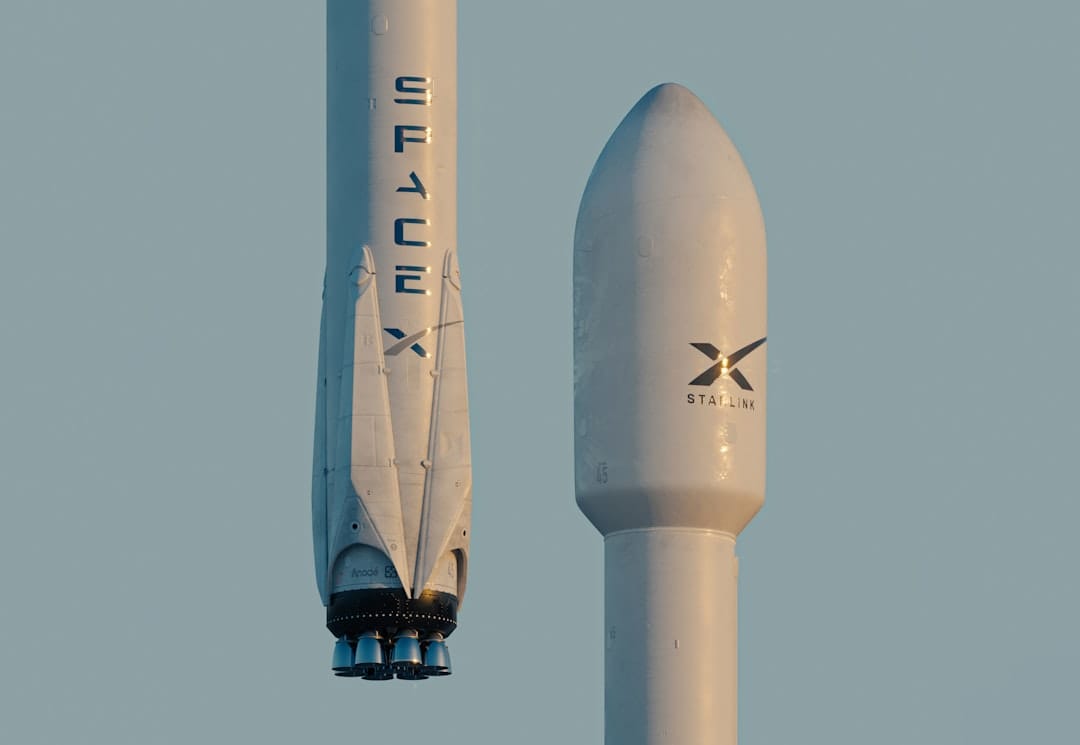
Hawthorne, California, MMN Correspondent: Think about this. A company that made its name landing rockets on drone ships could soon make most of its money renting out GPU chips. That is exactly the direction SpaceX is heading.
At a roughly 29-minute all-hands meeting posted on X on August 11, 2026, Elon Musk told employees that AI revenue will overtake every other SpaceX business line "probably in September" and then pull far ahead in the fourth quarter. He came with numbers and a clear timeline.
Right now SpaceX operates 1.4 gigawatts of AI compute capacity. Musk wants 10 gigawatts online by the end of 2027. If that target holds, he expects annual revenue between $300 billion and $500 billion. Think about that number for a moment. It is larger than the annual GDP of most countries.
How does a rocket company get there? Starlink is already the network layer for xAI's heavy compute jobs. SpaceX also rents capacity to outside customers. In the second quarter of 2026 alone, the company spent nearly $16 billion on AI infrastructure and saw AI segment revenue jump to around $2.6 billion. The idea is to build compute capacity faster than traditional data center players and then fill it almost as quickly.
Musk is thinking beyond quarterly numbers. He told employees that in four or five years, AI could represent 99 percent of SpaceX's value. The reason ties back to the original mission: generate the capital needed for Starship and Mars. The Terafab, a chip manufacturing joint venture between Tesla, SpaceX, and xAI, sits at the center of that plan.
This is not the first time Musk has teased an AI heavy future. During SpaceX's first earnings call as a public company on August 4, 2026, he moved the $1 trillion revenue goal up a year to 2030 and said Starlink could one day carry a majority of the world's internet. The all-hands video added something new: a hard deadline and a specific power figure.
Wall Street noticed. Argus Research upgraded SpaceX from Hold to Buy on August 11, with a $160 price target. The firm pointed to a few revenue engines: leasing capacity to companies like Anthropic, Google, and Reflection AI; strong utilization because AI training and inference demand is huge; high incremental margins on rented compute; and monetizing software layers like Grok, X, enterprise APIs, and Cursor coding tools.
SpaceX CFO Bret Johnsen says the economics are unusually fast. New deployments can be paid back within a year, which is an aggressive goal when many data center projects take years to reach payback.
Some analysts are taking a wait-and-see position. Morgan Stanley's Andrew Percoco focused on Tesla, not SpaceX, but Musk's AI projects are closely linked. He noted that Robotaxi and Optimus need stronger proof points before investors can feel good about the elevated capital spending. Morgan Stanley has a Hold rating on Tesla with a $415 price target, while the stock trades around $330.
The real test for SpaceX is execution. Going from 1.4 gigawatts to 10 gigawatts in about 17 months will test the company's ability to build power, cooling, and supply chains at a pace few companies have managed. If it works, SpaceX will become a central player in the AI economy while continuing to fund its space goals.
Musk closed the meeting with a recruiting message. He said anyone who helps SpaceX win the AI race could eventually earn a seat to the moon or Mars. That mix of financial discipline and long term vision is classic Musk, and it makes one point clear: the future of SpaceX is going to be powered by artificial intelligence.
The quarterly numbers will tell the real story. Watch the next few reports closely. If the 1.4 to 10 gigawatt jump starts to show up in revenue, the space industry will never look the same.
Related in Space Tech
Space Tech
Lunar Farside Revealed: 15,000 Images Uncover Ancient Moon Terrain
For centuries we have looked up and seen only one face of our nearest celestial neighbor. Tidal locking keeps the far side turned away from Earth, creating a permanent blind spot in human history. Modern orbital technology has now lifted that veil. A detailed mosaic captured by…
Read More...
Space Tech
Stickney Crater: How a Massive Impact Nearly Destroyed Mars' Moon Phobos
Phobos, the innermost moon of Mars, carries a scar that tells a story of cosmic violence. Stickney Crater dominates its surface, a colossal basin named after Angeline Stickney Hall, wife of astronomer Asaph Hall. Hall discovered both Phobos and Deimos in 1877, linking human hist…
Read More...
Space Tech
Saturn's Cosmic Clarity: How One Night Revealed the Ringed Planet's Secrets
On October 8, 2026, the Astronomy Picture of the Day featured a breathtaking composite image titled "The Saturn System Smörgåsbord." This visual feast offers an unprecedented view of the ringed planet and its diverse moons. Astrophotographer Tom Williams captured this exquisite…
Read More...
Space Tech
Artemis II Crew Captures Lunar Impact Flashes: What the Moon Revealed in April 2026
NASA has shared a remarkable dataset from the Artemis II mission that offers fresh perspectives on our lunar neighbor. The journey occurred between April 1 and April 10, 2026, marking the first crewed trip to the Moon's vicinity since the Apollo days. Astronauts Reid Wiseman, Vi…
Read More...
Space Tech
Pa 30: The 845-Year-Old Supernova Mystery That Defies Standard Models
The night sky holds countless stories written in light and dust. Among these celestial narratives, supernova remnants stand as testaments to the violent yet creative end of stellar lives. These expanding shells do more than mark a star's death. They scatter heavy elements across…
Read More...
Space Tech
Earth's Full Aurora Ring Revealed: SMILE Mission Captures Complete View
Scientists have achieved a remarkable first by capturing the entire auroral oval in one continuous shot. The Solar Wind Magnetosphere Ionosphere Link Explorer mission shared this image on October 6, 2026. This perspective offers a fresh look at how our planet interacts with the…
Read More...
Space Tech
Sombrero Galaxy M104: New Deep-Exposure Image Reveals Tidal Streams and Violent History
The Sombrero Galaxy, known scientifically as Messier 104 or M104, has always drawn the eye with its striking resemblance to a wide-brimmed Mexican hat. This massive spiral galaxy features a bright central bulge encircled by a distinctive dark band of interstellar dust. While ast…
Read More...
Space Tech
New Jersey Sky: Witnessing Supernumerary Rainbows and the Wave Nature of Light
On October 4, 2026, the skies above New Jersey presented a rare spectacle that captivated both amateur photographers and meteorology enthusiasts. Following the passage of storm remnants over the Jersey Shore, a standard rainbow appeared in one direction. However, the phenomenon…
Read More...
Space Tech
Mars Rover's New Selfie Reveals Vera Rubin Ridge Secrets
NASA’s Curiosity rover has once again provided humanity with a breathtaking glimpse into the red planet. The vehicle captured a stunning panoramic selfie at the south rim of Vera Rubin Ridge. This image served as the Astronomy Picture of the Day for October 3, 2026. It marks a s…
Read More...
Space Tech
313 Nebulas Captured: The Complete Sharpless Catalog Revealed in Eastern China
On October 2, 2026, NASA’s Astronomy Picture of the Day highlighted a monumental achievement in astrophotography. The complete Sharpless Catalog has been unveiled, showcasing 313 distinct nebulae. This comprehensive collection offers an unprecedented opportunity to explore the d…
Read More...