
Korean Study: How Elastic Barbells Boost Balance and Muscle Efficiency in 12 Weeks
We compile, generate and translate using Artificial Intelligence from the below given source. Macro Micro News is responsible for its editorial publication.
Busan, South Korea, Source:
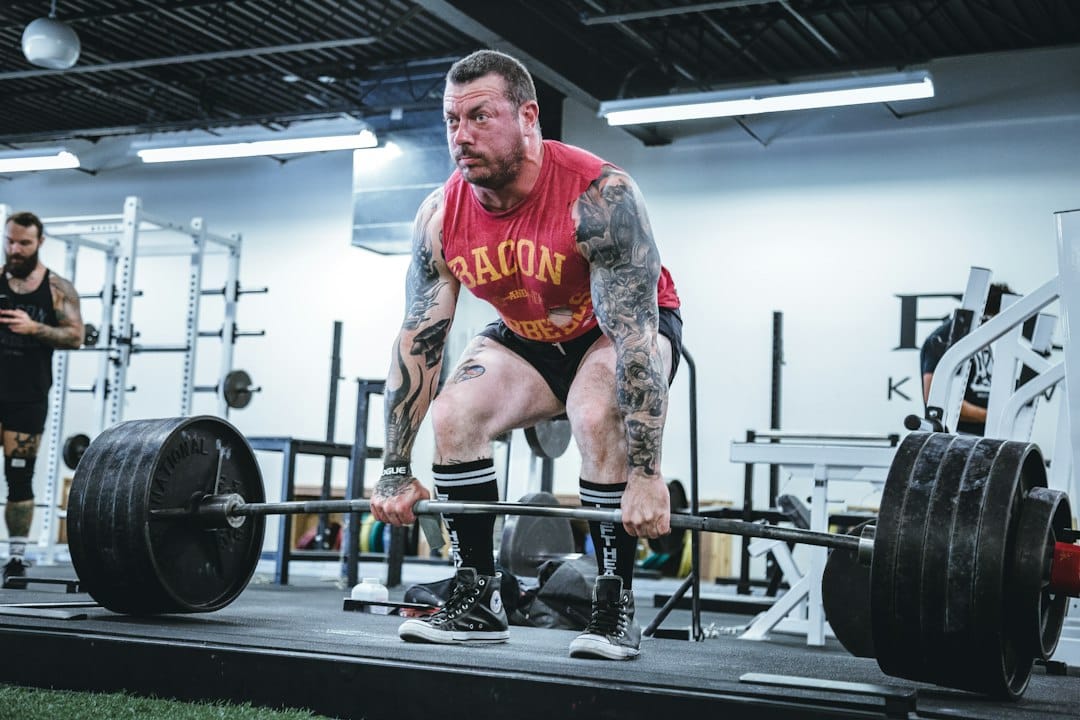
Have you ever wondered if the equipment on your bar matters as much as the weight you lift? Recent scientific inquiry into resistance training methodologies has revealed that the type of equipment used can significantly alter neuromuscular adaptations. A pivotal randomized controlled trial published in October 2026 investigated the effects of unilateral leg training using elastic versus inelastic barbells on dynamic balance and muscle activation. The study, conducted by researchers from Hwashin Cyber University and Busan University of Foreign Studies, challenges conventional assumptions about stability training by focusing on top-down instability stimuli.
The research involved twenty-eight resistance-trained men who were randomly assigned to either an experimental group (EG) using an elastic barbell or a control group (CG) using a standard inelastic barbell. Both groups underwent an identical twelve-week progressive unilateral leg training program, twice weekly, with loads ranging from 20% to 40% of their one-repetition maximum. The primary objective was to determine if the unpredictable perturbations generated by the elastic deformation of the bar could lead to superior gains in postural control compared to traditional stable loading.
The results demonstrated that the elastic barbell group achieved significantly greater improvements in dynamic balance, as measured by the Y-Balance Test. Notably, the EG showed enhanced performance in posteromedial and posterolateral reach directions, which rely heavily on hip stabilizers and posterior chain coordination. This suggests that the continuous, multi-planar oscillations of the elastic bar force the neuromuscular system to adapt more robustly to unpredictable disturbances than the predictable environment of a steel barbell.
A critical finding of the study was the phenomenon of task-specific transfer. Participants in the elastic barbell group exhibited improved postural stability even when performing the single-leg deadlift with an untrained, inelastic barbell. This indicates that the neural adaptations gained from training with unstable loads generalized to stable environments, offering a broader benefit for functional movement patterns. Furthermore, electromyography data revealed divergent muscle activation patterns; specifically, the semitendinosus muscle showed decreased activation in the elastic group at matched loads, suggesting improved neuromuscular efficiency, whereas the control group required increased activation to maintain stability.
These findings highlight the potential of elastic barbell training as a sophisticated tool for enhancing dynamic stability and motor control. By introducing top-down instability, athletes and clinicians can target frontal-plane hip control and sensory reweighting mechanisms that are often underutilized in traditional strength training. While the study did not directly measure injury incidence, the improvements in medial-lateral stability offer a promising hypothesis for future research into injury prevention strategies. For practitioners, this evidence supports the integration of elastic instability tools to progressively overload single-limb control, particularly at higher movement velocities, thereby bridging the gap between static strength and dynamic athletic performance.
Related in Sport

Sport
Why You See Access Denied on MDPI: The Real Story Behind Scholarly Paywalls
The phrase "Access Denied" often feels like a digital brick wall. It is more than a simple technical glitch. It represents the complex intersection of intellectual property rights and global information accessibility. When you encounter a 403 Forbidden error on platforms like MD…
Read More...
Sport
Why You Are Blocked: The Real Reasons Behind Access Denied Errors
In the vast landscape of digital information, few experiences are as frustrating or ubiquitous as encountering an 'Access Denied' error. This message, often accompanied by cryptic reference numbers and server warnings, represents a fundamental barrier between users and the conte…
Read More...
Sport
Aging and Muscle Protection: What the Repeated Bout Effect Reveals About Your Future Strength
The repeated bout effect describes a fascinating physiological phenomenon where a single session of eccentric exercise provides lasting protection against muscle damage during future similar activities. This adaptive response allows muscles to recover faster and suffer less stru…
Read More...
Sport
Elite Handball: How Anaerobic Power Drives Match Success
Team handball at the highest level demands more than just stamina. It requires explosive power and the ability to change direction instantly. Recent reviews point out that success in this intermittent sport hinges on anaerobic capacity. Players need to accelerate fast, shoot wit…
Read More...
Sport
Why You See Access Denied: The Real Story Behind Academic Paywalls
That frustrating "Access Denied" message is more than just a technical hiccup. It stands at the crossroads of intellectual property rights and global information equity. When you hit a 403 Forbidden error on platforms like MDPI, you are seeing the academic publishing ecosystem i…
Read More...
Sport
Core Training Boosts Balance and Strength in Young Female Tennis Players
Tennis demands explosive power and precise control. The core acts as the central hub that transfers energy from the legs to the arms. For girls aged 13 to 14 this stage offers a unique window for neuromuscular growth. A recent study explores how specific core exercises can impro…
Read More...
Sport
Hungarian Soccer Data: How MD-3 and MD-2 Training Loads Predict Match Wins
In the high-stakes arena of professional football, victory is often attributed to tactical brilliance or individual skill. However, emerging research suggests that the timing and distribution of physical training loads throughout the week may be a critical yet overlooked predict…
Read More...
Sport
How Synchronized Drives Team Unity: New Data on Junior Handball Cohesion
Success in youth sports often gets pinned on individual brilliance. Yet a new perspective suggests that the invisible glue holding a team together matters just as much. A recent six-month study tracking 64 junior handball players aged 12 to 14 reveals that coordination training…
Read More...
Sport
How Elite CrossFit Athletes Taper: The 8-Week Load Management Blueprint for Peak Performance
CrossFit has transformed from a niche fitness trend into a rigorous sport that demands seamless integration of weightlifting, gymnastics, and metabolic conditioning. For elite athletes, victory depends less on raw power alone and more on the precise orchestration of training loa…
Read More...
Sport
How Digital Platforms Can Transform Elite Athlete Career Transitions and Mental Health Support
The journey from elite sports to post-athletic life presents one of the most psychologically and socially demanding phases in an athlete's career. A comprehensive cross-sectional study involving 136 European elite athletes reveals a critical disconnect between the high value ath…
Read More...