
Meta Smart Glasses Update: Camera Disabled Instantly If Privacy Light Is Blocked or Removed
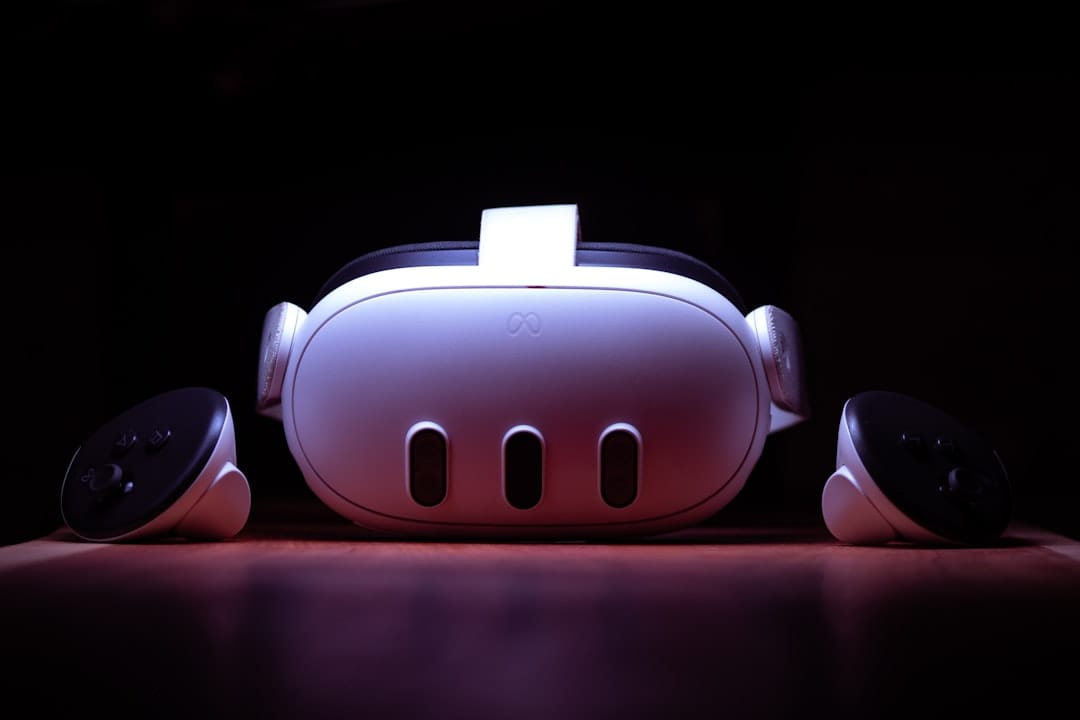
Menlo Park, California, MMN Correspondent: Imagine you are wearing a pair of smart glasses that can record video with a simple tap. Now imagine someone nearby covers the tiny light that tells you the camera is on. Until recently, that was possible. But Meta just changed the rules.
The company has released a new software update for its smart glasses that does something unprecedented: if the system detects any tampering with the privacy LED indicator, the camera automatically shuts down. And it stays off until the device is factory reset. This is not a warning. This is a hard stop.
Why does this matter? Because the privacy light is the only visible cue that recording is happening. It is a small LED that glows when the camera is active. For months, some users and hardware modders found ways to bypass it. They covered it with tape. They removed it. They rewired the circuit. Each method made the glasses capable of recording without anyone knowing. That raised serious questions about consent and accountability in public spaces.
Meta’s response is direct. The firmware now uses embedded micro-switches and optical sensors inside the frame to continuously monitor the LED’s status. If the light output drops, if the circuit is interrupted, or if the LED is physically obstructed, the system triggers a fail-safe. The main camera goes dark. So do the depth sensors and motion tracking modules. The glasses become a pair of stylish frames with no recording capability until you perform a full factory reset through official channels.
This move comes at a time when public venues are taking their own steps. In June 2026, New York State announced plans to ban camera-equipped smart glasses from all courtrooms. Major cruise lines and private event venues across North America and Europe followed with similar restrictions. The concern is not just about privacy. It is about the integrity of spaces where people expect not to be recorded without their knowledge.
Alex Himel, Meta’s Vice President of Wearables, confirmed the update was in development for weeks before rollout. He noted that as adoption grows, so do the challenges around responsible use. The company’s goal is not to limit innovation but to ensure privacy remains central to every design decision.
Earlier versions of the glasses relied on software prompts. If you covered the light, a message appeared asking you to uncover it. That worked for casual users but was easily ignored or bypassed by those with technical skills. The new approach moves from suggestion to enforcement. Tampering is no longer a workaround. It is a dead end.
This shift mirrors broader trends across the wearable tech industry. Apple, Google, and Samsung have introduced similar safeguards in their smart glasses and AR headsets. Some use automatic shutter mechanisms. Others require biometric authentication before recording. Meta’s implementation stands out because of its irreversible nature. Once the camera is disabled, only a full reset can bring it back. That effectively locks out unauthorized access.
For consumers, the implications are practical. If you own a pair of Meta smart glasses, you can still record freely as long as the privacy light is visible and functioning. The moment you try to hide that light, the camera stops working. This is not about restricting what you can do. It is about making sure everyone around you knows what you are doing.
Privacy advocates have praised the update as a meaningful step forward. Some modding communities have expressed frustration, arguing that it limits personal customization and ownership rights. Legal experts are also discussing whether such restrictions could be seen as anti-competitive under digital rights laws. These are valid conversations, but they do not change the core reality: the update is designed to protect people who are not wearing the glasses.
Looking ahead, analysts predict future versions of Meta’s glasses may include additional layers of verification. Facial recognition based access controls, time limited recording windows, and geofencing that adapts to local laws are all possibilities. These features could further reduce the risk of misuse while preserving functionality for legitimate users.
What this update ultimately signals is a shift in how we measure technological progress. It is no longer just about what a device can do. It is about what it will not do. By making tampering with the privacy light a self defeating act, Meta is setting a precedent that could influence the entire wearable tech ecosystem. The message is clear: if you try to hide the light, the camera won’t work. In a world where visibility matters more than ever, that is a rule worth keeping.
Related in Gadgets

Gadgets
How a Fake Cease-and-Desist Letter Targeted Flock Safety: What It Reveals About Trust in Surveillance Tech
In July 2026, a single image sent social media into a frenzy. A cease-and-desist letter, supposedly from Flock Safety, was circulating fast. It claimed the company had ordered a public lecture series in Newport Beach to stop discussing its surveillance technology. The post came…
Read More...
Gadgets
Microsoft’s Carbon Footprint Jumps 25%: What AI’s Energy Hunger Means for Your Digital Future
Microsoft just dropped a number that’s turning heads in the tech world: a 25% spike in carbon emissions for 2025. That’s 34 million metric tons of CO₂ equivalent, and it’s not a small blip. It’s a direct signal that the race to build smarter AI is colliding with the planet’s lim…
Read More...
Gadgets
7 Ways Meta's Always-On Smart Glasses Could Change How You Remember Everything
Imagine a pair of glasses that quietly listens to your conversations, notes the faces you meet, and remembers where you left your keys without you ever asking. Meta is reportedly building exactly that: a new generation of smart glasses designed to run in an always-on mode, captu…
Read More...
Gadgets
Hoto PixelDrive Cordless Screwdriver Hits $60: The Smart Tool DIYers Have Been Waiting For
If you have ever struggled with a stubborn screw in a dark corner or stripped the head of a tiny fastener while assembling furniture, you know the frustration. The Hoto PixelDrive cordless screwdriver is now available for $59.99, down from its usual $80. This is the first time i…
Read More...
Gadgets
Inside the $75,000 AI Schools Where Your Child Becomes a Beta Tester for Tomorrow's Learning
Walk into an Alpha School classroom, and you won't see a teacher at the front of the room. Instead, you will find rows of students wearing lightweight headsets, their eyes fixed on adaptive screens that shift content in real time based on their facial expressions and response sp…
Read More...
Gadgets
Can a Space Tug Save NASA’s Swift Observatory Before It Burns Up? The 9-Month Rescue Mission You Need to Know About
Imagine a satellite that has spent more than two decades unraveling the universe’s most violent explosions. Now imagine it’s falling. That’s the reality NASA faced earlier this year when the Swift Observatory, a workhorse of astrophysics, began a slow but steady descent toward E…
Read More...
Gadgets
Amazon Fire HD 10 Just Got Faster: 4GB RAM Upgrade in 2026 – What It Means for You
If you have been eyeing a budget tablet that can keep up with your daily multitasking, Amazon just gave you a reason to pay closer attention. In a move that flew under the radar, the company quietly boosted the RAM on its popular Fire HD 10 from 3GB to 4GB. This change, confirme…
Read More...
Gadgets
From 600,000 Discs a Day to Microlenses: What Sony’s Austrian Factory Pivot Means for AR, Cars, and Your Future
Imagine a factory that once stamped out 600,000 PlayStation discs every single day. Now imagine that same facility, just a few years later, shaping tiny lenses that bend light for self-driving cars and augmented reality glasses. That’s exactly what’s happening in Thalgau, Austri…
Read More...
Gadgets
Apple’s 2027 MacBook Pro: Touchscreen, M7 Chip, and a Design Shift You’ll Want to See
Apple is quietly preparing to rewrite the rules for its entry-level MacBook Pro. If the latest reports from industry insiders hold true, the laptop you might buy in 2027 will look, feel, and behave nothing like the one on shelves today. The company is planning a complete overhau…
Read More...
Gadgets
Meta’s AI Glasses Now Cap a Core Feature at 3 Hours Monthly – What Wearable Owners Need to Know
If you bought Meta’s latest AI powered smart glasses expecting full access to every built in feature, you might want to check your settings. The company has quietly introduced a usage cap on a key audio tool called Conversation Focus, and the limits are turning heads for reasons…
Read More...