
SpaceX's $16 Billion AI Power Play: What It Means for Tesla Owners and the Future of Compute
We compile, generate and translate using Artificial Intelligence from the below given source. Macro Micro News is responsible for its editorial publication.
Hawthorne, California, MMN Correspondent: SpaceX just dropped nearly $16 billion in a single quarter on artificial intelligence infrastructure. That is not a typo. The company is building GPU compute capacity at a scale few can match, and Argus Research has responded by upgrading the shares to Buy with a $160 price target. The bet? That SpaceX can turn AI compute clusters into revenue faster than almost anyone else in the industry.
Let's consider the supercomputers at the center of this strategy: Colossus and Colossus II. They were built to train SpaceX's own AI models. Today a large share of their capacity goes to Anthropic, Google, and Reflection AI, generating billions in monthly revenue from infrastructure contracts alone. Management says new racks fill almost immediately because demand for advanced AI training and inference capacity is so tight. Capacity has already climbed from 0.4 gigawatts annually to 1.4 gigawatts by the end of Q2, and the target is over 2 gigawatts by year-end.
The economics deserve a closer look. GPU cloud providers usually enjoy strong gross margins, and SpaceX has an unusually efficient path to adding capacity. CFO Bret Johnsen has noted that incremental EBITDA margins on rental revenue are exceptionally high, with payback periods compressed to under a year. That is an extraordinary result for capital-heavy infrastructure. Beyond renting out compute, SpaceX is making money from Grok subscriptions, X advertising, enterprise APIs, and the upcoming integration of Cursor coding tools. AI segment revenue hit about $2.6 billion in Q2, and the infrastructure side is doing the heavy lifting while software adds more.
The bigger picture here is fascinating. SpaceX now plays two major roles: an AI infrastructure provider and a key player in the future of satellite-connected autonomous vehicles. That is exactly where the recurring Tesla merger speculation comes in. ARK Invest, led by Cathie Wood, says a Tesla-SpaceX combination could be announced before year-end. The firm's chief futurist Brett Winton and research director Nick Grous call Tesla's Shanghai operations a 'small ish wrinkle' that can be managed. Musk has repeatedly denied plans to separate Tesla's China business, calling such reports 'absurdly fake news.' "China is awesome. I strongly encourage people to visit," he said, adding that a split has never come up in discussion.
Why does the merger talk persist? SpaceX's IPO created public shares that could become acquisition currency, and Wedbush's Dan Ives predicts a deal by early 2027. With Tesla pushing toward autonomous driving and robotics, and SpaceX building AI and satellite networks, the strategic overlap is hard to ignore. Gigafactory Shanghai remains Tesla's export hub, shipping more than half of global deliveries, so any merger would require careful handling. Analysts see that as manageable.
Beyond the corporate maneuvering, Musk's central idea is that Starlink will eventually be part of every car. He argues that satellite internet is the only way to deliver the super high bandwidth that AI-driven vehicles need. Tesla already confirmed in July that the Cybercab will have a Starlink terminal built into its roof, making it the first production vehicle with satellite hardware integrated from the factory. Tesla's head of AI Ashok Elluswamy explained that the connection is not part of the safety-critical driving stack. It is for navigation, customer service, and fleet management. Musk added that riders can enjoy 4K streaming during trips, and by July 22, the feature was extended to the full lineup.
This is where the bandwidth argument gets interesting. Musk has endorsed a Cloudflare forecast saying autonomous AI agents will soon generate far more traffic than humans ever will. Ground-based networks like fiber and cell towers, he believes, simply cannot keep pace with that growth. Starlink is his answer. SpaceX has a pending FCC filing for a third-generation Starlink constellation, plus a proposal called Starmind that could place up to a million satellites in orbit specifically to run AI computation. Musk expects space to become the cheapest place for AI compute within two to three years, with Starlink moving data and Starmind processing it.
For current Tesla owners, the immediate experience will not change. Existing vehicles use LTE and Wi-Fi, and there is no retrofit path for older models. The commitment applies to future production, and the trajectory is clear. Cars are becoming data machines, and Musk is betting that orbit will be part of their infrastructure backbone.
What is emerging here is a reimagining of how compute, connectivity, and transportation interact. SpaceX's $16 billion gamble is already generating real revenue, and if the Tesla connection strengthens, the implications for the auto industry and the AI world are enormous. The only question left is how quickly the pieces come together.
Related in Space Tech
Space Tech
Lunar Farside Revealed: 15,000 Images Uncover Ancient Moon Terrain
For centuries we have looked up and seen only one face of our nearest celestial neighbor. Tidal locking keeps the far side turned away from Earth, creating a permanent blind spot in human history. Modern orbital technology has now lifted that veil. A detailed mosaic captured by…
Read More...
Space Tech
Stickney Crater: How a Massive Impact Nearly Destroyed Mars' Moon Phobos
Phobos, the innermost moon of Mars, carries a scar that tells a story of cosmic violence. Stickney Crater dominates its surface, a colossal basin named after Angeline Stickney Hall, wife of astronomer Asaph Hall. Hall discovered both Phobos and Deimos in 1877, linking human hist…
Read More...
Space Tech
Saturn's Cosmic Clarity: How One Night Revealed the Ringed Planet's Secrets
On October 8, 2026, the Astronomy Picture of the Day featured a breathtaking composite image titled "The Saturn System Smörgåsbord." This visual feast offers an unprecedented view of the ringed planet and its diverse moons. Astrophotographer Tom Williams captured this exquisite…
Read More...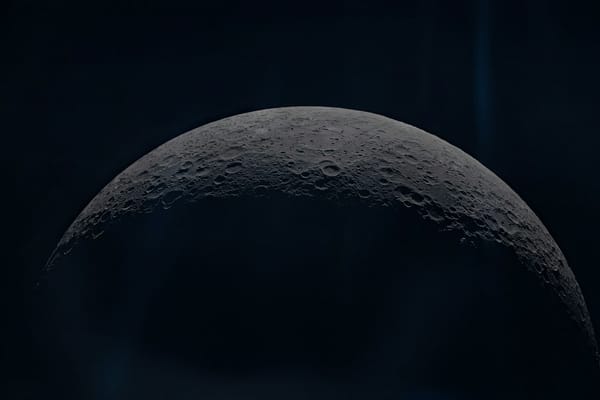
Space Tech
Artemis II Crew Captures Lunar Impact Flashes: What the Moon Revealed in April 2026
NASA has shared a remarkable dataset from the Artemis II mission that offers fresh perspectives on our lunar neighbor. The journey occurred between April 1 and April 10, 2026, marking the first crewed trip to the Moon's vicinity since the Apollo days. Astronauts Reid Wiseman, Vi…
Read More...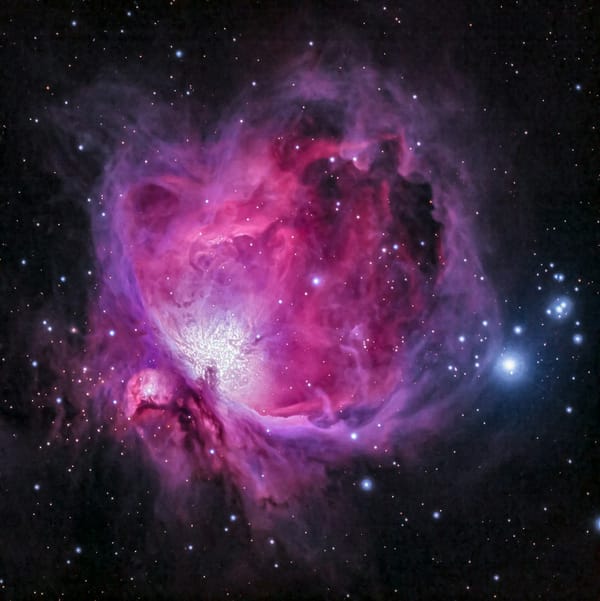
Space Tech
Pa 30: The 845-Year-Old Supernova Mystery That Defies Standard Models
The night sky holds countless stories written in light and dust. Among these celestial narratives, supernova remnants stand as testaments to the violent yet creative end of stellar lives. These expanding shells do more than mark a star's death. They scatter heavy elements across…
Read More...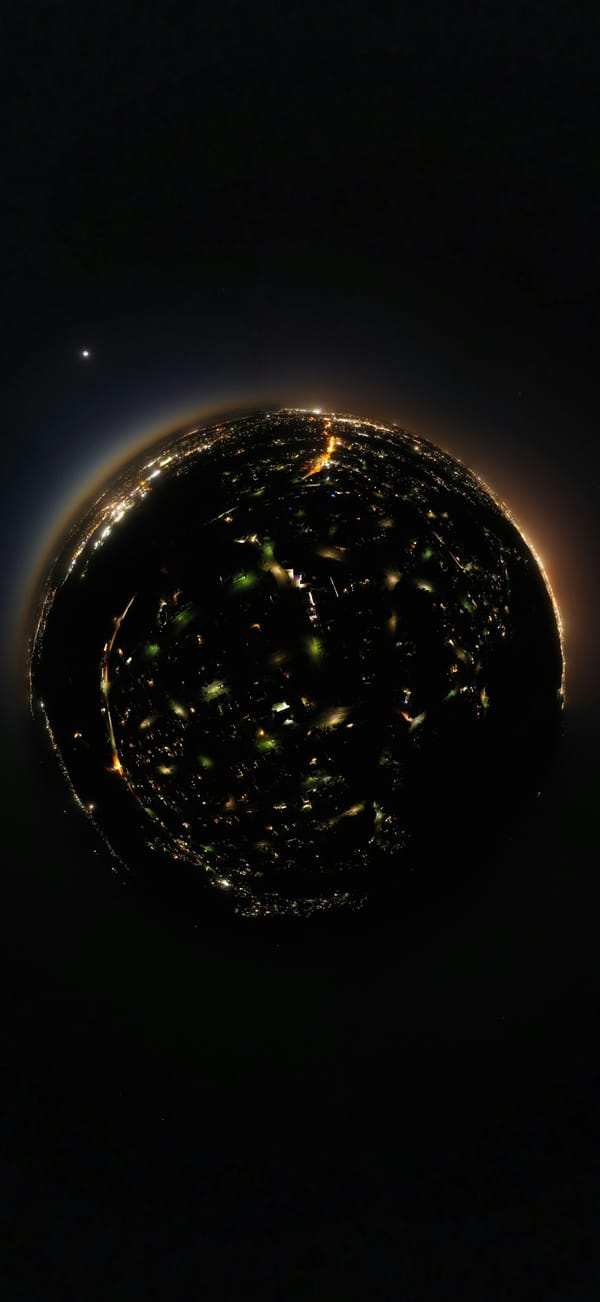
Space Tech
Earth's Full Aurora Ring Revealed: SMILE Mission Captures Complete View
Scientists have achieved a remarkable first by capturing the entire auroral oval in one continuous shot. The Solar Wind Magnetosphere Ionosphere Link Explorer mission shared this image on October 6, 2026. This perspective offers a fresh look at how our planet interacts with the…
Read More...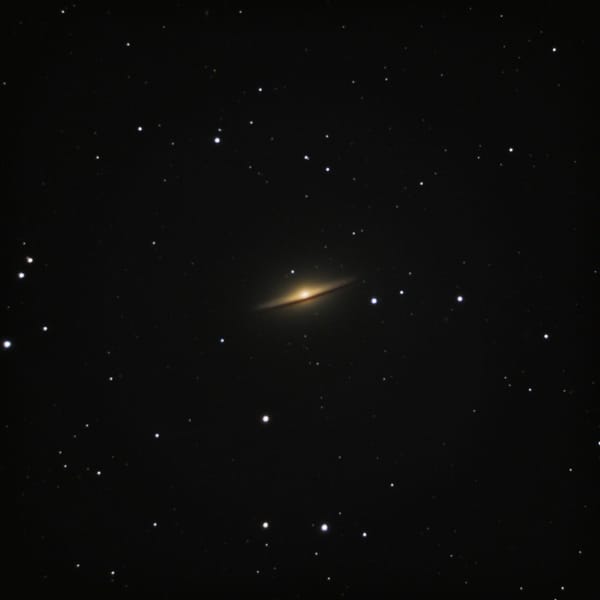
Space Tech
Sombrero Galaxy M104: New Deep-Exposure Image Reveals Tidal Streams and Violent History
The Sombrero Galaxy, known scientifically as Messier 104 or M104, has always drawn the eye with its striking resemblance to a wide-brimmed Mexican hat. This massive spiral galaxy features a bright central bulge encircled by a distinctive dark band of interstellar dust. While ast…
Read More...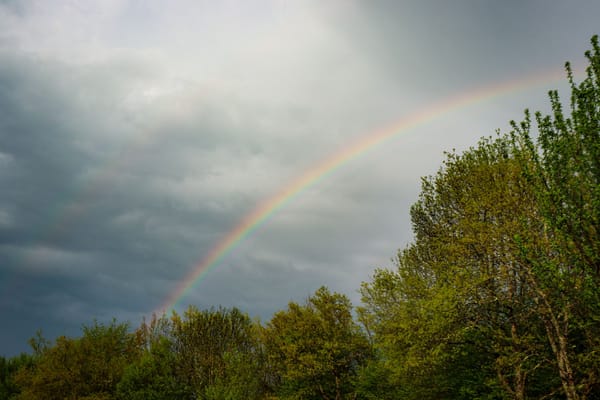
Space Tech
New Jersey Sky: Witnessing Supernumerary Rainbows and the Wave Nature of Light
On October 4, 2026, the skies above New Jersey presented a rare spectacle that captivated both amateur photographers and meteorology enthusiasts. Following the passage of storm remnants over the Jersey Shore, a standard rainbow appeared in one direction. However, the phenomenon…
Read More...
Space Tech
Mars Rover's New Selfie Reveals Vera Rubin Ridge Secrets
NASA’s Curiosity rover has once again provided humanity with a breathtaking glimpse into the red planet. The vehicle captured a stunning panoramic selfie at the south rim of Vera Rubin Ridge. This image served as the Astronomy Picture of the Day for October 3, 2026. It marks a s…
Read More...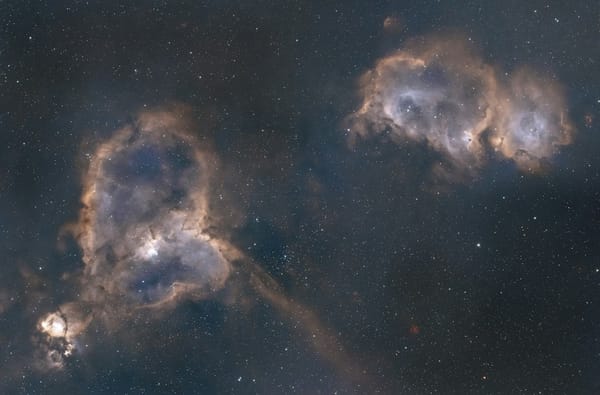
Space Tech
313 Nebulas Captured: The Complete Sharpless Catalog Revealed in Eastern China
On October 2, 2026, NASA’s Astronomy Picture of the Day highlighted a monumental achievement in astrophotography. The complete Sharpless Catalog has been unveiled, showcasing 313 distinct nebulae. This comprehensive collection offers an unprecedented opportunity to explore the d…
Read More...