
What Happens When Bieber, Madonna, Shakira, and BTS Share the World Cup Stage?
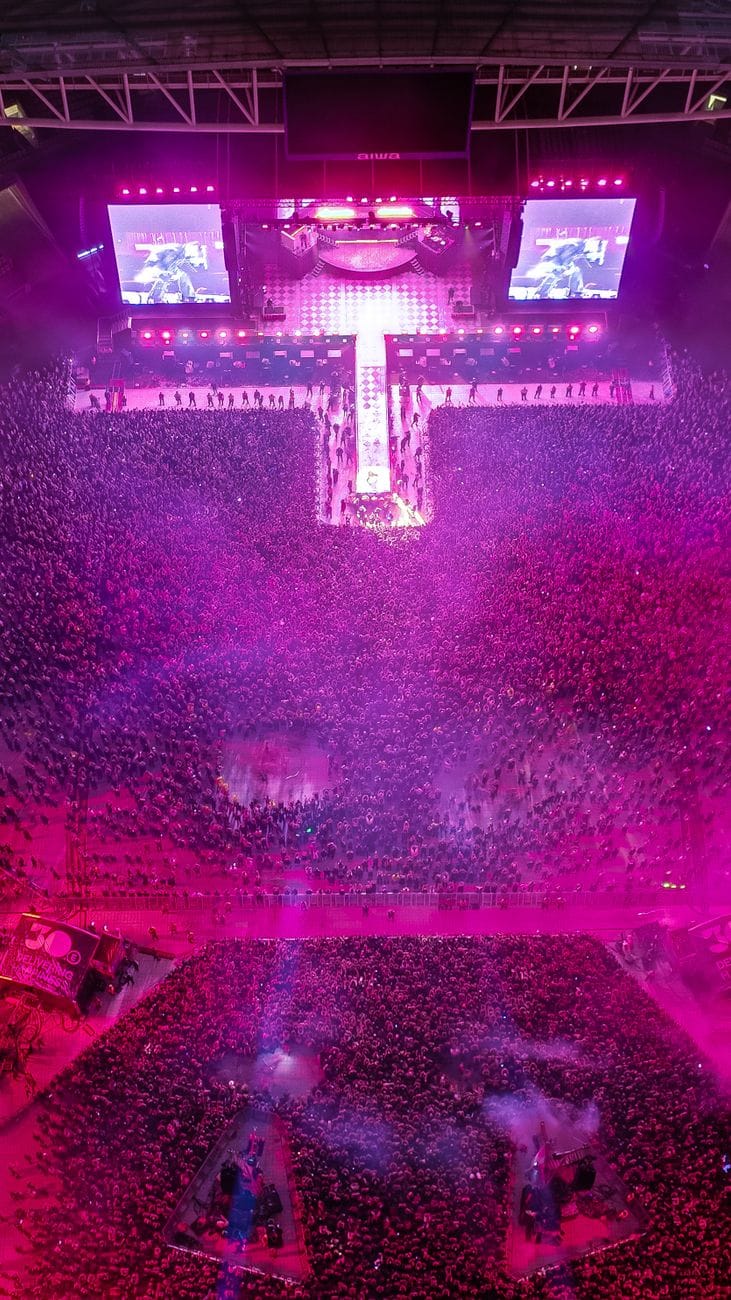
New York City, MMN Correspondent: Imagine this: It’s July 19, 2026, and the world is watching. Not just for the final whistle of the FIFA World Cup, but for something that’s never happened before. For the first time in the tournament’s history, a Super Bowl style halftime show is about to unfold at MetLife Stadium. And the lineup? It reads like a fever dream of global music royalty.
Justin Bieber, fresh off a deeply personal return at Coachella, will share the stage with Madonna, Shakira, and BTS. Yes, all of them. Together. For eleven minutes. Curated by Coldplay’s Chris Martin, this isn’t just a concert break between halves. It’s a carefully designed moment of cultural convergence, one that raises funds for the FIFA Global Citizen Education Fund, aiming to secure $100 million for children’s education in underserved communities.
Why does this matter beyond the spectacle? Because each artist brings a distinct chapter of music history. Bieber’s journey from teen phenom to a reflective performer who reimagined his live show after health setbacks tells a story of resilience. Madonna’s four decade legacy of pushing boundaries adds weight and gravitas. Shakira, whose anthem “Dai Dai” with Burna Boy has become the soundtrack of this World Cup, represents the pulse of Latin and Afrobeat fusion. And BTS? Their presence signals something bigger than K-pop. It signals that the center of pop culture has shifted, and it’s now truly global.
But the surprises don’t stop there. Burna Boy will join Shakira for a live rendition of their viral hit. Gustavo Dudamel will conduct a symphonic arrangement that elevates the entire production. The PS22 Chorus, known for their viral covers, will perform alongside Coldplay. And the Sesame Street Muppets will make an appearance, reminding everyone that joy has no age limit.
This halftime show is happening against the backdrop of a historic tournament. For the first time, 48 teams competed across three host nations: Mexico, Canada, and the United States. Though the hosts exited early, viewership has shattered records, with over 3.5 billion people tuning in from more than 200 countries. The quarterfinals are delivering drama: France vs. Morocco in Boston, Spain vs. Belgium in Los Angeles, Norway vs. England in Miami, and defending champions Argentina facing Switzerland in Kansas City.
On the pitch, Lionel Messi leads the Golden Boot race with eight goals, followed closely by Kylian Mbappé and Erling Haaland with seven each, and England’s Harry Kane with six. These athletes are writing their own legends, but the halftime show offers a different kind of legacy one built on collaboration, not competition.
What makes this moment truly remarkable is how it reflects a broader shift in how we experience global events. The World Cup has embraced renewable energy at all venues, AI powered crowd management, and accessible ticketing. It’s setting new standards for what a tournament can be. And the halftime show mirrors that ambition: it’s not just entertainment, it’s a statement about unity.
As fans gather under the lights of MetLife Stadium, they’ll witness something that feels almost impossible in a fragmented world: a shared moment of wonder. Music, sport, and purpose colliding in real time. The question isn’t whether this will be memorable. The question is: what will it inspire next?
Related in Global Trend

Global Trend
Meta’s AI Image Tool Vanishes Days After Launch: What Happened to Your Instagram Photos?
Just days after its flashy debut, Meta’s new AI image generation feature has been pulled from the platform. The tool, part of the Muse Image rollout, let users of Meta’s AI chatbot create artificial images by pulling content from public Instagram accounts. Think about that for a…
Read More...
Global Trend
Middle East Travelers Are Flocking to Thailand for Wellness: Here’s What’s Driving the 2026 Boom
What if the next luxury vacation didn’t just pamper you but actually changed how you feel long after you return home? That’s the question Thailand is asking Middle East travelers right now. And the answer is reshaping how people from the Gulf plan their getaways. The Tourism Aut…
Read More...
Global Trend
How SK Hynix Raised $26.5 Billion in Its US Debut: What It Means for AI Chip Investors
Imagine walking into a room where the world’s biggest money managers are all fighting for a piece of the same company. That’s exactly what happened when SK Hynix, the South Korean memory chip giant, stepped onto the Nasdaq stage in July 2026. The result? A staggering $26.5 billi…
Read More...
Global Trend
80 Targets Hit: What the US Strikes on Iran Mean for Global Oil Routes
The world’s most critical oil passageway just became the epicenter of a major military confrontation. The United States has launched sweeping airstrikes across Iran’s southern coast, hitting more than 80 locations after three commercial tankers came under attack in the Strait of…
Read More...
Global Trend
Travel Before the Crowds: Why the Two Weeks Before School Holidays Are Your Best Bet for a Peaceful Summer Escape
Picture this: warm sand beneath your feet, a gentle sea breeze, and the sound of waves instead of the chatter of crowds. That’s the reality for travelers who discover a simple truth about summer vacations. The best time to go isn’t when everyone else does. It’s the two weeks rig…
Read More...
Global Trend
Faster Patents in Europe and China: What the New EPO-CNIPA PPH Pilot Means for Your Innovation Timeline
What if you could cut months off the time it takes to secure a patent in both Europe and China? Starting August 1, 2026, that possibility becomes reality. The European Patent Office (EPO) and China National Intellectual Property Administration (CNIPA) are launching a new bilater…
Read More...
Global Trend
What Happened in a Utah Courtroom When Charlie Kirk’s Family Came Face to Face With His Accused Killer?
On a quiet Tuesday morning in May 2026, a Utah courtroom became the center of a story that has haunted America for months. The family of Charlie Kirk, the 31-year-old conservative activist and founder of Turning Point USA, sat just feet away from the man accused of ending his li…
Read More...
Global Trend
4 New Luxury Travel Mindsets Reshaping Asia Pacific: How Gen Z Is Redefining High End Tourism
What does luxury mean to a generation that grew up with Instagram, climate anxiety, and a craving for meaning? A sweeping study of 2,800 affluent travelers across eight Asia Pacific markets—China, Japan, South Korea, Australia, India, Singapore, Thailand, and Indonesia—has uncov…
Read More...
Global Trend
How Europe and China Are Cutting Patent Wait Times by 40% Starting August 2026
Imagine filing a single patent application and watching it sail through two of the world’s largest intellectual property offices with minimal friction. That vision becomes reality on August 1, 2026, when the European Patent Office (EPO) and the China National Intellectual Proper…
Read More...
Global Trend
What Happens When a Prime Minister Picks Kylie Minogue Over Policy? A National Conversation Begins
Australian Prime Minister Anthony Albanese found himself at the center of a national conversation this week after a podcast appearance took an unexpected turn. During a lighthearted interview on the Bush Deep podcast, host Nikki Osborne asked Albanese to rank three iconic Austra…
Read More...