
50 Year Quantum Riddle Solved: How Heidelberg Physicists Bridged Two Opposing Particle Theories
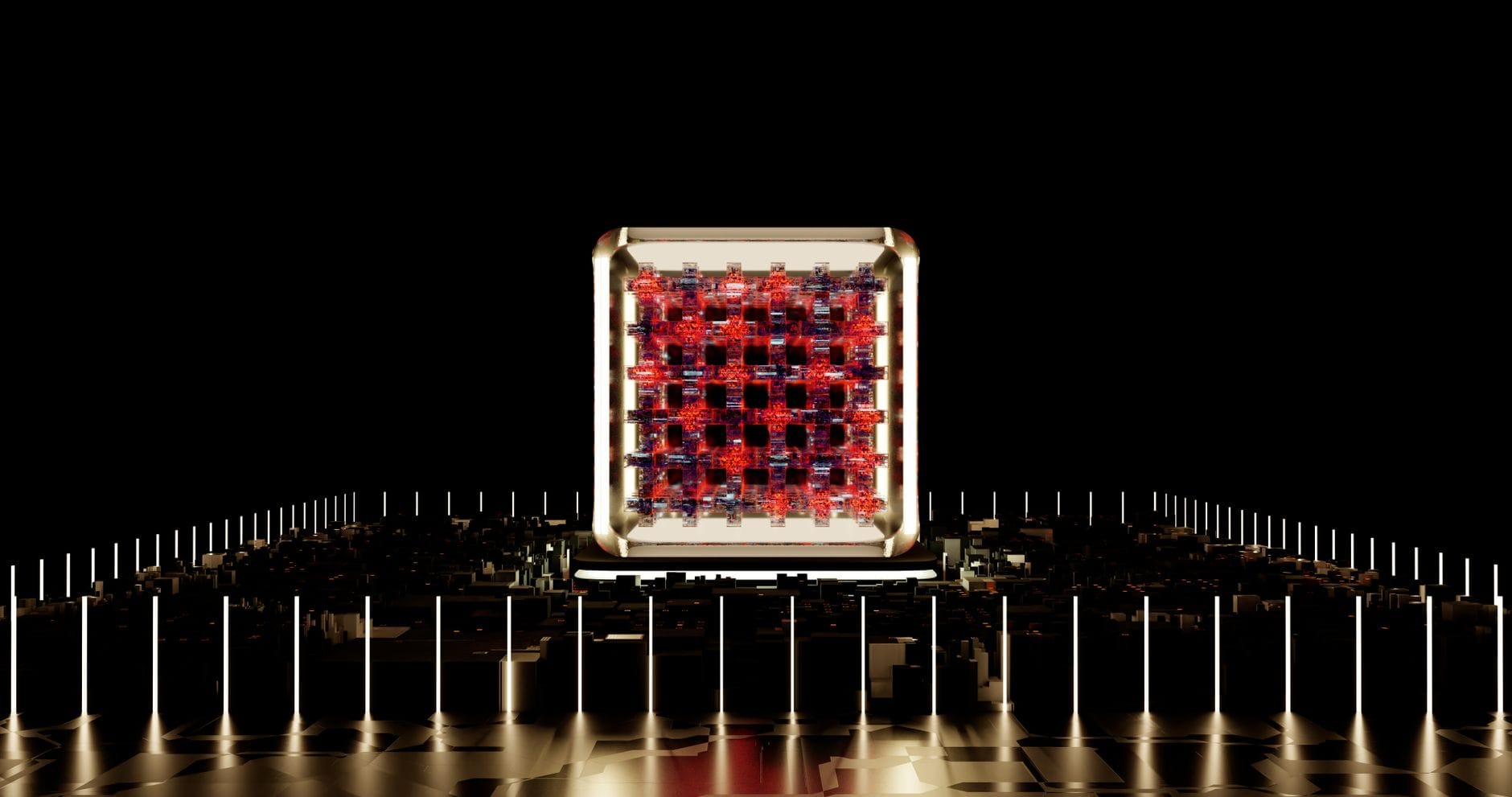
Heidelberg, Germany, MMN Correspondent: Imagine trying to describe a single dancer moving through a crowded dance floor. One theory says the dancer pulls nearby people along, creating a small moving cluster. Another theory says if the dancer stands perfectly still, the crowd around them changes so completely that the original dance pattern vanishes. For decades, physicists faced exactly this puzzle with quantum particles. They had two powerful but contradictory models to describe what happens when a foreign particle, called an impurity, enters a dense sea of other particles. Neither model could talk to the other. Until now.
A team at Heidelberg University has done something remarkable. They have found a way to connect these two opposing views, resolving a paradox that has puzzled scientists for over fifty years. The work focuses on something called quantum impurities. These are particles introduced into a system of fermions, which are particles like electrons or atoms that follow specific quantum rules. One model, the quasiparticle or polaronic picture, describes a light, mobile impurity that moves through the crowd, dragging a cloud of surrounding particles along with it. This creates a composite entity known as a Fermi polaron. It behaves like a single particle even though it has a complex internal structure. This model has been incredibly useful for explaining phenomena in high-temperature superconductors and ultracold quantum gases.
But what happens when the impurity is extremely heavy? So heavy that it barely moves at all. In that case, the system enters a regime governed by something called Anderson's orthogonality catastrophe. Here, the presence of the immobile impurity changes the quantum state of the surrounding fermions so drastically that their wave functions become orthogonal, or completely independent, from their original configuration. This destroys the coherence needed for quasiparticles to form. The polaronic description fails completely. Physicists were left with two separate toolboxes, and no way to know which one to use for impurities that fall somewhere in between.
This is where the Heidelberg team, led by Prof. Dr. Richard Schmidt and doctoral candidate Eugen Dizer, made their breakthrough. They asked a simple but profound question. What if even the heaviest impurities are not perfectly still? What if they undergo tiny, almost imperceptible fluctuations due to quantum recoil and environmental adjustments? These motions are so small they seem negligible. But the team realized they carry deep physical consequences.
These tiny motions generate what the researchers call a 'mass gap'. Think of it as a finite energy barrier. This barrier stabilizes the formation of quasiparticles even when the impurity is nearly immobile. The mass gap acts as a bridge between the mobile and immobile regimes. It allows coherent quantum states to emerge across a continuous spectrum of conditions. The transition from polaronic to molecular-like states, where the impurity binds tightly with nearby fermions, is not abrupt. It is smooth and governed by this emergent energy scale. This is a beautiful example of how paying attention to the smallest details can reveal a hidden order.
Why should anyone care about this? The implications are vast. By providing a unified description that works across different spatial dimensions and interaction strengths, the new theory gives experimentalists a powerful predictive tool. It can guide the design and interpretation of experiments with ultracold atoms trapped in optical lattices, where researchers manipulate quantum impurities to simulate condensed matter phenomena. It is also highly relevant to next-generation semiconductors and two-dimensional materials like graphene, where electron-impurity interactions dictate electrical and thermal properties.
The framework also enables more accurate modeling of quantum effects in nuclear matter, where heavy nucleons interact within a dense Fermi sea of protons and neutrons. It contributes to the broader quest to understand quantum phase transitions, sudden shifts in the fundamental behavior of matter under extreme conditions, such as those believed to occur in the interiors of giant planets like Uranus and Neptune. This is not just an abstract theoretical exercise. It has real, tangible consequences for how we understand and design materials.
The research was conducted within the STRUCTURES Cluster of Excellence and the ISOQUANT Collaborative Research Centre 1225 at Heidelberg University. The findings were published in the prestigious journal Physical Review Letters. This unification marks a pivotal moment in quantum theory. It demonstrates that apparent contradictions in physical behavior often stem not from flawed models, but from incomplete frameworks. By recognizing the role of minute quantum fluctuations in enabling coherence, the Heidelberg team has redefined how we conceptualize quantum impurities. They are not isolated entities. They are dynamic participants in a vast, interconnected quantum landscape.
As experimental techniques continue to advance, with ever greater precision in controlling and measuring quantum systems, this new theoretical foundation will likely serve as a cornerstone for future discoveries. It paves the way for deeper exploration of quantum coherence, entanglement, and topological states in many-body systems. These are areas critical to the development of quantum computing, ultra-sensitive sensors, and revolutionary materials with tailored electronic properties. This breakthrough reminds us that even the most rigid dichotomies, between motion and stillness, particle and wave, order and chaos, can be reconciled through deeper insight and elegant mathematical formulation. The dance floor is more connected than we ever imagined.
Related in Scientific Research
Scientific Research
How Soft Lithium Dendrites Crack Hard Ceramic Batteries: The Discovery That Could Triple EV Range
Imagine a battery that powers your phone for five days, charges your electric car in under 15 minutes, and never catches fire. That’s the promise of solid-state batteries. But for years, a tiny, stubborn problem has kept them stuck in labs: lithium dendrites. These microscopic,…
Read More...
Scientific Research
450,000 Barred Owls Could Be Shot to Save the Spotted Owl: Here’s Why Scientists Say It’s Working
Imagine walking through a silent forest at midnight. You hear a call—a deep, rhythmic hoot—and you raise a shotgun. This isn’t a scene from a thriller. It’s the front line of one of the most ambitious and controversial conservation experiments in American history. In the dense f…
Read More...
Scientific Research
9 Entangled Particles Found in a Crystal You Can Hold: What This Means for Quantum Tech
Imagine holding a small crystal in your hand, one that fits comfortably in your palm. Now imagine that inside that crystal, particles are connected in a way that defies everything we thought we knew about the quantum world. That is exactly what a team of researchers at TU Wien i…
Read More...
Scientific Research
30 Years Later: Scientists Finally Identify Rye Pollen Molecules That Slow Tumors – What This Means for Cancer Therapy
For nearly three decades, a quiet mystery sat at the edge of natural medicine. Two molecules found in rye pollen seemed to slow tumor growth in animal studies. But no one could figure out their exact shape. That puzzle has now been solved by researchers at Northwestern Universit…
Read More...
Scientific Research
55 Million Affected: Scientists Just Found a New Way Alzheimer’s Kills Brain Cells – And How to Stop It
For decades, the question of how Alzheimer’s disease actually destroys brain cells has been one of the most stubborn mysteries in medicine. We knew toxic proteins like amyloid and tau build up inside neurons. We knew cells eventually die. But the exact mechanism? That was the mi…
Read More...
Scientific Research
UK Heatwave Alert: Temperatures Hit 34°C This Week – Are You Ready for the Third Scorcher of 2026?
Here we go again. The United Kingdom is bracing for its third major heatwave of 2026, with thermometers expected to climb past 34°C in southern and eastern regions. This isn’t just another warm spell – it’s a week-long event that has health officials on high alert from Saturday,…
Read More...
Scientific Research
Quantum Time Reversal Achieved: 5 Ways This Breakthrough Could Power Future Tech
What if you could rewind a moment in time not in your memory, but in the physical world itself? That question has moved from the pages of science fiction into the lab. Researchers at Los Alamos National Laboratory have just demonstrated something extraordinary: they can make qua…
Read More...
Scientific Research
6 Inventors Just Won Europe’s Top Prize – Here’s What They Created That Could Change Your Life
What do oat milk, a malaria vaccine, and recycled EV batteries have in common? They are all powered by the minds of six inventors who just took home the 2026 European Inventor Award. The European Patent Office (EPO) streamed the ceremony live from Berlin, and the winners did not…
Read More...
Scientific Research
7 Reasons Why a Remote Arctic Research Station Is Now the World's Most Watched Geopolitical Hotspot
Imagine a place so quiet that the loudest sound is the crunch of snow under your boots. A place built for science, not strategy. That was the Arctic research station on Svalbard just a few years ago. Today, that same outpost is the center of a global tug-of-war. What changed? Th…
Read More...
Scientific Research
Meet the 2026 European Inventor Award Winners: 6 Breakthroughs That Could Change Your Life
The European Patent Office just wrapped its 19th annual Inventor Award ceremony live from Berlin, and the winners are nothing short of remarkable. Six teams walked away with top honors, but one duo did something historic: they won both the Non-EPO Countries category and the Popu…
Read More...