
7 Reasons Why a Remote Arctic Research Station Is Now the World's Most Watched Geopolitical Hotspot
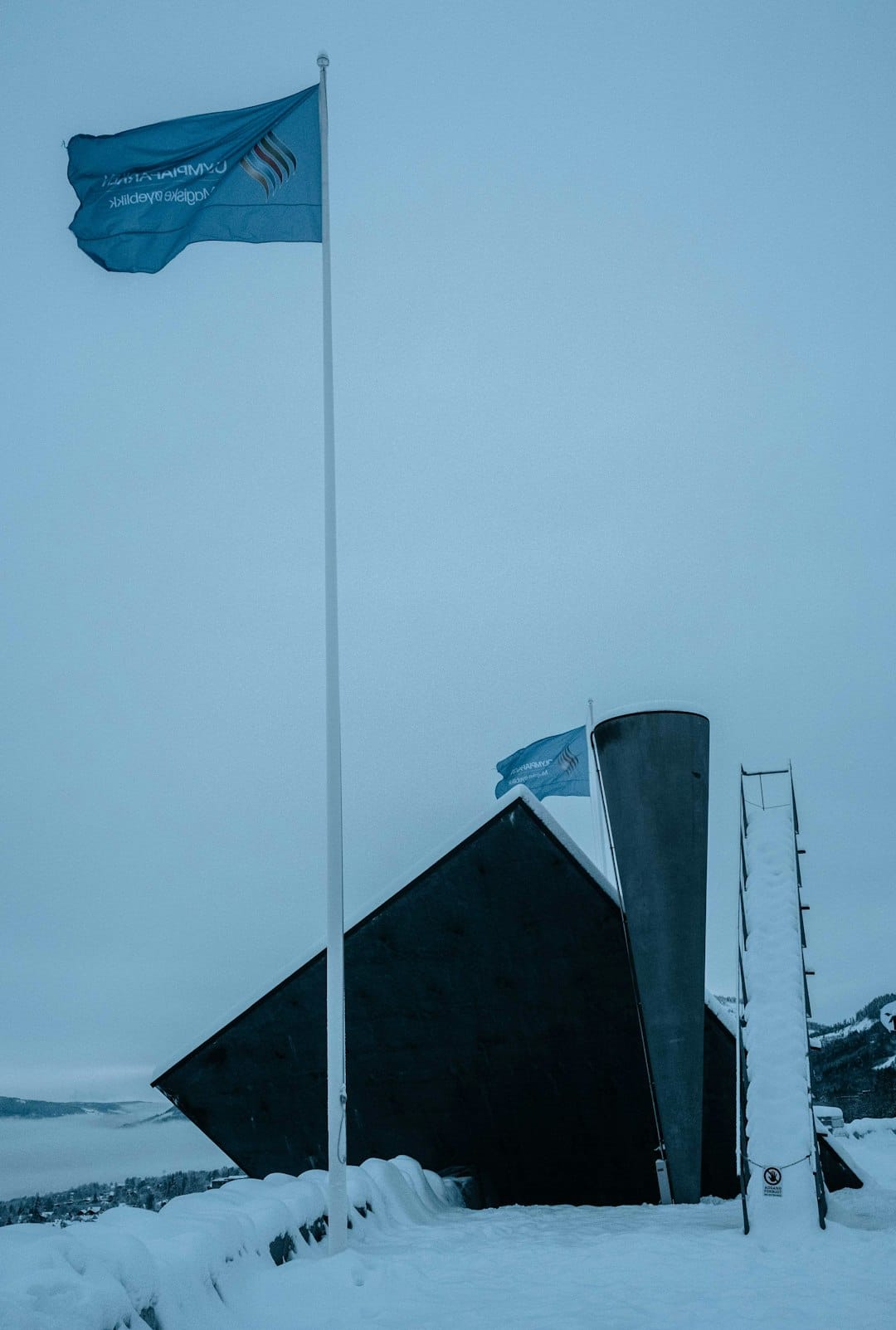
Longyearbyen, Svalbard, Norway, MMN Correspondent: Imagine a place so quiet that the loudest sound is the crunch of snow under your boots. A place built for science, not strategy. That was the Arctic research station on Svalbard just a few years ago. Today, that same outpost is the center of a global tug-of-war. What changed? The ice melted, revealing trillions of dollars in resources and new shipping lanes. And suddenly, every major power wants a piece of the Arctic.
This station sits on the Svalbard archipelago, about 1,000 kilometers from the North Pole. For decades, it operated under a 1920 treaty that let countries like the United States, Russia, China, and European nations work side by side. They studied climate change, monitored the atmosphere, and shared data freely. It was a model of peaceful collaboration. But the world has shifted. The Arctic is warming twice as fast as the rest of the planet, and with that warmth comes opportunity and tension.
Here is what makes this place so valuable. The station sits on top of a critical atmospheric monitoring network. It tracks greenhouse gases, ozone levels, and tiny particles that affect our climate. This data feeds into global programs like the World Meteorological Organization's Global Atmosphere Watch. Scientists from every continent rely on it. But as nations compete for influence, questions arise. Who controls this data? Could it be restricted during a conflict? These are not hypotheticals anymore.
In early 2023, foreign researchers were denied entry to the facility. Officials said it was routine security. Insiders whispered it was political. The scientific community took notice. Climate research should be above politics, they argued. But national security protocols are creeping in. The line between science and surveillance is blurring. Drones and autonomous underwater vehicles now buzz around the station. One country calls it research. Another calls it spying. The ambiguity fuels suspicion.
The economic stakes are enormous. The U.S. Geological Survey estimates the Arctic holds 13% of the world's undiscovered oil and 30% of its undiscovered natural gas. It also holds rare earth elements essential for smartphones and electric vehicles. As ice retreats, the Northern Sea Route and Northwest Passage become viable. Ships can cut weeks off trans-Pacific trade. This reshapes global logistics and threatens traditional routes. Nations are positioning themselves for this new reality.
Russia has expanded its military presence near the Barents Sea, upgrading airfields and increasing naval patrols. China, though not an Arctic nation, calls itself a near-Arctic state. It has invested in polar research vessels, satellites, and infrastructure. Western analysts see this as a strategy to gain influence over Arctic governance. The station, once a symbol of unity, now sits at the intersection of these ambitions.
Environmental changes add urgency. Permafrost is thawing, coastlines are eroding, and ecosystems are shifting. Indigenous communities in the region face existential threats to their hunting and fishing traditions. Their voices are gaining traction through advocacy groups demanding a seat at the table. They remind us that the Arctic is not just a resource frontier. It is a home.
The Arctic Council, a forum of eight nations including the U.S., Canada, Russia, and Nordic countries, still meets to discuss sustainable development. But its effectiveness has waned since Russia's isolation from Western institutions. Without full participation, key initiatives on pollution and marine conservation stall. The council's future is uncertain.
So what happens next? The fate of this research station may tell us. Will it remain a place where scientists from rival nations share coffee and data? Or will it become a locked-down facility where flags matter more than findings? The answer depends on whether the world treats the Arctic as a shared commons or a competitive arena. The ice is receding fast. So is the window for peaceful coexistence. The choices made in the next decade will shape not just the Arctic, but global stability for generations.
Related in Scientific Research

Scientific Research
How Soft Lithium Dendrites Crack Hard Ceramic Batteries: The Discovery That Could Triple EV Range
Imagine a battery that powers your phone for five days, charges your electric car in under 15 minutes, and never catches fire. That’s the promise of solid-state batteries. But for years, a tiny, stubborn problem has kept them stuck in labs: lithium dendrites. These microscopic,…
Read More...
Scientific Research
450,000 Barred Owls Could Be Shot to Save the Spotted Owl: Here’s Why Scientists Say It’s Working
Imagine walking through a silent forest at midnight. You hear a call—a deep, rhythmic hoot—and you raise a shotgun. This isn’t a scene from a thriller. It’s the front line of one of the most ambitious and controversial conservation experiments in American history. In the dense f…
Read More...
Scientific Research
50 Year Quantum Riddle Solved: How Heidelberg Physicists Bridged Two Opposing Particle Theories
Imagine trying to describe a single dancer moving through a crowded dance floor. One theory says the dancer pulls nearby people along, creating a small moving cluster. Another theory says if the dancer stands perfectly still, the crowd around them changes so completely that the…
Read More...
Scientific Research
9 Entangled Particles Found in a Crystal You Can Hold: What This Means for Quantum Tech
Imagine holding a small crystal in your hand, one that fits comfortably in your palm. Now imagine that inside that crystal, particles are connected in a way that defies everything we thought we knew about the quantum world. That is exactly what a team of researchers at TU Wien i…
Read More...
Scientific Research
30 Years Later: Scientists Finally Identify Rye Pollen Molecules That Slow Tumors – What This Means for Cancer Therapy
For nearly three decades, a quiet mystery sat at the edge of natural medicine. Two molecules found in rye pollen seemed to slow tumor growth in animal studies. But no one could figure out their exact shape. That puzzle has now been solved by researchers at Northwestern Universit…
Read More...
Scientific Research
55 Million Affected: Scientists Just Found a New Way Alzheimer’s Kills Brain Cells – And How to Stop It
For decades, the question of how Alzheimer’s disease actually destroys brain cells has been one of the most stubborn mysteries in medicine. We knew toxic proteins like amyloid and tau build up inside neurons. We knew cells eventually die. But the exact mechanism? That was the mi…
Read More...
Scientific Research
UK Heatwave Alert: Temperatures Hit 34°C This Week – Are You Ready for the Third Scorcher of 2026?
Here we go again. The United Kingdom is bracing for its third major heatwave of 2026, with thermometers expected to climb past 34°C in southern and eastern regions. This isn’t just another warm spell – it’s a week-long event that has health officials on high alert from Saturday,…
Read More...
Scientific Research
Quantum Time Reversal Achieved: 5 Ways This Breakthrough Could Power Future Tech
What if you could rewind a moment in time not in your memory, but in the physical world itself? That question has moved from the pages of science fiction into the lab. Researchers at Los Alamos National Laboratory have just demonstrated something extraordinary: they can make qua…
Read More...
Scientific Research
6 Inventors Just Won Europe’s Top Prize – Here’s What They Created That Could Change Your Life
What do oat milk, a malaria vaccine, and recycled EV batteries have in common? They are all powered by the minds of six inventors who just took home the 2026 European Inventor Award. The European Patent Office (EPO) streamed the ceremony live from Berlin, and the winners did not…
Read More...
Scientific Research
Meet the 2026 European Inventor Award Winners: 6 Breakthroughs That Could Change Your Life
The European Patent Office just wrapped its 19th annual Inventor Award ceremony live from Berlin, and the winners are nothing short of remarkable. Six teams walked away with top honors, but one duo did something historic: they won both the Non-EPO Countries category and the Popu…
Read More...