
55 Million Affected: Scientists Just Found a New Way Alzheimer’s Kills Brain Cells – And How to Stop It
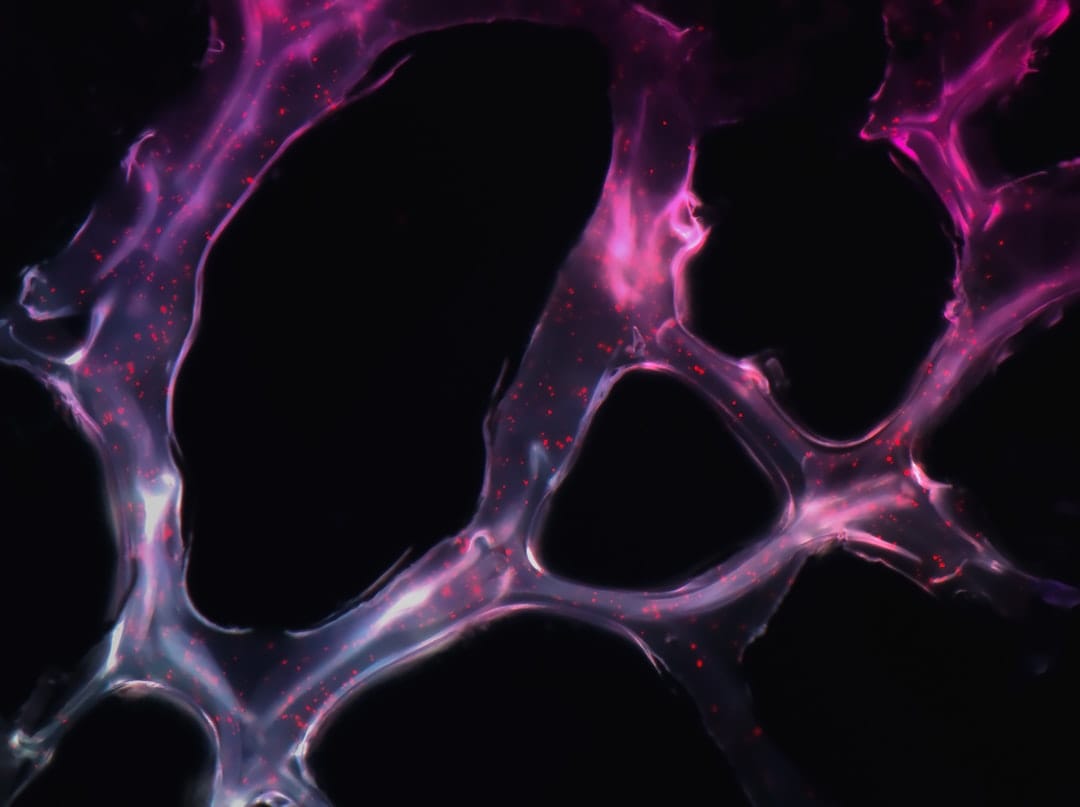
London, United Kingdom, MMN Correspondent: For decades, the question of how Alzheimer’s disease actually destroys brain cells has been one of the most stubborn mysteries in medicine. We knew toxic proteins like amyloid and tau build up inside neurons. We knew cells eventually die. But the exact mechanism? That was the missing piece. Now, researchers at King’s College London, working with the UK Dementia Research Institute and backed by Alzheimer’s Research UK, have identified a completely new form of cell death they call karyoptosis. And it changes everything we thought we knew about dementia.
Alzheimer’s currently affects more than 55 million people worldwide, and that number is expected to nearly triple by 2050. The disease is defined by the accumulation of misfolded proteins inside neurons. Over time, these aggregates disrupt normal function, leading to memory loss, cognitive decline, and eventually, widespread neuronal death. Scientists have long studied apoptosis, the classic programmed cell death pathway, but it never fully explained the sheer scale of neuron loss seen in advanced Alzheimer’s and frontotemporal dementia (FTD). Something else was happening. Now we know what it is.
Karyoptosis is a newly identified form of cell death triggered by proteotoxic stress. Unlike apoptosis, which dismantles the cell in a controlled, orderly fashion, karyoptosis specifically targets the nucleus, the command center where DNA lives. When toxic proteins accumulate inside neurons, they destabilize the nuclear envelope. The nucleus shrinks. Then it ruptures. What was once dismissed as accidental cellular damage is now understood as a regulated biochemical pathway that actively drives neurodegeneration.
The evidence comes from a detailed analysis of 3,000 brain cells taken from 28 individuals, 14 with end-stage Alzheimer’s and 14 with FTD. Using advanced computational algorithms and single-cell RNA sequencing, researchers classified different modes of cell death across neural tissue. The results were striking: 35% of neurons in the frontal cortex of Alzheimer’s patients showed clear signs of karyoptosis, compared to just 15% in healthy aging brains. That difference is not subtle. It tells us karyoptosis is a hallmark of disease, not a normal part of getting older.
So what flips the switch? The researchers identified a key molecular interaction between p38 MAP kinase and a structural protein called LaminB1. LaminB1 is essential for maintaining the integrity of the nuclear membrane. When toxic proteins build up, they activate p38 MAP kinase, which then phosphorylates LaminB1, weakening the nuclear scaffold. This breakdown leads to nuclear collapse, a point of no return for the neuron.
In laboratory experiments using rat neurons, the team tested whether blocking this interaction could prevent karyoptosis. By inhibiting p38 MAP kinase or stabilizing LaminB1, they significantly reduced markers of nuclear disintegration. These results suggest that targeting this specific protein interaction could halt or slow down the degenerative process. It’s a viable strategy for future drug development, and it’s grounded in real biology.
Dr. Manolis Fanto, Reader in Functional Genomics at King’s College London, described the potential impact this way: “By specifically targeting the interaction between p38 MAP kinase and LaminB1, we may slow down the process of cell death, buying precious time for more precise therapies that address the root causes of disease.” This represents a shift from managing symptoms to modifying the disease itself, potentially altering the course of dementia rather than just delaying its effects.
The implications go beyond Alzheimer’s and FTD. Karyoptosis appears to be a common pathway in other neurodegenerative conditions linked to protein aggregation, including amyotrophic lateral sclerosis (ALS) and Parkinson’s disease. That means a single therapeutic strategy might work across multiple disorders, accelerating the development of broad-spectrum treatments. It’s an exciting possibility for a field that has long struggled with one-size-fits-all approaches.
Dr. Rebecca Casterton, Senior Researcher at the UK Dementia Research Institute and lead author of the study, called the work a milestone. “We have started to lay out the road map of how karyoptosis works. I’m excited to see future breakthroughs this may drive in the dementia research community and beyond.” With this molecular blueprint now available, scientists can begin testing compounds that stabilize the nucleus or inhibit the p38-LaminB1 axis in animal models and eventually in human clinical trials.
The study was published in Nature Communications and funded primarily by Alzheimer’s Research UK and the Biotechnology and Biological Sciences Research Council International Partnership. Additional support came from the UK Medical Research Council and the UK Dementia Research Institute, reflecting a global commitment to solving the dementia crisis.
As the world faces an aging population and rising dementia rates, the identification of karyoptosis marks a turning point in neuroscience. It transforms a long-standing enigma into a tangible target for intervention. If drugs can be developed to protect the nucleus from proteotoxic stress, they could preserve cognitive function for years longer in affected individuals. Even modest delays in neurodegeneration could dramatically improve quality of life and reduce the societal burden of dementia care.
This discovery also reinforces the importance of early diagnosis. Detecting toxic protein buildup before irreversible nuclear damage occurs could allow for timely treatment, maximizing the effectiveness of future therapeutics. Advances in biomarker detection, such as blood tests for neurofilament light chain or PET imaging for amyloid plaques, are already paving the way for earlier interventions.
Ultimately, karyoptosis is not just a scientific curiosity. It is a critical piece of the puzzle in the fight against dementia. By uncovering the hidden mechanisms of brain cell death, researchers are not only deepening our understanding of disease biology but also illuminating a path toward truly transformative therapies. As science continues to unravel the complexities of the human brain, one truth stands clear: every new discovery brings us closer to ending the silent epidemic of dementia.
Related in Scientific Research
Scientific Research
How Soft Lithium Dendrites Crack Hard Ceramic Batteries: The Discovery That Could Triple EV Range
Imagine a battery that powers your phone for five days, charges your electric car in under 15 minutes, and never catches fire. That’s the promise of solid-state batteries. But for years, a tiny, stubborn problem has kept them stuck in labs: lithium dendrites. These microscopic,…
Read More...
Scientific Research
450,000 Barred Owls Could Be Shot to Save the Spotted Owl: Here’s Why Scientists Say It’s Working
Imagine walking through a silent forest at midnight. You hear a call—a deep, rhythmic hoot—and you raise a shotgun. This isn’t a scene from a thriller. It’s the front line of one of the most ambitious and controversial conservation experiments in American history. In the dense f…
Read More...
Scientific Research
50 Year Quantum Riddle Solved: How Heidelberg Physicists Bridged Two Opposing Particle Theories
Imagine trying to describe a single dancer moving through a crowded dance floor. One theory says the dancer pulls nearby people along, creating a small moving cluster. Another theory says if the dancer stands perfectly still, the crowd around them changes so completely that the…
Read More...
Scientific Research
9 Entangled Particles Found in a Crystal You Can Hold: What This Means for Quantum Tech
Imagine holding a small crystal in your hand, one that fits comfortably in your palm. Now imagine that inside that crystal, particles are connected in a way that defies everything we thought we knew about the quantum world. That is exactly what a team of researchers at TU Wien i…
Read More...
Scientific Research
30 Years Later: Scientists Finally Identify Rye Pollen Molecules That Slow Tumors – What This Means for Cancer Therapy
For nearly three decades, a quiet mystery sat at the edge of natural medicine. Two molecules found in rye pollen seemed to slow tumor growth in animal studies. But no one could figure out their exact shape. That puzzle has now been solved by researchers at Northwestern Universit…
Read More...
Scientific Research
UK Heatwave Alert: Temperatures Hit 34°C This Week – Are You Ready for the Third Scorcher of 2026?
Here we go again. The United Kingdom is bracing for its third major heatwave of 2026, with thermometers expected to climb past 34°C in southern and eastern regions. This isn’t just another warm spell – it’s a week-long event that has health officials on high alert from Saturday,…
Read More...
Scientific Research
Quantum Time Reversal Achieved: 5 Ways This Breakthrough Could Power Future Tech
What if you could rewind a moment in time not in your memory, but in the physical world itself? That question has moved from the pages of science fiction into the lab. Researchers at Los Alamos National Laboratory have just demonstrated something extraordinary: they can make qua…
Read More...
Scientific Research
6 Inventors Just Won Europe’s Top Prize – Here’s What They Created That Could Change Your Life
What do oat milk, a malaria vaccine, and recycled EV batteries have in common? They are all powered by the minds of six inventors who just took home the 2026 European Inventor Award. The European Patent Office (EPO) streamed the ceremony live from Berlin, and the winners did not…
Read More...
Scientific Research
7 Reasons Why a Remote Arctic Research Station Is Now the World's Most Watched Geopolitical Hotspot
Imagine a place so quiet that the loudest sound is the crunch of snow under your boots. A place built for science, not strategy. That was the Arctic research station on Svalbard just a few years ago. Today, that same outpost is the center of a global tug-of-war. What changed? Th…
Read More...
Scientific Research
Meet the 2026 European Inventor Award Winners: 6 Breakthroughs That Could Change Your Life
The European Patent Office just wrapped its 19th annual Inventor Award ceremony live from Berlin, and the winners are nothing short of remarkable. Six teams walked away with top honors, but one duo did something historic: they won both the Non-EPO Countries category and the Popu…
Read More...