
How Soft Lithium Dendrites Crack Hard Ceramic Batteries: The Discovery That Could Triple EV Range
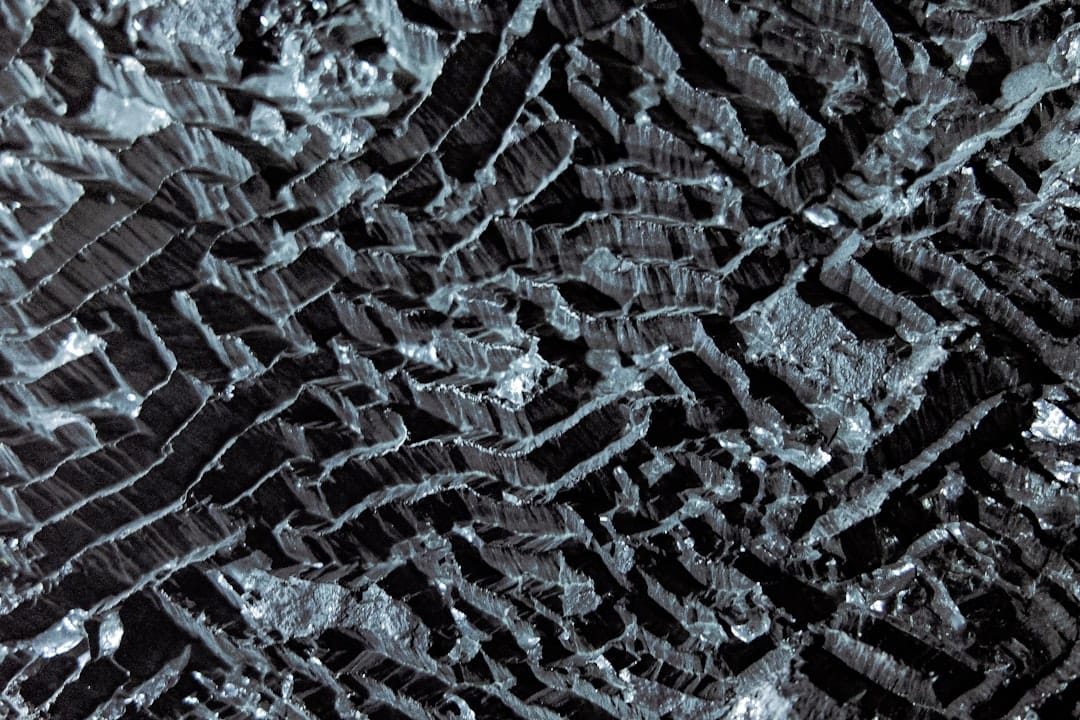
Düsseldorf, Germany, MMN Correspondent: Imagine a battery that powers your phone for five days, charges your electric car in under 15 minutes, and never catches fire. That’s the promise of solid-state batteries. But for years, a tiny, stubborn problem has kept them stuck in labs: lithium dendrites. These microscopic, needle-like structures grow inside the battery during charging. They’re soft as gum. Yet they somehow fracture the hard ceramic electrolyte meant to contain them. How? A team at the Max Planck Institute for Sustainable Materials just found the answer. And it changes everything.
Solid-state batteries are fundamentally different from the lithium-ion cells we use today. Instead of a liquid electrolyte, they use a rigid ceramic one. This swap offers huge benefits: up to three times more energy density, faster charging, longer life, and no flammable liquids. No leaks. No fires. It sounds perfect. So why aren’t they in your phone or car yet?
The culprit is dendrites. During charging, these tiny formations sprout from the lithium metal anode and burrow through the ceramic electrolyte like roots through concrete. When they punch through, they create a direct electrical path between the electrodes. That causes a short circuit. Performance drops. In worst cases, the battery overheats or fails catastrophically. The puzzle has always been: how can something as soft as chewing gum crack a material many times harder?
Two theories competed. One said mechanical stress builds up inside the dendrite itself, eventually fracturing the ceramic. The other suggested electrons leak along grain boundaries in the ceramic, causing lithium to deposit there and bridge the gap. Neither had been proven. So the Max Planck team decided to settle it once and for all.
They used an extraordinary approach. Every step of sample preparation and analysis happened in a vacuum at cryogenic temperatures. No moisture. No oxygen. Even the electron beams used for imaging couldn’t alter the delicate structures. This let them watch the process at the nanoscale without disturbing anything. What they saw surprised them.
There was no lithium buildup ahead of the dendrite tip. That ruled out the internal stress theory. Instead, they observed something else: hydrostatic pressure generated inside the soft lithium dendrite. Think of it like a continuous waterjet. The pressure concentrates at the tip, and that focused force causes brittle fracture in the ceramic. The dendrite then slides right through the crack. The softness of lithium isn’t a weakness. It actually helps the material conform and transmit pressure precisely where it’s needed at the point of contact.
This mechanism is similar to how high-pressure water jets cut through stone or steel. Once the crack forms, the dendrite keeps growing through the fracture path, accelerating failure. To confirm their findings, the team combined experimental data with phase field simulations and electron backscatter diffraction measurements. The results matched perfectly. Hydrostatic stress drives the fracture.
Now that we understand the problem, we can solve it. Researchers are already exploring several promising strategies. Tougher ceramics with nano-reinforcements or composite structures could resist crack propagation. Microscopic voids or engineered pathways could divert dendrite growth away from critical areas. Protective coatings on the lithium anode could suppress dendrite nucleation and stabilize the interface. And grain boundary engineering could minimize conductive paths where electron leakage might occur.
These approaches can be integrated into existing manufacturing processes. That means commercial solid-state batteries could hit the market within five to ten years. The implications are enormous. For electric vehicles, driving range could jump from 300 miles to over 900 miles on a single charge. Charging times could drop to under 15 minutes. Smartphones could last up to five days with minimal degradation over years of use. Energy storage systems for renewable grids would become safer, more efficient, and longer lasting.
This discovery also highlights a broader lesson in materials science: understanding behavior at the atomic and microscale is essential for solving macro-level problems. The success of solid-state batteries depends not just on chemistry, but on mechanics, electrochemistry, and materials physics working together. As global demand for clean energy and sustainable electronics grows, innovations in battery technology are critical. With this breakthrough, the final barrier to widespread adoption may finally be falling.
The journey from lab discovery to consumer product takes time. But the foundation has been laid. Engineers and manufacturers around the world are already adapting these insights into next-generation battery designs. The era of truly safe, ultra-durable, high-capacity batteries is no longer a distant dream. It’s within reach.
Related in Scientific Research

Scientific Research
450,000 Barred Owls Could Be Shot to Save the Spotted Owl: Here’s Why Scientists Say It’s Working
Imagine walking through a silent forest at midnight. You hear a call—a deep, rhythmic hoot—and you raise a shotgun. This isn’t a scene from a thriller. It’s the front line of one of the most ambitious and controversial conservation experiments in American history. In the dense f…
Read More...
Scientific Research
50 Year Quantum Riddle Solved: How Heidelberg Physicists Bridged Two Opposing Particle Theories
Imagine trying to describe a single dancer moving through a crowded dance floor. One theory says the dancer pulls nearby people along, creating a small moving cluster. Another theory says if the dancer stands perfectly still, the crowd around them changes so completely that the…
Read More...
Scientific Research
9 Entangled Particles Found in a Crystal You Can Hold: What This Means for Quantum Tech
Imagine holding a small crystal in your hand, one that fits comfortably in your palm. Now imagine that inside that crystal, particles are connected in a way that defies everything we thought we knew about the quantum world. That is exactly what a team of researchers at TU Wien i…
Read More...
Scientific Research
30 Years Later: Scientists Finally Identify Rye Pollen Molecules That Slow Tumors – What This Means for Cancer Therapy
For nearly three decades, a quiet mystery sat at the edge of natural medicine. Two molecules found in rye pollen seemed to slow tumor growth in animal studies. But no one could figure out their exact shape. That puzzle has now been solved by researchers at Northwestern Universit…
Read More...
Scientific Research
55 Million Affected: Scientists Just Found a New Way Alzheimer’s Kills Brain Cells – And How to Stop It
For decades, the question of how Alzheimer’s disease actually destroys brain cells has been one of the most stubborn mysteries in medicine. We knew toxic proteins like amyloid and tau build up inside neurons. We knew cells eventually die. But the exact mechanism? That was the mi…
Read More...
Scientific Research
UK Heatwave Alert: Temperatures Hit 34°C This Week – Are You Ready for the Third Scorcher of 2026?
Here we go again. The United Kingdom is bracing for its third major heatwave of 2026, with thermometers expected to climb past 34°C in southern and eastern regions. This isn’t just another warm spell – it’s a week-long event that has health officials on high alert from Saturday,…
Read More...
Scientific Research
Quantum Time Reversal Achieved: 5 Ways This Breakthrough Could Power Future Tech
What if you could rewind a moment in time not in your memory, but in the physical world itself? That question has moved from the pages of science fiction into the lab. Researchers at Los Alamos National Laboratory have just demonstrated something extraordinary: they can make qua…
Read More...
Scientific Research
6 Inventors Just Won Europe’s Top Prize – Here’s What They Created That Could Change Your Life
What do oat milk, a malaria vaccine, and recycled EV batteries have in common? They are all powered by the minds of six inventors who just took home the 2026 European Inventor Award. The European Patent Office (EPO) streamed the ceremony live from Berlin, and the winners did not…
Read More...
Scientific Research
7 Reasons Why a Remote Arctic Research Station Is Now the World's Most Watched Geopolitical Hotspot
Imagine a place so quiet that the loudest sound is the crunch of snow under your boots. A place built for science, not strategy. That was the Arctic research station on Svalbard just a few years ago. Today, that same outpost is the center of a global tug-of-war. What changed? Th…
Read More...
Scientific Research
Meet the 2026 European Inventor Award Winners: 6 Breakthroughs That Could Change Your Life
The European Patent Office just wrapped its 19th annual Inventor Award ceremony live from Berlin, and the winners are nothing short of remarkable. Six teams walked away with top honors, but one duo did something historic: they won both the Non-EPO Countries category and the Popu…
Read More...