
9 Entangled Particles Found in a Crystal You Can Hold: What This Means for Quantum Tech
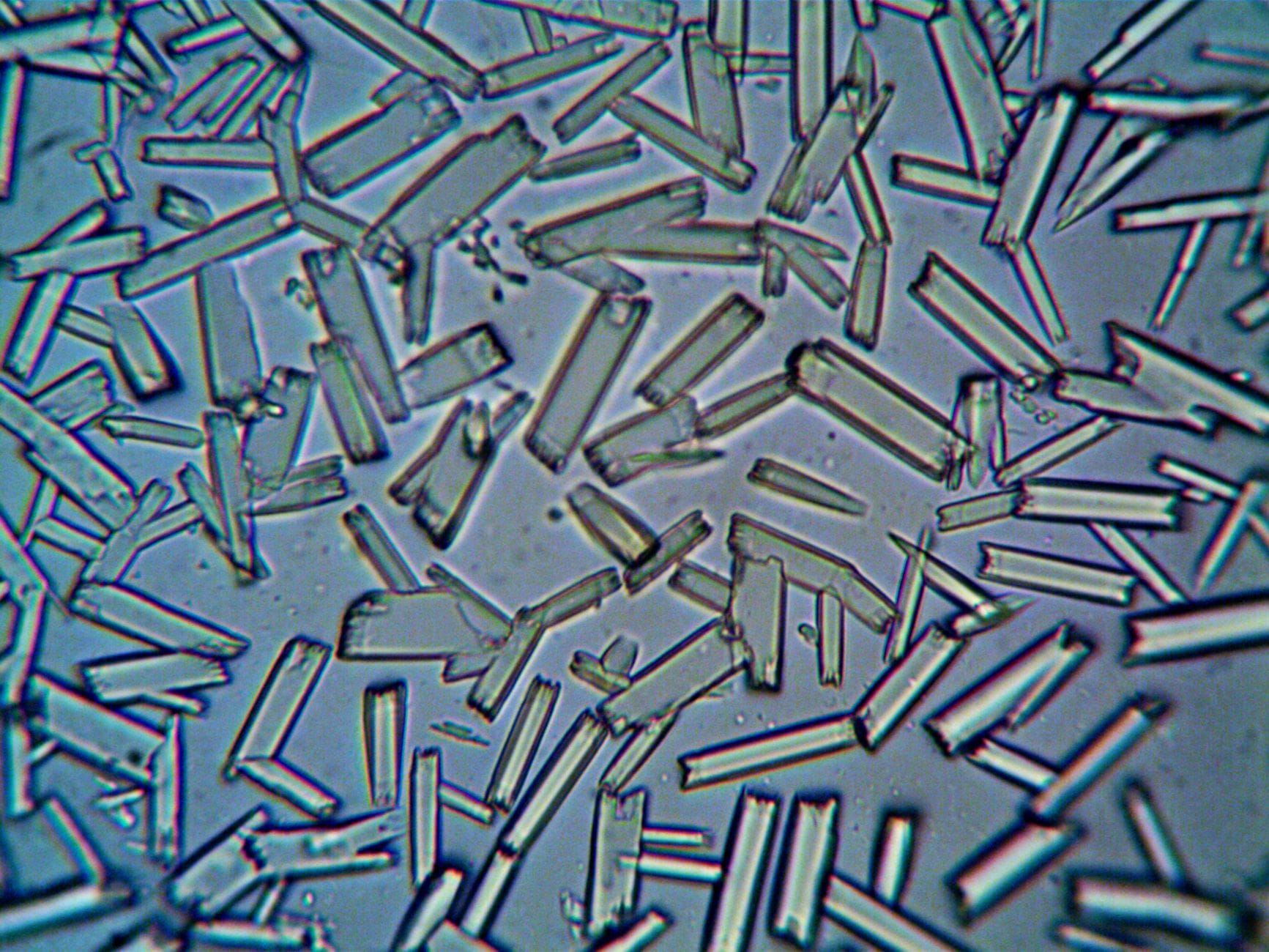
Vienna, Austria, MMN Correspondent: Imagine holding a small crystal in your hand, one that fits comfortably in your palm. Now imagine that inside that crystal, particles are connected in a way that defies everything we thought we knew about the quantum world. That is exactly what a team of researchers at TU Wien in Austria has just demonstrated, and the implications are enormous.
For decades, quantum entanglement was considered a phenomenon reserved for the tiniest building blocks of matter: atoms, photons, and electrons. The idea that it could exist in a solid object you can physically hold seemed like science fiction. But this new study, focused on a centimeter-sized crystal made of cerium, palladium, and silicon, proves otherwise. This material belongs to a class known as 'strange metals,' which have puzzled physicists for years because their electrical and thermal behaviors don't follow the usual rules.
What makes this discovery so fascinating is not just the size of the crystal, but the method used to detect the entanglement. Instead of trying to put the entire crystal into a single quantum state, the researchers asked a different question: Are the particles inside the crystal acting together as a coordinated network? Professor Silke Bühler-Paschen compares this to observing an anthill. When you disturb an anthill, the entire colony responds as one, not as individual ants. The team wanted to see if the particles in the crystal behaved the same way.
To find out, they bombarded the crystal with neutrons at the Institut Laue-Langevin in Grenoble. In a normal material, a neutron would transfer energy to a single particle or a small group, producing a predictable response. But the data showed something unexpected. The crystal reacted with a sensitivity that was far too high to be explained by independent particles. Using a tool from quantum information science called quantum Fisher information, the team quantified this enhanced response and found that at least nine particles were entangled together, forming a collective quantum state.
This is a big deal for several reasons. First, it helps explain why strange metals behave the way they do. In 2025, researchers from TU Wien and Rice University had already noticed that current flowing through these materials produces unusually low electrical noise. The new findings suggest that this quietness comes directly from entanglement. When particles are entangled, their fluctuations tend to cancel each other out, leading to smoother, more stable current flow. This could finally solve one of the long-standing puzzles in condensed matter physics.
Second, this work bridges two major fields: quantum information science and solid-state physics. Peter Zoller and his colleagues in Innsbruck had previously shown that quantum Fisher information could be used to detect entanglement in complex systems. Now, with real experimental validation, this approach has proven to be a practical tool for studying macroscopic quantum phenomena in actual materials.
The potential applications are exciting. Quantum entanglement is the foundation of many emerging technologies, including quantum computing, secure communication, and ultra-precise sensors. The ability to observe and measure entanglement in a room-temperature, macroscopic solid brings us closer to practical devices. Researchers believe that strange metals could one day serve as ideal platforms for quantum metrology, enabling instruments that detect tiny changes in magnetic fields, gravitational waves, or other subtle signals with unprecedented accuracy.
Looking ahead, the team plans to explore the reverse direction: using insights from quantum materials to design next-generation quantum devices. If entangled states can be stabilized and controlled in these crystals, they could become building blocks for robust quantum circuits that function without extreme cooling or isolation, which are major obstacles in current quantum computing architectures.
This research also highlights a broader trend in science: the convergence of disciplines. By applying tools from quantum information to problems in solid-state physics, researchers are uncovering hidden layers of complexity in everyday materials. It suggests that the quantum world is not as distant or fragile as once believed. Instead, quantum effects may be embedded in the very fabric of certain materials, waiting to be revealed through the right lens.
As physicists continue to explore the limits of quantum behavior, the line between the microscopic and the tangible grows increasingly blurred. A crystal you can hold might contain a universe of entangled particles, each influencing the others in ways that still challenge our understanding. Yet, with every advance, we move closer to harnessing these phenomena not just to understand nature, but to reshape technology, medicine, and industry in the decades to come.
This discovery invites a new era of curiosity-driven exploration, one where even the simplest-looking objects may conceal the deepest secrets of the universe.
Related in Scientific Research
Scientific Research
How Soft Lithium Dendrites Crack Hard Ceramic Batteries: The Discovery That Could Triple EV Range
Imagine a battery that powers your phone for five days, charges your electric car in under 15 minutes, and never catches fire. That’s the promise of solid-state batteries. But for years, a tiny, stubborn problem has kept them stuck in labs: lithium dendrites. These microscopic,…
Read More...
Scientific Research
450,000 Barred Owls Could Be Shot to Save the Spotted Owl: Here’s Why Scientists Say It’s Working
Imagine walking through a silent forest at midnight. You hear a call—a deep, rhythmic hoot—and you raise a shotgun. This isn’t a scene from a thriller. It’s the front line of one of the most ambitious and controversial conservation experiments in American history. In the dense f…
Read More...
Scientific Research
50 Year Quantum Riddle Solved: How Heidelberg Physicists Bridged Two Opposing Particle Theories
Imagine trying to describe a single dancer moving through a crowded dance floor. One theory says the dancer pulls nearby people along, creating a small moving cluster. Another theory says if the dancer stands perfectly still, the crowd around them changes so completely that the…
Read More...
Scientific Research
30 Years Later: Scientists Finally Identify Rye Pollen Molecules That Slow Tumors – What This Means for Cancer Therapy
For nearly three decades, a quiet mystery sat at the edge of natural medicine. Two molecules found in rye pollen seemed to slow tumor growth in animal studies. But no one could figure out their exact shape. That puzzle has now been solved by researchers at Northwestern Universit…
Read More...
Scientific Research
55 Million Affected: Scientists Just Found a New Way Alzheimer’s Kills Brain Cells – And How to Stop It
For decades, the question of how Alzheimer’s disease actually destroys brain cells has been one of the most stubborn mysteries in medicine. We knew toxic proteins like amyloid and tau build up inside neurons. We knew cells eventually die. But the exact mechanism? That was the mi…
Read More...
Scientific Research
UK Heatwave Alert: Temperatures Hit 34°C This Week – Are You Ready for the Third Scorcher of 2026?
Here we go again. The United Kingdom is bracing for its third major heatwave of 2026, with thermometers expected to climb past 34°C in southern and eastern regions. This isn’t just another warm spell – it’s a week-long event that has health officials on high alert from Saturday,…
Read More...
Scientific Research
Quantum Time Reversal Achieved: 5 Ways This Breakthrough Could Power Future Tech
What if you could rewind a moment in time not in your memory, but in the physical world itself? That question has moved from the pages of science fiction into the lab. Researchers at Los Alamos National Laboratory have just demonstrated something extraordinary: they can make qua…
Read More...
Scientific Research
6 Inventors Just Won Europe’s Top Prize – Here’s What They Created That Could Change Your Life
What do oat milk, a malaria vaccine, and recycled EV batteries have in common? They are all powered by the minds of six inventors who just took home the 2026 European Inventor Award. The European Patent Office (EPO) streamed the ceremony live from Berlin, and the winners did not…
Read More...
Scientific Research
7 Reasons Why a Remote Arctic Research Station Is Now the World's Most Watched Geopolitical Hotspot
Imagine a place so quiet that the loudest sound is the crunch of snow under your boots. A place built for science, not strategy. That was the Arctic research station on Svalbard just a few years ago. Today, that same outpost is the center of a global tug-of-war. What changed? Th…
Read More...
Scientific Research
Meet the 2026 European Inventor Award Winners: 6 Breakthroughs That Could Change Your Life
The European Patent Office just wrapped its 19th annual Inventor Award ceremony live from Berlin, and the winners are nothing short of remarkable. Six teams walked away with top honors, but one duo did something historic: they won both the Non-EPO Countries category and the Popu…
Read More...