
6-0 Victory: How Canada Made World Cup History in Paris and What It Means for the Future
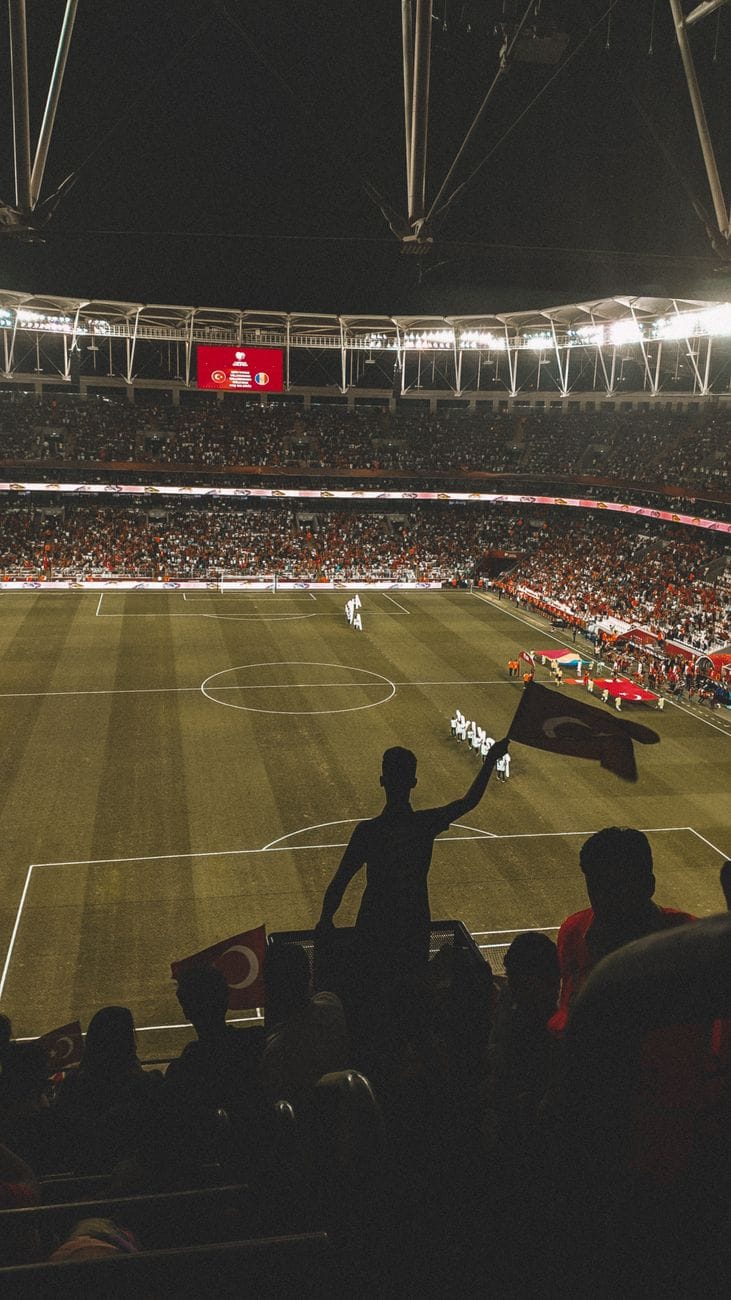
Paris, France, MMN Correspondent: What does it feel like to witness a nation rewrite its football story in a single afternoon? On June 19, 2024, at the Stade de France, Canada answered that question with a performance that left fans, pundits, and opponents alike searching for words. The final score read 6-0. But the real story goes far beyond the numbers.
This was Canada’s first win in a FIFA World Cup finals match since 1986. And it wasn’t just a win. It was a statement. Against Qatar, a team that reached the quarterfinals of the 2022 World Cup, the Canadians played with a confidence that suggested they belonged on this stage all along. From the opening minutes, you could feel something different in the air. The players moved with purpose. The crowd, a sea of red and white, roared with every pass.
The breakthrough came in the 23rd minute. Alphonso Davies, the Toronto FC star and MLS All-Star, received the ball on the left flank. He cut inside, took a touch, and unleashed a shot that curled into the far corner. The stadium erupted. It was the kind of goal that makes you believe anything is possible.
Five minutes later, Jonathan David doubled the lead. A perfectly timed through ball from Lucas Cavallini split the Qatari defense. David raced onto it, kept his composure, and slotted the ball past the goalkeeper. At 2-0, the Canadian bench was already celebrating. But the best was yet to come.
After halftime, the match took a dramatic turn. In the 57th minute, Qatari defender Abdullah Mubarak was shown a red card for a reckless challenge on David. Down to ten men, Qatar struggled to regroup. Canada smelled blood. Tajon Buchanan made it 3-0 in the 62nd minute, capitalizing on a goalkeeper error. Then Cyle Larin, who had come off the bench, rose to meet a cross from Davies and headed home the fourth goal in the 70th minute.
The final two goals came in the closing stages. An own goal from Hassan Al-Haydos made it 5-0. And in stoppage time, captain Atiba Hutchinson calmly converted a penalty after being fouled in the box. The scoreboard read 6-0. History had been made.
But as the players celebrated, a shadow fell over the pitch. In the 74th minute, midfielder Ismael Kone went down after a collision. He clutched his knee. Medical staff rushed to his side. The stretcher came out. The stadium fell silent. Head coach Jesse Marsch, usually composed, broke down on the sideline. Later, he described the moment as heart-wrenching. Initial reports suggested a possible ACL tear, a devastating injury for any athlete, especially one so young and promising.
Kone had been a key figure in Canada’s midfield throughout the qualification campaign. His absence will be felt. But the team’s response to adversity spoke volumes about their character. They didn’t let the injury derail their focus. They kept playing. They kept pushing. And they finished the match with a scoreline that will be remembered for generations.
This victory is more than a single result. It represents years of investment in youth academies, the growth of Major League Soccer, and the emergence of world-class talent like Davies, David, and Buchanan. Canada is no longer an outsider in international football. They are a team to be taken seriously.
With six points in Group F, Canada now sits atop the standings. Upcoming matches against Morocco and the United States will test their resolve. But after this performance, anything feels possible. The dream of advancing to the knockout stage is no longer a fantasy. It is a realistic goal.
As the final whistle blew, Canadian fans in the stands waved maple leaf flags and sang the national anthem. Millions watched around the world. Social media lit up with tributes. For one afternoon, a nation united around a football pitch in Paris.
June 19, 2024, will be remembered as the day Canada announced its arrival on the world stage. A day of triumph, tears, and unforgettable moments. And as the team looks ahead, one question lingers: What will they do next?
Related in Sport

Sport
How Dubai Basketball Won the ABA League in Just Two Seasons: Inside the Partnership That Made It Possible
When Dubai Basketball lifted the ABA League trophy after only its second season, the basketball world took notice. But the story behind that trophy is bigger than any single game or player. It is a story about what happens when a city’s ambition meets a partner that moves mounta…
Read More...
Sport
From Career-Threatening Injury to World Cup Hero: How Mikel Merino Became Spain’s Clutch Performer in 2026
Imagine being told you might never play football again. Then imagine stepping onto the world’s biggest stage months later and scoring the goals that carry your country to the semi finals. That is the reality for Mikel Merino, the Arsenal midfielder who has quietly become the mos…
Read More...
Sport
Can France’s 2026 World Cup Squad Become the Greatest Team in History?
What does it take to build a football dynasty? France is giving the world a masterclass answer right now. With a commanding 2-0 victory over Morocco in Boston, Les Bleus have become the first team to lock in a semi final spot at the 2026 FIFA World Cup. They are chasing a third…
Read More...
Sport
Will France Survive Morocco’s Challenge? 4 Quarter-Final Predictions That Could Reshape the World Cup
The 2026 FIFA World Cup quarter-finals are here, and the tension is almost unbearable. Four matches stand between eight teams and a shot at glory. Every pass, every tackle, every decision could rewrite football history. Among the most anticipated battles is France versus Morocco…
Read More...
Sport
How Gregor Kobel’s Three Saves Sent Switzerland to the 2026 World Cup Quarter Finals
What happens when a team’s entire World Cup dream rests on one goalkeeper’s reflexes? You get the kind of night that turns a quiet Swiss shot stopper into a national legend. Switzerland’s 2026 campaign just took a historic turn, and it all unfolded under the lights of MetLife St…
Read More...
Sport
What Really Went Wrong for USA in World Cup 2026? One Defensive Mistake That Changed Everything
You could feel the air leave the stadium. The 2026 FIFA World Cup Round of 16 match between the United States and Belgium was poised on a knife edge. Then, in the 67th minute, everything shifted. A single moment of miscommunication turned a tightly contested knockout game into a…
Read More...
Sport
How a 19-Year-Old’s Header Just Changed England’s World Cup Destiny – See the Moment That Stunned Mexico
The Estadio Azteca roared with over 87,000 voices, a wall of green and white that seemed impossible to penetrate. Yet, in the 38th minute, a single leap by a teenager silenced an entire nation. Jude Bellingham, just 19 years old, rose above the Mexican defense and powered a head…
Read More...
Sport
How France Outlasted Paraguay’s Relentless Tactics in a Heated World Cup 2026 Quarterfinal – What the Scoreline Doesn’t Tell You
The 2026 FIFA World Cup quarterfinal between France and Paraguay at Lincoln Financial Field was never going to be a classic. But what unfolded under the sweltering Philadelphia sun was something far more gripping than a simple 1-0 scoreline suggests. This was a match that tested…
Read More...
Sport
How Argentina Survived Cape Verde’s 120-Minute Ambush: 3 Key Moments That Defined a World Cup Classic
What happens when a two-time world champion meets a team that refuses to believe in rankings? You get a night that rewrites the script of the 2026 World Cup. Argentina’s 3-2 extra-time victory over Cape Verde on July 4 at the Estadio Ciudad de México wasn’t just a match. It was…
Read More...
Sport
How a Single Millimeter Decided Croatia’s Fate Against Portugal in the 2026 World Cup Knockout
What happens when a goal that should have been the equalizer gets erased by a margin so thin it’s almost invisible? That’s the question football fans around the world are asking after Croatia’s heartbreaking 1-0 loss to Portugal in the Round of 16 of the 2026 FIFA World Cup. The…
Read More...