
60 Days to Peace: What US Iran Talks in Switzerland Mean for Global Oil Prices and Middle East Stability

Lucerne, Switzerland, MMN Correspondent: Deep into the night in a quiet Swiss city, two longtime adversaries are sitting across a table trying to rewrite the rules of a conflict that has shaken the Middle East and rattled global markets. The United States and Iran have entered a critical phase of direct negotiations, racing against a 60 day deadline to turn a fragile ceasefire into something more lasting. The question on everyone’s mind: can they pull it off before tensions boil over again?
This round of talks, which started Sunday evening and stretched through the night, is the first face to face meeting since a landmark agreement was signed last week. That deal promised an end to fighting on all fronts, a reopening of the Strait of Hormuz, and a sweeping lift of U.S. sanctions. But the real work is just beginning. Negotiators are now drilling down on the details: what does Iran’s commitment to reopen the strait actually mean? How will a ceasefire in southern Lebanon be enforced? And can the nuclear agreement be revived in a way both sides can trust?
A senior U.S. diplomat described these sessions as the foundation for ongoing technical dialogues. In plain language, that means moving from big promises to concrete steps. The urgency is real. If no breakthrough comes within the next 60 days, the risk of renewed hostilities is high. The clock is ticking, and the world is watching.
The initial agreement was ambitious. It called for an immediate end to fighting across all fronts, including the escalating violence between Israel and Hezbollah in southern Lebanon. Iran agreed to reopen the Strait of Hormuz, a waterway that carries about 20% of the world’s oil and natural gas. The U.S. pledged to lift all sanctions on Iran, remove its military blockade on Iranian shipping, and commit $300 billion to rebuild Iran’s infrastructure and economy. On paper, it looked like a historic breakthrough.
But reality has a way of complicating things. In the days after the agreement, Israeli airstrikes in southern Lebanon intensified, killing at least 67 civilians according to Lebanon’s health ministry. Hezbollah responded with rocket attacks that killed five Israeli soldiers. These events have shaken confidence in the ceasefire. Iran then announced it had closed the Strait of Hormuz, but maritime tracking data told a different story: four tankers and multiple cargo vessels were seen transiting the waterway by late Sunday afternoon. Some ships may have turned off their tracking systems, but overall movement suggests the strait remains operational. The gap between Iran’s official claim and the observable facts adds another layer of complexity to the talks.
Meanwhile, former U.S. President Donald Trump re entered the public conversation with a series of pointed statements on social media. He demanded that Iran stop its proxies in Lebanon from causing trouble and warned of consequences if the situation did not improve. Iran’s lead negotiator, Mohammad Bagher Ghalibaf, responded firmly: threats have never changed Iran’s course, he said, and actions not rhetoric will determine outcomes. His words reflect a growing sense of defiance in Tehran, even as formal negotiations continue.
On the U.S. side, Vice President JD Vance delivered a clear message before the talks began. President Trump has instructed negotiators to turn over a new leaf, Vance said. The U.S. remains firm on issues like Iran’s nuclear ambitions, but it is open to a fundamental transformation of bilateral relations if Iran shows a genuine commitment to regional stability and abandons its pursuit of nuclear weapons. Iran maintains that its nuclear program is entirely peaceful, intended only for energy and medical purposes. Bridging that gap is one of the central challenges of these talks.
The delegation in Lucerne includes key figures from both sides. Vance is accompanied by Jared Kushner and special envoy Steve Witkoff, signaling the administration’s high level engagement. On the Iranian side, Foreign Minister Abbas Araghchi joins Ghalibaf, underscoring the seriousness with which Tehran views the process. International observers also noted the presence of Pakistan’s Prime Minister and Army Chief, along with Qatar’s Prime Minister. Qatar, a long standing mediator in Middle Eastern conflicts, has expressed support for the talks, calling them a crucial step toward de escalation.
The stakes are enormous. The Strait of Hormuz is a flashpoint not just for Iran and the U.S., but for the entire global economy. Any disruption to the flow of oil and natural gas through that narrow channel can send fuel prices spiking and trigger supply chain fears. Since early March, over 4,000 people have been killed in Lebanon alone, with more than 30 Israeli soldiers and four civilians dead in northern Israel. The war began after a strike in February that killed Iran’s supreme leader, prompting Hezbollah to launch retaliatory rockets into Israel. Israel responded with a full scale bombing campaign and a ground incursion into southern Lebanon, occupying roughly 5% of the country’s territory in an effort to push back Hezbollah fighters from its northern border.
Israel insists its operations in Lebanon are separate from its conflict with Iran, but analysts argue the two are deeply intertwined. The war has drawn in regional powers, strained alliances, and exposed vulnerabilities in international security architecture. The fact that such a complex web of actors including the U.S., Israel, Hezbollah, Iran, Qatar, and Pakistan is now converging in a Swiss resort shows how far the crisis has evolved beyond local borders.
As the night wears on, diplomats remain locked in intensive discussions. Every hour counts. The success of this diplomatic initiative will depend not only on resolving technical disputes but also on building trust something that has been eroded over years of hostility, sanctions, and military posturing. If the 60 day deadline is met with a viable agreement, it could mark a historic pivot in Middle Eastern geopolitics. If not, the region risks sliding deeper into chaos, with consequences that extend far beyond national borders.
For now, the world watches and waits as the clock ticks down on a fragile window of opportunity to forge lasting peace.
Related in Global Trend

Global Trend
Meta’s AI Image Tool Vanishes Days After Launch: What Happened to Your Instagram Photos?
Just days after its flashy debut, Meta’s new AI image generation feature has been pulled from the platform. The tool, part of the Muse Image rollout, let users of Meta’s AI chatbot create artificial images by pulling content from public Instagram accounts. Think about that for a…
Read More...
Global Trend
Middle East Travelers Are Flocking to Thailand for Wellness: Here’s What’s Driving the 2026 Boom
What if the next luxury vacation didn’t just pamper you but actually changed how you feel long after you return home? That’s the question Thailand is asking Middle East travelers right now. And the answer is reshaping how people from the Gulf plan their getaways. The Tourism Aut…
Read More...
Global Trend
How SK Hynix Raised $26.5 Billion in Its US Debut: What It Means for AI Chip Investors
Imagine walking into a room where the world’s biggest money managers are all fighting for a piece of the same company. That’s exactly what happened when SK Hynix, the South Korean memory chip giant, stepped onto the Nasdaq stage in July 2026. The result? A staggering $26.5 billi…
Read More...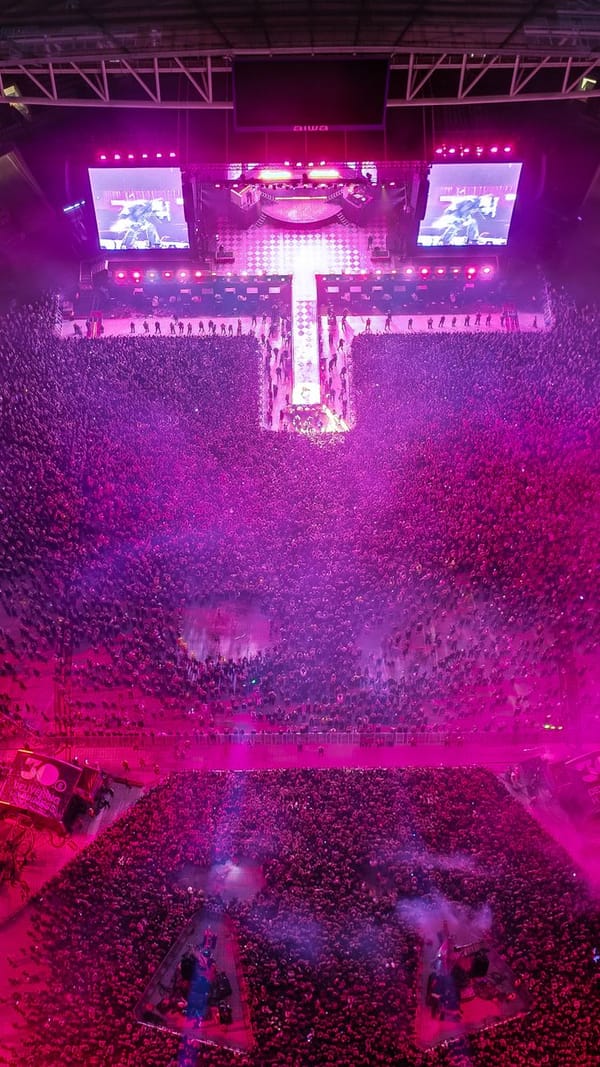
Global Trend
What Happens When Bieber, Madonna, Shakira, and BTS Share the World Cup Stage?
Imagine this: It’s July 19, 2026, and the world is watching. Not just for the final whistle of the FIFA World Cup, but for something that’s never happened before. For the first time in the tournament’s history, a Super Bowl style halftime show is about to unfold at MetLife Stadi…
Read More...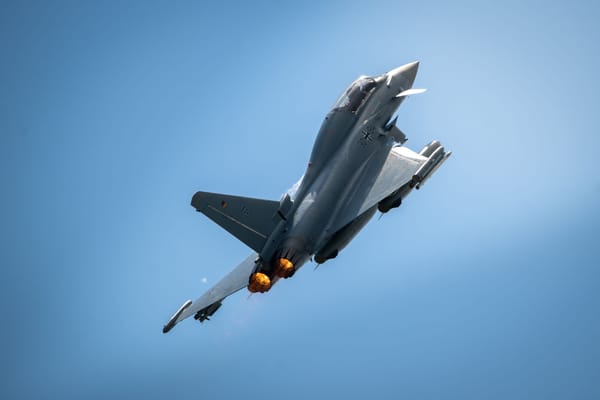
Global Trend
80 Targets Hit: What the US Strikes on Iran Mean for Global Oil Routes
The world’s most critical oil passageway just became the epicenter of a major military confrontation. The United States has launched sweeping airstrikes across Iran’s southern coast, hitting more than 80 locations after three commercial tankers came under attack in the Strait of…
Read More...
Global Trend
Travel Before the Crowds: Why the Two Weeks Before School Holidays Are Your Best Bet for a Peaceful Summer Escape
Picture this: warm sand beneath your feet, a gentle sea breeze, and the sound of waves instead of the chatter of crowds. That’s the reality for travelers who discover a simple truth about summer vacations. The best time to go isn’t when everyone else does. It’s the two weeks rig…
Read More...
Global Trend
Faster Patents in Europe and China: What the New EPO-CNIPA PPH Pilot Means for Your Innovation Timeline
What if you could cut months off the time it takes to secure a patent in both Europe and China? Starting August 1, 2026, that possibility becomes reality. The European Patent Office (EPO) and China National Intellectual Property Administration (CNIPA) are launching a new bilater…
Read More...
Global Trend
What Happened in a Utah Courtroom When Charlie Kirk’s Family Came Face to Face With His Accused Killer?
On a quiet Tuesday morning in May 2026, a Utah courtroom became the center of a story that has haunted America for months. The family of Charlie Kirk, the 31-year-old conservative activist and founder of Turning Point USA, sat just feet away from the man accused of ending his li…
Read More...
Global Trend
4 New Luxury Travel Mindsets Reshaping Asia Pacific: How Gen Z Is Redefining High End Tourism
What does luxury mean to a generation that grew up with Instagram, climate anxiety, and a craving for meaning? A sweeping study of 2,800 affluent travelers across eight Asia Pacific markets—China, Japan, South Korea, Australia, India, Singapore, Thailand, and Indonesia—has uncov…
Read More...
Global Trend
How Europe and China Are Cutting Patent Wait Times by 40% Starting August 2026
Imagine filing a single patent application and watching it sail through two of the world’s largest intellectual property offices with minimal friction. That vision becomes reality on August 1, 2026, when the European Patent Office (EPO) and the China National Intellectual Proper…
Read More...