
8 Days Under 140 Tonnes of Rubble: How One Man Survived Venezuela’s Twin Earthquakes and the Rescue That Defied the Odds
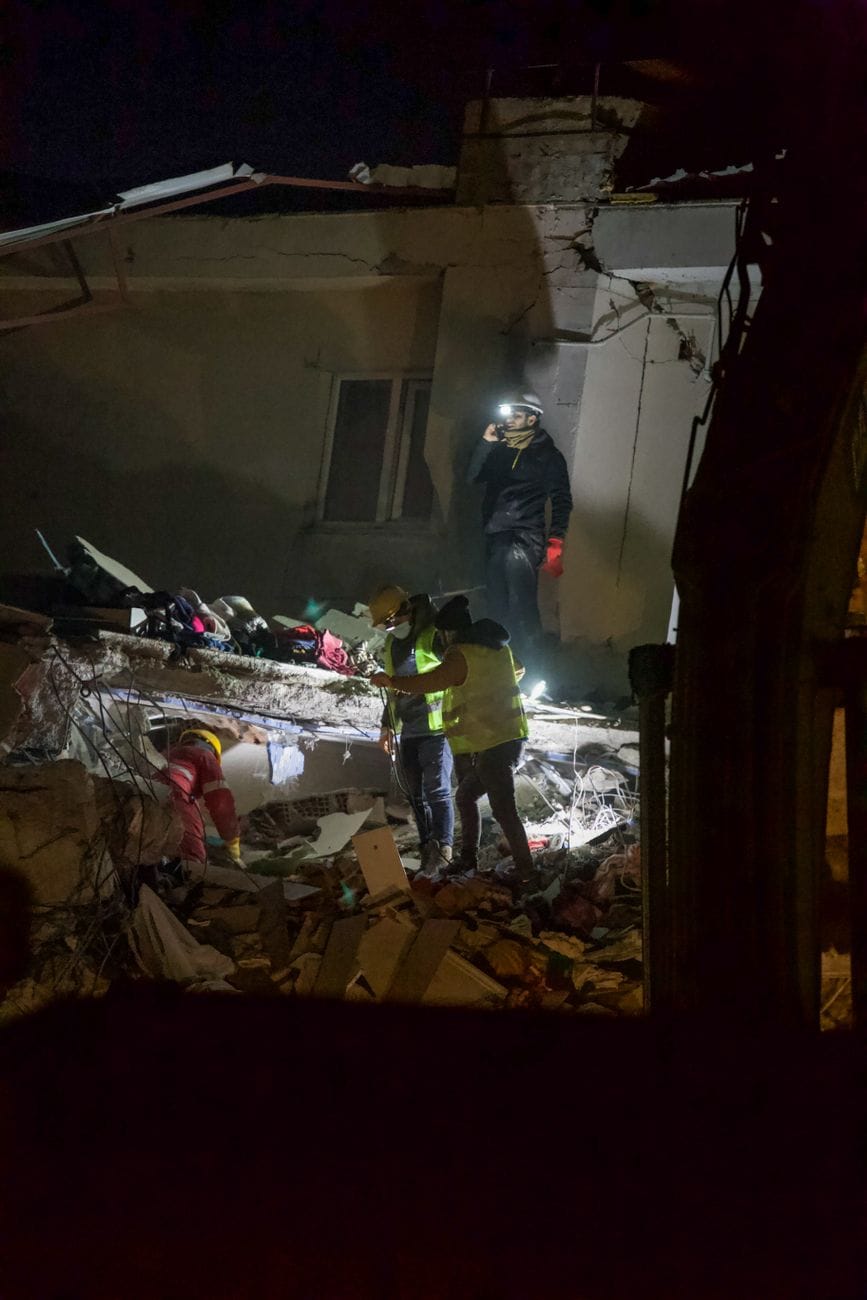
Catia La Mar, Venezuela, MMN Correspondent: Imagine being buried alive under 140 tonnes of concrete and steel, with no light, no movement, and only the faint hope that someone might hear you. For Hernán Gil, a 47-year-old security guard, that nightmare became his reality for eight full days. But what happened next is a story that has captivated the world and redefined what we think is possible in disaster survival.
The twin earthquakes that struck Venezuela on June 24, 2026, were catastrophic. With magnitudes of 7.2 and 6.8, they tore through northern coastal regions, leveling entire neighborhoods and leaving over 2,595 people dead. Tens of thousands remain missing or displaced. In the chaos, one man was forgotten beneath the ruins of a parking structure in Catia La Mar. Or so everyone thought.
Hernán Gil was working his shift in a small concrete booth in the basement of a parking garage near the Galerias Playa Grande mall when the ground began to shake. As the building collapsed, that booth became his accidental fortress. It didn’t crush him. It didn’t flood. It simply held. That structural quirk is the reason he’s alive today. Without it, the story would have ended differently.
Days passed. Rescuers worked tirelessly above, but the site was unstable and the rubble deep. Then, on Sunday, a paramedic from the Costa Rican Red Cross named Allan Madrigal heard something. A faint cry. He stopped. He asked a colleague to listen. Was it real? Could someone actually be alive under all that? The answer came when they confirmed the sound. It was Gil.
What followed was over 100 hours of painstaking excavation. A multinational team from Chile, Costa Rica, El Salvador, Mexico, Portugal, the United States, and Venezuela worked in rotating shifts. They used listening devices, robotic cameras, and hand tools to carve a narrow tunnel toward Gil. Several times, the shaft collapsed, forcing them to restart. Each setback could have been fatal for both the rescuers and the man they were trying to save.
But communication never stopped. Through a small hole, rescuers passed water, IV fluids, and a face mask to protect Gil from dust. A Chilean firefighter used a camera probe to make visual contact. In the grainy footage, you could see Gil’s bloodshot eye. He wore the mask as instructed. When the firefighter asked him to put on goggles, Gil complied without hesitation. He was weak, but his mind was sharp.
Marco Antonio Franco from the Mexican Red Cross described Gil as a cheerful man who kept morale high. He asked for hydration drinks in specific flavors he liked. Of course, the team indulged him. He joked with rescuers, called them by name, and said things like, “How nice that you came back and that you’re with me again.” That kind of spirit is rare in such conditions. It kept everyone going.
Medically, Gil’s survival is remarkable. Trapped in near total darkness with limited oxygen and constant risk of collapse, most people would have succumbed to dehydration, hypothermia, or mental breakdown within days. But Gil remained conscious, alert, and emotionally stable. Doctors say that’s almost unheard of in post disaster scenarios. His concrete booth gave him a fighting chance, and his mindset did the rest.
When rescuers finally pulled him out, the scene was emotional. Medical personnel described him as “just perfect.” No broken bones. No crushed nails. Just minor abrasions and fatigue. He was stable and immediately taken to a hospital for recovery. The team that saved him called it the most complex and technically difficult rescue they had ever faced.
This event has sparked important conversations about building safety in earthquake prone regions. Many structures in Venezuela, especially older ones, were not built to withstand strong seismic activity. The collapse of the Galerias Playa Grande parking garage is a clear example of why stricter building codes and regular inspections are needed. It’s not just about saving lives after a disaster. It’s about preventing the disaster from claiming them in the first place.
As Gil recovers, his story is a reminder that even in the darkest moments, human resilience and international cooperation can achieve the extraordinary. Social media has been flooded with messages of gratitude and hope. Humanitarian organizations have pledged additional aid. The search for other survivors continues, but Gil’s rescue stands as a powerful testament to what’s possible when people refuse to give up.
His survival isn’t just a miracle. It’s a call to action for better preparedness, stronger construction standards, and faster international response mechanisms. Because if one man can survive eight days under 140 tonnes of rubble, imagine what we can do when we work together.
Related in Global Trend

Global Trend
Meta’s AI Image Tool Vanishes Days After Launch: What Happened to Your Instagram Photos?
Just days after its flashy debut, Meta’s new AI image generation feature has been pulled from the platform. The tool, part of the Muse Image rollout, let users of Meta’s AI chatbot create artificial images by pulling content from public Instagram accounts. Think about that for a…
Read More...
Global Trend
Middle East Travelers Are Flocking to Thailand for Wellness: Here’s What’s Driving the 2026 Boom
What if the next luxury vacation didn’t just pamper you but actually changed how you feel long after you return home? That’s the question Thailand is asking Middle East travelers right now. And the answer is reshaping how people from the Gulf plan their getaways. The Tourism Aut…
Read More...
Global Trend
How SK Hynix Raised $26.5 Billion in Its US Debut: What It Means for AI Chip Investors
Imagine walking into a room where the world’s biggest money managers are all fighting for a piece of the same company. That’s exactly what happened when SK Hynix, the South Korean memory chip giant, stepped onto the Nasdaq stage in July 2026. The result? A staggering $26.5 billi…
Read More...
Global Trend
What Happens When Bieber, Madonna, Shakira, and BTS Share the World Cup Stage?
Imagine this: It’s July 19, 2026, and the world is watching. Not just for the final whistle of the FIFA World Cup, but for something that’s never happened before. For the first time in the tournament’s history, a Super Bowl style halftime show is about to unfold at MetLife Stadi…
Read More...
Global Trend
80 Targets Hit: What the US Strikes on Iran Mean for Global Oil Routes
The world’s most critical oil passageway just became the epicenter of a major military confrontation. The United States has launched sweeping airstrikes across Iran’s southern coast, hitting more than 80 locations after three commercial tankers came under attack in the Strait of…
Read More...
Global Trend
Travel Before the Crowds: Why the Two Weeks Before School Holidays Are Your Best Bet for a Peaceful Summer Escape
Picture this: warm sand beneath your feet, a gentle sea breeze, and the sound of waves instead of the chatter of crowds. That’s the reality for travelers who discover a simple truth about summer vacations. The best time to go isn’t when everyone else does. It’s the two weeks rig…
Read More...
Global Trend
Faster Patents in Europe and China: What the New EPO-CNIPA PPH Pilot Means for Your Innovation Timeline
What if you could cut months off the time it takes to secure a patent in both Europe and China? Starting August 1, 2026, that possibility becomes reality. The European Patent Office (EPO) and China National Intellectual Property Administration (CNIPA) are launching a new bilater…
Read More...
Global Trend
What Happened in a Utah Courtroom When Charlie Kirk’s Family Came Face to Face With His Accused Killer?
On a quiet Tuesday morning in May 2026, a Utah courtroom became the center of a story that has haunted America for months. The family of Charlie Kirk, the 31-year-old conservative activist and founder of Turning Point USA, sat just feet away from the man accused of ending his li…
Read More...
Global Trend
4 New Luxury Travel Mindsets Reshaping Asia Pacific: How Gen Z Is Redefining High End Tourism
What does luxury mean to a generation that grew up with Instagram, climate anxiety, and a craving for meaning? A sweeping study of 2,800 affluent travelers across eight Asia Pacific markets—China, Japan, South Korea, Australia, India, Singapore, Thailand, and Indonesia—has uncov…
Read More...
Global Trend
How Europe and China Are Cutting Patent Wait Times by 40% Starting August 2026
Imagine filing a single patent application and watching it sail through two of the world’s largest intellectual property offices with minimal friction. That vision becomes reality on August 1, 2026, when the European Patent Office (EPO) and the China National Intellectual Proper…
Read More...