
COP17: Why World Heritage Sites Are the Hidden Engines of Global Biodiversity Success
We compile, generate and translate using Artificial Intelligence from the below given source. Macro Micro News is responsible for its editorial publication.

Global, Source:
At the 17th Conference of the Parties to the Convention on Biological Diversity a pivotal assessment has come to light. It underscores a critical reality that many might overlook. The UNESCO World Heritage Convention is not just about preserving old stones or scenic views. It serves as an essential engine for conservation sustainable development and climate resilience. These sites are far more than cultural landmarks. They are active participants in achieving global biodiversity targets.
The findings reveal that World Heritage properties act as vital sanctuaries for biodiversity. They contribute significantly to the implementation of the Kunming-Montreal Global Biodiversity Framework. By integrating heritage conservation with national strategies countries can leverage these sites effectively. This approach helps halt species loss and restore ecosystems. Yet the report points out persistent gaps. Cultural heritage is often underrecognized within Nationally Determined Contributions and National Biodiversity Strategies and Action Plans.
A major focus of recent World Heritage Committee decisions involves strengthening capacity in member states. Africa stands out as a key region where threatened sites require urgent attention. Financial support from nations like Norway Japan South Korea and France has been instrumental. These funds aid properties listed on the List of World Heritage in Danger. The efforts emphasize the interaction between local communities and their environment. Conservation here supports sustainable livelihoods. This connection facilitates the eventual removal of sites from danger lists.
Indigenous Peoples participation has emerged as a cornerstone of effective heritage management. New initiatives aim to enhance their involvement in decision-making processes. Traditional knowledge is recognized as crucial for ecosystem stewardship. Governments of Australia and Canada have contributed to funding these inclusive practices. Such approaches align with human rights-based methods for heritage protection. This inclusion ensures that those who know the land best help guide its future.
Technological innovation plays a transformative role in this landscape. The launch of the UNESCO Sites Navigator offers a geospatial knowledge-management tool. It allows for better monitoring and data integration of World Heritage properties. Supported by Belgium and the Netherlands this tool helps track site conditions. It also informs policy decisions with precision. Additionally new guidance on wind and solar energy projects aims to balance renewable expansion with heritage preservation. This prevents irreversible damage to Outstanding Universal Value while meeting energy needs.
Despite progress challenges remain significant. Climate change armed conflicts and unsustainable development pressures continue to threaten sites globally. The Committee urges stronger collaboration between biodiversity conventions such as Ramsar and the CBD. Creating synergies in protection strategies is essential. There is an urgent call for increased financial resources. These funds must address the escalating impacts of natural disasters and conflict-related destruction.
As the world moves toward the 2030 Agenda for Sustainable Development integration becomes more important. World Heritage conservation must be woven into broader environmental policies. Harnessing the unique value of these sites allows nations to advance biodiversity goals. It also promotes community well-being. Heritage serves as a bridge to a sustainable future when managed with care and foresight.
Related in Social Justice

Social Justice
Central Asia and Mongolia Unite: New Strategies for Transboundary Heritage Conservation in Almaty
In the heart of Eurasia, a significant step forward for ecological preservation took place on October 7-8, 2026. UNESCO and the International Union for Conservation of Nature (IUCN) hosted a pivotal regional capacity-building workshop in Almaty, Kazakhstan. This gathering brough…
Read More...
Social Justice
Macao 2026: The Essential Guide to Mastering World Heritage Management
How do we protect our most precious cultural and natural landmarks when urban sprawl and climate change threaten their very existence? This pressing question drives a new initiative launching in the Asia-Pacific region. The World Heritage Centre has joined forces with WHITR-AP S…
Read More...
Social Justice
How You Can Support Cross-Border Diplomacy to Restore the Yellow Sea Tidal Flats for 50 Million Migratory Birds
Imagine standing along a coastline where the rhythm of the tides shapes an entire continent. The Yellow Sea tidal flats stretch across China, North Korea, and South Korea, creating a dynamic intertidal zone that welcomes millions of migratory waterbirds each year. These wetlands…
Read More...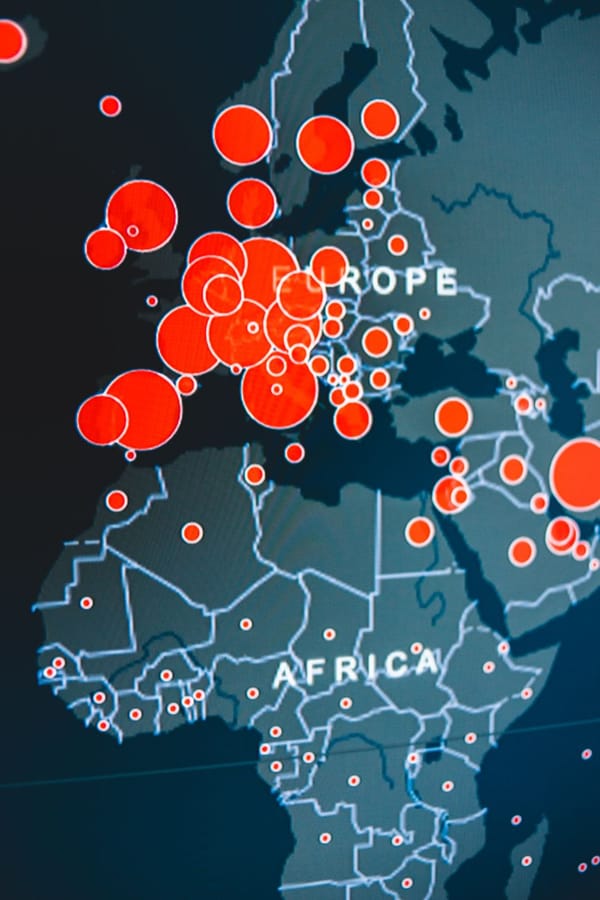
Social Justice
Queer Travel Safety 2026: Destinations on the Rise, the United States Sliding, and What Inclusive Tourism Means for Your Next Journey
What makes a destination feel safe for you as an LGBTQ+ traveller in 2026? The answer just got more complex. New data from ITB Berlin, A3M Global Monitoring, and Diversity Tourism shows that queer travellers are making choices in a fresh way. Legal equality is still on the table…
Read More...
Social Justice
Barcelona’s Walls Speak: 40% More Street Art Demands Justice for All. Here’s What It Says
In a city known for Gaudí and the Mediterranean, there is another language being written across walls. Iusticia Omnibus. Justice for all. The phrase shows up in huge murals, tiny stencils, and quick tags. It is easy to miss if you are not looking. Once you see it, you cannot sto…
Read More...
Social Justice
Pa'lante Siempre: Denise Oliver-Velez's 80-Year Blueprint for Intersectional Liberation Still Demands Your Action
What does it take to keep pushing for justice for nearly eight decades? Denise Oliver-Velez offered an answer with her life. If you have ever felt torn between causes, she is the example you need. Born in 1947 and still organizing until her passing in 2026, she became a bridge b…
Read More...
Social Justice
What Can Three Youth Activists Teach Us About Tackling Discrimination, Gun Violence, and Digital Privacy?
What does it take for a young person to turn a painful experience into a force for change? For the activists featured in Amnesty International's Digital Disruptors project, the answer begins with personal history and quickly grows into something much bigger. On International You…
Read More...
Social Justice
Zambia's 2026 Elections: The Stalled Human Rights Reforms You Need to Watch
Can a country reclaim the promise of democracy after a season of setbacks? As Zambia's 13 August 2026 general elections draw closer, that question is on the minds of many citizens and observers. The country is at a moment of real possibility. The path forward depends on choices…
Read More...
Social Justice
North Carolina Death Penalty Symposium 2026: 20 Years After the Last Execution, You Can Shape What Comes Next
Twenty years have passed since North Carolina carried out an execution. On August 22, 2026, the discussion about what comes next reaches a key moment. The NC Coalition for Alternatives to the Death Penalty (NCCADP) will host a symposium called "Beyond the Death Penalty" at the E…
Read More...
Social Justice
20 Years After North Carolina’s Last Execution: A Landmark Symposium Looks Beyond Capital Punishment
Twenty years have passed since North Carolina carried out an execution. In that time, death row has not disappeared. More than 130 people still live there, and new death sentences are still handed down. On August 22, 2026, the NC Coalition for Alternatives to the Death Penalty (…
Read More...