
Guatemalan Prisoners of Conscience Granted Conditional Release: What 160,000 Quetzales Bail Means
We compile, generate and translate using Artificial Intelligence from the below given source. Macro Micro News is responsible for its editorial publication.
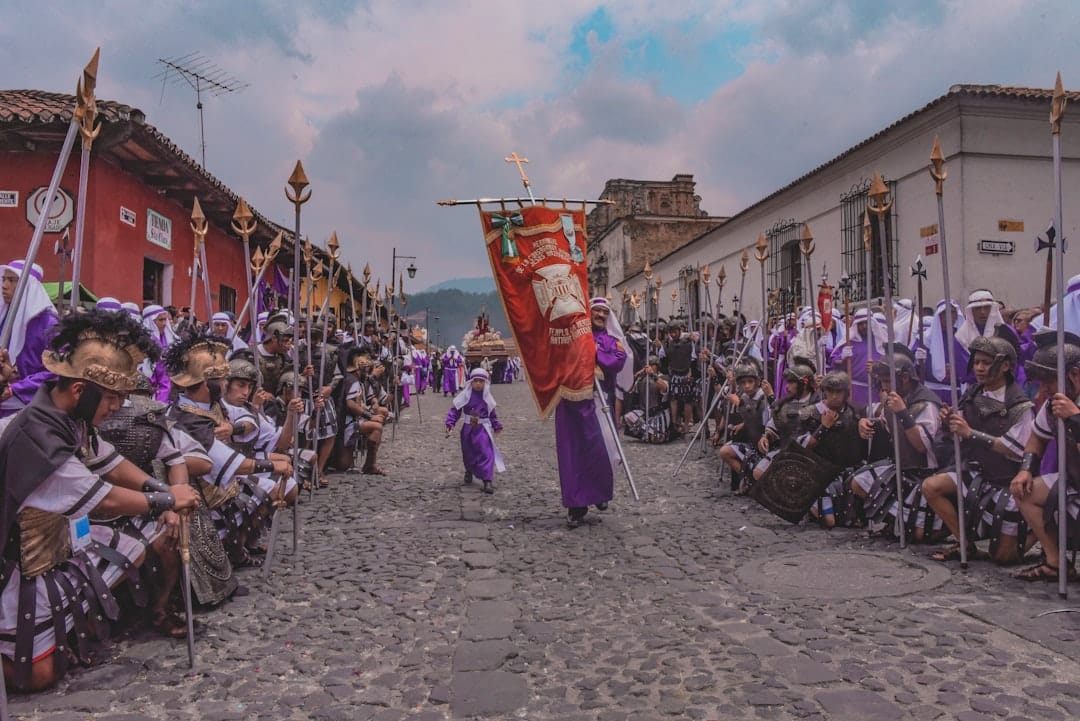
Guatemala City, MMN Correspondent: A Guatemalan court has issued a decision that could bring Luis Pacheco and Héctor Chaclán back to their communities after more than a year in custody. The two Indigenous leaders, both from the 48 Cantons of Totonicapán, have been granted alternatives to pretrial detention. The ruling came on August 5, 2026, and it carries a clear condition: each man must pay bail of 160,000 quetzales, about $20,700 USD, before he can walk free.
The immediate question is whether that payment can be arranged. The amount is steep, especially for leaders who work within a traditional governance system based on community service. Amnesty International has welcomed the ruling while drawing attention to the practical side. Ana Piquer, the Americas Director at Amnesty International, said the decision is an important step forward and brings relief to the men, their families, and everyone who has never stopped demanding justice. She also noted that the bail requirement could become an obstacle. In her words, "The measure is conditional on each of them paying bail of 160,000 quetzales, meaning that they will remain deprived of their liberty until this requirement is met."
Pacheco and Chaclán are former ancestral authorities of the 48 Cantons of Totonicapán, a traditional Indigenous governance structure that predates the Guatemalan state. They were arrested in April 2025 on charges linked to their participation in the nationwide protests of 2023. Those protests began after the suspension of the political party of President-elect Bernardo Arévalo. Tens of thousands of Indigenous and rural citizens took part, blocking roads and occupying public squares to call for the resignation of Attorney General Consuelo Porras and other officials accused of undermining democracy.
The 48 Cantons were central to organizing that mobilization. For Pacheco and Chaclán, that leadership role became the basis for criminal charges. Human rights groups have said the charges are politically motivated and aimed at punishing peaceful dissent. In May 2026, Amnesty International designated both men as prisoners of conscience, based on the conclusion that they were detained solely for peacefully exercising their rights to freedom of expression and assembly.
The court's ruling is a step forward. The bail condition adds a layer of uncertainty. For community leaders without access to large sums of money, meeting the requirement may take time. The criminal proceedings are also still active, meaning the final outcome of the case has yet to be decided.
This case sits within a broader pattern in Guatemala. Indigenous leaders, environmental defenders, and human rights advocates have faced rising legal pressure for their peaceful work. According to the Guatemalan organization UDEFEGUA, at least 30 human rights defenders were killed in 2025, while hundreds more faced criminal charges, threats, and harassment. The 2023 protests showed the power of civic mobilization. The aftermath has opened a conversation about how much space exists for peaceful protest in the country.
The 48 Cantons of Totonicapán represent 48 communities through an assembly-based selection process. Leaders serve out of communal duty, guided by the Maya K'iche' worldview that emphasizes collective well-being and the protection of shared resources. Legal action against these leaders touches something larger than the individuals involved. It affects the ability of Indigenous communities to govern themselves and defend their rights.
International voices have been consistent. Amnesty International, Human Rights Watch, and the Inter-American Commission on Human Rights have all called for the men's release. The UN Special Rapporteur on the rights of Indigenous Peoples has also expressed concern over the treatment of Indigenous leaders in Guatemala. Piquer's statement captured the broader meaning of the case: "The release of Luis and Héctor must serve to reaffirm a fundamental principle: peacefully exercising human rights must never be grounds for punishment. The Guatemalan authorities must protect peaceful protest, respect the rights of Indigenous Peoples and ensure that community authorities can carry out their work without fear of criminalisation."
So what happens next? For Pacheco and Chaclán, the immediate priority is raising the bail money. For their communities, it is about preparing to welcome them home. For Guatemala, it is a moment to show whether the justice system can uphold the right to peaceful protest while protecting democratic institutions.
The ruling has been met with relief, alongside a clear awareness that the legal process is not over. The two leaders will remain in custody until the bail is paid. Their families and communities now face the task of gathering the funds. Once released, they will continue to carry the ongoing legal proceedings with them. A conviction could still carry severe penalties, and that possibility has not disappeared.
The case of Luis Pacheco and Héctor Chaclán has become a barometer for human rights in Guatemala. Their conditional release, when it happens, will be a moment to celebrate. The broader test lies in whether Guatemala can move toward a system where exercising fundamental rights does not lead to criminal charges. The steps taken in the coming months will matter as much as this ruling itself.
Related in Social Justice

Social Justice
Macao 2026: The Essential Guide to Mastering World Heritage Management
How do we protect our most precious cultural and natural landmarks when urban sprawl and climate change threaten their very existence? This pressing question drives a new initiative launching in the Asia-Pacific region. The World Heritage Centre has joined forces with WHITR-AP S…
Read More...
Social Justice
How You Can Support Cross-Border Diplomacy to Restore the Yellow Sea Tidal Flats for 50 Million Migratory Birds
Imagine standing along a coastline where the rhythm of the tides shapes an entire continent. The Yellow Sea tidal flats stretch across China, North Korea, and South Korea, creating a dynamic intertidal zone that welcomes millions of migratory waterbirds each year. These wetlands…
Read More...
Social Justice
Queer Travel Safety 2026: Destinations on the Rise, the United States Sliding, and What Inclusive Tourism Means for Your Next Journey
What makes a destination feel safe for you as an LGBTQ+ traveller in 2026? The answer just got more complex. New data from ITB Berlin, A3M Global Monitoring, and Diversity Tourism shows that queer travellers are making choices in a fresh way. Legal equality is still on the table…
Read More...
Social Justice
Barcelona’s Walls Speak: 40% More Street Art Demands Justice for All. Here’s What It Says
In a city known for Gaudí and the Mediterranean, there is another language being written across walls. Iusticia Omnibus. Justice for all. The phrase shows up in huge murals, tiny stencils, and quick tags. It is easy to miss if you are not looking. Once you see it, you cannot sto…
Read More...
Social Justice
Pa'lante Siempre: Denise Oliver-Velez's 80-Year Blueprint for Intersectional Liberation Still Demands Your Action
What does it take to keep pushing for justice for nearly eight decades? Denise Oliver-Velez offered an answer with her life. If you have ever felt torn between causes, she is the example you need. Born in 1947 and still organizing until her passing in 2026, she became a bridge b…
Read More...
Social Justice
What Can Three Youth Activists Teach Us About Tackling Discrimination, Gun Violence, and Digital Privacy?
What does it take for a young person to turn a painful experience into a force for change? For the activists featured in Amnesty International's Digital Disruptors project, the answer begins with personal history and quickly grows into something much bigger. On International You…
Read More...
Social Justice
Zambia's 2026 Elections: The Stalled Human Rights Reforms You Need to Watch
Can a country reclaim the promise of democracy after a season of setbacks? As Zambia's 13 August 2026 general elections draw closer, that question is on the minds of many citizens and observers. The country is at a moment of real possibility. The path forward depends on choices…
Read More...
Social Justice
North Carolina Death Penalty Symposium 2026: 20 Years After the Last Execution, You Can Shape What Comes Next
Twenty years have passed since North Carolina carried out an execution. On August 22, 2026, the discussion about what comes next reaches a key moment. The NC Coalition for Alternatives to the Death Penalty (NCCADP) will host a symposium called "Beyond the Death Penalty" at the E…
Read More...
Social Justice
20 Years After North Carolina’s Last Execution: A Landmark Symposium Looks Beyond Capital Punishment
Twenty years have passed since North Carolina carried out an execution. In that time, death row has not disappeared. More than 130 people still live there, and new death sentences are still handed down. On August 22, 2026, the NC Coalition for Alternatives to the Death Penalty (…
Read More...
Social Justice
Venezuela Quits the ICC and Rome Statute: What It Means for You and the Future of Justice
The acting government of Venezuela has formally stepped away from the Rome Statute, the international treaty behind the International Criminal Court. Official withdrawal documents reached the UN Secretary-General on July 24, 2026, and appeared in the UN's public registry on Augu…
Read More...