
Venezuela Quits the ICC and Rome Statute: What It Means for You and the Future of Justice
We compile, generate and translate using Artificial Intelligence from the below given source. Macro Micro News is responsible for its editorial publication.
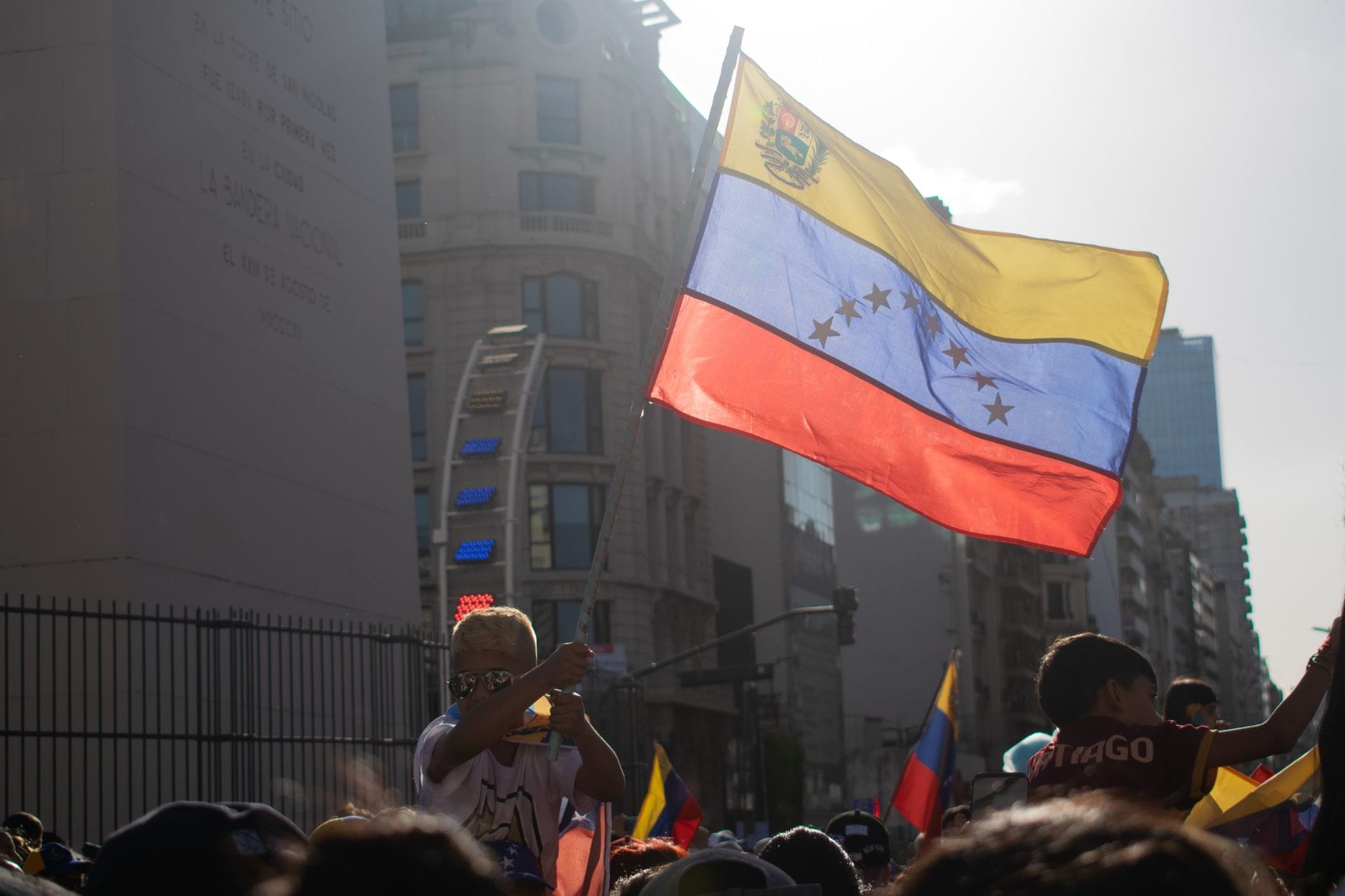
United Nations Headquarters, New York, MMN Correspondent: The acting government of Venezuela has formally stepped away from the Rome Statute, the international treaty behind the International Criminal Court. Official withdrawal documents reached the UN Secretary-General on July 24, 2026, and appeared in the UN's public registry on August 6, 2026. Under the treaty's rules, the exit becomes complete on July 24, 2027. That timing raises an important question: what does this mean for the ICC's ongoing investigation into Venezuela?
Amnesty International has described the decision as a regretful step. The organization views it as one more attempt to avoid accountability for serious crimes under international law. One crucial detail stands out. The ICC's jurisdiction does not disappear when a country leaves the treaty. The court can still investigate crimes committed while Venezuela was a party, including all alleged offenses up to the official exit date.
To understand what is at stake, consider the timeline. Venezuela signed the Rome Statute in 1998 and ratified it in 2000. That commitment gave the ICC authority over serious crimes committed on Venezuelan soil or by Venezuelan nationals. For more than two decades, that legal doorway stayed open. Victims and their families have used it to bring forward evidence of political repression and violence.
The ICC's work in Venezuela began with a preliminary examination in 2018. On November 3, 2021, the Office of the Prosecutor moved to a full investigation into possible crimes against humanity since April 2017. The alleged crimes include deprivation of liberty, torture, rape and other sexual violence, and politically motivated persecution of detainees. State security forces, civil authorities, and pro-government collectives are among the parties under scrutiny. The investigation is active and continues to collect evidence.
Amnesty International's documentation points in the same direction. In 2019, the organization concluded that authorities under the command of Nicolás Maduro were committing crimes under international law on a widespread and systematic scale. Extrajudicial executions, enforced disappearances, arbitrary detention, and political persecution were not isolated cases. They formed a pattern. The UN Fact-Finding Mission on Venezuela has reached similar conclusions. Its mandate will expire soon, and its renewal at the Human Rights Council session in September and October 2026 is now a critical focus.
What about the people directly affected? Ana Piquer, Amnesty International's Americas Director, has emphasized that the withdrawal does not affect the ICC's investigation into crimes committed before the decision. It does signal a disregard for victims' rights to truth, justice, reparations, and guarantees that abuses will not repeat. Piquer also noted that victims have not stopped searching for justice. They have opened pathways outside Venezuela, and those pathways remain active.
Those pathways include the ICC investigation, the UN Fact-Finding Mission, and legal cases based on universal jurisdiction. Universal jurisdiction allows courts in any country to prosecute serious crimes, no matter where the crimes took place. For many survivors, these mechanisms are the principal doors left open. A withdrawal from the Rome Statute may complicate cooperation with Venezuelan authorities. It does not erase the evidence already gathered from witnesses, survivors, and civil society groups.
International reactions have been firm. The European Union, the United States, UN representatives, and human rights organizations have all expressed concerns about Venezuela's move. They point out that it could inspire other governments to seek similar exits. At the same time, this case highlights a basic feature of international justice. The ICC depends on state cooperation to carry out its rulings. A country that leaves the court no longer has treaty obligations to cooperate. That can slow down investigations, especially when they require access to Venezuelan territory and officials.
The principle of complementarity offers a powerful response. Under this principle, the ICC can step in exactly when national courts are unwilling or unable to address serious crimes. Venezuela's domestic justice system has not demonstrated a willingness to investigate senior officials. That gap gives the ICC a legitimate basis to continue. The withdrawal does not close that gap. It changes the environment in which the court operates.
Look at the larger picture. Venezuela has experienced more than a decade of political and economic crisis. Millions of people have left the country. Those who remain have endured hyperinflation, shortages of food and medicine, and persistent violence. The government has faced repeated accusations of dismantling democratic institutions and criminalizing dissent. The decision to leave the Rome Statute is part of that larger story. It is also a test for the global system of accountability. History tends to remember both the attempts to evade justice and the mechanisms that stood firm.
For families of the disappeared, survivors of torture, and people who have fought for democracy from inside Venezuela or abroad, this moment is deeply personal. It is also clarifying. The government's position is now fully visible. The ICC investigation continues. The UN Fact-Finding Mission continues to document abuses. The voices of victims remain central to the conversation. None of these things vanish when a treaty withdrawal is filed.
The next phase depends on several moving pieces. Renewal of the UN Fact-Finding Mission's mandate, progress in the ICC investigation, and decisions by governments around the world will all play a part. Venezuela's exit from the Rome Statute does not end the search for justice. It changes the conditions of that search. For anyone who follows human rights, this is a moment to watch closely. The way the world responds will tell us a great deal about the strength of international law.
The Rome Statute was built on a straightforward idea: certain crimes are so serious that no border can protect those who commit them. Venezuela participated in that system for more than two decades. Leaving the treaty cannot rewrite the past. The evidence stays. The cases stay. So does the demand for truth and accountability. That demand is stronger than any withdrawal document.
Related in Social Justice

Social Justice
Macao 2026: The Essential Guide to Mastering World Heritage Management
How do we protect our most precious cultural and natural landmarks when urban sprawl and climate change threaten their very existence? This pressing question drives a new initiative launching in the Asia-Pacific region. The World Heritage Centre has joined forces with WHITR-AP S…
Read More...
Social Justice
How You Can Support Cross-Border Diplomacy to Restore the Yellow Sea Tidal Flats for 50 Million Migratory Birds
Imagine standing along a coastline where the rhythm of the tides shapes an entire continent. The Yellow Sea tidal flats stretch across China, North Korea, and South Korea, creating a dynamic intertidal zone that welcomes millions of migratory waterbirds each year. These wetlands…
Read More...
Social Justice
Queer Travel Safety 2026: Destinations on the Rise, the United States Sliding, and What Inclusive Tourism Means for Your Next Journey
What makes a destination feel safe for you as an LGBTQ+ traveller in 2026? The answer just got more complex. New data from ITB Berlin, A3M Global Monitoring, and Diversity Tourism shows that queer travellers are making choices in a fresh way. Legal equality is still on the table…
Read More...
Social Justice
Barcelona’s Walls Speak: 40% More Street Art Demands Justice for All. Here’s What It Says
In a city known for Gaudí and the Mediterranean, there is another language being written across walls. Iusticia Omnibus. Justice for all. The phrase shows up in huge murals, tiny stencils, and quick tags. It is easy to miss if you are not looking. Once you see it, you cannot sto…
Read More...
Social Justice
Pa'lante Siempre: Denise Oliver-Velez's 80-Year Blueprint for Intersectional Liberation Still Demands Your Action
What does it take to keep pushing for justice for nearly eight decades? Denise Oliver-Velez offered an answer with her life. If you have ever felt torn between causes, she is the example you need. Born in 1947 and still organizing until her passing in 2026, she became a bridge b…
Read More...
Social Justice
What Can Three Youth Activists Teach Us About Tackling Discrimination, Gun Violence, and Digital Privacy?
What does it take for a young person to turn a painful experience into a force for change? For the activists featured in Amnesty International's Digital Disruptors project, the answer begins with personal history and quickly grows into something much bigger. On International You…
Read More...
Social Justice
Zambia's 2026 Elections: The Stalled Human Rights Reforms You Need to Watch
Can a country reclaim the promise of democracy after a season of setbacks? As Zambia's 13 August 2026 general elections draw closer, that question is on the minds of many citizens and observers. The country is at a moment of real possibility. The path forward depends on choices…
Read More...
Social Justice
North Carolina Death Penalty Symposium 2026: 20 Years After the Last Execution, You Can Shape What Comes Next
Twenty years have passed since North Carolina carried out an execution. On August 22, 2026, the discussion about what comes next reaches a key moment. The NC Coalition for Alternatives to the Death Penalty (NCCADP) will host a symposium called "Beyond the Death Penalty" at the E…
Read More...
Social Justice
20 Years After North Carolina’s Last Execution: A Landmark Symposium Looks Beyond Capital Punishment
Twenty years have passed since North Carolina carried out an execution. In that time, death row has not disappeared. More than 130 people still live there, and new death sentences are still handed down. On August 22, 2026, the NC Coalition for Alternatives to the Death Penalty (…
Read More...
Social Justice
FIFA’s Governance Crisis: 5 Systemic Reforms You Need to See Before the 2034 World Cup
Football is facing a moment of truth. FIFA is in the middle of a governance crisis, and human rights organizations are raising a pointed question: can a new face at the top truly change the game? Their answer is a firm no. The call is for systemic transformation, an overhaul of…
Read More...