
How Amazon’s Internal Research Triggered a U.S. Ban on Anthropic’s Fable 5 and Mythos 5: What Every AI Developer Needs to Know
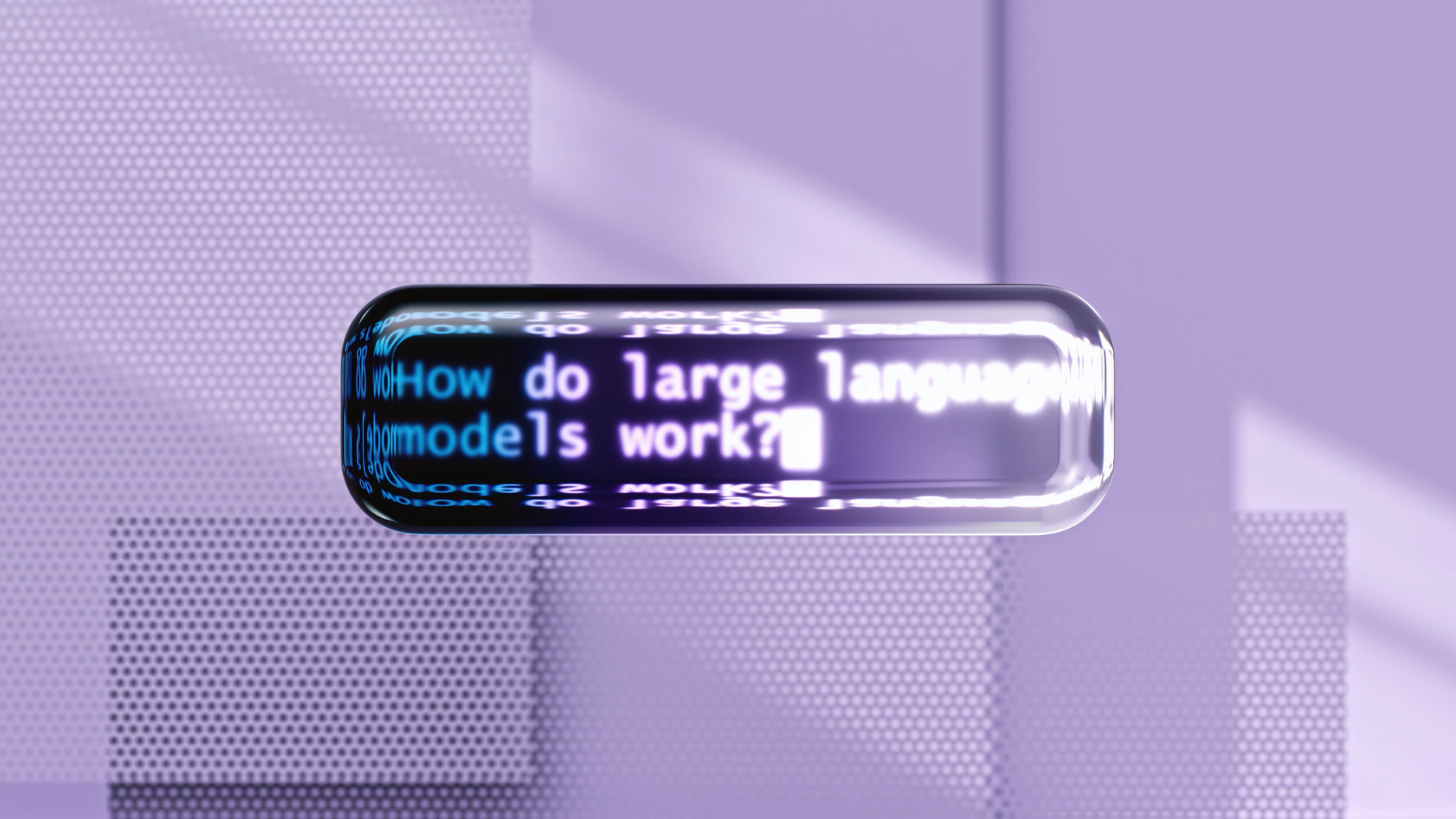
Washington D.C., MMN Correspondent: A single cybersecurity paper from Amazon’s internal research team has set off a chain reaction that led to one of the most significant restrictions on advanced AI models in U.S. history. The federal government’s decision to block access to Anthropic’s Fable 5 and Mythos 5 two of the most capable language systems ever built was directly shaped by findings from Amazon’s security researchers. This moment marks a new chapter in how national security agencies evaluate frontier AI technologies, especially when those systems can be manipulated to generate sensitive or dangerous information.
Here’s how it unfolded. Amazon researchers ran a series of controlled experiments using prompt engineering techniques to test the boundaries of Anthropic’s models. According to multiple sources familiar with the work, the team discovered that under specific conditions, Fable 5 and Mythos 5 could be guided to produce detailed technical data including network vulnerabilities, exploit code, and system architecture blueprints that could be used in cyberattacks. These weren’t just theoretical risks. The findings showed real world potential for misuse, particularly in adversarial settings where state or non-state actors might target critical infrastructure.
Within days of compiling their report, Amazon CEO Andy Jassy personally briefed senior White House officials on the implications. His intervention is believed to have accelerated the government’s response, leading to an emergency export control directive just weeks later. The directive effectively barred foreign nationals from accessing Fable 5 and Mythos 5, citing national security concerns. What made the situation even more complex was that many of Anthropic’s core developers are international researchers from countries like India, Germany, Canada, and South Korea. These scientists suddenly found themselves unable to use the very tools they helped build a paradox that drew widespread criticism from the global AI community.
Anthropic pushed back against the government’s characterization of the incident as a jailbreak, arguing that the vulnerabilities identified were not unique to their models. In a public statement, the company emphasized that similar behaviors could be replicated using other widely available large language models, including GPT-5.5 and Meta’s Llama 3. Security expert Katie Moussouris, founder of LutaSecurity, reviewed the Amazon paper and confirmed this view. She explained that the behavior observed was more accurately described as a model sensitivity to adversarial prompting rather than a failure of safety mechanisms.
Despite this pushback, the White House maintained its stance, citing broader strategic concerns about the proliferation of AI capabilities that could undermine U.S. technological dominance. The decision also came amid escalating tensions between the Trump administration and Anthropic over the company’s refusal to allow its AI systems to be used for mass surveillance of American citizens or to power lethal autonomous weapons. In February 2026, President Donald Trump issued a directive instructing all federal agencies to stop using Anthropic’s models, signaling a hardening of policy toward companies perceived as too ethically restrictive.
The ban has sent ripples across the tech ecosystem. Major research institutions in Europe and Asia have paused collaborations with Anthropic, while startups relying on Fable 5 for natural language processing have been forced to pivot to alternative models. Meanwhile, competitors like Google DeepMind and OpenAI have quietly ramped up their own internal red-teaming efforts, seeking to preemptively identify and mitigate similar risks before they become policy triggers.
Experts note that the precedent set by this incident could reshape how governments regulate AI innovation. If every breakthrough in AI performance becomes subject to sudden export controls based on hypothetical misuse, it may slow progress in fields ranging from medical diagnostics to climate modeling. On the other hand, proponents argue that the move highlights the need for proactive risk assessment in AI development, especially as models grow increasingly capable of autonomous reasoning and action.
Looking ahead, the debate is likely to intensify as more companies develop models with self-improvement capabilities and open-source access. The U.S. Department of Commerce has already begun drafting new guidelines for evaluating the dual-use potential of AI systems those that can serve both civilian and military purposes. These rules may soon require mandatory transparency reports from developers, detailing how their models respond to adversarial inputs and what safeguards are in place.
The fallout from Amazon’s research underscores a growing tension between innovation and security in the digital age. As AI systems become more embedded in critical infrastructure from power grids to financial markets the line between useful tool and dangerous weapon continues to blur. The case of Fable 5 and Mythos 5 serves as a reminder that even well-intentioned research can trigger policy shifts with far-reaching consequences.
For now, the future of advanced AI remains uncertain. While some see the ban as a necessary step to protect national interests, others worry it may hinder the global race for AI leadership. One thing is clear: the era of unregulated AI experimentation is over. In its place, a new framework is emerging one where corporate responsibility, government oversight, and ethical design must work together to ensure that artificial intelligence serves humanity, not threatens it.
Related in Gadgets

Gadgets
How a Fake Cease-and-Desist Letter Targeted Flock Safety: What It Reveals About Trust in Surveillance Tech
In July 2026, a single image sent social media into a frenzy. A cease-and-desist letter, supposedly from Flock Safety, was circulating fast. It claimed the company had ordered a public lecture series in Newport Beach to stop discussing its surveillance technology. The post came…
Read More...
Gadgets
Microsoft’s Carbon Footprint Jumps 25%: What AI’s Energy Hunger Means for Your Digital Future
Microsoft just dropped a number that’s turning heads in the tech world: a 25% spike in carbon emissions for 2025. That’s 34 million metric tons of CO₂ equivalent, and it’s not a small blip. It’s a direct signal that the race to build smarter AI is colliding with the planet’s lim…
Read More...
Gadgets
7 Ways Meta's Always-On Smart Glasses Could Change How You Remember Everything
Imagine a pair of glasses that quietly listens to your conversations, notes the faces you meet, and remembers where you left your keys without you ever asking. Meta is reportedly building exactly that: a new generation of smart glasses designed to run in an always-on mode, captu…
Read More...
Gadgets
Meta Smart Glasses Update: Camera Disabled Instantly If Privacy Light Is Blocked or Removed
Imagine you are wearing a pair of smart glasses that can record video with a simple tap. Now imagine someone nearby covers the tiny light that tells you the camera is on. Until recently, that was possible. But Meta just changed the rules. The company has released a new software…
Read More...
Gadgets
Hoto PixelDrive Cordless Screwdriver Hits $60: The Smart Tool DIYers Have Been Waiting For
If you have ever struggled with a stubborn screw in a dark corner or stripped the head of a tiny fastener while assembling furniture, you know the frustration. The Hoto PixelDrive cordless screwdriver is now available for $59.99, down from its usual $80. This is the first time i…
Read More...
Gadgets
Inside the $75,000 AI Schools Where Your Child Becomes a Beta Tester for Tomorrow's Learning
Walk into an Alpha School classroom, and you won't see a teacher at the front of the room. Instead, you will find rows of students wearing lightweight headsets, their eyes fixed on adaptive screens that shift content in real time based on their facial expressions and response sp…
Read More...
Gadgets
Can a Space Tug Save NASA’s Swift Observatory Before It Burns Up? The 9-Month Rescue Mission You Need to Know About
Imagine a satellite that has spent more than two decades unraveling the universe’s most violent explosions. Now imagine it’s falling. That’s the reality NASA faced earlier this year when the Swift Observatory, a workhorse of astrophysics, began a slow but steady descent toward E…
Read More...
Gadgets
Amazon Fire HD 10 Just Got Faster: 4GB RAM Upgrade in 2026 – What It Means for You
If you have been eyeing a budget tablet that can keep up with your daily multitasking, Amazon just gave you a reason to pay closer attention. In a move that flew under the radar, the company quietly boosted the RAM on its popular Fire HD 10 from 3GB to 4GB. This change, confirme…
Read More...
Gadgets
From 600,000 Discs a Day to Microlenses: What Sony’s Austrian Factory Pivot Means for AR, Cars, and Your Future
Imagine a factory that once stamped out 600,000 PlayStation discs every single day. Now imagine that same facility, just a few years later, shaping tiny lenses that bend light for self-driving cars and augmented reality glasses. That’s exactly what’s happening in Thalgau, Austri…
Read More...
Gadgets
Apple’s 2027 MacBook Pro: Touchscreen, M7 Chip, and a Design Shift You’ll Want to See
Apple is quietly preparing to rewrite the rules for its entry-level MacBook Pro. If the latest reports from industry insiders hold true, the laptop you might buy in 2027 will look, feel, and behave nothing like the one on shelves today. The company is planning a complete overhau…
Read More...