
How Scotland’s Relentless Fight in the 2026 World Cup Changed Everything You Thought About Them

Boston, MMN Correspondent: Under the bright lights of Boston Stadium, something unexpected happened. Scotland walked off the pitch with a 1-0 loss to Morocco, but the scoreboard told only half the story. This was a team that refused to break. A team that turned a potential blowout into a battle of wills. And in doing so, they may have rewritten their own future.
Morocco struck early. Just 71 seconds in, Achraf Hakimi switched from right back to left wing with the kind of fluidity that makes defenders dizzy. His cross found Ismael Saibari, who finished calmly. For the next 40 minutes, Morocco looked every bit the world’s sixth ranked team. Their possession was crisp. Their movement was sharp. Scotland seemed to be chasing shadows, struggling to find any rhythm.
But here is where the story takes a turn. This was not the same Scotland that stumbled out of Euro 2024 without a single shot on target against Hungary. That memory had become fuel. Head coach Steve Clarke had spent weeks drilling a new message into his squad: take risks. Fight back. Never be passive again.
And so, with the clock winding down and the equalizer slipping away, Clarke did something he rarely does. He threw caution aside. He sent on Ben Gannon Doak, Lyndon Dykes, and Ross Stewart. He pushed Scott McTominay from defensive midfield into a central attacking role. The plan was simple: overwhelm Morocco, even if it meant leaving the back door open.
The result was beautiful chaos. Scotland attacked in waves. McTominay rattled the crossbar. Dykes headed just wide. Another effort was smothered by the Moroccan goalkeeper. At one point, with seconds left, Moroccan center back Chadi Riad screamed at his own midfielders after clearing a corner. He was rattled. Scotland had done what few teams can: they made a top side panic.
Zero shots on target for Scotland. But their impact was undeniable. Jack Hendry made two crucial interventions at the back. Angus Gunn produced a vital save late in the second half to deny Morocco a second goal. These were not just defensive plays. They were statements of character.
Morocco, for all their brilliance, lacked ruthlessness. They created chances but failed to convert. As their energy dipped in the final 20 minutes, Scotland seized the moment. The momentum shifted. Where Scotland once looked like victims, they became hunters.
The emotional weight was visible. Lewis Ferguson, Andy Robertson, and Lyndon Dykes were devastated after the final whistle. Robertson rubbed his face in frustration. Dykes looked like he might collapse. But beneath the pain was something deeper: pride. They had given everything. And in doing so, they reminded everyone that heart still matters in modern football.
Two penalty appeals went unanswered. One for McTominay, another for John McGinn. Both were close calls. Clarke stayed composed, saying simply, “On another day, that’s a penalty.” Fine margins define elite football, and Scotland lived on the edge of them.
The contrast at full time was striking. Morocco celebrated with relief. Scotland players carried themselves with dignity. Their tournament is far from over. Brazil awaits in the next fixture. Scotland need just one point to keep their knockout hopes alive, though goal difference will play a role in whether they advance as a best third placed team.
What makes this story even more compelling is the fan culture on display. Amid the tension, two Scotland supporters in traffic cone hats climbed the stadium steps, laughing and singing “Flower of Scotland” with unbridled joy. They were unconcerned by the scoreline. They reminded everyone that football is about spirit, community, and enduring belief.
This match captures Scotland’s evolution. Once criticized for being too conservative, they have embraced a new philosophy: play with purpose, defend with pride, attack with fury. They may not have the technical polish of Morocco or the global stature of Brazil. But they have something equally valuable: relentless determination.
As they prepare for Miami, Scotland carries not just hope, but a renewed identity. They are no longer defined by past failures. They are men of substance. Flawed, yes. But relentless. In a tournament filled with giants, their story stands as a testament to perseverance. Sometimes the greatest victories are not measured in goals, but in the courage to keep going when all seems lost.
For fans, players, and pundits alike, this match was more than a loss. It was a statement. Scotland may not win every battle. But they will never surrender the fight.
Related in Sport

Sport
How Dubai Basketball Won the ABA League in Just Two Seasons: Inside the Partnership That Made It Possible
When Dubai Basketball lifted the ABA League trophy after only its second season, the basketball world took notice. But the story behind that trophy is bigger than any single game or player. It is a story about what happens when a city’s ambition meets a partner that moves mounta…
Read More...
Sport
From Career-Threatening Injury to World Cup Hero: How Mikel Merino Became Spain’s Clutch Performer in 2026
Imagine being told you might never play football again. Then imagine stepping onto the world’s biggest stage months later and scoring the goals that carry your country to the semi finals. That is the reality for Mikel Merino, the Arsenal midfielder who has quietly become the mos…
Read More...
Sport
Can France’s 2026 World Cup Squad Become the Greatest Team in History?
What does it take to build a football dynasty? France is giving the world a masterclass answer right now. With a commanding 2-0 victory over Morocco in Boston, Les Bleus have become the first team to lock in a semi final spot at the 2026 FIFA World Cup. They are chasing a third…
Read More...
Sport
Will France Survive Morocco’s Challenge? 4 Quarter-Final Predictions That Could Reshape the World Cup
The 2026 FIFA World Cup quarter-finals are here, and the tension is almost unbearable. Four matches stand between eight teams and a shot at glory. Every pass, every tackle, every decision could rewrite football history. Among the most anticipated battles is France versus Morocco…
Read More...
Sport
How Gregor Kobel’s Three Saves Sent Switzerland to the 2026 World Cup Quarter Finals
What happens when a team’s entire World Cup dream rests on one goalkeeper’s reflexes? You get the kind of night that turns a quiet Swiss shot stopper into a national legend. Switzerland’s 2026 campaign just took a historic turn, and it all unfolded under the lights of MetLife St…
Read More...
Sport
What Really Went Wrong for USA in World Cup 2026? One Defensive Mistake That Changed Everything
You could feel the air leave the stadium. The 2026 FIFA World Cup Round of 16 match between the United States and Belgium was poised on a knife edge. Then, in the 67th minute, everything shifted. A single moment of miscommunication turned a tightly contested knockout game into a…
Read More...
Sport
How a 19-Year-Old’s Header Just Changed England’s World Cup Destiny – See the Moment That Stunned Mexico
The Estadio Azteca roared with over 87,000 voices, a wall of green and white that seemed impossible to penetrate. Yet, in the 38th minute, a single leap by a teenager silenced an entire nation. Jude Bellingham, just 19 years old, rose above the Mexican defense and powered a head…
Read More...
Sport
How France Outlasted Paraguay’s Relentless Tactics in a Heated World Cup 2026 Quarterfinal – What the Scoreline Doesn’t Tell You
The 2026 FIFA World Cup quarterfinal between France and Paraguay at Lincoln Financial Field was never going to be a classic. But what unfolded under the sweltering Philadelphia sun was something far more gripping than a simple 1-0 scoreline suggests. This was a match that tested…
Read More...
Sport
How Argentina Survived Cape Verde’s 120-Minute Ambush: 3 Key Moments That Defined a World Cup Classic
What happens when a two-time world champion meets a team that refuses to believe in rankings? You get a night that rewrites the script of the 2026 World Cup. Argentina’s 3-2 extra-time victory over Cape Verde on July 4 at the Estadio Ciudad de México wasn’t just a match. It was…
Read More...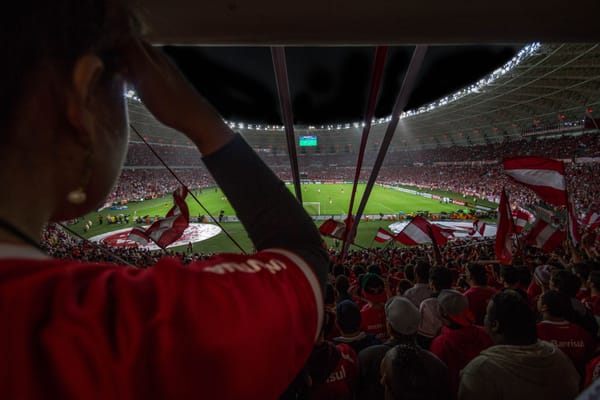
Sport
How a Single Millimeter Decided Croatia’s Fate Against Portugal in the 2026 World Cup Knockout
What happens when a goal that should have been the equalizer gets erased by a margin so thin it’s almost invisible? That’s the question football fans around the world are asking after Croatia’s heartbreaking 1-0 loss to Portugal in the Round of 16 of the 2026 FIFA World Cup. The…
Read More...