
How Trump Turned Crypto Into a Billion Dollar Comeback in 2025
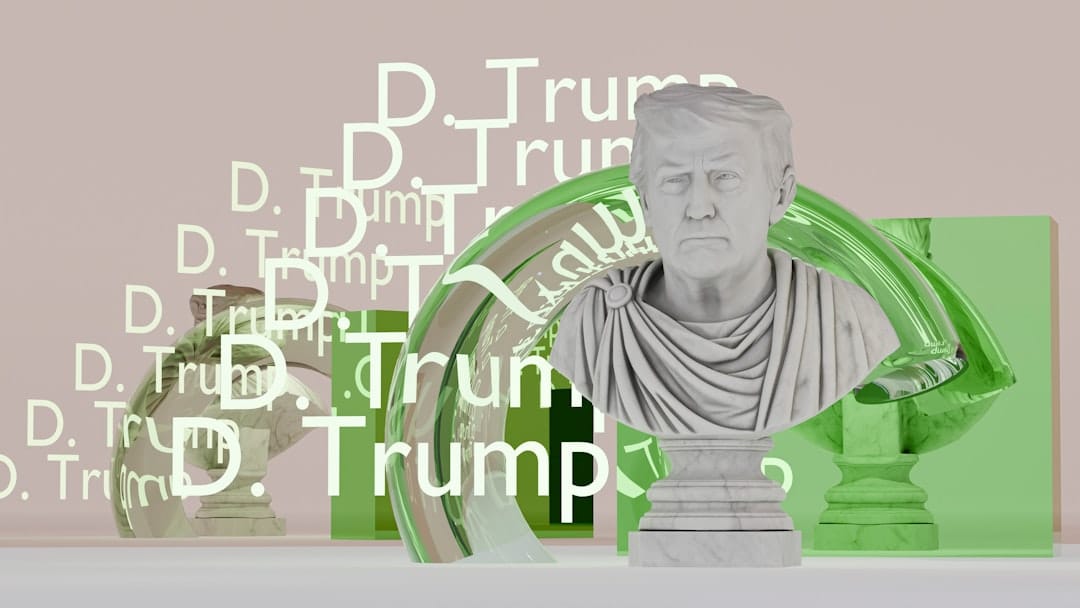
Washington D.C., MMN Correspondent: When Donald Trump returned to the White House in 2025, few expected his first year back to be defined by digital coins. But a newly released financial disclosure, spanning nearly a thousand pages, tells a story that has the financial world leaning in. The former and now current president reported earning over $1 billion from cryptocurrency related ventures in just twelve months. That is a jump from the $600 million he disclosed the year before, and it marks a complete reversal of his earlier stance on digital assets.
So where did all that money come from? The largest slice, $635 million, came from royalties tied to a meme coin called TRUMP. Launched just three days before his inauguration, the token was marketed as a symbol of economic nationalism and decentralized power. It rode a wave of viral memes and celebrity shout outs to an explosive debut. But according to blockchain analytics firm Chainalysis, the coin lost nearly 80% of its value within months. Still, the early surge was enough to generate a massive payday.
Another major piece of the puzzle is World Liberty Financial, or WLF, a crypto venture co founded by Trump’s sons Donald Jr. and Eric, alongside the children of senior advisor Steve Witkoff. The disclosure reveals that Trump and his family take home 75% of WLF’s net proceeds. The firm runs crypto trading platforms, staking protocols, and digital asset custody services, positioning itself as a heavyweight in the U.S. based digital finance scene. That kind of direct financial stake means the family’s fortunes are now closely tied to how well the crypto sector performs.
The report also details smaller but still notable wins from digital wallets linked to Trump and his inner circle. These include millions from selling NFTs, private blockchain investments, and speculative trades in emerging altcoins. Each transaction might only be worth a few million, but together they add up to a significant stream of income. It is a level of financial activity that would be remarkable for any public figure, let alone a sitting president.
This is the same man who once called Bitcoin a scam and warned that digital currencies could destabilize the national economy. His transformation from skeptic to crypto kingpin has raised more than a few eyebrows among regulators, economists, and political watchdogs. How does a leader go from dismissing an entire asset class to becoming one of its biggest beneficiaries? The answer likely lies in the sheer speed at which the crypto landscape has evolved, and the opportunities it now presents for those with influence and reach.
The White House has pushed back hard against any suggestion of ethical problems. Deputy press secretary Anna Kelly issued a statement saying neither the president nor his family has engaged in conflicts of interest. She framed the criticism as part of a long running narrative pushed by opposition parties and traditional media. “President Trump has proudly made the United States the crypto capital of the world,” Kelly said. “His leadership has catalyzed innovation, attracted billions in private investment, and created thousands of high paying jobs in the digital economy.”
Supporters point to real world data to back that up. The U.S. Department of Commerce reports a 40% increase in blockchain startups registered between January and December 2025. Cities like Austin, Miami, and Wyoming have become hubs for crypto incubators and regulatory sandboxes. Federal grants are now available for projects focused on secure digital identity and decentralized governance. For those who believe in the promise of blockchain, this is a golden age.
Critics, however, see a different picture. They argue that having a sitting president with such deep financial ties to private crypto firms creates an unprecedented risk of regulatory capture. The Securities and Exchange Commission has not yet issued formal guidance on whether these close ties violate conflict of interest laws. Legal experts note that while no explicit law bars a president from profiting from private ventures, transparency and accountability are still essential. The question is whether the current system provides enough of either.
First Lady Melania Trump also filed her own financial disclosure, showing $10.7 million from a license agreement tied to a documentary about her life that premiered in late 2024. Another $6 million came from selling NFTs based on her fashion collections and public appearances. It is a clear sign that digital assets are becoming a go to tool for monetizing personal branding, even among political families.
This trend is not limited to the United States. In Switzerland, a new political party led by a former finance minister has launched a national digital currency initiative backed by private investors. In Singapore, members of Parliament are exploring blockchain for transparent voting systems and public records management. The line between politics, profit, and technology is blurring everywhere.
Trump’s billion dollar crypto year is a case study in how quickly the digital economy can reshape traditional power structures. It shows the immense opportunities that decentralized finance offers, but also the serious challenges that come with them. As more countries adopt crypto friendly policies and governments experiment with central bank digital currencies, the role of political leaders in shaping the future of money will only grow more complex.
The coming years will likely bring intensified scrutiny of how public officials engage with emerging financial technologies. Whether this model of political entrepreneurship becomes the norm or faces regulatory pushback remains to be seen. But one thing is certain: the era of politicians leveraging digital assets for personal gain and national influence is no longer a hypothetical. It is here, and it is growing fast.
Related in Global Trend

Global Trend
Meta’s AI Image Tool Vanishes Days After Launch: What Happened to Your Instagram Photos?
Just days after its flashy debut, Meta’s new AI image generation feature has been pulled from the platform. The tool, part of the Muse Image rollout, let users of Meta’s AI chatbot create artificial images by pulling content from public Instagram accounts. Think about that for a…
Read More...
Global Trend
Middle East Travelers Are Flocking to Thailand for Wellness: Here’s What’s Driving the 2026 Boom
What if the next luxury vacation didn’t just pamper you but actually changed how you feel long after you return home? That’s the question Thailand is asking Middle East travelers right now. And the answer is reshaping how people from the Gulf plan their getaways. The Tourism Aut…
Read More...
Global Trend
How SK Hynix Raised $26.5 Billion in Its US Debut: What It Means for AI Chip Investors
Imagine walking into a room where the world’s biggest money managers are all fighting for a piece of the same company. That’s exactly what happened when SK Hynix, the South Korean memory chip giant, stepped onto the Nasdaq stage in July 2026. The result? A staggering $26.5 billi…
Read More...
Global Trend
What Happens When Bieber, Madonna, Shakira, and BTS Share the World Cup Stage?
Imagine this: It’s July 19, 2026, and the world is watching. Not just for the final whistle of the FIFA World Cup, but for something that’s never happened before. For the first time in the tournament’s history, a Super Bowl style halftime show is about to unfold at MetLife Stadi…
Read More...
Global Trend
80 Targets Hit: What the US Strikes on Iran Mean for Global Oil Routes
The world’s most critical oil passageway just became the epicenter of a major military confrontation. The United States has launched sweeping airstrikes across Iran’s southern coast, hitting more than 80 locations after three commercial tankers came under attack in the Strait of…
Read More...
Global Trend
Travel Before the Crowds: Why the Two Weeks Before School Holidays Are Your Best Bet for a Peaceful Summer Escape
Picture this: warm sand beneath your feet, a gentle sea breeze, and the sound of waves instead of the chatter of crowds. That’s the reality for travelers who discover a simple truth about summer vacations. The best time to go isn’t when everyone else does. It’s the two weeks rig…
Read More...
Global Trend
Faster Patents in Europe and China: What the New EPO-CNIPA PPH Pilot Means for Your Innovation Timeline
What if you could cut months off the time it takes to secure a patent in both Europe and China? Starting August 1, 2026, that possibility becomes reality. The European Patent Office (EPO) and China National Intellectual Property Administration (CNIPA) are launching a new bilater…
Read More...
Global Trend
What Happened in a Utah Courtroom When Charlie Kirk’s Family Came Face to Face With His Accused Killer?
On a quiet Tuesday morning in May 2026, a Utah courtroom became the center of a story that has haunted America for months. The family of Charlie Kirk, the 31-year-old conservative activist and founder of Turning Point USA, sat just feet away from the man accused of ending his li…
Read More...
Global Trend
4 New Luxury Travel Mindsets Reshaping Asia Pacific: How Gen Z Is Redefining High End Tourism
What does luxury mean to a generation that grew up with Instagram, climate anxiety, and a craving for meaning? A sweeping study of 2,800 affluent travelers across eight Asia Pacific markets—China, Japan, South Korea, Australia, India, Singapore, Thailand, and Indonesia—has uncov…
Read More...
Global Trend
How Europe and China Are Cutting Patent Wait Times by 40% Starting August 2026
Imagine filing a single patent application and watching it sail through two of the world’s largest intellectual property offices with minimal friction. That vision becomes reality on August 1, 2026, when the European Patent Office (EPO) and the China National Intellectual Proper…
Read More...