
Is Ryanair Charging Parents to Sit With Their Kids? UK Regulators Want Answers
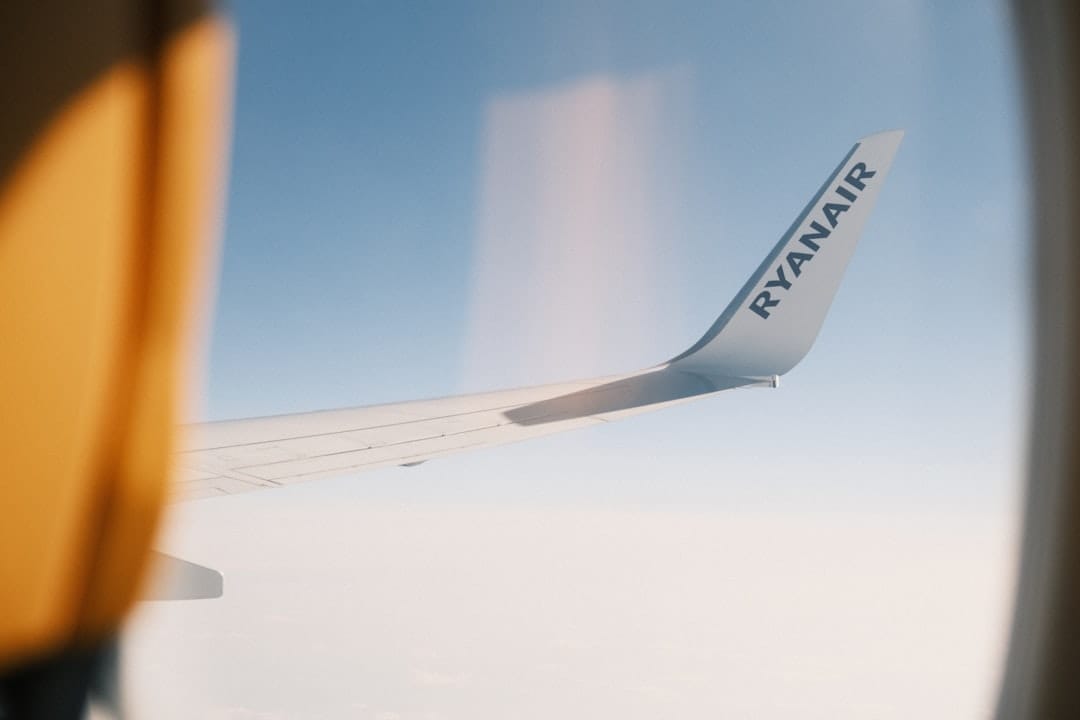
London, United Kingdom, MMN Correspondent: If you have ever booked a flight with Ryanair and found yourself paying extra just to sit next to your own child, you are not alone. And now, the UK’s Competition and Markets Authority (CMA) is asking the same question many parents have been wondering: why should a family have to pay a mandatory fee for something that feels like basic safety and common sense?
The CMA has opened a formal investigation into Ryanair’s policy of charging parents an additional £8 per flight (roughly $10) to secure a seat beside their children aged two to eleven. This fee applies even when the child is not occupying a full seat, and it is only waived if parents book a separate seat for the child, which is not typical for young travelers. The regulator believes this practice may violate UK consumer protection laws by imposing what it calls an “unfair” charge.
What makes this case particularly interesting is how Ryanair stands out among its peers. Most major airlines allow children under 12 to fly free or with discounted fares, and they automatically assign adjacent seats without extra cost. Ryanair is reportedly the only major UK based carrier with such a mandatory fee structure for family seating. That alone makes this investigation a potential turning point for how airlines treat families.
At the heart of the matter is transparency. UK consumer law requires businesses to display the total price of a service upfront, including all fees and extras. Yet Ryanair’s booking process often shows the base fare first, then introduces the family seat fee later in the checkout sequence. This practice, known as “drip pricing,” can leave families feeling misled, especially when they are budgeting carefully for a vacation. For many, an unexpected £8 surcharge might not seem like much, but it adds up and erodes trust.
The situation becomes even more curious when you look at Ryanair’s recent history. The airline previously eliminated these fees on routes between the UK and Italy after a legal challenge from Italy’s Civil Aviation Authority (ENAC), which had banned such fees on flights originating from Italian airports. Ryanair adjusted its policy there, suggesting that the company can change its approach when regulators push back. This raises a natural question: if it can work in Italy, why not across the board?
Industry experts point out that Ryanair has always positioned itself as a no frills carrier focused on keeping costs low. The airline argues that the fee helps cover operational costs for managing family seating, including staff coordination and cabin safety protocols. But critics counter that ensuring child safety and comfort should be part of the fundamental service any airline provides, not a premium add on. After all, children under 12 are already entitled to reserved seating at no extra cost on most airlines, making Ryanair’s fee feel arbitrary.
Consumer advocacy groups have welcomed the CMA’s intervention, calling it a necessary step toward fairer air travel. They warn that if such practices go unchecked, they could become widespread, eroding confidence in the entire low cost airline model. With rising fuel prices and inflation, families are increasingly sensitive to every expense, and surprise fees can turn dream holidays into financial burdens.
The investigation will examine several dimensions: whether the fee constitutes an unfair commercial practice under EU and UK consumer legislation, how it compares to policies across other European carriers, and whether the lack of transparency violates fair trading standards. If found in breach, Ryanair could face penalties, forced policy changes, or mandated refunds to affected passengers. The outcome could set a precedent for how airlines worldwide handle family seating, potentially leading to stricter regulations on ancillary fees in the aviation sector.
In the broader context of global air travel trends, this case reflects a growing demand for greater accountability and transparency. As digital platforms continue to streamline bookings, consumers expect clearer, more predictable pricing. The rise of dynamic pricing and bundled fees has made the travel experience more complex, prompting regulators to reevaluate outdated business models. The Ryanair probe serves as a bellwether for future enforcement actions against opaque pricing strategies in high traffic industries.
Passenger reactions have been mixed. Some parents express frustration over what they see as a violation of basic family rights, while others acknowledge the need for airlines to manage space efficiently. However, the overwhelming sentiment among consumer forums and social media platforms leans toward support for the CMA’s stance, with many calling for standardized family seating policies across all airlines.
As the investigation unfolds, stakeholders including regulators, airlines, travel agencies, and millions of passengers are watching closely. The final decision could redefine how family travel is priced and managed in Europe and beyond. Whether Ryanair will adapt its model or defend its position remains uncertain. But one thing is clear: the era of hidden fees may be nearing its end, ushering in a new chapter of fairness, transparency, and consumer empowerment in air travel.
For families planning summer getaways, the outcome of this probe could mean the difference between affordable, stress free journeys and unexpectedly costly experiences. The wheels of justice are turning, and the skies might just become a little fairer for everyone.
Related in Gadgets

Gadgets
How a Fake Cease-and-Desist Letter Targeted Flock Safety: What It Reveals About Trust in Surveillance Tech
In July 2026, a single image sent social media into a frenzy. A cease-and-desist letter, supposedly from Flock Safety, was circulating fast. It claimed the company had ordered a public lecture series in Newport Beach to stop discussing its surveillance technology. The post came…
Read More...
Gadgets
Microsoft’s Carbon Footprint Jumps 25%: What AI’s Energy Hunger Means for Your Digital Future
Microsoft just dropped a number that’s turning heads in the tech world: a 25% spike in carbon emissions for 2025. That’s 34 million metric tons of CO₂ equivalent, and it’s not a small blip. It’s a direct signal that the race to build smarter AI is colliding with the planet’s lim…
Read More...
Gadgets
7 Ways Meta's Always-On Smart Glasses Could Change How You Remember Everything
Imagine a pair of glasses that quietly listens to your conversations, notes the faces you meet, and remembers where you left your keys without you ever asking. Meta is reportedly building exactly that: a new generation of smart glasses designed to run in an always-on mode, captu…
Read More...
Gadgets
Meta Smart Glasses Update: Camera Disabled Instantly If Privacy Light Is Blocked or Removed
Imagine you are wearing a pair of smart glasses that can record video with a simple tap. Now imagine someone nearby covers the tiny light that tells you the camera is on. Until recently, that was possible. But Meta just changed the rules. The company has released a new software…
Read More...
Gadgets
Hoto PixelDrive Cordless Screwdriver Hits $60: The Smart Tool DIYers Have Been Waiting For
If you have ever struggled with a stubborn screw in a dark corner or stripped the head of a tiny fastener while assembling furniture, you know the frustration. The Hoto PixelDrive cordless screwdriver is now available for $59.99, down from its usual $80. This is the first time i…
Read More...
Gadgets
Inside the $75,000 AI Schools Where Your Child Becomes a Beta Tester for Tomorrow's Learning
Walk into an Alpha School classroom, and you won't see a teacher at the front of the room. Instead, you will find rows of students wearing lightweight headsets, their eyes fixed on adaptive screens that shift content in real time based on their facial expressions and response sp…
Read More...
Gadgets
Can a Space Tug Save NASA’s Swift Observatory Before It Burns Up? The 9-Month Rescue Mission You Need to Know About
Imagine a satellite that has spent more than two decades unraveling the universe’s most violent explosions. Now imagine it’s falling. That’s the reality NASA faced earlier this year when the Swift Observatory, a workhorse of astrophysics, began a slow but steady descent toward E…
Read More...
Gadgets
Amazon Fire HD 10 Just Got Faster: 4GB RAM Upgrade in 2026 – What It Means for You
If you have been eyeing a budget tablet that can keep up with your daily multitasking, Amazon just gave you a reason to pay closer attention. In a move that flew under the radar, the company quietly boosted the RAM on its popular Fire HD 10 from 3GB to 4GB. This change, confirme…
Read More...
Gadgets
From 600,000 Discs a Day to Microlenses: What Sony’s Austrian Factory Pivot Means for AR, Cars, and Your Future
Imagine a factory that once stamped out 600,000 PlayStation discs every single day. Now imagine that same facility, just a few years later, shaping tiny lenses that bend light for self-driving cars and augmented reality glasses. That’s exactly what’s happening in Thalgau, Austri…
Read More...
Gadgets
Apple’s 2027 MacBook Pro: Touchscreen, M7 Chip, and a Design Shift You’ll Want to See
Apple is quietly preparing to rewrite the rules for its entry-level MacBook Pro. If the latest reports from industry insiders hold true, the laptop you might buy in 2027 will look, feel, and behave nothing like the one on shelves today. The company is planning a complete overhau…
Read More...