
Marco Silva Takes Over Benfica After Mourinho’s Real Madrid Return: What This Means for the Primeira Liga’s Future

Lisbon, Portugal, MMN Correspondent: If you thought the summer transfer window was only about players, think again. The biggest move in Portuguese football this season just happened in the dugout. Marco Silva has officially signed on as the new head coach of S.L. Benfica, stepping into a role that comes with history, pressure, and a very specific set of expectations. The announcement arrived just days after Jose Mourinho packed his bags for a second stint at Real Madrid, leaving behind a Benfica side that finished the Primeira Liga campaign unbeaten across 34 matches.
That’s right. Unbeaten. And still only third place. That tells you everything about the intensity of Portugal’s top flight right now. Mourinho’s second tenure at the Estadio da Luz was defined by tactical discipline and defensive resilience, but the club’s board clearly saw a ceiling. Enter Silva, a 48 year old Portuguese manager who knows the Premier League inside out after managing Hull City, Watford, Everton, and most recently Fulham. His contract with Fulham expired just a week ago, making him a free agent at exactly the right moment.
This is a homecoming with layers. Silva started his playing career at Belenenses and later played for Rio Ave, two clubs that also appear in Mourinho’s early biography. That shared heritage adds a quiet symbolism to the transition. Both men understand the fabric of Portuguese football, but they approach it from different angles. Mourinho built his reputation on pragmatism and counter attacking mastery. Silva leans toward possession, pressing, and positional rotation. Benfica is signaling a stylistic shift, and the timing could not be more deliberate.
The club confirmed that Silva has signed a contract running through the end of the 2027–28 season, with an option to extend through 2028–29. Mourinho gave his consent to the move, which speaks to a respectful handover rather than a messy divorce. Financial details remain private, but reports indicate Real Madrid will pay Benfica a compensation fee of £13 million, roughly €15 million, to bring Mourinho back to the Santiago Bernabéu. That figure reflects the enduring value of a manager who won La Liga and the Champions League during his first spell in Madrid between 2010 and 2013.
Now let’s talk about what Silva inherits. Benfica has not won the Primeira Liga since 2014. That drought weighs heavily on a club that considers itself one of Europe’s traditional powerhouses. Under Mourinho, they showed remarkable consistency, beating both Sporting CP and FC Porto in key matches while maintaining an unbeaten league record. But consistency alone did not deliver the title. The board wants more. They want a team that controls games, develops young talent, and competes deep into the Champions League knockout stages.
Silva’s track record suggests he can deliver on those fronts. At Fulham, he transformed a mid table squad into a side that played attractive, high energy football. He earned praise for maximizing output from limited resources, a skill that will serve him well at Benfica, where the pressure to produce homegrown stars is constant. His time at Watford and Everton showed he can adapt to different environments and communicate clearly under scrutiny. Those soft skills matter when you are managing a club where every match is analyzed by millions.
The Portuguese media has responded with cautious optimism. Analysts point out that Silva may not have Mourinho’s global brand recognition, but he brings something equally valuable: a modern tactical framework that aligns with how the game is evolving. His emphasis on pressing, rapid transitions, and fluid attacking movement fits the profile of a club that wants to reclaim its identity as a trendsetter rather than a follower. The question now is how quickly he can imprint that philosophy on a squad that was built for Mourinho’s more structured approach.
Silva’s first major task will be preparing the team for the upcoming season, which includes defending their domestic standing and navigating Champions League qualification. He will also need to address squad depth in central midfield and attacking positions. Rumors are already circulating about potential targets from La Liga and Serie A, players who thrive in high tempo systems with clear positional responsibilities. The summer transfer window will be his first real test of judgment.
Beyond Benfica, this managerial shift carries broader implications. Mourinho’s return to Real Madrid reinforces the club’s ambition to reclaim European dominance. For Silva, it is an opportunity to step out of a legendary shadow and build something that feels distinctly his own. The fans will remember Mourinho’s fire and his unbeaten run, but they are also ready for a new chapter. There is hope that Silva can blend technical excellence with youth integration and sustainable success.
Pre season training begins in July. Silva will spend the coming weeks assembling his coaching staff and mapping out the tactical blueprint for the months ahead. Whether he can replicate the results of his predecessor or forge a completely new path remains an open question. But one thing is clear: the era of Marco Silva at Benfica has started with purpose, ambition, and a quiet confidence that the best is yet to come.
Related in Sport

Sport
How Dubai Basketball Won the ABA League in Just Two Seasons: Inside the Partnership That Made It Possible
When Dubai Basketball lifted the ABA League trophy after only its second season, the basketball world took notice. But the story behind that trophy is bigger than any single game or player. It is a story about what happens when a city’s ambition meets a partner that moves mounta…
Read More...
Sport
From Career-Threatening Injury to World Cup Hero: How Mikel Merino Became Spain’s Clutch Performer in 2026
Imagine being told you might never play football again. Then imagine stepping onto the world’s biggest stage months later and scoring the goals that carry your country to the semi finals. That is the reality for Mikel Merino, the Arsenal midfielder who has quietly become the mos…
Read More...
Sport
Can France’s 2026 World Cup Squad Become the Greatest Team in History?
What does it take to build a football dynasty? France is giving the world a masterclass answer right now. With a commanding 2-0 victory over Morocco in Boston, Les Bleus have become the first team to lock in a semi final spot at the 2026 FIFA World Cup. They are chasing a third…
Read More...
Sport
Will France Survive Morocco’s Challenge? 4 Quarter-Final Predictions That Could Reshape the World Cup
The 2026 FIFA World Cup quarter-finals are here, and the tension is almost unbearable. Four matches stand between eight teams and a shot at glory. Every pass, every tackle, every decision could rewrite football history. Among the most anticipated battles is France versus Morocco…
Read More...
Sport
How Gregor Kobel’s Three Saves Sent Switzerland to the 2026 World Cup Quarter Finals
What happens when a team’s entire World Cup dream rests on one goalkeeper’s reflexes? You get the kind of night that turns a quiet Swiss shot stopper into a national legend. Switzerland’s 2026 campaign just took a historic turn, and it all unfolded under the lights of MetLife St…
Read More...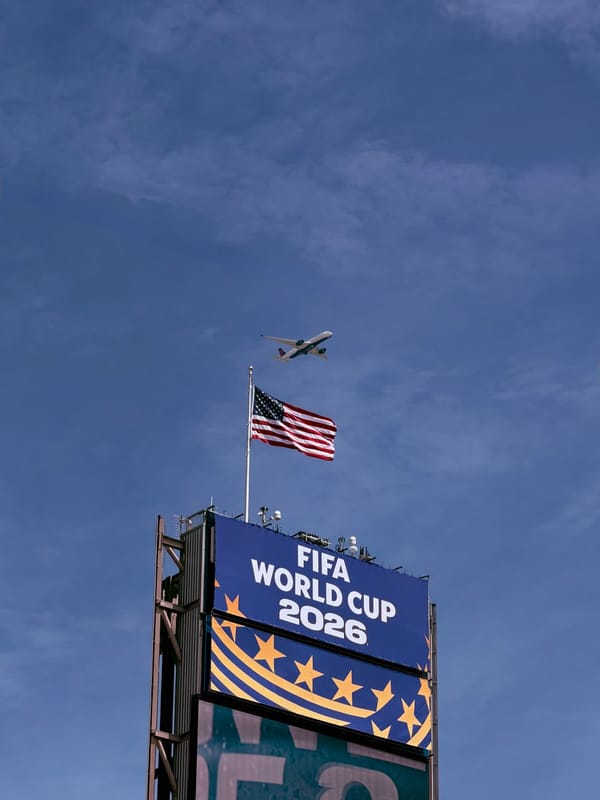
Sport
What Really Went Wrong for USA in World Cup 2026? One Defensive Mistake That Changed Everything
You could feel the air leave the stadium. The 2026 FIFA World Cup Round of 16 match between the United States and Belgium was poised on a knife edge. Then, in the 67th minute, everything shifted. A single moment of miscommunication turned a tightly contested knockout game into a…
Read More...
Sport
How a 19-Year-Old’s Header Just Changed England’s World Cup Destiny – See the Moment That Stunned Mexico
The Estadio Azteca roared with over 87,000 voices, a wall of green and white that seemed impossible to penetrate. Yet, in the 38th minute, a single leap by a teenager silenced an entire nation. Jude Bellingham, just 19 years old, rose above the Mexican defense and powered a head…
Read More...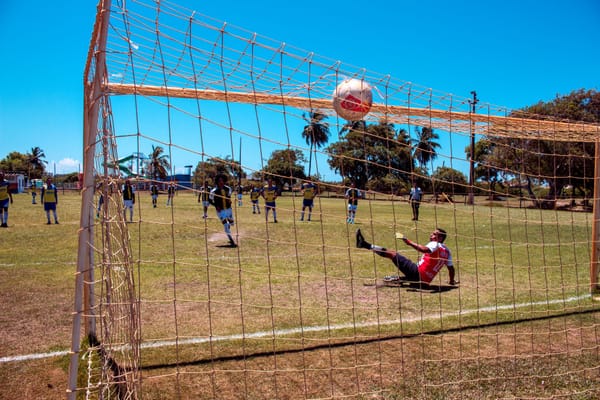
Sport
How France Outlasted Paraguay’s Relentless Tactics in a Heated World Cup 2026 Quarterfinal – What the Scoreline Doesn’t Tell You
The 2026 FIFA World Cup quarterfinal between France and Paraguay at Lincoln Financial Field was never going to be a classic. But what unfolded under the sweltering Philadelphia sun was something far more gripping than a simple 1-0 scoreline suggests. This was a match that tested…
Read More...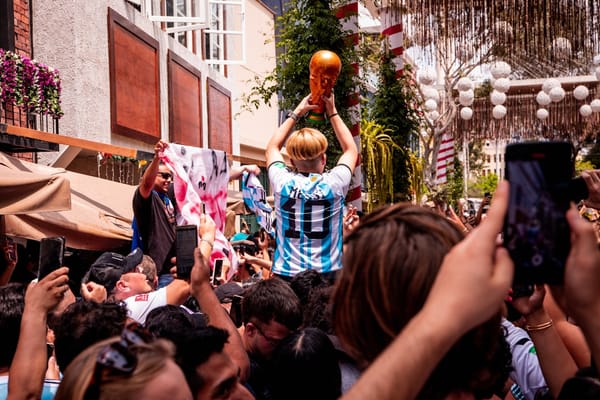
Sport
How Argentina Survived Cape Verde’s 120-Minute Ambush: 3 Key Moments That Defined a World Cup Classic
What happens when a two-time world champion meets a team that refuses to believe in rankings? You get a night that rewrites the script of the 2026 World Cup. Argentina’s 3-2 extra-time victory over Cape Verde on July 4 at the Estadio Ciudad de México wasn’t just a match. It was…
Read More...
Sport
How a Single Millimeter Decided Croatia’s Fate Against Portugal in the 2026 World Cup Knockout
What happens when a goal that should have been the equalizer gets erased by a margin so thin it’s almost invisible? That’s the question football fans around the world are asking after Croatia’s heartbreaking 1-0 loss to Portugal in the Round of 16 of the 2026 FIFA World Cup. The…
Read More...