
Ryanair Under UK Investigation for Parent Child Seating Fees: 3 Key Changes Families Need to Know
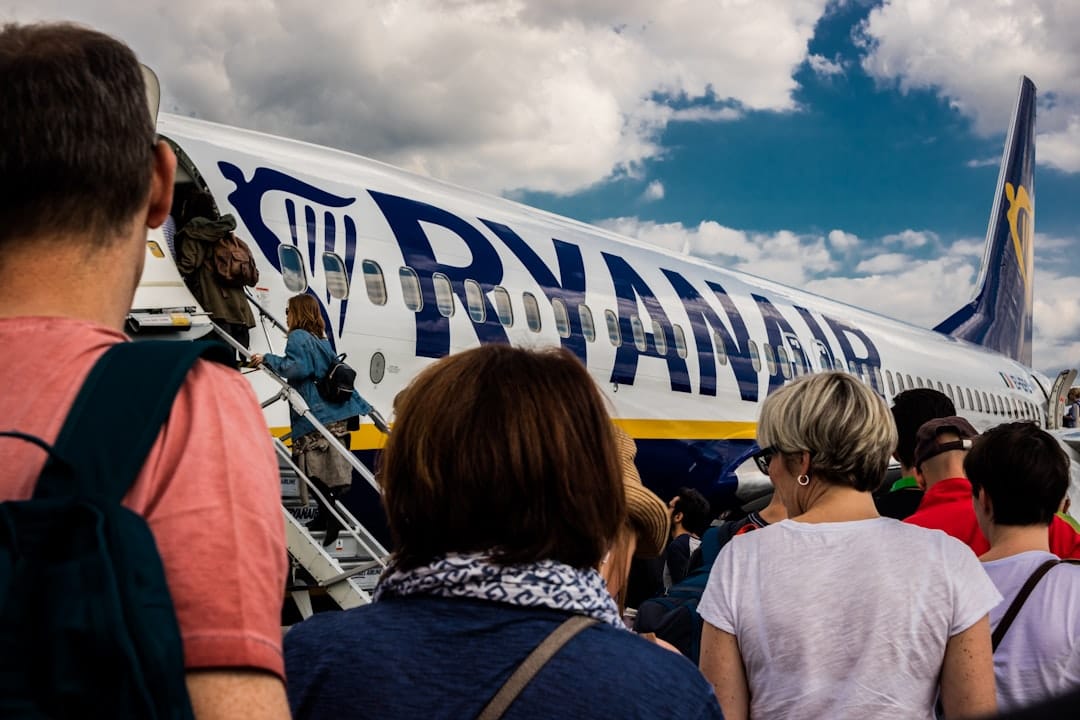
London, United Kingdom, MMN Correspondent: What happens when a budget airline’s cost saving strategy collides with family travel? That is the question at the heart of a new investigation by the UK’s Competition and Markets Authority (CMA) into Ryanair’s policy of charging parents to sit next to their children. The probe is examining whether these mandatory fees violate consumer protection laws, particularly around transparent pricing and fair business practices. This could be a defining moment for how low cost carriers balance efficiency with passenger rights.
Here is how the policy works. When flying with children aged 2 to 11, parents must pay an additional fee typically around £8 ($10) to secure a seat next to their child. Unlike other passengers who can choose whether to pay for seat selection, this fee is not optional for families. The CMA is asking whether this practice amounts to an unfair commercial tactic under UK law, specifically looking at whether the airline hides the true cost of a ticket until late in the booking process a method known as drip pricing.
The core issue is that while Ryanair offers free reserved seating for children under 12, parents still have to pay to access those seats. This creates a situation where families are forced to spend extra money for what many consider a basic safety and comfort requirement. Critics argue that requiring payment for a parent to sit beside a young child is not just financially burdensome but also ethically questionable, especially since children often need supervision throughout a flight.
What makes this investigation particularly interesting is how Ryanair’s policy compares to other airlines. The airline claims it is the only major UK based carrier imposing such fees, a point supported by consumer advocacy groups. Other low cost carriers like easyJet and Wizz Air do not charge for parent child seating, though they offer paid seat selection for all passengers. Legacy carriers such as British Airways and Virgin Atlantic generally provide complimentary seating for children and allow parents to sit together without extra charges.
The situation becomes even more complex when you look at Ryanair’s recent actions. The airline stopped applying these fees on flights between the UK and Italy after facing regulatory pushback from Italy’s Civil Aviation Authority (ENAC), which introduced a ban on mandatory child seating fees. Ryanair challenged the regulation legally but eventually chose to comply. This selective enforcement applying the fee in some regions while waiving it in others has led to criticism that the airline is exploiting regulatory differences across borders to maximize revenue.
Consumer advocates have long warned that such practices disproportionately affect lower income families. A 2025 survey by the UK Consumer Rights Association found that nearly 67% of respondents considered mandatory child seating fees unreasonable, especially when combined with other add ons like baggage, meals, and priority boarding. The average cost of a family holiday including airfare, accommodation, and activities has risen sharply over the past decade, making every additional expense a significant burden. For many families saving for months to afford a vacation, an unexpected £8 per child can feel like a substantial financial hit.
The CMA’s probe will examine several key aspects of Ryanair’s policy. These include whether the airline adequately discloses the mandatory nature of the family seat fee during the booking process, whether the fee is proportionate to the service provided, and whether it constitutes an unfair advantage in the market. The authority will also assess whether the practice undermines competition by creating artificial barriers for families choosing alternative airlines.
Ryanair has responded defiantly, calling the CMA’s investigation bogus and defending its policy as necessary for maintaining safety standards and operational efficiency. The airline argues that without paid seat assignments, there would be a higher risk of children being seated far from their caregivers, potentially leading to confusion, distress, or safety issues during turbulence or emergency procedures. Critics counter that this concern could be addressed through improved cabin crew coordination and signage, rather than monetizing a fundamental parental right.
This case is part of a larger global trend toward greater scrutiny of airline pricing models, especially among budget carriers. Regulatory bodies in France, Germany, and Canada have previously launched similar investigations into dynamic pricing, hidden fees, and forced add ons. In response, some airlines have begun offering more transparent fare structures, including all inclusive tickets that bundle essentials like seat selection and baggage allowance.
As the CMA continues its review, stakeholders across the travel industry are watching closely. Airlines may face increased pressure to reform their policies, while consumers are demanding greater clarity and fairness. The outcome of this probe could set a precedent not only for Ryanair but for the entire low cost aviation sector, influencing how airlines approach family travel, pricing transparency, and customer expectations in the years ahead.
For families planning summer trips, staying informed is key. Booking early, comparing fares across carriers, and understanding the full scope of fees before checkout are essential steps to avoid unexpected costs. With increasing regulatory attention on airline practices, the future of family friendly travel may hinge on whether companies prioritize profit or passenger well being.
Related in Gadgets

Gadgets
How a Fake Cease-and-Desist Letter Targeted Flock Safety: What It Reveals About Trust in Surveillance Tech
In July 2026, a single image sent social media into a frenzy. A cease-and-desist letter, supposedly from Flock Safety, was circulating fast. It claimed the company had ordered a public lecture series in Newport Beach to stop discussing its surveillance technology. The post came…
Read More...
Gadgets
Microsoft’s Carbon Footprint Jumps 25%: What AI’s Energy Hunger Means for Your Digital Future
Microsoft just dropped a number that’s turning heads in the tech world: a 25% spike in carbon emissions for 2025. That’s 34 million metric tons of CO₂ equivalent, and it’s not a small blip. It’s a direct signal that the race to build smarter AI is colliding with the planet’s lim…
Read More...
Gadgets
7 Ways Meta's Always-On Smart Glasses Could Change How You Remember Everything
Imagine a pair of glasses that quietly listens to your conversations, notes the faces you meet, and remembers where you left your keys without you ever asking. Meta is reportedly building exactly that: a new generation of smart glasses designed to run in an always-on mode, captu…
Read More...
Gadgets
Meta Smart Glasses Update: Camera Disabled Instantly If Privacy Light Is Blocked or Removed
Imagine you are wearing a pair of smart glasses that can record video with a simple tap. Now imagine someone nearby covers the tiny light that tells you the camera is on. Until recently, that was possible. But Meta just changed the rules. The company has released a new software…
Read More...
Gadgets
Hoto PixelDrive Cordless Screwdriver Hits $60: The Smart Tool DIYers Have Been Waiting For
If you have ever struggled with a stubborn screw in a dark corner or stripped the head of a tiny fastener while assembling furniture, you know the frustration. The Hoto PixelDrive cordless screwdriver is now available for $59.99, down from its usual $80. This is the first time i…
Read More...
Gadgets
Inside the $75,000 AI Schools Where Your Child Becomes a Beta Tester for Tomorrow's Learning
Walk into an Alpha School classroom, and you won't see a teacher at the front of the room. Instead, you will find rows of students wearing lightweight headsets, their eyes fixed on adaptive screens that shift content in real time based on their facial expressions and response sp…
Read More...
Gadgets
Can a Space Tug Save NASA’s Swift Observatory Before It Burns Up? The 9-Month Rescue Mission You Need to Know About
Imagine a satellite that has spent more than two decades unraveling the universe’s most violent explosions. Now imagine it’s falling. That’s the reality NASA faced earlier this year when the Swift Observatory, a workhorse of astrophysics, began a slow but steady descent toward E…
Read More...
Gadgets
Amazon Fire HD 10 Just Got Faster: 4GB RAM Upgrade in 2026 – What It Means for You
If you have been eyeing a budget tablet that can keep up with your daily multitasking, Amazon just gave you a reason to pay closer attention. In a move that flew under the radar, the company quietly boosted the RAM on its popular Fire HD 10 from 3GB to 4GB. This change, confirme…
Read More...
Gadgets
From 600,000 Discs a Day to Microlenses: What Sony’s Austrian Factory Pivot Means for AR, Cars, and Your Future
Imagine a factory that once stamped out 600,000 PlayStation discs every single day. Now imagine that same facility, just a few years later, shaping tiny lenses that bend light for self-driving cars and augmented reality glasses. That’s exactly what’s happening in Thalgau, Austri…
Read More...
Gadgets
Apple’s 2027 MacBook Pro: Touchscreen, M7 Chip, and a Design Shift You’ll Want to See
Apple is quietly preparing to rewrite the rules for its entry-level MacBook Pro. If the latest reports from industry insiders hold true, the laptop you might buy in 2027 will look, feel, and behave nothing like the one on shelves today. The company is planning a complete overhau…
Read More...