
Vinicius Jr’s 38-Minute Masterclass: How Brazil’s Star Ended Scotland’s 2026 World Cup Dream in Miami
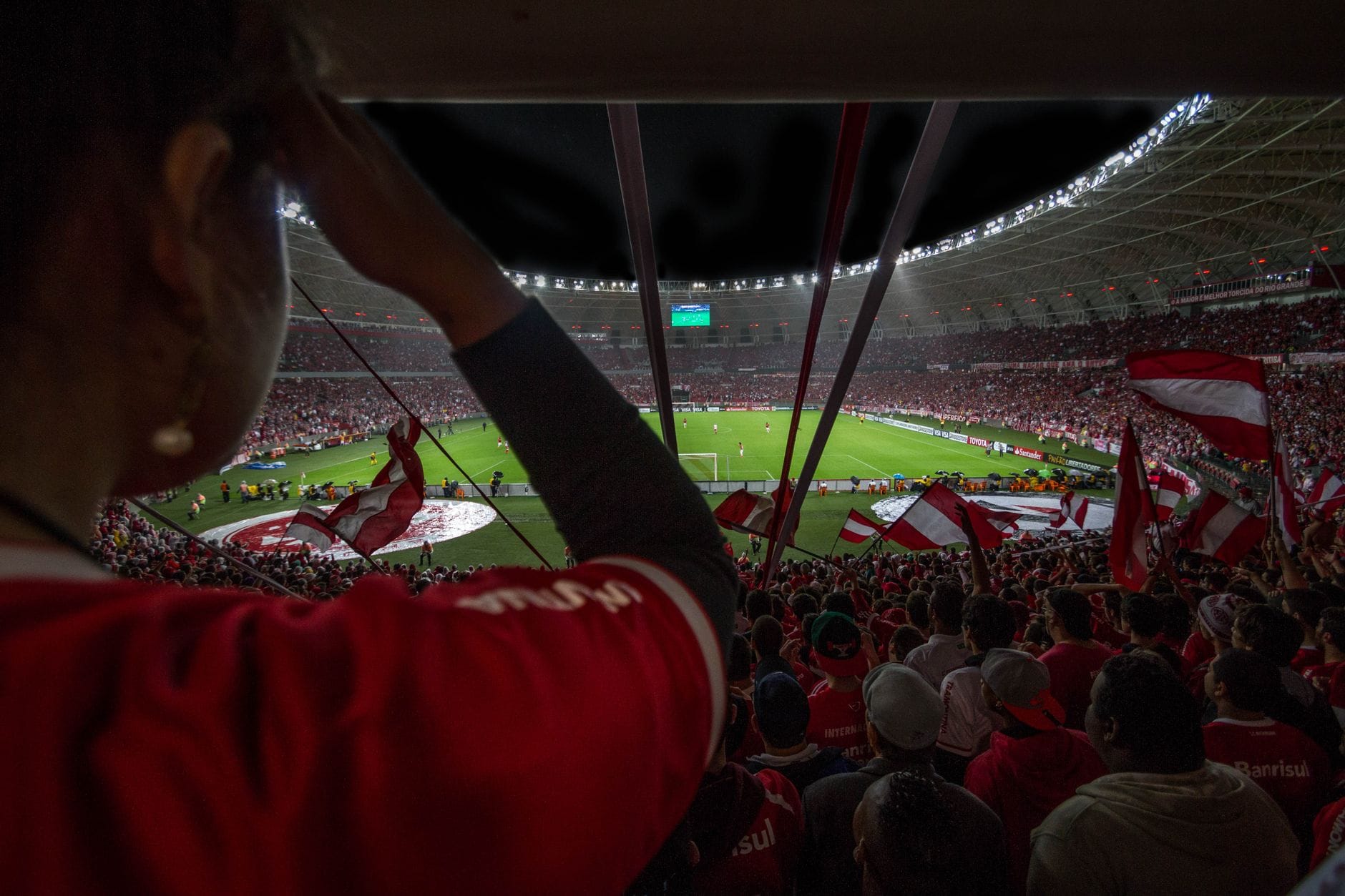
Miami Stadium, Miami, MMN Correspondent: Under the thick Miami humidity, with the sky heavy and the stands buzzing, Scotland’s 2026 World Cup journey hit a wall. Not a brick wall, but a yellow and green blur named Vinicius Junior. In just 38 minutes, the Brazilian winger turned a must-win group stage clash into a 4-0 demolition, leaving the Tartan Army silent and their knockout hopes dangling by a thread.
This was June 25, 2026, and Group D’s final round had already seen Brazil secure top spot. For Scotland, though, this was everything. Sitting second among the best third-placed teams before kickoff, a win could have punched their ticket to the last 32. Instead, they faced a Brazilian side that treated the match like a warm-up for bigger things. The result? A performance that will be remembered as the moment Vinicius Jr announced himself as a World Cup phenomenon.
From the first whistle, Scotland’s defense looked fragile. Within seven minutes, Scott McKenna hesitated for a split second, and Vinicius Jr pounced. He slipped past the defender, kept his cool, and slid the ball past Angus Gunn. That goal wasn’t just a score. It was a message. The Tartan Army’s chants, which had echoed from Boston to Miami, fell into a stunned silence.
Scotland’s struggles weren’t new. They had managed only one shot on target since John McGinn’s deflected effort against Haiti over three hours earlier. Their attack was stuck in neutral. Brazil, meanwhile, moved with precision and pace. In the 37th minute, Andy Robertson lost the ball in midfield, and Brazil countered instantly. Bruno Guimaraes flicked the ball to the post, Nathan Patterson lost track of Vinicius Jr, and the Brazilian headed home unchallenged. By halftime, it was 3-0, and Scotland’s dream was in pieces.
After the break, Scotland showed some fight. They won corners, forced Alisson Becker into five saves, and even spent a few moments in Brazil’s half. But their attacking output remained minimal. They had spent just 47 seconds in Brazil’s final third during the entire first half. When Scott McTominay finally tested Alisson late in the game, the Brazilian keeper barely moved. Even when Vinicius Jr found himself one-on-one with Gunn, the Scottish keeper made a save, but it was too little, too late.
Brazil’s fourth goal felt like a formality. With 14 minutes left, Neymar returned to international duty after a two-and-a-half-year absence. The crowd erupted, not because the result was in doubt, but because a legend was back. Brazil had already qualified as group winners. Neymar’s appearance was a celebration, not a necessity.
Vinicius Jr’s hat-trick was more than just three goals. It was his fourth of the tournament, making him only the fifth Brazilian player ever to score in all three group stage matches in a single World Cup. He joined Jairzinho, Romario, Ronaldo, and Rivaldo in that elite club. His ability to find space, combine speed with technical finesse, and finish under pressure has cemented his status as one of the game’s most dangerous attackers.
For Scotland, this defeat exposed deeper issues. They have never beaten Brazil in ten encounters over five decades. Their last win over South American opposition came in 1974. This latest loss extended that streak, highlighting a pattern of vulnerability against top-tier teams. Their lack of offensive creativity and defensive lapses left them powerless against Brazil’s relentless wing play and midfield control.
Now, Scotland faces a crossroads. They play Mexico on Tuesday in Charlotte, North Carolina, a must-win match. But even victory may not be enough. Their fate depends on results involving Senegal, Ecuador, Curacao, Cape Verde, and Saudi Arabia. If multiple teams pick up points, Scotland could still be eliminated despite a win.
Historically, Scotland has never advanced beyond the group stage in a World Cup where they won just one match. Their best result was reaching the quarterfinals in 1990, but that was under a different format. Now, with only one goal scored across three games and two losses, their path is narrow and uncertain.
Yet, football is a sport of miracles. A few goals in the next few days, combined with favorable results elsewhere, could see Scotland edge into the last 32. But the odds are steep. Their inability to create chances, defend consistently, or adapt tactically under pressure suggests a team struggling to evolve with modern football’s demands.
As the dust settles in Miami, one truth stands out: Vinicius Jr didn’t just score goals. He dismantled a nation’s hope in real time. His brilliance wasn’t just about skill. It was about timing, instinct, and the cold precision of a predator seizing its moment. For Scotland, the music stopped, the lights dimmed, and the dream faded under the yellow floodlights of a Brazilian triumph.
The road ahead is uncertain. Whether Scotland survives or succumbs depends not only on their own efforts but on the fates of others. But one thing is clear: the world now knows Vinicius Jr isn’t just a star. He’s a phenomenon. And in Miami, he proved why.
Related in Sport

Sport
How Dubai Basketball Won the ABA League in Just Two Seasons: Inside the Partnership That Made It Possible
When Dubai Basketball lifted the ABA League trophy after only its second season, the basketball world took notice. But the story behind that trophy is bigger than any single game or player. It is a story about what happens when a city’s ambition meets a partner that moves mounta…
Read More...
Sport
From Career-Threatening Injury to World Cup Hero: How Mikel Merino Became Spain’s Clutch Performer in 2026
Imagine being told you might never play football again. Then imagine stepping onto the world’s biggest stage months later and scoring the goals that carry your country to the semi finals. That is the reality for Mikel Merino, the Arsenal midfielder who has quietly become the mos…
Read More...
Sport
Can France’s 2026 World Cup Squad Become the Greatest Team in History?
What does it take to build a football dynasty? France is giving the world a masterclass answer right now. With a commanding 2-0 victory over Morocco in Boston, Les Bleus have become the first team to lock in a semi final spot at the 2026 FIFA World Cup. They are chasing a third…
Read More...
Sport
Will France Survive Morocco’s Challenge? 4 Quarter-Final Predictions That Could Reshape the World Cup
The 2026 FIFA World Cup quarter-finals are here, and the tension is almost unbearable. Four matches stand between eight teams and a shot at glory. Every pass, every tackle, every decision could rewrite football history. Among the most anticipated battles is France versus Morocco…
Read More...
Sport
How Gregor Kobel’s Three Saves Sent Switzerland to the 2026 World Cup Quarter Finals
What happens when a team’s entire World Cup dream rests on one goalkeeper’s reflexes? You get the kind of night that turns a quiet Swiss shot stopper into a national legend. Switzerland’s 2026 campaign just took a historic turn, and it all unfolded under the lights of MetLife St…
Read More...
Sport
What Really Went Wrong for USA in World Cup 2026? One Defensive Mistake That Changed Everything
You could feel the air leave the stadium. The 2026 FIFA World Cup Round of 16 match between the United States and Belgium was poised on a knife edge. Then, in the 67th minute, everything shifted. A single moment of miscommunication turned a tightly contested knockout game into a…
Read More...
Sport
How a 19-Year-Old’s Header Just Changed England’s World Cup Destiny – See the Moment That Stunned Mexico
The Estadio Azteca roared with over 87,000 voices, a wall of green and white that seemed impossible to penetrate. Yet, in the 38th minute, a single leap by a teenager silenced an entire nation. Jude Bellingham, just 19 years old, rose above the Mexican defense and powered a head…
Read More...
Sport
How France Outlasted Paraguay’s Relentless Tactics in a Heated World Cup 2026 Quarterfinal – What the Scoreline Doesn’t Tell You
The 2026 FIFA World Cup quarterfinal between France and Paraguay at Lincoln Financial Field was never going to be a classic. But what unfolded under the sweltering Philadelphia sun was something far more gripping than a simple 1-0 scoreline suggests. This was a match that tested…
Read More...
Sport
How Argentina Survived Cape Verde’s 120-Minute Ambush: 3 Key Moments That Defined a World Cup Classic
What happens when a two-time world champion meets a team that refuses to believe in rankings? You get a night that rewrites the script of the 2026 World Cup. Argentina’s 3-2 extra-time victory over Cape Verde on July 4 at the Estadio Ciudad de México wasn’t just a match. It was…
Read More...
Sport
How a Single Millimeter Decided Croatia’s Fate Against Portugal in the 2026 World Cup Knockout
What happens when a goal that should have been the equalizer gets erased by a margin so thin it’s almost invisible? That’s the question football fans around the world are asking after Croatia’s heartbreaking 1-0 loss to Portugal in the Round of 16 of the 2026 FIFA World Cup. The…
Read More...