
What Happens When a Russian Frigate Fires Warning Shots at a UK Yacht in the Channel? A Retired Couple’s Story
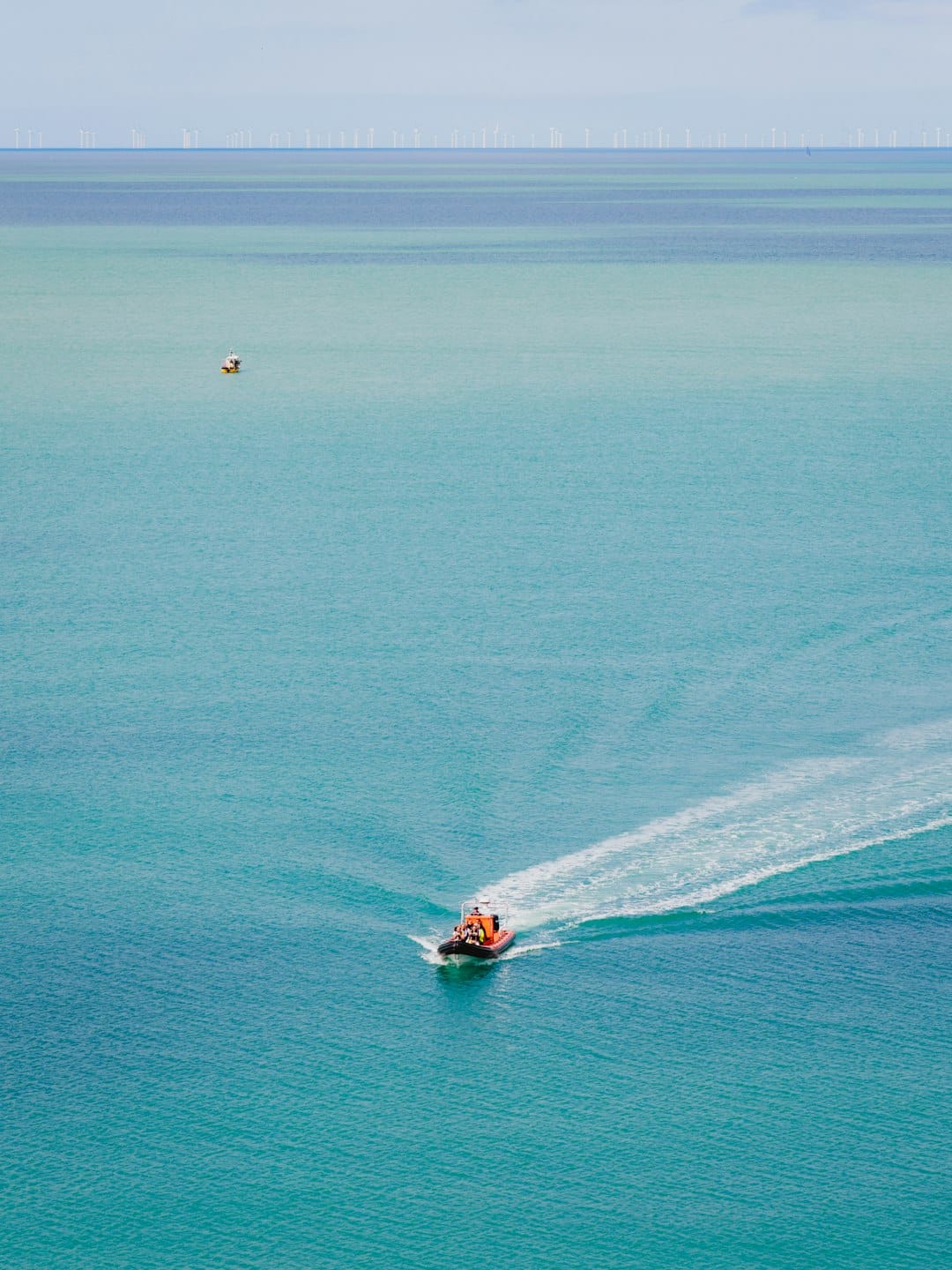
English Channel, MMN Correspondent: Imagine you are sailing your small yacht on a quiet Tuesday morning, enjoying the sea breeze off the southern coast of England. Suddenly, five loud horn blasts from a massive Russian warship break the calm. That is exactly what happened to Jane and Alan Kelvey, a retired British couple, on June 16, 2026. Their yacht, the Bright Future, was about 23 miles south of the Isle of Wight, well within international waters but right in the middle of one of the world’s busiest shipping lanes.
The horn blasts are an internationally recognized signal meaning “Have you seen us?” Jane immediately adjusted their course by two degrees to port, a clear sign they understood and were complying. But then came another set of five horn blasts, followed by four to five bursts of small arms fire into the air. These were warning shots, non-lethal but unmistakably serious. The couple, unarmed and on a leisurely voyage, suddenly found themselves in a scene that felt more like a movie than real life.
Jane recalled crouching down and covering her head with a canvas hood while her husband kept steering. “We weren’t afraid,” she said. “It was more like being in a movie than reality.” They reported the incident as a hazard to navigation, as required by international maritime law. The Ministry of Defence confirmed that the Russian frigate Admiral Grigorovich fired the shots after multiple failed radio attempts and after launching warning flares. Officials emphasized the shots were directed above the yacht, not at it.
Russia’s Defence Ministry offered a different version. They claimed the yacht was on a “dangerous approach” toward the warship and that the crew acted in line with international regulations. They suggested the yacht’s lack of engine power and drift in foggy conditions may have made it appear less maneuverable, prompting precautionary measures. Which story is closer to the truth? Maritime experts point to a broader pattern.
The Admiral Grigorovich, a Kirov-class frigate, had been shadowed for days by the Royal Navy’s HMS Mersey as part of routine monitoring. Satellite data shows the frigate operating with a repair vessel, PM-82, which shuttles between the Channel and the North Sea. NATO sources confirm the PM-82 likely delivers food, water, fuel, and supplies, enabling the warship to stay at sea for weeks. In April 2026 alone, the Admiral Grigorovich escorted six Russian-flagged vessels through the Channel, many linked to the so-called “shadow fleet” that helps Moscow bypass sanctions.
Former Royal Navy Rear Admiral James Parkin analyzed the incident. “I would not be surprised if this was a miscalculation rather than a deliberate provocation,” he said. “The ship was clearly trying to assert control over a perceived risk, but firing warning shots at a civilian vessel so close to British waters crosses a significant line.” The shots were fired just 500 yards from the yacht, raising questions about naval protocols and communication in contested waters.
After the encounter, a boat from HMS Tyne visited the Bright Future to verify the couple’s safety and collect details. No injuries were reported, and the yacht continued its journey. But the psychological impact lingers. “It felt like we’d been thrown into a geopolitical thriller overnight,” said Alan Kelvey. “You never expect something like this to happen while you’re just enjoying a quiet sail.”
This incident highlights growing tensions in Europe’s maritime domain. As Russia expands its naval footprint in Western waters, the English Channel has become a flashpoint in the strategic competition between NATO and Russia. With more shadow fleet activity, covert resupply operations, and heightened patrols, the need for clearer communication protocols and de-escalation mechanisms becomes urgent. Experts warn that fog, limited visibility, and high-stakes operations increase the risk of misinterpretation. International maritime law mandates transparency and non-aggression, but enforcement remains challenging in contested zones.
For sailors like Jane and Alan Kelvey, the experience is a stark reminder that even the most peaceful journeys can intersect with the world’s most volatile forces. The sea is no longer just a passage. It is a stage for diplomacy, deterrence, and silent power plays. What happens next depends on how nations choose to navigate these waters together.
Related in Global Trend

Global Trend
Meta’s AI Image Tool Vanishes Days After Launch: What Happened to Your Instagram Photos?
Just days after its flashy debut, Meta’s new AI image generation feature has been pulled from the platform. The tool, part of the Muse Image rollout, let users of Meta’s AI chatbot create artificial images by pulling content from public Instagram accounts. Think about that for a…
Read More...
Global Trend
Middle East Travelers Are Flocking to Thailand for Wellness: Here’s What’s Driving the 2026 Boom
What if the next luxury vacation didn’t just pamper you but actually changed how you feel long after you return home? That’s the question Thailand is asking Middle East travelers right now. And the answer is reshaping how people from the Gulf plan their getaways. The Tourism Aut…
Read More...
Global Trend
How SK Hynix Raised $26.5 Billion in Its US Debut: What It Means for AI Chip Investors
Imagine walking into a room where the world’s biggest money managers are all fighting for a piece of the same company. That’s exactly what happened when SK Hynix, the South Korean memory chip giant, stepped onto the Nasdaq stage in July 2026. The result? A staggering $26.5 billi…
Read More...
Global Trend
What Happens When Bieber, Madonna, Shakira, and BTS Share the World Cup Stage?
Imagine this: It’s July 19, 2026, and the world is watching. Not just for the final whistle of the FIFA World Cup, but for something that’s never happened before. For the first time in the tournament’s history, a Super Bowl style halftime show is about to unfold at MetLife Stadi…
Read More...
Global Trend
80 Targets Hit: What the US Strikes on Iran Mean for Global Oil Routes
The world’s most critical oil passageway just became the epicenter of a major military confrontation. The United States has launched sweeping airstrikes across Iran’s southern coast, hitting more than 80 locations after three commercial tankers came under attack in the Strait of…
Read More...
Global Trend
Travel Before the Crowds: Why the Two Weeks Before School Holidays Are Your Best Bet for a Peaceful Summer Escape
Picture this: warm sand beneath your feet, a gentle sea breeze, and the sound of waves instead of the chatter of crowds. That’s the reality for travelers who discover a simple truth about summer vacations. The best time to go isn’t when everyone else does. It’s the two weeks rig…
Read More...
Global Trend
Faster Patents in Europe and China: What the New EPO-CNIPA PPH Pilot Means for Your Innovation Timeline
What if you could cut months off the time it takes to secure a patent in both Europe and China? Starting August 1, 2026, that possibility becomes reality. The European Patent Office (EPO) and China National Intellectual Property Administration (CNIPA) are launching a new bilater…
Read More...
Global Trend
What Happened in a Utah Courtroom When Charlie Kirk’s Family Came Face to Face With His Accused Killer?
On a quiet Tuesday morning in May 2026, a Utah courtroom became the center of a story that has haunted America for months. The family of Charlie Kirk, the 31-year-old conservative activist and founder of Turning Point USA, sat just feet away from the man accused of ending his li…
Read More...
Global Trend
4 New Luxury Travel Mindsets Reshaping Asia Pacific: How Gen Z Is Redefining High End Tourism
What does luxury mean to a generation that grew up with Instagram, climate anxiety, and a craving for meaning? A sweeping study of 2,800 affluent travelers across eight Asia Pacific markets—China, Japan, South Korea, Australia, India, Singapore, Thailand, and Indonesia—has uncov…
Read More...
Global Trend
How Europe and China Are Cutting Patent Wait Times by 40% Starting August 2026
Imagine filing a single patent application and watching it sail through two of the world’s largest intellectual property offices with minimal friction. That vision becomes reality on August 1, 2026, when the European Patent Office (EPO) and the China National Intellectual Proper…
Read More...