
What Just Happened in the Strait of Hormuz? US Iran Conflict Escalates 5 Key Developments You Need to Know
Strait of Hormuz, MMN Correspondent: The world’s most critical oil chokepoint just became the center of a high stakes military standoff. Hours after former President Donald Trump warned Iran would face severe consequences for refusing a diplomatic deal, the United States launched what it called self defense strikes against Iranian targets. Almost immediately, Iran’s Islamic Revolutionary Guards Corps responded with coordinated attacks on maritime vessels in the Strait of Hormuz. The question on everyone’s mind is simple: how close are we to a full scale regional war?
Let’s walk through what actually happened and why it matters for global energy markets, regional stability, and your daily life. The U.S. Central Command confirmed Wednesday that it struck military installations and surveillance sites linked to recent attacks on American assets. Defense Secretary Pete Hegseth made it clear that bombs would keep falling on key Iranian facilities unless a peace deal materializes. He noted that Iran had multiple chances to negotiate but instead chose asymmetric warfare and proxy operations. This is not just another skirmish. This is a deliberate shift in posture.
Iranian state media reported that two commercial ships were hit in the strait, a waterway that carries nearly one fifth of the world’s oil supply every single day. The IRGC then claimed the strait was completely closed to all maritime traffic. That claim alone sent Brent crude surging above $95 per barrel, a nearly 2% jump during Asian trading hours. Energy markets are now pricing in the possibility of prolonged disruption. But here is where it gets interesting: U.S. officials maintain that commercial shipping remains operational, just with heightened security. The gap between these two narratives highlights how difficult it is to verify real time developments in a fog of disinformation and propaganda.
Explosions were also reported on Qeshm Island and in coastal cities like Bandar Abbas and Sirik, suggesting ground based missile or drone strikes may have occurred. This is not a random flare up. The roots of this crisis trace back to April 2026, when a temporary ceasefire between the U.S. and Iran quickly unraveled due to repeated violations on both sides. Since then, intermittent drone assaults and missile barrages have kept the region on edge. Recent mediation efforts through third party intermediaries have stalled, leaving both nations locked in a cycle of retaliation that shows no signs of breaking.
A pivotal moment came Tuesday when an American military helicopter was downed in an attack attributed to Iranian backed forces. The IRGC responded by targeting several U.S. military bases across Iraq, Syria, and Jordan. This marked a significant escalation, demonstrating Iran’s willingness to challenge American military presence beyond its borders. UN Secretary General António Guterres described the current situation as a lesser fire ceasefire more symbolic than substantive. He warned that even minor incidents could spiral into full scale conflict. His words carry weight: we should not minimize the risks of lesser fire becoming full fire.
The geopolitical implications extend far beyond the immediate theater. The Strait of Hormuz remains one of the most important chokepoints in global trade, with over 18 million barrels of oil passing through daily. Any prolonged disruption could send shockwaves through financial markets, disrupt supply chains, and trigger inflationary pressures worldwide. Energy analysts are already warning that sustained military activity could lead to long term structural shifts in oil pricing, energy security policies, and shipping routes. This is not just a regional story. It is a global one.
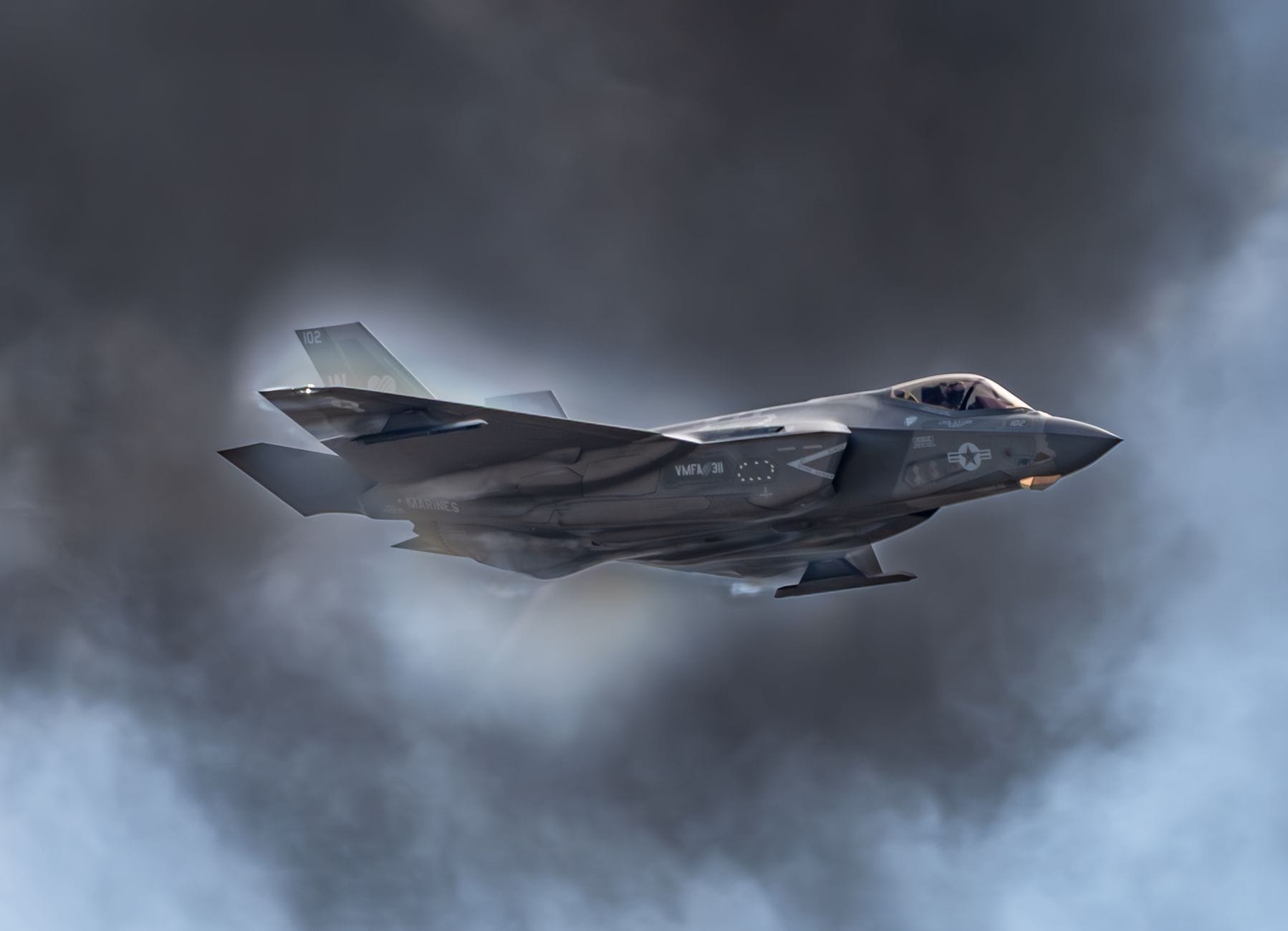
Domestic political dynamics are fueling the escalation on both sides. Trump’s return to public prominence via Truth Social has injected a confrontational tone into U.S. foreign policy discourse. His repeated threats of hitting hard appeal to nationalist sentiment but raise concerns about strategic overreach. Iranian President Masoud Pezeshkian has adopted a defiant stance, vowing that Iran will stand firm against any external pressure. This mutual intransigence leaves little room for compromise. Military experts note that the U.S. has significantly bolstered its presence in the region, deploying advanced F-35 Lightning II fighter jets, cyber warfare units, and naval task forces. Iran has expanded its arsenal of drones, precision guided missiles, and asymmetric warfare capabilities, often using proxies in Yemen, Lebanon, and Iraq to project influence without direct confrontation.
As the situation evolves, the international community faces mounting pressure to re engage in mediation efforts. Regional powers such as Saudi Arabia, Turkey, and Qatar have expressed concern and are calling for urgent diplomatic intervention. But with both sides entrenched and no clear path forward, the risk of miscalculation remains high. The coming days will be crucial in determining whether this latest surge in violence marks the beginning of a broader war or a final attempt to force a breakthrough in negotiations. For now, the world watches closely as the Strait of Hormuz a symbol of global interdependence becomes a flashpoint of geopolitical tension where every strike carries the weight of global consequence.
This ongoing crisis underscores the delicate balance between deterrence and diplomacy. It shows how swiftly a fragile ceasefire can collapse under the weight of mistrust, propaganda, and political posturing. With oil markets reacting instantly and military readiness at an all time high, the stakes could not be higher. As the world braces for what comes next, one truth remains undeniable: the fate of global stability hangs in the balance. And the choices made in the next few days will shape the economic and security landscape for years to come.
Related in Global Trend

Global Trend
Meta’s AI Image Tool Vanishes Days After Launch: What Happened to Your Instagram Photos?
Just days after its flashy debut, Meta’s new AI image generation feature has been pulled from the platform. The tool, part of the Muse Image rollout, let users of Meta’s AI chatbot create artificial images by pulling content from public Instagram accounts. Think about that for a…
Read More...
Global Trend
Middle East Travelers Are Flocking to Thailand for Wellness: Here’s What’s Driving the 2026 Boom
What if the next luxury vacation didn’t just pamper you but actually changed how you feel long after you return home? That’s the question Thailand is asking Middle East travelers right now. And the answer is reshaping how people from the Gulf plan their getaways. The Tourism Aut…
Read More...
Global Trend
How SK Hynix Raised $26.5 Billion in Its US Debut: What It Means for AI Chip Investors
Imagine walking into a room where the world’s biggest money managers are all fighting for a piece of the same company. That’s exactly what happened when SK Hynix, the South Korean memory chip giant, stepped onto the Nasdaq stage in July 2026. The result? A staggering $26.5 billi…
Read More...
Global Trend
What Happens When Bieber, Madonna, Shakira, and BTS Share the World Cup Stage?
Imagine this: It’s July 19, 2026, and the world is watching. Not just for the final whistle of the FIFA World Cup, but for something that’s never happened before. For the first time in the tournament’s history, a Super Bowl style halftime show is about to unfold at MetLife Stadi…
Read More...
Global Trend
80 Targets Hit: What the US Strikes on Iran Mean for Global Oil Routes
The world’s most critical oil passageway just became the epicenter of a major military confrontation. The United States has launched sweeping airstrikes across Iran’s southern coast, hitting more than 80 locations after three commercial tankers came under attack in the Strait of…
Read More...
Global Trend
Travel Before the Crowds: Why the Two Weeks Before School Holidays Are Your Best Bet for a Peaceful Summer Escape
Picture this: warm sand beneath your feet, a gentle sea breeze, and the sound of waves instead of the chatter of crowds. That’s the reality for travelers who discover a simple truth about summer vacations. The best time to go isn’t when everyone else does. It’s the two weeks rig…
Read More...
Global Trend
Faster Patents in Europe and China: What the New EPO-CNIPA PPH Pilot Means for Your Innovation Timeline
What if you could cut months off the time it takes to secure a patent in both Europe and China? Starting August 1, 2026, that possibility becomes reality. The European Patent Office (EPO) and China National Intellectual Property Administration (CNIPA) are launching a new bilater…
Read More...
Global Trend
What Happened in a Utah Courtroom When Charlie Kirk’s Family Came Face to Face With His Accused Killer?
On a quiet Tuesday morning in May 2026, a Utah courtroom became the center of a story that has haunted America for months. The family of Charlie Kirk, the 31-year-old conservative activist and founder of Turning Point USA, sat just feet away from the man accused of ending his li…
Read More...
Global Trend
4 New Luxury Travel Mindsets Reshaping Asia Pacific: How Gen Z Is Redefining High End Tourism
What does luxury mean to a generation that grew up with Instagram, climate anxiety, and a craving for meaning? A sweeping study of 2,800 affluent travelers across eight Asia Pacific markets—China, Japan, South Korea, Australia, India, Singapore, Thailand, and Indonesia—has uncov…
Read More...
Global Trend
How Europe and China Are Cutting Patent Wait Times by 40% Starting August 2026
Imagine filing a single patent application and watching it sail through two of the world’s largest intellectual property offices with minimal friction. That vision becomes reality on August 1, 2026, when the European Patent Office (EPO) and the China National Intellectual Proper…
Read More...