
What Just Happened Over the Strait of Hormuz? US Strikes Iran After Helicopter Downed – Here’s What We Know
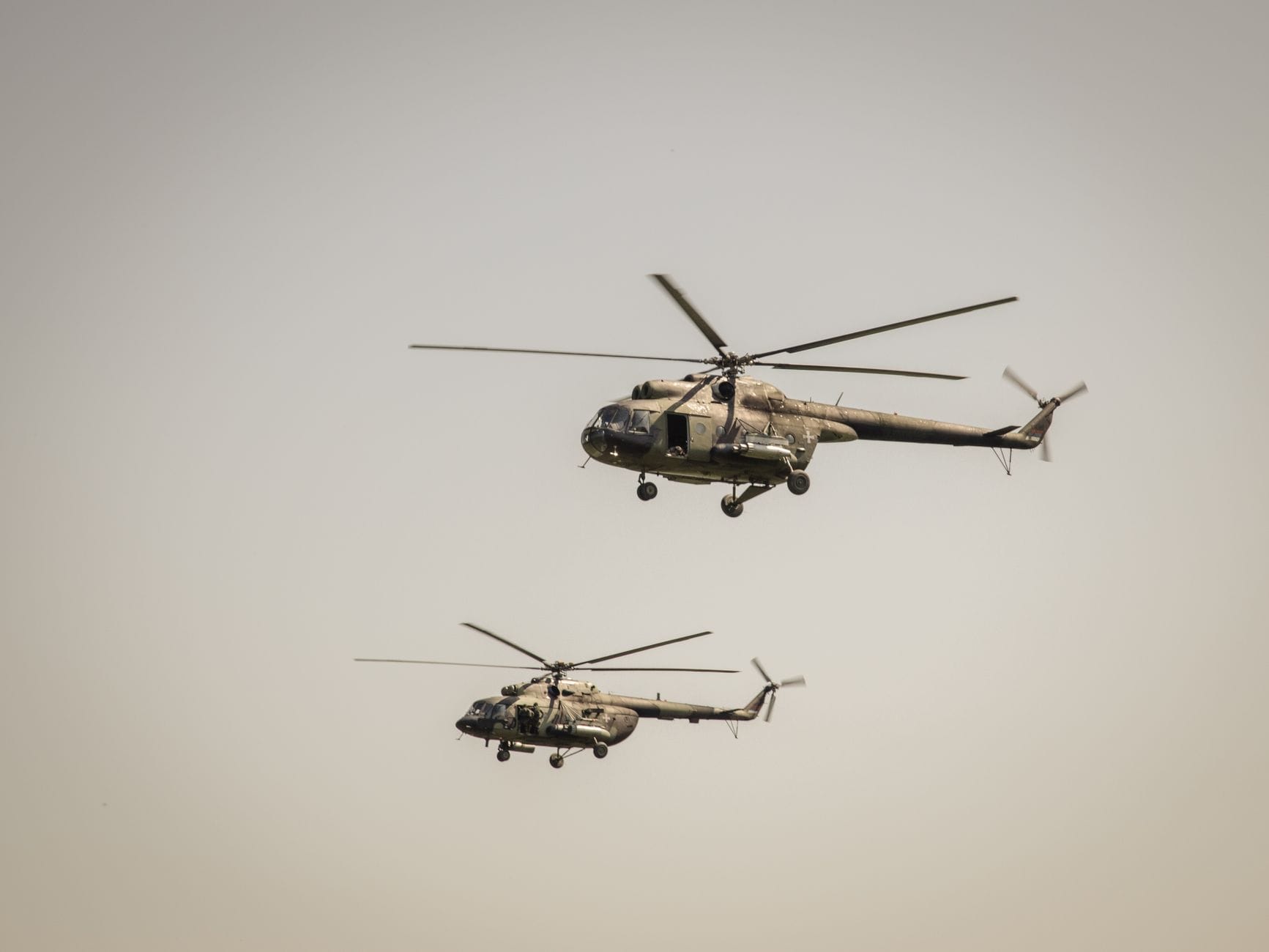
Strait of Hormuz, MMN Correspondent: The world woke up to a new flashpoint in the Middle East this week. A US Apache helicopter was downed over the Strait of Hormuz on Monday evening, and within 24 hours, American precision strikes hit Iranian defense infrastructure along the Persian Gulf coast. The question on everyone’s mind: is this a calculated escalation or a tragic misunderstanding?
Let’s walk through what actually happened. The US Central Command confirmed that at 17:00 EST on Tuesday, coordinated strikes targeted key Iranian radar and military sites. Officials described the operation as a proportional response to what they called unjustified Iranian aggression. But here’s where it gets interesting: the two Apache crew members were rescued safely from the water. No casualties. That detail alone changes the diplomatic calculus significantly.
President Donald Trump broke the news on Truth Social, clarifying that the downed aircraft was an Apache helicopter, not a drone as initially reported. He confirmed both pilots were uninjured after a swift rescue operation. That rescue itself is worth noting: an unmanned surface drone operated by Task Force 59, a Bahrain based unit, retrieved the pilots from the water. A US Navy helicopter then airlifted them to safety. It’s a remarkable example of how autonomous systems are quietly reshaping modern military operations.
Now, the big question: who fired first? US military sources say an Iranian drone targeted the Apache. But an unnamed official admitted it’s unclear whether the drone acted deliberately or if it was a case of misidentification. That ambiguity is crucial. If it was an accident, the door for diplomacy remains open. If it was intentional, we’re looking at a very different scenario.
Iranian state media acknowledged explosions near Bandar Abbas, Qeshm Island, and Sirik, confirming the US strikes. But the semi official Mehr News Agency stopped short of claiming responsibility for the helicopter downing. That silence speaks volumes. Meanwhile, Iranian Foreign Minister Abbas Araghchi took to social media with a defiant message: “Leave our region if you want to be safe.” It’s a clear signal that Tehran is not backing down.
Adding fuel to the fire, Israel launched fresh aerial assaults across southern Lebanon on the same day. That move reignited broader regional tensions, especially after Tehran warned that such actions would trigger retaliation. Iran’s top negotiator, Mohammad Baqer Qalibaf, posted a pointed message: “We speak other languages far more fluently.” The implication is unmistakable: diplomacy is preferred, but force remains an option.
President Trump publicly urged both Israel and Iran to step back, framing the standoff as a threat to fragile peace efforts. He claimed that US Iran negotiations were nearing completion, describing the upcoming deal as “very, very good” and predicting it would be finalized within two to three days. According to Trump, the agreement would include the immediate reopening of the Strait of Hormuz, a vital waterway through which nearly 20% of the world’s oil passes daily.
But here’s the tension: can you negotiate while launching strikes? Critics argue that military action undermines trust. US officials counter that the response was necessary to protect national interests and prevent further aggression. Both sides have a point, and the coming days will test whether diplomacy can survive this kind of pressure.
The Strait of Hormuz is not just another piece of water. Over 18 million barrels of crude oil pass through it every day. Any disruption sends shockwaves through global energy markets. That’s why this conflict center matters to every major economy, especially those dependent on Middle Eastern oil. The stakes are genuinely global.
Looking back, US Iran relations have seen plenty of flashpoints: the 1979 hostage crisis, the 2015 nuclear deal, the US withdrawal in 2018, and years of proxy conflicts in Syria, Yemen, and Iraq. But this incident marks a rare direct confrontation between US and Iranian military assets. That’s what makes it different. That’s what raises the fear of a broader regional war.
For now, intelligence agencies worldwide are watching closely. Regional allies like Saudi Arabia, the UAE, and Jordan have called for de escalation without taking sides. The United Nations Security Council has convened emergency consultations, though no formal resolution has been passed yet.
So where do we go from here? If diplomatic channels remain open, the US Iran deal could still materialize, offering a path to reduced tensions. But if retaliatory actions continue, the region risks slipping into a cycle of violence that could engulf neighboring countries and draw in global powers. The next 48 hours will tell us a lot.
One thing is certain: the world is watching, and the outcome of this moment will shape the Middle East for years to come.
Related in Global Trend

Global Trend
Meta’s AI Image Tool Vanishes Days After Launch: What Happened to Your Instagram Photos?
Just days after its flashy debut, Meta’s new AI image generation feature has been pulled from the platform. The tool, part of the Muse Image rollout, let users of Meta’s AI chatbot create artificial images by pulling content from public Instagram accounts. Think about that for a…
Read More...
Global Trend
Middle East Travelers Are Flocking to Thailand for Wellness: Here’s What’s Driving the 2026 Boom
What if the next luxury vacation didn’t just pamper you but actually changed how you feel long after you return home? That’s the question Thailand is asking Middle East travelers right now. And the answer is reshaping how people from the Gulf plan their getaways. The Tourism Aut…
Read More...
Global Trend
How SK Hynix Raised $26.5 Billion in Its US Debut: What It Means for AI Chip Investors
Imagine walking into a room where the world’s biggest money managers are all fighting for a piece of the same company. That’s exactly what happened when SK Hynix, the South Korean memory chip giant, stepped onto the Nasdaq stage in July 2026. The result? A staggering $26.5 billi…
Read More...
Global Trend
What Happens When Bieber, Madonna, Shakira, and BTS Share the World Cup Stage?
Imagine this: It’s July 19, 2026, and the world is watching. Not just for the final whistle of the FIFA World Cup, but for something that’s never happened before. For the first time in the tournament’s history, a Super Bowl style halftime show is about to unfold at MetLife Stadi…
Read More...
Global Trend
80 Targets Hit: What the US Strikes on Iran Mean for Global Oil Routes
The world’s most critical oil passageway just became the epicenter of a major military confrontation. The United States has launched sweeping airstrikes across Iran’s southern coast, hitting more than 80 locations after three commercial tankers came under attack in the Strait of…
Read More...
Global Trend
Travel Before the Crowds: Why the Two Weeks Before School Holidays Are Your Best Bet for a Peaceful Summer Escape
Picture this: warm sand beneath your feet, a gentle sea breeze, and the sound of waves instead of the chatter of crowds. That’s the reality for travelers who discover a simple truth about summer vacations. The best time to go isn’t when everyone else does. It’s the two weeks rig…
Read More...
Global Trend
Faster Patents in Europe and China: What the New EPO-CNIPA PPH Pilot Means for Your Innovation Timeline
What if you could cut months off the time it takes to secure a patent in both Europe and China? Starting August 1, 2026, that possibility becomes reality. The European Patent Office (EPO) and China National Intellectual Property Administration (CNIPA) are launching a new bilater…
Read More...
Global Trend
What Happened in a Utah Courtroom When Charlie Kirk’s Family Came Face to Face With His Accused Killer?
On a quiet Tuesday morning in May 2026, a Utah courtroom became the center of a story that has haunted America for months. The family of Charlie Kirk, the 31-year-old conservative activist and founder of Turning Point USA, sat just feet away from the man accused of ending his li…
Read More...
Global Trend
4 New Luxury Travel Mindsets Reshaping Asia Pacific: How Gen Z Is Redefining High End Tourism
What does luxury mean to a generation that grew up with Instagram, climate anxiety, and a craving for meaning? A sweeping study of 2,800 affluent travelers across eight Asia Pacific markets—China, Japan, South Korea, Australia, India, Singapore, Thailand, and Indonesia—has uncov…
Read More...
Global Trend
How Europe and China Are Cutting Patent Wait Times by 40% Starting August 2026
Imagine filing a single patent application and watching it sail through two of the world’s largest intellectual property offices with minimal friction. That vision becomes reality on August 1, 2026, when the European Patent Office (EPO) and the China National Intellectual Proper…
Read More...